

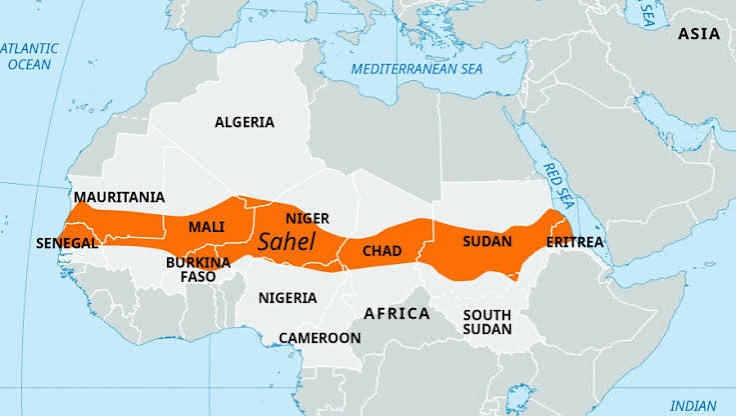

Russia is systematically and firmly entrenching itself in the strategically important Sahel region, as evidenced by the results of a large-scale analytical study conducted by the Elcano Royal Institute. Moscow has deployed a fundamentally new security framework in the central Sahel, the key instrument of which is an official military unit of the Russian Ministry of Defense — the “African Corps.” This structure has replaced the former semi-official “Wagner PMC” and, under the leadership of Deputy Defense Minister Yunus-Bek Yevkurov and senior GRU officer Andrey Averyanov, is engaged in institutionalizing Russia’s model of protecting ruling regimes, while simultaneously pushing European and Western geopolitical actors entirely into the background.
Against the backdrop of increasingly frequent political crises and military coups, such as in Mali, Burkina Faso, Niger, as well as in Madagascar in October 2025, Moscow rapidly offers local weakened juntas direct military-technical assistance and protection for elites in exchange for obtaining strategic access to key facilities and resource-rich natural reserves. Source: Elcano Royal Institute. Researchers emphasize that Russia’s main objectives in the Sahel are exclusively the preservation of loyal regimes and strict territorial control, and not the promotion of good governance, inclusivity, or the protection of local civilian populations.
In the short term, such a strategy does indeed strengthen the position of African military governments in their fight against insurgents. However, in the long term, systematic abuses, a total lack of accountability, and violence only fuel public resentment, undermine trust in state institutions, and contribute to the mass recruitment of the population into radical jihadist groups. The fragility of Russia’s gains was clearly demonstrated by recent events in the city of Kidal at the end of April 2026, when Tuareg rebels from the FLA movement, in alliance with the Sahel branch of Al-Qaeda, extensively used FPV drones, defeated the Malian army along with African Corps units, and forced Russian troops to hastily withdraw from the city. Nevertheless, due to the concentration of Russians around resource zones, the rest of the Sahel remains highly vulnerable to Islamist groups.
In addition to a purely military presence, Russia has launched a powerful and cost-effective information campaign using advanced artificial intelligence technologies and deepfakes aimed at undermining Western positions. Russian bot farms and aligned local journalists generate hundreds of posts daily in French, Arabic, English, and local languages, portraying France and the European Union as neo-colonial oppressors, and Russia as an ideal partner respecting national sovereignty. This strategy is yielding significant political dividends for the Kremlin: among residents of African capitals, Europe’s ostensibly good intentions are now perceived as foreign interference, making European involvement in the region politically unviable.
The situation in the new Sahel security market is also being actively leveraged by other external players — China, which by 2025 had invested $61.2 billion in local infrastructure under the Belt and Road Initiative, and Turkey, which is building flexible partnerships through supplies of Bayraktar TB2 drones and active Islamic cultural diplomacy.
For the European Union and NATO, Russia’s large-scale entrenchment in the Sahel represents a critical security threat to Europe’s southern flank, as rising violence and instability inevitably provoke illegal migration, the expansion of smuggling, and terrorism, directly affecting European border countries — Spain, Italy, France, and Portugal, researchers note. In addition, Moscow gains direct access to African airfields, bases, and supply points near Europe’s borders, as well as control over key trade and energy routes.
As countermeasures, the study’s authors recommend that the EU and NATO abandon the practice of general statements, create a joint group to regularly declassify and publish data on the crimes of the “African Corps,” financially support local independent journalists and fact-checkers, and make more active use of economic leverage. European institutions should form flexible coalitions with African middle powers such as Morocco, Ghana, or Senegal, and Gulf countries, in order to offer the Sahel transparent alternatives in logistics and training, thereby gradually limiting destructive Russian dominance.