

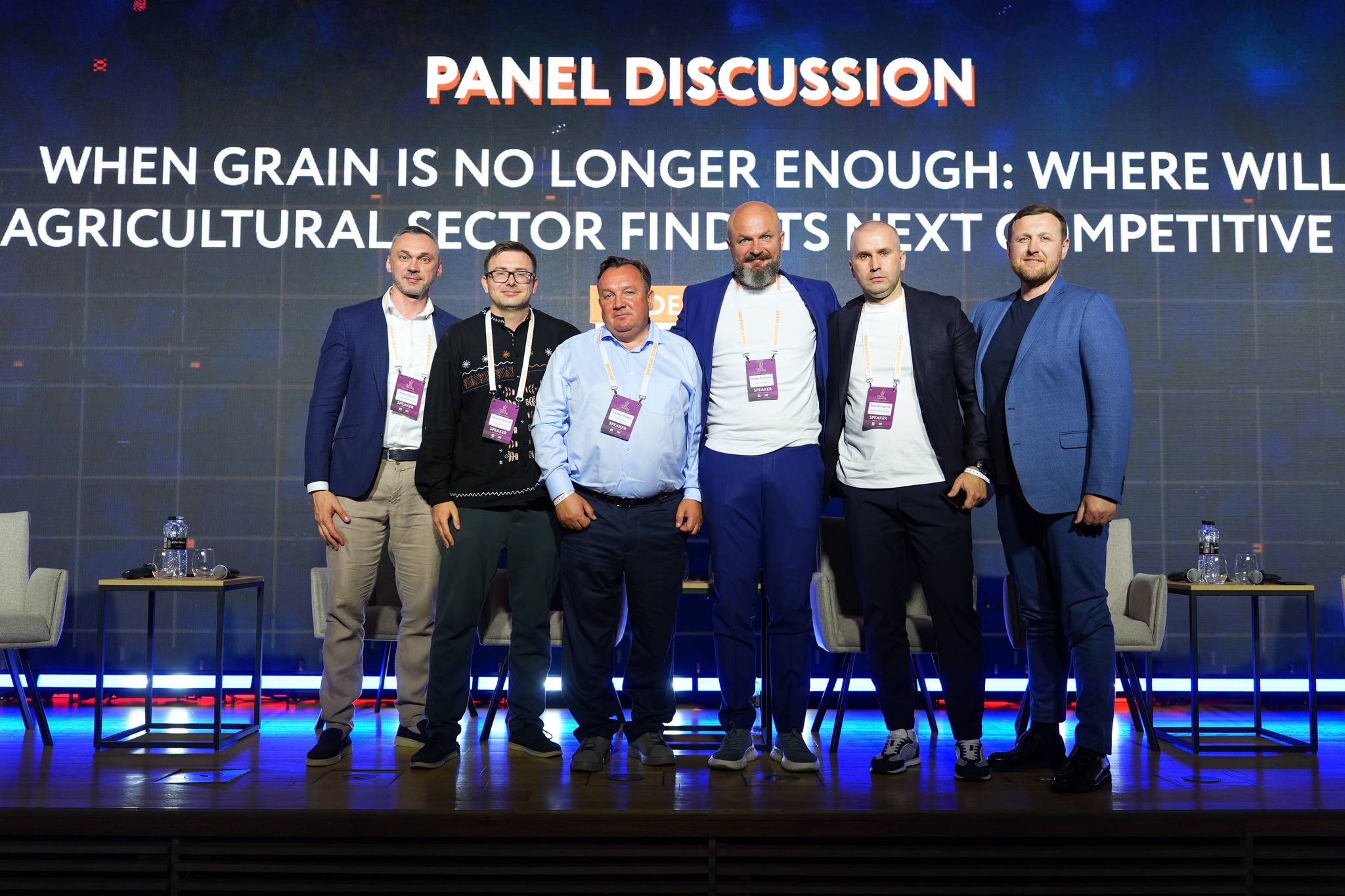

The Grain Ukraine 2026 forum concluded with a panel discussion titled “When Grain Is No Longer Enough: Where Will the Agribusiness Seek New Competitiveness?”, moderated by Kostiantyn Tkachenko, editor-in-chief of Latifundist.com.
The discussion brought together key industry figures: Pavlo Fesiuk, Yevhen Dudka, Volodymyr Metkyi, Bohdan Kostetskyi, and Serhii Nechyporuk.
Participants agreed that the conditions that once enabled the rapid expansion of Ukraine’s agricultural sector are changing. Rising costs for inputs and logistics, intensifying global competition, as well as growing concerns over security, labor availability, and operational efficiency are increasingly shaping corporate strategies.
What was once a structural advantage of Ukrainian agriculture is gradually becoming a baseline requirement for market participation.
A central theme of the discussion was the redefinition of competitiveness. Panelists emphasized that productivity alone is no longer sufficient. Instead, competitiveness now depends on a company’s ability to manage technology, production costs, logistics, and business models in an integrated way.
In this new environment, factors that previously differentiated leading players are becoming standard expectations across the industry.
Another key direction highlighted was the development of domestic consumption markets. Speakers pointed to bioethanol, biodiesel, livestock production, and energy-related sectors as potential growth drivers that could reduce Ukraine’s exposure to volatility in global commodity markets.
Strengthening internal demand was described as a strategic step toward stabilizing the sector and diversifying revenue streams.
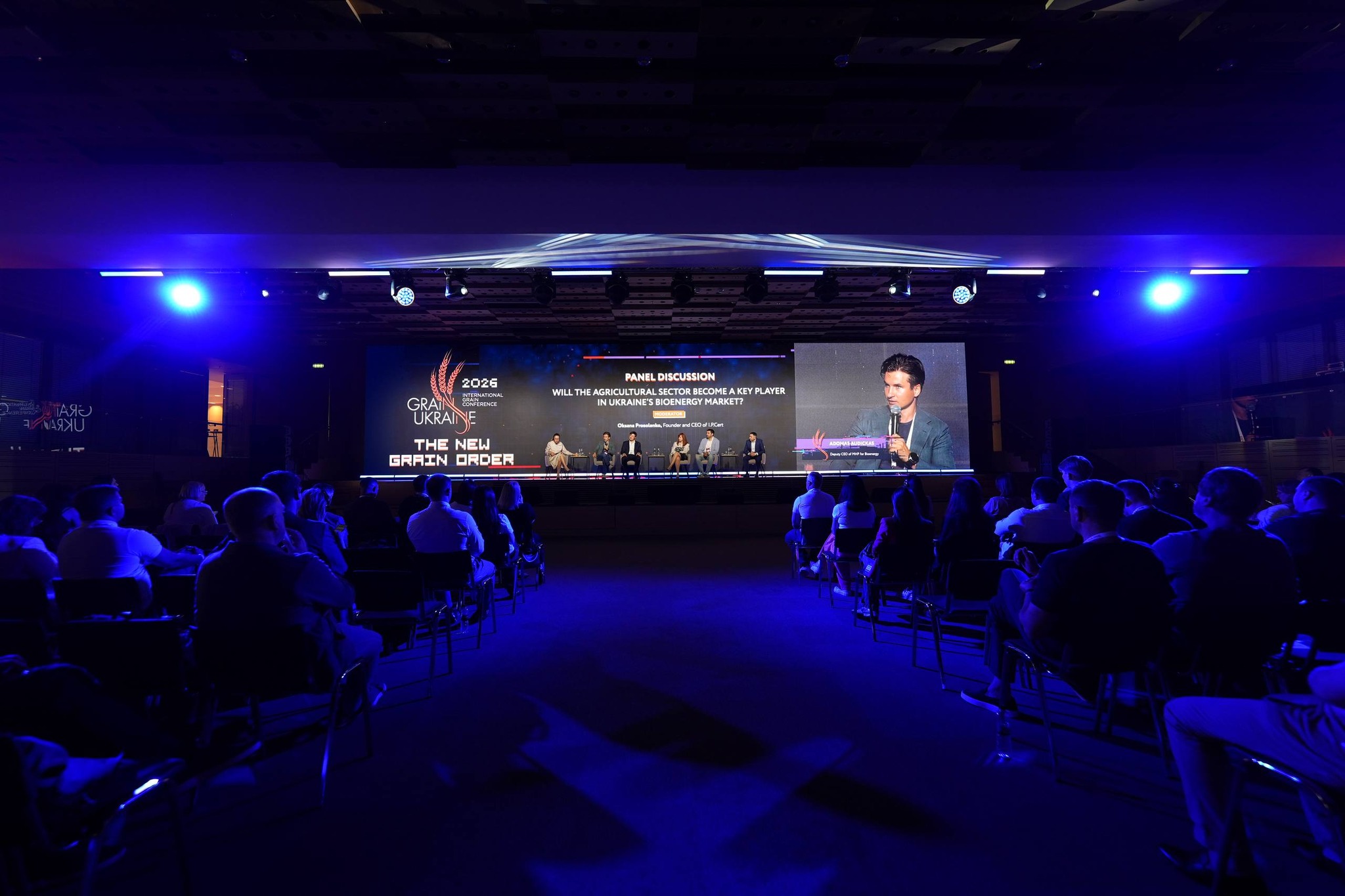
The panel also addressed agricultural processing. Participants cautioned against viewing it as a universal solution for profitability. Instead, they stressed that success in processing depends on scale, technological capacity, access to raw materials, and the ability to integrate multiple business segments.
Processing, they noted, can create value—but only under the right structural conditions.
Cooperation between market players emerged as another important topic. Trade alliances, joint procurement, shared logistics, and pooled expertise were identified as mechanisms that can strengthen Ukrainian companies’ positions in international markets.
Such collaboration was described as increasingly important in responding to global volatility and competitive pressure.
A significant part of the discussion focused on Ukraine’s European integration trajectory. Participants noted that the sector has already adapted substantially to European standards. However, future progress will depend not only on market access but also on deeper integration into a shared food system and long-term partnerships with Europe.
One of the key takeaways of the panel was a strategic reframing of Ukraine’s identity in global markets. Rather than positioning itself solely as an agricultural producer, speakers suggested Ukraine should evolve toward a food and bioeconomy-oriented model.
In this vision, future competitiveness is driven by technology, cooperation, efficiency, and value-added production—marking a shift from raw output toward integrated, innovation-driven growth.