


So, there has been a lot of discussion about problems for China caused by the Gulf War. The idea is that it would be left without oil. But one interesting aspect was overlooked — starting in August 2025, China sharply increased its crude oil purchases to average monthly levels of 1.6–1.8 million barrels per day, while its refinery demand was 1.2–1.4 million barrels per day.
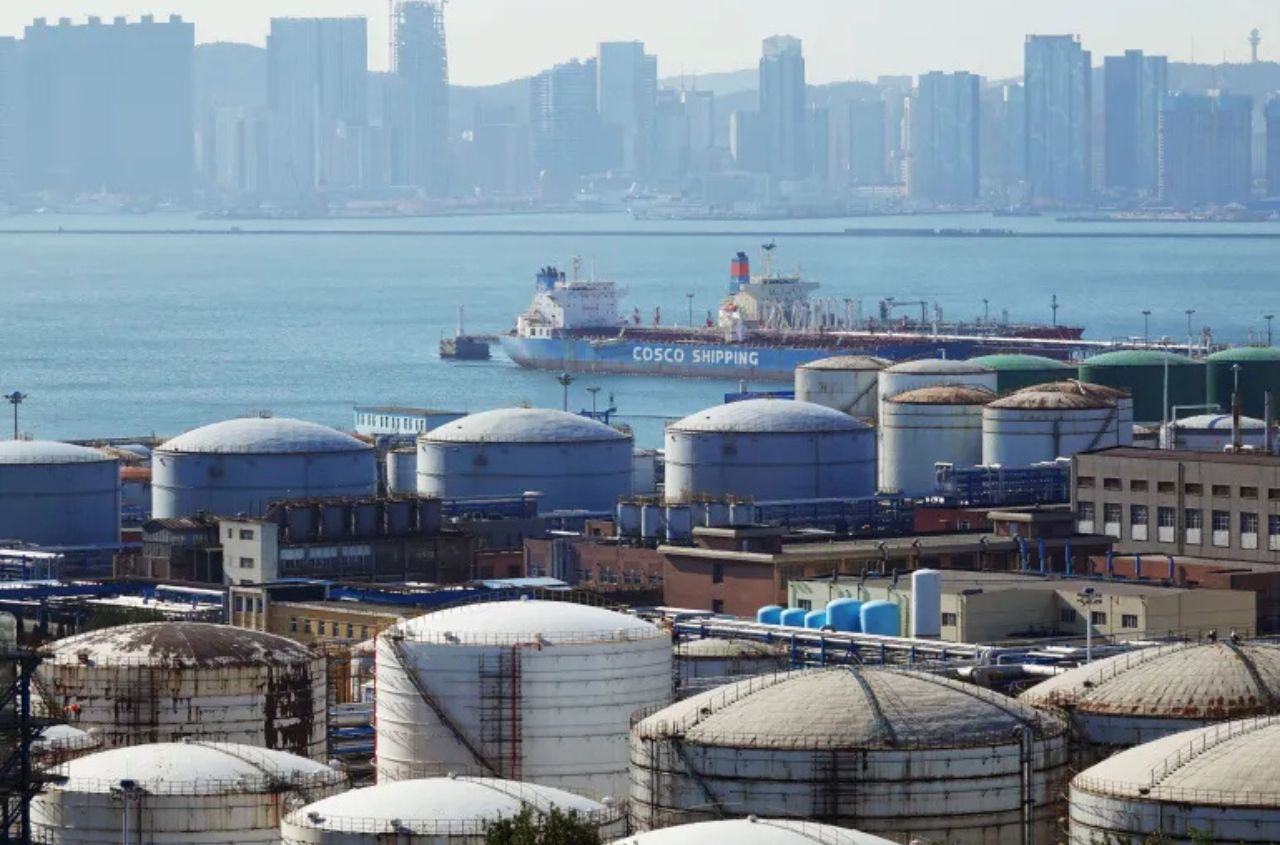
In other words, officials in Beijing apparently assessed the risks realistically and did not miscalculate. As a result, by the end of 2025, China had reached record-high crude oil reserves in its entire history. Storage capacity (both state-owned companies and private facilities in the south) amounts to roughly 1.3–1.5 billion barrels. Some analysts even claimed 2 billion, but that is doubtful. However, about 1.6–1.7 billion barrels were accumulated. This is, for reference, more than 80 days of China’s total consumption or more than 120 days of total imports (under normal conditions — domestic consumption plus average annual exports of petroleum products).
This allowed China to play a fairly tough game with the United States regarding Venezuela. When Trump brought all exports under U.S. control, he did not ban trade with China. He simply required payments to go through Washington-controlled mechanisms. China simply banned (!) imports from Venezuela for three months. Later, it advised caution.
The situation with Iran is even more interesting. There was a blockade, but until the meeting between Trump and Xi in Beijing, Chinese tankers still passed through the strait. After the meeting — even more so. In fact, for a couple of weeks they were the only tankers doing so.
However, global oil prices began to rise slightly. And then Chinese independent refiners (mainly the Shandong province cluster, where the so-called “teapots” are concentrated) decided… to buy less. They gradually processed excess (above-normal) reserves. And, amid declining regional demand, they also reduced exports of refined products. Accordingly, they bought less crude.
As a result, China returned to its “normal” import level — 1.1–1.2 billion barrels. In May it dropped to 1.04 billion (after all, storage has to be drawn down).
The result: Iranian heavy oil began trading at a discount to Brent, and Russian Urals did as well. This is because refineries in southern China are the main buyers of these grades in the country. As for the northern part of the country — they were buying light oil from Sakhalin and Eastern Siberia. Those sellers also started competing on price, and the premium for Russian ESPO fell from $5 to $2 against Brent.
What happens next? Prices are expected to decline further due to negotiations between Tehran and Washington. This will be helped by China reducing imports to about 1 million barrels per day, at least until August. After that, new contracts with new prices will come, where downward pressure will be applied, including on Russia. The Kremlin understands this very well, which is why it tried (and will continue trying) to get involved in the Iran deal regarding uranium exports, and ideally to slow down the negotiation process as much as possible.
Will China’s interests in Iran suffer from this? Unlikely. In terms of rebuilding the country, Tehran has no one to turn to except Beijing and Delhi. And if sanctions are eased and Iran becomes open to the global economy, a five-year-old project will be unfrozen — a comprehensive cooperation agreement and the injection of $400 billion in Chinese investment and credit into modernizing Iran’s infrastructure and economy. In return, Iran supplies China with oil at a discount to global prices. The agreement term is 25 years, signed in 2021.
Beijing receives cheap oil (raising the question of why “teapots” in the south still need Russian Urals), and through massive investments firmly integrates Iran into its Belt and Road and SCO+ projects.
Only one question remains — will there be a monument to Trump erected in Beijing after this? Or will “volunteers” from private refineries instead install thousands of Buddhas on the approach to the mountain near Jinan (capital of Shandong province)?