


Russia's chances of achieving a major operational breakthrough in Ukraine are diminishing as Ukrainian forces continue to expand and reinforce a network of defensive fortifications, according to OSINT researcher Clément Molin.
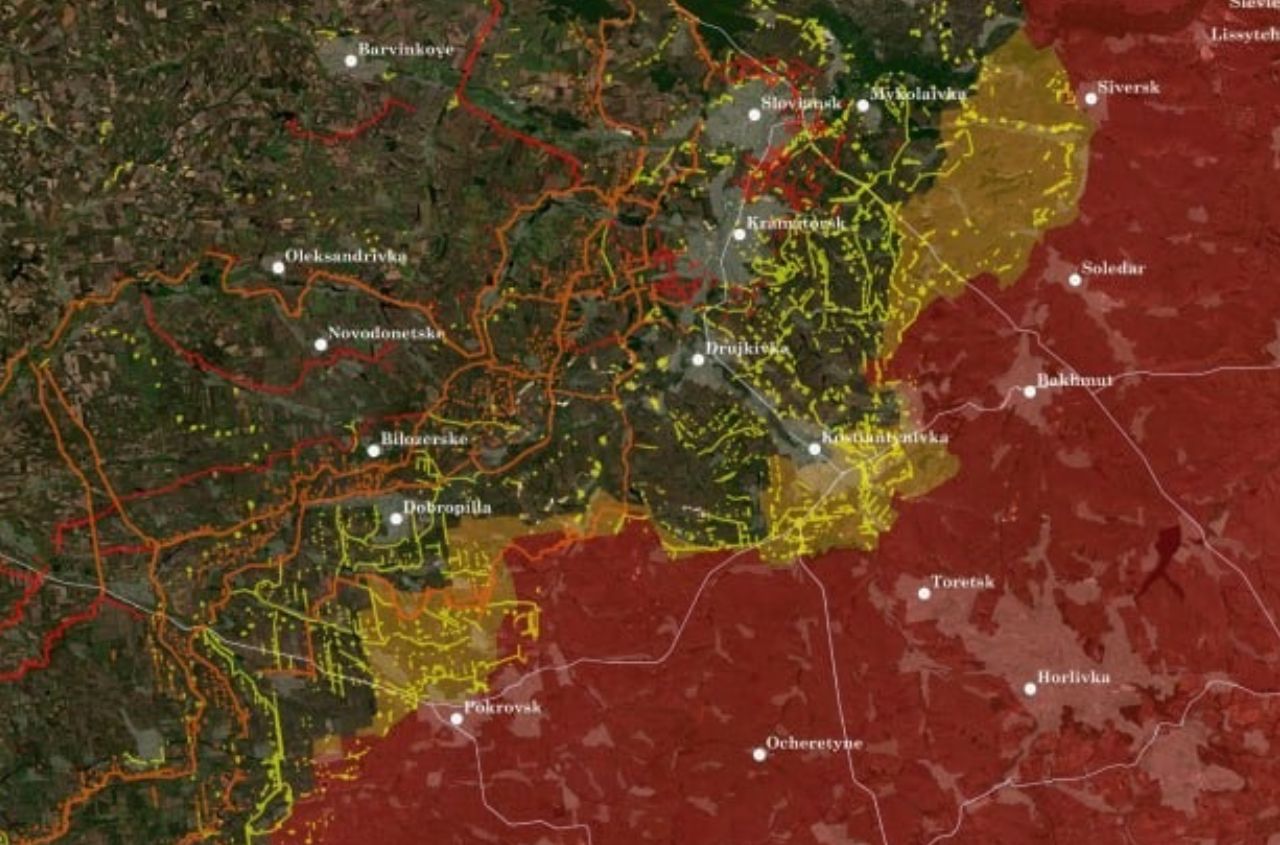
In a new assessment, Molin presented a map of Ukraine's defensive positions, distinguishing between fortifications built before 2024, those constructed in 2025 and new defensive lines established in 2026.
The analysis suggests that Ukraine's fortification programme has evolved considerably during the war, creating successive layers of defensive infrastructure designed to restrict Russian advances and prevent breakthroughs into areas behind the front line.
Molin identified three main phases of construction.
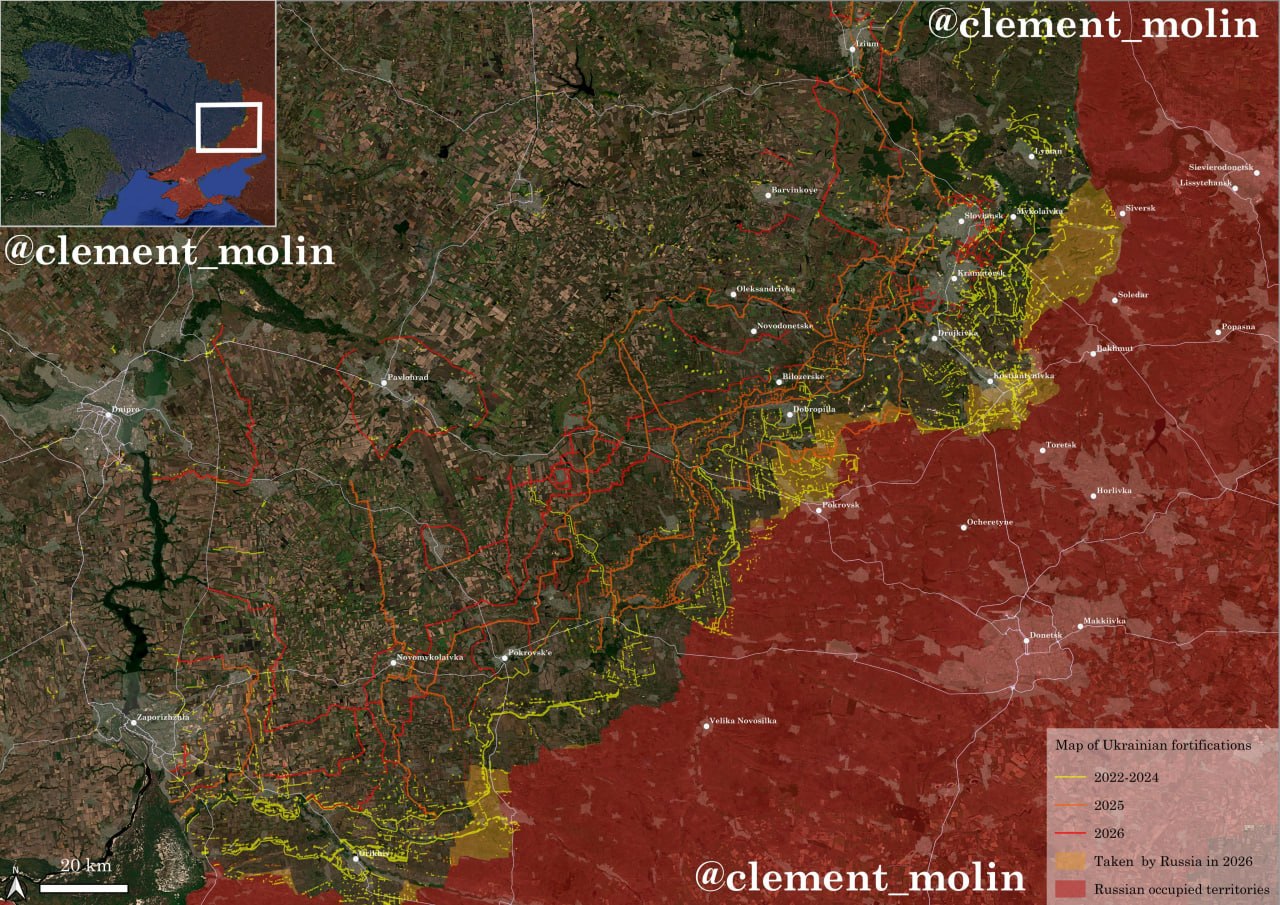
The earliest fortifications, built before 2024 and marked in yellow on his map, include positions that have since been captured by Russian forces. However, some of these defensive structures now complicate Russian movements, demonstrating how earlier fortification networks can continue to influence battlefield conditions even after territory changes hands.
Defensive lines constructed in 2025, shown in orange, reflect a revised Ukrainian approach to fortification design. According to the researcher, Russian forces have yet to reach most of these positions.
The newest lines, marked in red, were built during 2026 and represent a further expansion of Ukraine's defensive network.
Molin also observed that construction has slowed significantly in several sectors. He attributed this either to Ukrainian forces pushing the front line back or to defensive positions in those areas already reaching a high level of completion.
According to his assessment, the most active fortification work is currently concentrated around Pavlohrad, Izium and Kharkiv, as well as in Chernihiv and Kyiv regions.
Closer to the front line, Ukrainian forces are installing additional anti-personnel obstacles, including barriers made from razor wire, to complicate infantry movement and strengthen existing defensive positions. The researcher also noted an apparent absence of comparable large-scale fortification construction on the Russian side.
The growing depth of Ukraine's defensive network could make it increasingly difficult for Russian forces to exploit local territorial gains and develop them into larger advances. However, the assessment is based on open-source observations, and the effectiveness of individual defensive lines will ultimately depend on battlefield conditions, available personnel and the ability of Ukrainian forces to maintain their positions.