

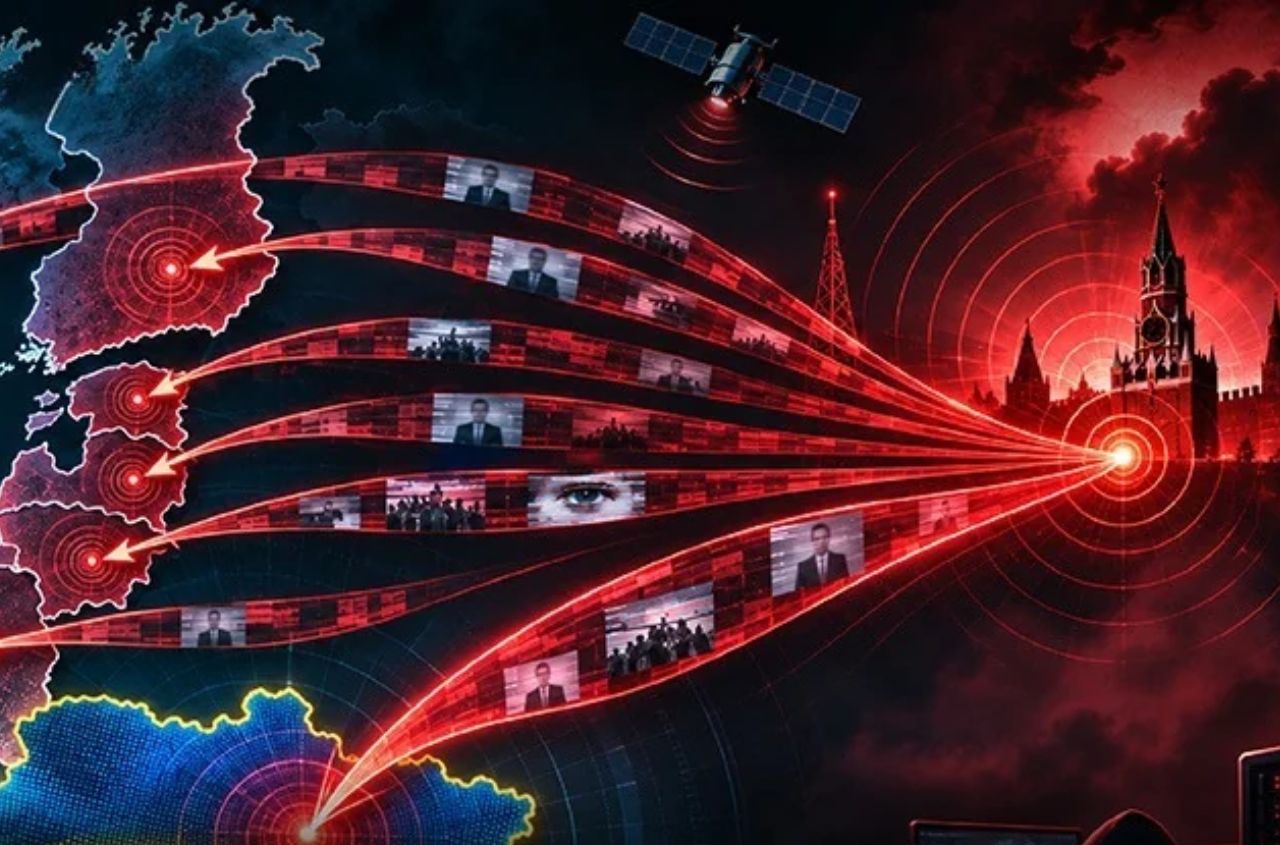

Russia is using information pressure tactics against Norway, Finland, Estonia, Latvia, Lithuania and Poland similar to those deployed against Ukraine before its full-scale invasion, according to an analytical report by Ukraine's Centre for Countering Disinformation (CCD).
The report finds that Moscow portrays defensive measures as aggression, efforts to protect national languages as discrimination, and church independence as religious persecution.
"Russia is applying to its European neighbours the same models it tested in Ukraine: presenting defence as aggression, language protection as discrimination, and church independence as persecution," the report's presentation states.
The CCD emphasised that Russian information campaigns are adapted to local circumstances.
"Any language legislation or educational reforms are portrayed as systematic persecution of Russian-speaking populations. The same applies to church independence and the legal regulation of religious organisations, which Russia attempts to present as an attack on freedom of religion," said Anait Khoperia, acting head of the CCD under Ukraine's National Security and Defence Council.
She made the remarks during the presentation of the analytical report, Models of Russian Information Pressure: From Ukraine to Europe, at Kyiv Media Hub.
According to the report, Russian information pressure focuses on different issues in each country.
- Norway: Arctic security and NATO military activity.
- Finland: Protection of the eastern border, visa restrictions and security cooperation.
- Estonia: Language and education reforms, as well as church-related issues.
- Latvia: Language and education reforms.
- Lithuania: Defence strengthening, language policies and the status of religious communities.
- Poland: Security on NATO's eastern flank and border controls.
"Ukraine's experience has demonstrated that such campaigns accompany preparations for armed aggression," the presentation states among the study's key findings.
At the same time, the CCD stressed that information pressure must be assessed alongside Russia's actual military preparations and diplomatic activities.
The report identifies several warning indicators, including repeated accusations, their amplification by Russian officials, and the simultaneous intensification of narratives concerning security, language and religion.
As part of the study, the CCD compared Russian media coverage of Ukraine before the full-scale invasion with reporting on Norway, Finland, Estonia, Latvia, Lithuania and Poland in 2026.
The research examined two 100-day periods: 14 November 2021 to 21 February 2022 for Ukraine, and 20 July to 27 October 2026 for the six European countries.
Across coverage of the different countries, researchers identified three recurring models of information pressure: "Military-political escalation and the potential threat of armed attack", "Persecution and discrimination against Russian-speaking populations", and "Religious persecution and pressure on Orthodox religious organisations".
The analysis covered materials published by news portals, analytical publications, government websites and official institutions, as well as posts on social media platforms and messaging services.