



The European integration of Ukraine’s agricultural sector will simplify logistics for agricultural products and reduce dependence on Black Sea ports.
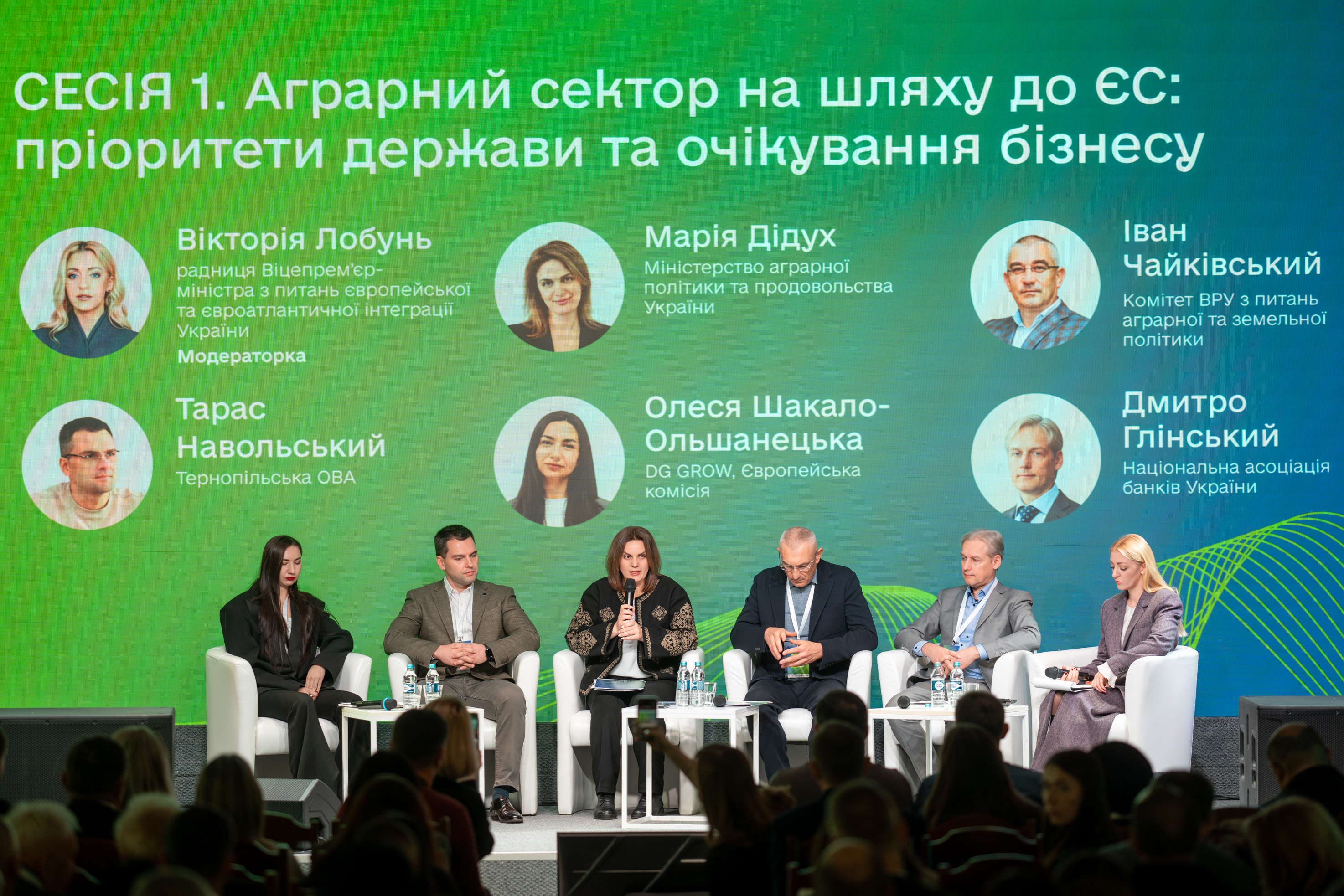
Minister of Agrarian Policy and Food Taras Vysotskyi emphasised this at the event “Regional Dialogues with Business on European Integration” in Ternopil.
“With maritime logistics constrained, we are particularly aware of the importance of full access to the EU single market. Membership of the European Union will significantly simplify logistics for Ukrainian agricultural products, particularly their transportation to third countries, and reduce our dependence on Black Sea ports. It is also about enabling our agricultural producers to sell their high-quality products at a fair price,” Vysotskyi said.
The minister stressed that successful European integration requires not only legislative alignment but also clear timelines for businesses to implement new requirements. According to him, professional dialogue with producers and processors must take place systematically to jointly develop a clear roadmap for the transition to European rules.
Deputy Minister Mariia Didukh presented the government’s priorities for the European integration of the agri-food sector. She emphasised that Ukraine had moved from predominantly aligning its legislation with EU law to the practical implementation of rules, the establishment of necessary institutions and the strengthening of their capacity.
“2027 should mark an important stage in the transition from establishing legislative and institutional foundations to the practical implementation of reforms. The period from 2027 to 2029 will be particularly intensive in terms of legislative alignment and preparing businesses to operate under European rules,” Didukh said.
According to her, over the coming year, the Ministry of Agrarian Policy will focus on ensuring the operation of the Paying Agency and preparing it for accreditation, developing the Integrated Administration and Control System (IACS), including the Land Parcel Identification System (LPIS), introducing the Farm Sustainability Data Network (FSDN), and further developing the State Agrarian Register.
Legislative alignment will also continue in areas including the organisation of agricultural markets, production and marketing standards, organic production and producer organisations, alongside the completion of key reforms in food safety, veterinary and phytosanitary policy.
According to Didukh, agricultural producers must gradually transition to the European model of state support, improve record-keeping for land and production activities, and comply with requirements concerning the use of plant protection products, animal health and welfare, as well as production and marketing standards.
“For the food and processing industries, key priorities will include stricter requirements for product safety and traceability, production hygiene, labelling, laboratory testing and the handling of animal by-products,” the deputy minister said.