



In the Baltic countries, a large-scale hybrid storm is unfolding: Russia is deliberately trying to undermine public trust in state institutions by using coordinated disinformation mechanisms. After the blocking of official Russian television channels in the Baltic republics, social media has become the main breeding ground for fakes and manipulation.
A special study by the company Repsense, conducted at the request of the Lithuanian Radio and Television Commission, clearly demonstrates that the spread of disinformation in the digital space operates like a precisely organized conveyor belt. Experts from Estonia fully agree with their Lithuanian colleagues and emphasize that Kremlin methods are universal and applied equally in Vilnius and Tallinn.
The main goal of this hybrid attack is not to make people believe a specific lie, but to immerse society in a dense “information fog,” blur the line between truth and fiction, and systematically erode citizens’ trust in their own state institutions, according to ERR.
The modern disinformation factory operates according to a strict protocol resembling an industrial assembly line. The primary source where destructive ideas are formulated and messages are tested, with the involvement of state propaganda apparatus, is Telegram. Despite the fact that relatively few people in Lithuania use it, the messenger serves as a key gateway for the spread of manipulation into Europe.
A junior research fellow in media literacy at the University of Tartu and coordinator of the BECID consortium, Maia Klaassen, confirms this pattern using Estonia as an example. She recalls the separatist fake about the so-called “Narva People’s Republic,” which was initially coordinated and amplified in closed Telegram groups and later exposed by the volunteer portal Propastop. However, Klaassen notes a serious professional dilemma for fact-checkers: publicly debunking such claims risks spreading fragments of propaganda to a much wider audience than if the information had simply been ignored.
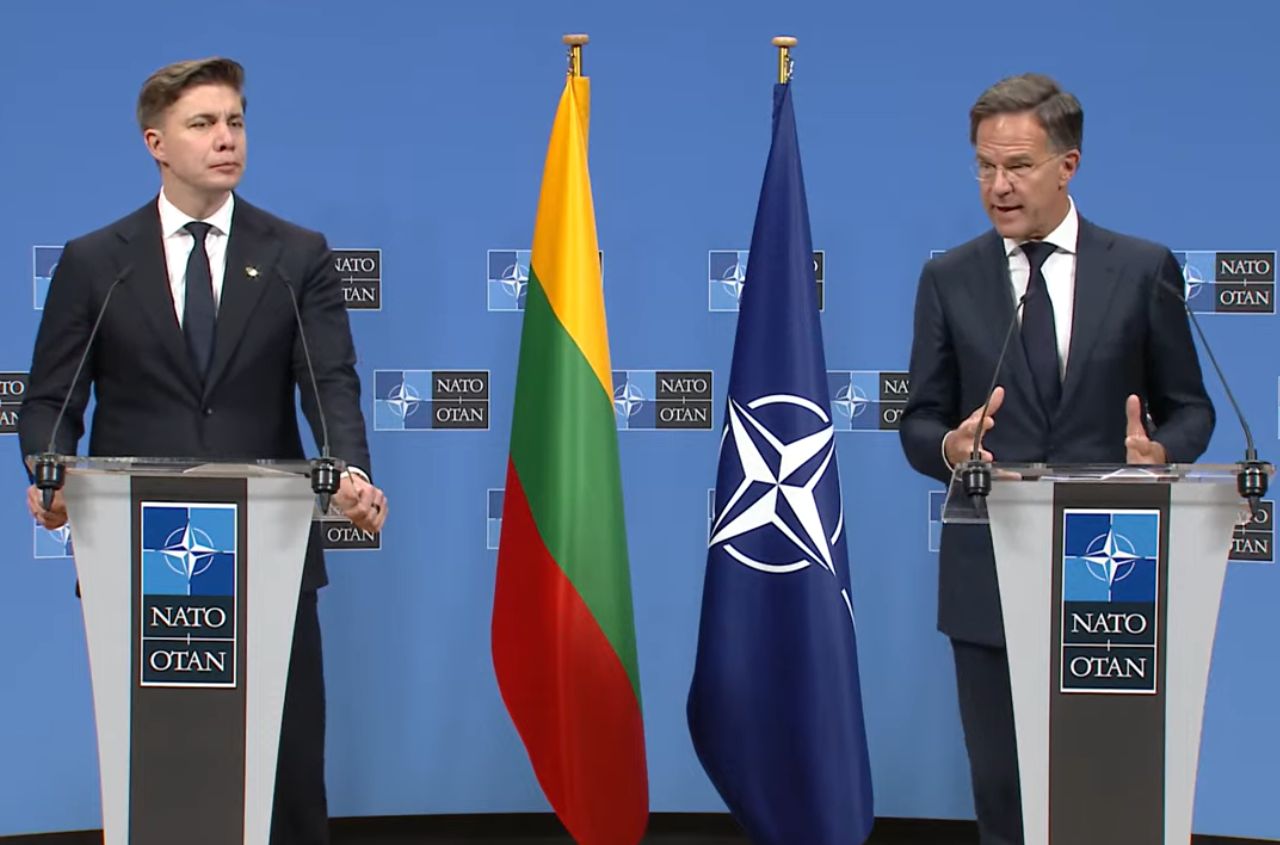
After being tested on Telegram, the content mutates and migrates to mass platforms such as TikTok and Facebook, where it is rapidly adapted to the psychological profiles of specific target groups. The targets of such campaigns are always familiar social triggers—primarily negative narratives about local government institutions, authorities, and NATO.
The Chair of the Lithuanian Radio and Television Commission, Mantas Martišius, adds that regulators consistently observe one trend: manipulative narratives are first tested in Russian- or Belarusian-controlled online communities and then, after linguistic adaptation, transferred to Lithuanian, Latvian, and Estonian channels.
To ensure that disinformation does not get lost in the information space, its coordinators build complex multi-layered support networks to create artificial reach. Mykolas Katkus explains that this involves both completely fake accounts and profiles of real individuals operating dozens of fake accounts each to distribute content. Posts are placed in groups that are often purchased or hijacked.
Facebook becomes the most important platform, where efforts are made to actively influence users themselves. Bots generate initial likes, shares, and repetitive comments, creating the illusion of active and legitimate discussion, which increases trust in the post. This triggers a snowball effect, and the story spreads rapidly through real user reposts. Mantas Martišius acknowledges that stopping such flows at an early stage is extremely difficult, so authorities often have to intervene only after they have already grown significantly.
Maia Klaassen notes that Estonian researchers within the European BECID consortium use advanced analytical methods such as FIMI analysis, which study the tactics and behavioral patterns of manipulators. These patterns show striking uniformity across Europe and aim to fracture societies at minimal cost while undermining trust in governments and experts.
In this case, the strategy relies on volume, using the classical Latin propaganda technique ad nauseam—endless repetition of the same claim from different sources until it begins to feel like plausible truth. Social media algorithms further amplify this process by promoting sensational and emotionally negative content to retain users.
Klaassen sees a weakness in the current system in the lack of economic incentives for producing quality content, which turns users into passive doomscrollers trapped by algorithms.
Meanwhile, media researcher Andres Kõnno from the Baltic Film, Media and Arts Institute and Tallinn University urges against panic and encourages viewing the issue in historical perspective. He recalls coordinated attacks during events such as the 2007 Bronze Soldier relocation in Tallinn, when waves of disinformation were also directed from a single center.
A recent study by the Institute of the Estonian Language shows that language models’ ability to detect disinformation is based on just 14 core narratives that have remained unchanged for 30 years. New “layers” are simply added on top of old patterns about Western decline, the weakness of small states, alleged fascism, and inevitable economic collapse.
Mantas Martišius concludes that the old rule of verifying information across multiple independent sources no longer works, as bots and disposable websites can simultaneously repeat the same falsehood across many channels. While police and security services can block fake account networks, new ones quickly emerge.
The only reliable long-term solution, experts say, is systematic media literacy education of the population, which must be organized at the state level.