


Meanwhile, in the Middle East, the geopolitical game of Go continues.
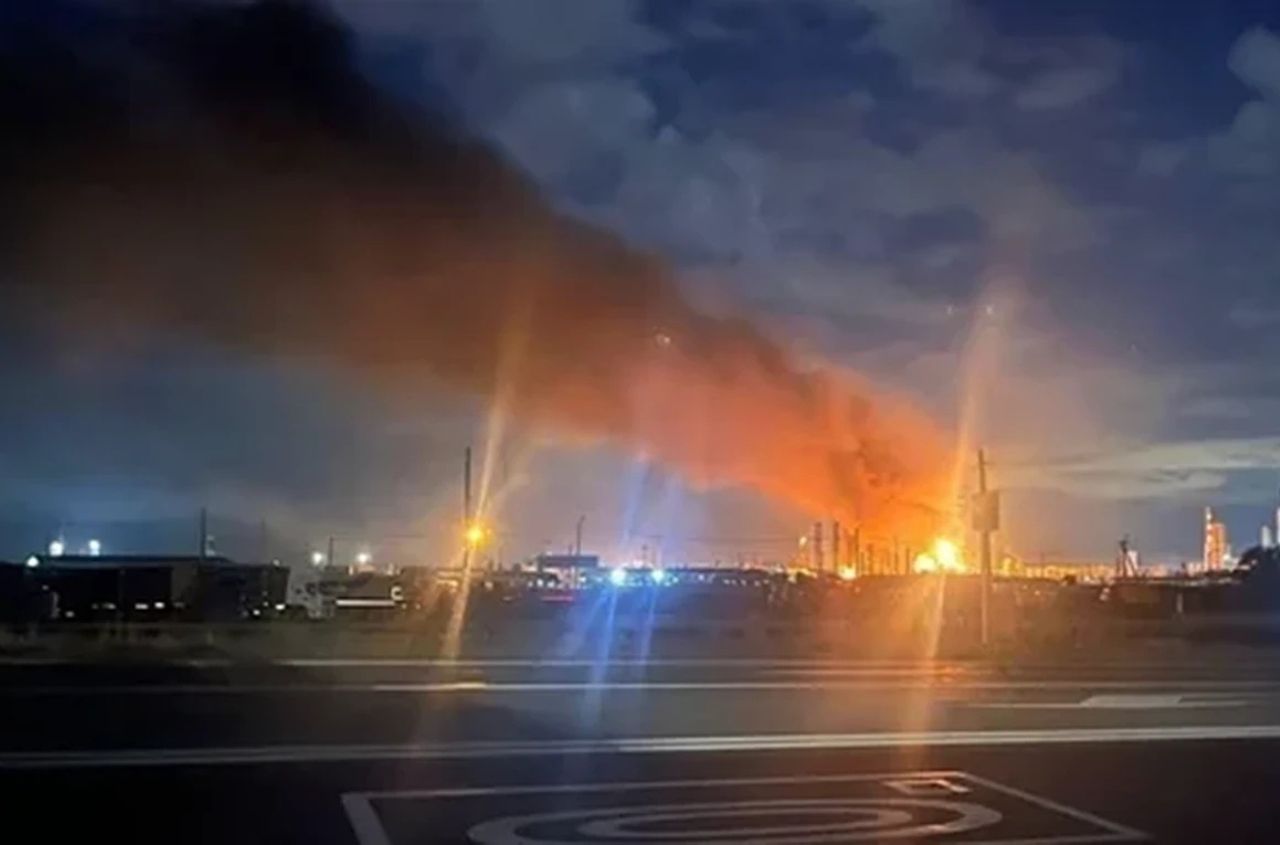
The Syrian army of Julani has launched an offensive and seized territory controlled by the Kurdish Syrian Democratic Forces (SDF) east of the Euphrates in Deir ez-Zor province, taking control of the region’s largest oil field, Al-Umar, and the Kuniko gas field.
This is far from an ordinary event.
In Deir ez-Zor, neither Assad’s forces nor Russia’s Wagner PMC had previously been able to secure a lasting presence. In fact, one Wagner battalion in the area was completely destroyed by an American airstrike. Nearly all of Syria’s oil and gas are concentrated in this province.
Moreover, Israel, which relies on Syrian Druze and Kurds, had planned to create a “David Corridor,” connecting southern Syria (where the Israeli army and Druze militias are stationed) with Kurdish territories in the north.
Turkey, however, strongly opposed this plan.
Now, the project is impossible — Ankara is taking preemptive action to thwart Israel’s regional plans.
Recently, Kurdish forces withdrew from one of the districts of Aleppo that they had still held (essentially an enclave surrounded by Arab forces). And now we see a real collapse of the front east of the Euphrates.
Essentially, a race is unfolding between Turkey and Israel: who will play the “Kurdish card” faster.
Either Israel will support the creation of a Kurdish allied state at the intersection of Syria, Iraq, and Iran, or Turkey, with Syria’s help, will divide the Kurdish area into several enclaves surrounded on all sides and integrate them into a pro-Turkish neo-Ottoman project — but on Turkey’s terms.
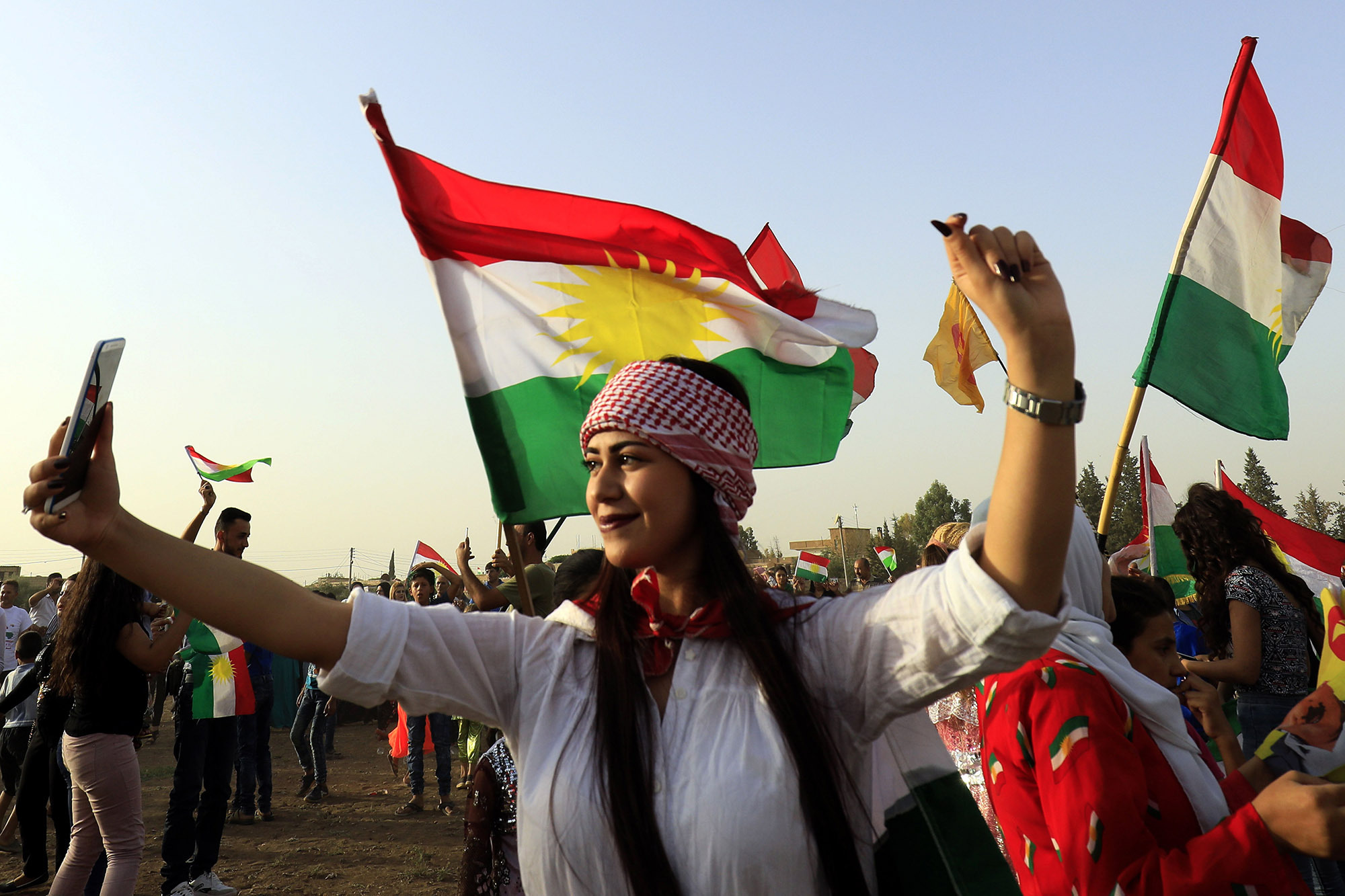
The Kurds, like the Ukrainians, are two of the largest peoples who actively participated in World War I but did not achieve statehood as a result. This was partly due to a unique, atypical perception of the historical moment.
During that war, the Kurds fully supported Turkey in hopes of gaining autonomy, while Ukrainians, during the Hetmanate, aligned with Germany. They tried to advance their national project through Austria-Hungary, hoping the emperor would support the creation of Ukrainian autonomy alongside Polish autonomy.
The Kurds relied on the “republicanization” of the Ottoman Empire, even on Atatürk.
Neither Ukrainians nor Kurds succeeded in establishing relations with the Entente, which shaped the postwar borders: for Ukraine, the Versailles system and the Riga Treaty between the Ukrainian Directorate and Pilsudski’s Poland; for the Kurds, the Treaty of Lausanne.
On the other hand, Ukraine eventually gained independence after the collapse of the USSR, while the Kurds have not, even amid Iraq’s disintegration.
Even today, there are active attempts to form new geopolitical fault lines using the Kurds in the Middle East and Ukrainians in Eastern Europe.
The Kurds in Syria bet on the U.S. and have currently lost — in a few months, their enclaves in the country may be completely surrounded by Julani’s forces and local Arab tribes. As a result, Turkey will expand its neo-imperial project, while the U.S. will gain control over local oil.
Importantly, the U.S. will take control of local resources while simultaneously reducing its military presence. The U.S. is also withdrawing troops from Iraq.
An unprecedented combination — controlling without conquering.
A similar situation is occurring in Ukraine: the U.S. is gaining control over lithium and rare-earth deposits while simultaneously reducing financial aid and, from the east, facing another neo-imperial project — in this case, Russian.
Paradoxically, the current U.S. strategy focuses on establishing a modus vivendi with neo-imperial projects: Chinese, Russian, Turkish, and Israeli (though “neo-imperial” is not fully accurate here, perhaps “neo-kingdom” would be closer).
At the same time, the U.S. is worsening relations with the “geopolitical value cluster” — Europe.
The main goal of America in all this is control over resources critical to humanity’s development.
This issue, for now, is being managed by Washington in the context of its relations with neo-imperial powers.
This is because neo-empires — just like classical empires in the past — develop along the vector of controlling key natural resources.
Clusters such as the EU, in recent times, have tragically underestimated the importance of critical resources for the development of their own cluster.
As a result, the EU has expanded primarily along the lines of “ideological homogeneity” rather than increasing its resource potential.
The U.S., by contrast, has abandoned ideological expansion and global homogenization in favor of purely resource-driven expansion.
At least until 2028.