


By Dmitri Stratievski for Vot-Tak.TV
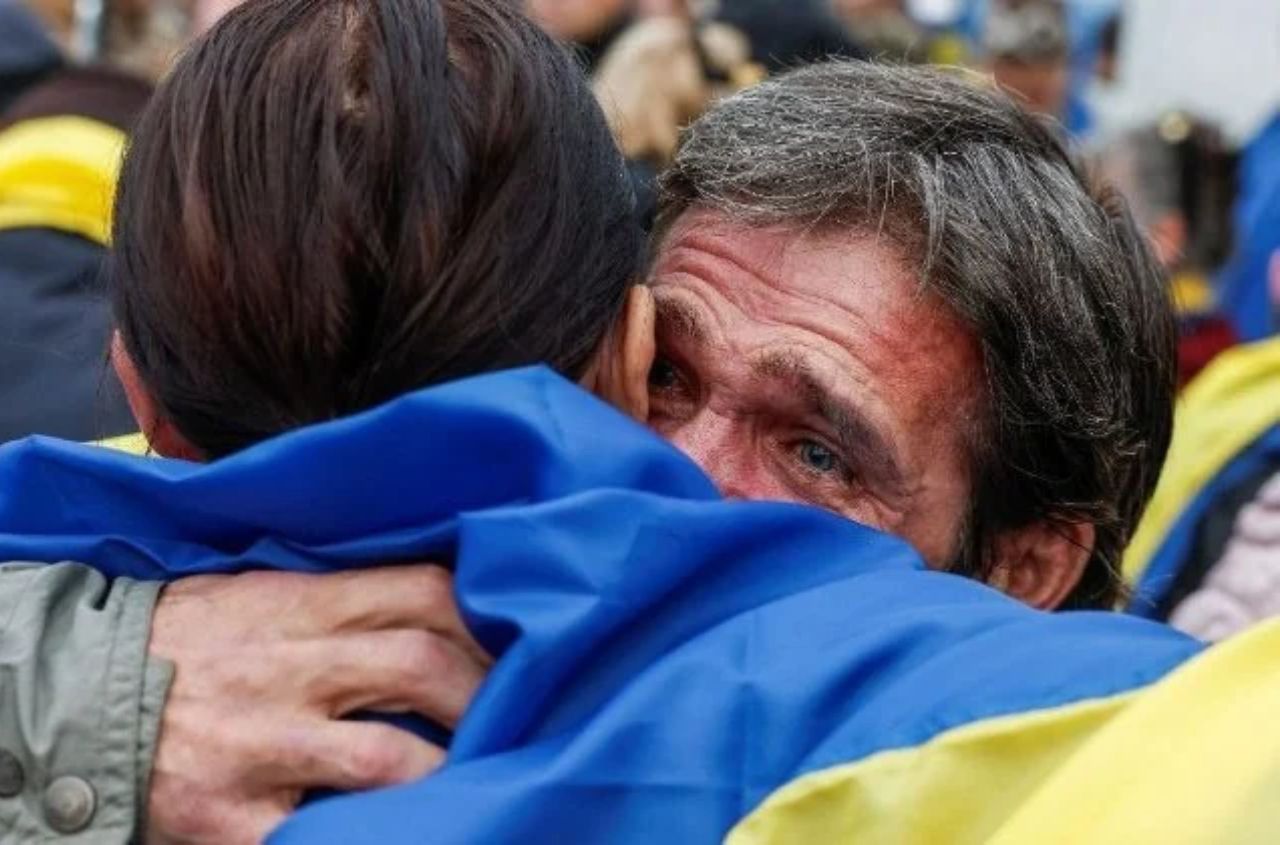
Main image: Residents evacuated from the Russian-occupied town of Oleshky, return to Ukrainian-controlled territory, at an undisclosed location (REUTERS)
The humanitarian evacuation from Russian-occupied Oleshky offered a rare example of cooperation between Ukraine and Russia, but its success is unlikely to bring the two countries closer to ending the war. Despite the operation, mutual distrust remains profound, while neither side has changed its strategic objectives.
Ukraine and Russia agreed not to disclose the exact number of people evacuated from Oleshky. US First Lady Melania Trump stated that 800 residents had left the town, while Russian representatives claimed that the buses used in the operation had capacity for 750 people.
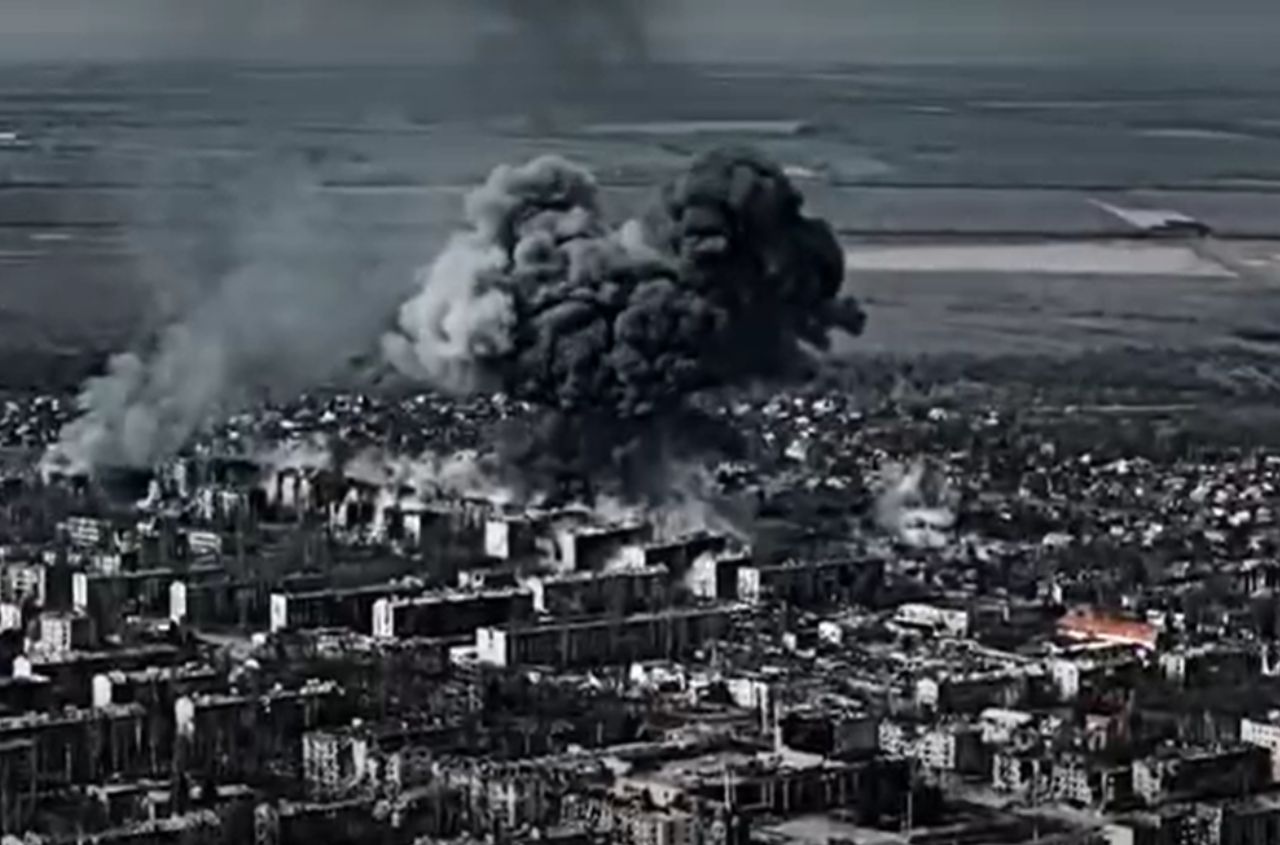
Oleshky covers an area of just 60 square kilometres, and up to 90% of its urban territory was flooded following the destruction of the Kakhovka Hydroelectric Power Plant, leaving much of it uninhabitable.
What we witnessed was essentially a short-term humanitarian operation in an isolated section of the frontline, where both sides could monitor each other's actions relatively easily. So far, only two statements have suggested the possibility of extending the Oleshky operation to other areas.
Ukrainian Human Rights Commissioner Dmytro Lubinets raised the possibility. His position requires him to draw international attention to the humanitarian catastrophe in Russian-occupied territories and seek ways to alleviate the suffering of Ukrainians cut off from their country.
Even Lubinets, however, described Oleshky merely as a "potential mechanism" that could be applied elsewhere, without identifying any specific locations. Ukrainian Foreign Minister Andrii Sybiha referred to "building trust" and "further steps", but offered no concrete proposals. Russia, meanwhile, openly demonstrated its unwillingness to maintain even a local ceasefire.
Humanitarian initiatives have been implemented before, including the evacuation corridor for civilians from Azovstal in May 2022 and exchanges of prisoners of war and the bodies of fallen soldiers. Yet these have remained isolated episodes without far-reaching consequences.
A gift to Trump: why Putin agreed to the Oleshky ceasefire
A decisive factor behind the success of the Oleshky operation was Vladimir Putin's desire to make a gesture towards the White House — one that would cost him little and impose virtually no obligations.
The American president was expected to appreciate the Kremlin's support for both his administration's diplomatic efforts and the personal initiatives of Melania Trump, who has long advocated measures to improve conditions for people living in Russian-occupied Ukrainian territories.
The timing of the US congressional midterm elections also provides important context. Trump was seeking to strengthen his image as a peacemaker, and Oleshky offered an ideal opportunity in the absence of meaningful progress in peace negotiations. The period for such political gifts has now passed, as have the elections, and Putin has received no direct benefit from his apparent generosity. Trump's current desire to link efforts to end the Russia-Ukraine war with negotiations over Europe's future security architecture is attractive to Moscow. However, this approach moves the negotiations into an entirely different geopolitical framework, leaving little room for a sequence of humanitarian initiatives that might eventually lead to a peace settlement.
Why Russia and Ukraine remain deeply distrustful, even during a ceasefire
Trust between opposing sides is an unavoidable issue in any peace process. In conflict studies, the expectation that an adversary will break its promises, together with fears that temporary ceasefires may be exploited to gain a military advantage, is recognised as one of the major obstacles to ending wars. In this case, those concerns appear to have some foundation.
Ukrainian President Volodymyr Zelensky reported that Russia had rotated troops and deployed additional personnel and military equipment on the left bank of the Dnipro during the ceasefire. For the Oleshky precedent to be applied on a much larger scale, effective mechanisms would be needed to monitor compliance with ceasefire agreements across territories far more extensive than a small, partially flooded town in the Kherson region.
A second essential condition would be clearly defined enforcement mechanisms, accepted by all parties, including consequences for violations. At present, no such measures are even being prepared.
Kyiv and Moscow remain profoundly distrustful of one another. For Ukraine, Russia is a state attempting to deprive it of sovereignty, national identity and its European future.
The Russian leadership, meanwhile, denies Ukraine's right to independent statehood, treating it as a rebellious province or a Western puppet incapable of pursuing its own political course. Under these circumstances, a single successful operation involving the evacuation of fewer than a thousand people from a disaster zone is far too limited to establish a new foundation for negotiations.
Neither side has changed its strategic objectives following Oleshky, nor could such an operation realistically have been expected to produce that result.
It was no coincidence that the principal participants were the human rights commissioners of Ukraine and Russia — officials removed from the centres of political and military decision-making. The Kremlin is not opposed to occasionally accommodating Trump and improving its international reputation at little cost, particularly among countries that have remained neutral towards the war. But Moscow is clearly unwilling to go much further at present. Any more substantial concession, such as a prolonged ceasefire or a freeze in hostilities along the current line of contact, would come at a considerably higher political price.
Ukraine therefore has good reason to demand further steps extending beyond relatively limited humanitarian initiatives. Kyiv fears that short-term ceasefires could allow Russian forces to concentrate reserves in areas where Ukrainian troops are under pressure, while further consolidating Russia's occupation of Ukrainian territory. Humanitarian operations undoubtedly help individual Ukrainians. But they do not, in themselves, bring the liberation of occupied territories any closer or weaken Russia sufficiently to make it ready for serious compromise.
Why humanitarian ceasefires rarely bring wars to an end
The history of conflicts in the twentieth and twenty-first centuries offers little reason for optimism.
Short, localised ceasefires intended to facilitate humanitarian operations have rarely, if ever, served as catalysts for a broader reconciliation process.
During the Yugoslav wars, opposing forces in Bosnia concluded numerous temporary ceasefire agreements, primarily to allow food supplies to reach besieged cities such as Sarajevo.
These agreements were repeatedly violated whenever one side saw a tactical advantage in unexpectedly resuming hostilities.
During the wars in Sudan, humanitarian corridors established under UN missions to deliver medicine and food were repeatedly disrupted following mutual accusations that they were being used to conceal military shipments.
A similar pattern emerged during the war in Syria.
In 2018, Eastern Ghouta was completely surrounded by forces loyal to Bashar al-Assad and their allies.
Damascus obstructed UN humanitarian initiatives as it sought to bring the military operation to a decisive conclusion.
Civilian evacuation routes were opened only when Russia had an opportunity to strengthen its reputation as a peacemaker and the enclave's surrender had become a matter of time.
None of these conflicts ended because of humanitarian efforts.
There was no chain reaction leading from individual agreements to a broader peace process. Limited successes remained isolated elements within much larger conflicts and did not determine their outcomes.
Perhaps surprisingly, European media, often inclined towards optimism following humanitarian breakthroughs, have taken a notably pragmatic approach this time.
From Germany to the United Kingdom, the prevailing assessment is that the war in Ukraine will not end because of the success in Oleshky.
This autumn's humanitarian operation saved lives, but it did not bring peace any closer.