

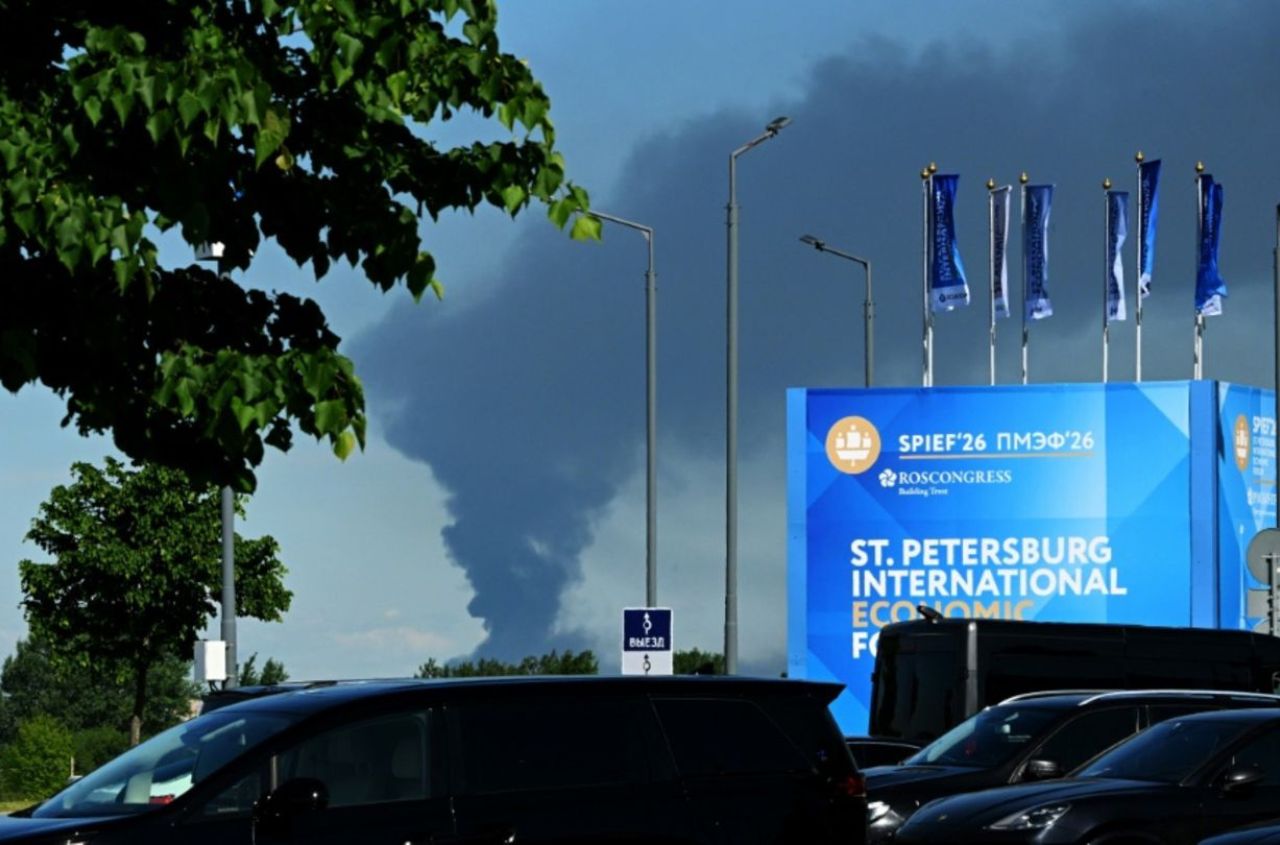

The current forum held by the aggressor state in Saint Petersburg is titled “Pragmatic Dialogue – The Path to a Stable Future.” However, in reality, Russia is steadily moving toward economic collapse. The main reason is the growing share of wartime expenditures at the expense of ignoring the real needs of the economy.
The volume of Russia’s trade is rapidly declining. Over the years of armed aggression against Ukraine, Russia’s foreign trade balance has fallen almost threefold — from USD 337 billion to USD 125 billion. The top 20 largest Russian exporters are reporting a decline in net profits, including such giants as Rosneft, Lukoil, Gazprom, Novatek, and Severstal. Even flagship foreign economic projects are suffering from a lack of investment. At present, the state corporation Rosatom is short of USD 7 billion to complete the construction of the Akkuyu nuclear power plant in Turkey. Last year, for the first time in decades, fixed capital investment turned negative. At the same time, the share of foreign investment in Russia stands at 0.01%.
Increased tax pressure and large-scale internet shutdowns are undermining the trust of Russian businesses and the population in the authorities. More than 30% of small and medium-sized entrepreneurs in Russia are preparing to shut down their businesses, while another 30% are considering shifting to “shadow” schemes. As a result, the business climate indicator in Russia turned negative for the first time since 2022. The volume of non-performing loans has risen to 12%, while cash turnover has increased to record levels. Against this backdrop, the Central Bank of Russia plans to remove 11 regional banks from the market, as they can no longer conceal their problems.
Contrary to the Kremlin’s optimistic rhetoric, Russia is steadily acquiring the status of a “bankrupt state.” Despite high oil prices, state revenues have fallen by 40% compared to last year. A budget “hole” of over USD 80 billion has emerged. Amid a rapidly growing federal budget deficit, regional decline is accelerating. 71 of 85 regions ended 2025 with budget deficits, and this year the total regional deficit has already exceeded USD 34 billion.
Despite the Kremlin’s attempts to showcase mythical achievements and prospects at the 2026 St. Petersburg International Economic Forum, even “friendly countries” are increasingly becoming aware of the failures of the regime’s economic policy.