

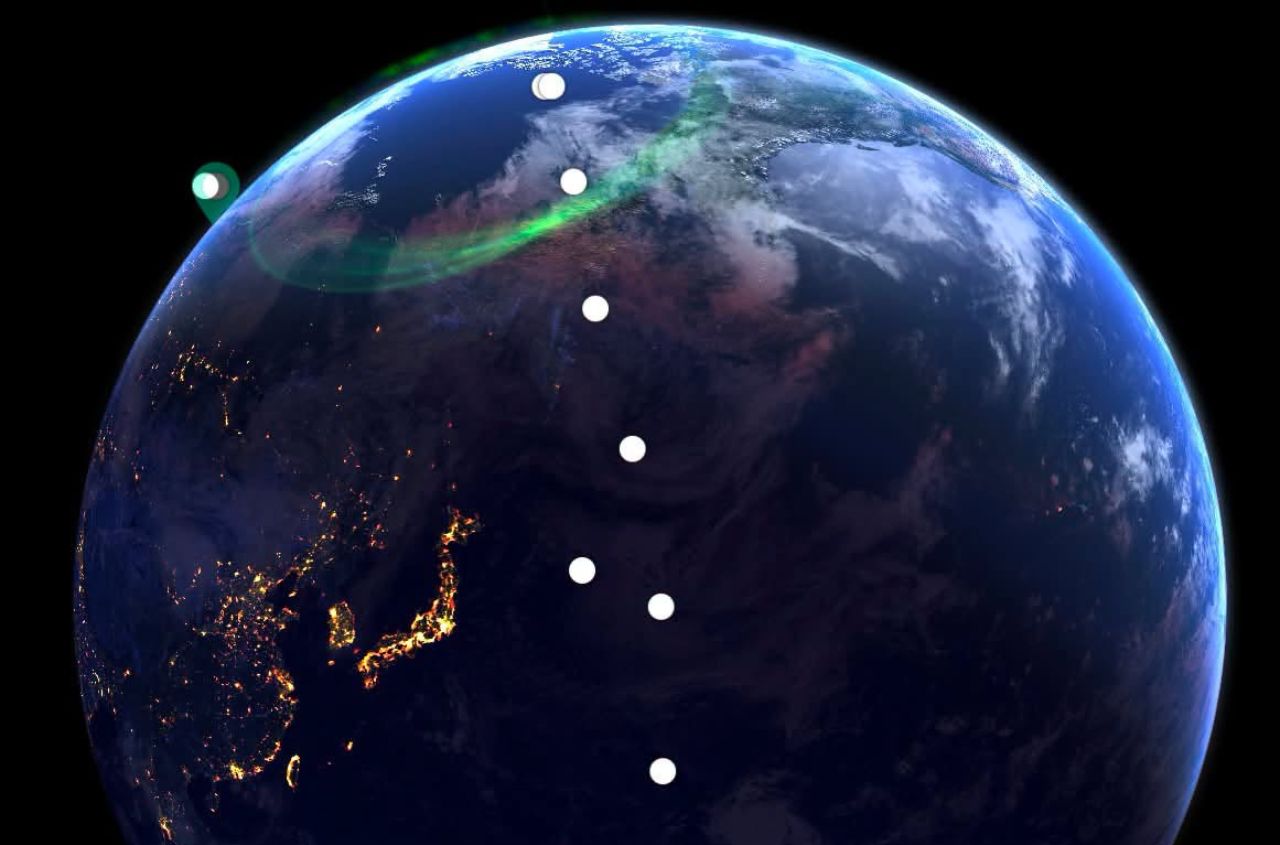

Russia has launched a second batch of Rassvet communications satellites, according to Serhiy “Flash” Beskrestnov.
“Russia launched the second batch of Rassvet satellites, which are supposed to become an analogue of Starlink. Thus, there are now up to 40 satellites in orbit,” Beskrestnov said.
He noted that the satellites have not yet joined their designated orbital positions, although this process could happen quickly.
At the same time, the expert emphasized that the current scale of the Russian constellation is insufficient for effective military use.
“To start using the Rassvet constellation for military purposes, the enemy needs to launch at least several hundred satellites,” he said.
By comparison, SpaceX’s Starlink network currently includes more than 15,000 satellites. OneWeb operates around 600–700 satellites, while Amazon’s Leo constellation is developing toward a planned network of about 4,000 spacecraft.
The project is being developed by Bureau 1440, a Russian company planning to create a global broadband data transmission system based on its own low Earth orbit satellite constellation.
The first three experimental spacecraft of the Rassvet-1 mission were launched in June 2023. In May 2024, Russia announced that it had placed three more satellites, Rassvet-2, into orbit to test key technologies for future production models. At the time, the company also claimed to have successfully tested inter-satellite laser communication with data transfer speeds of up to 10 Gbps.
In March 2026, Bureau 1440 launched the first 16 operational satellites.
According to Defense Express, Bureau 1440 claims that the system will become operational after the deployment of the first stage of 288 satellites. The developers say this will provide global coverage and allow the network to enter commercial service as early as 2027.
Defense Express notes that the planned constellation of 288 satellites is relatively small and would only provide limited capabilities. However, analysts do not rule out that this number could be sufficient to support a limited number of military users, especially after Russian forces in Ukraine lost access to SpaceX’s Starlink terminals. In the future, Russia plans to expand the constellation to 730 satellites by 2030 and 900 satellites by 2035.