


Ukraine’s Unmanned Systems Forces (USF) disabled three of the five ferries servicing the Kerch ferry crossing between July 6 and 19 as part of Operation “MoLoChKa,” reducing the crossing’s transport capacity by 75%, USF Commander Robert 'Madyar' Brovdi said.
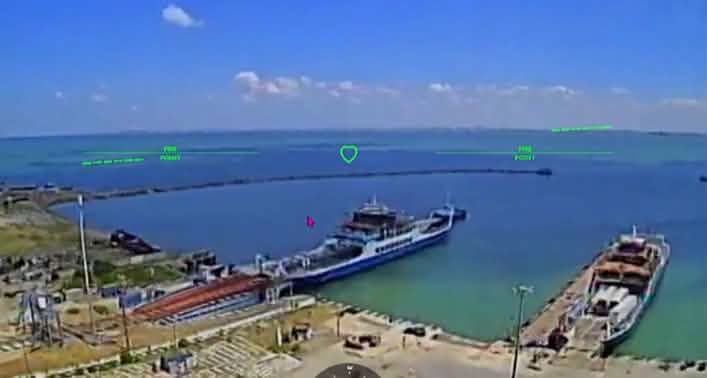
In a Facebook post, Brovdi said that before the operation, the Kerch ferry crossing was served by four ferries operating regular routes between Port Kavkaz in Russia and Port Krym in occupied Crimea. A fifth ferry was stationed in the Port of Kerch. The vessels were Lavrentiy, Panagia, Yeisk, Mariya, and SKS-One.
According to Brovdi, the Unmanned Systems Forces, in cooperation with the Security Service of Ukraine, significantly disrupted the ferry operation during two weeks of strikes in July.
As of July 19, the ferry Yeisk, successfully struck by the USF on July 12 and 13, and the ferry Mariya, repeatedly hit by the USF and SSU throughout July, have been towed to the Port of Kerch. Neither vessel is expected to be repaired or returned to service.
The cargo vessel SKS-One, struck by the USF on July 7, 12, and 13, has sunk in the Port of Kamysh-Burun and is beyond repair.
The ferries Lavrentiy and Panagia, which were damaged by the USF, SSU, and Ukraine’s Defense Intelligence (HUR), are no longer capable of operating under their own power. They are now being used as barges and must be towed, reducing their operational capacity by half while making them more vulnerable to further attacks.
Brovdi noted that each ferry could carry between eight and 15 vehicles, depending on their size and weight. Around 80% of the traffic was allocated for the needs of Russia’s Ministry of Defense.
“The combined daily capacity of the four operational ferries under normal, non-combat conditions was between 180 and 250 vehicles per day. Or rather, it was,” Brovdi said.