

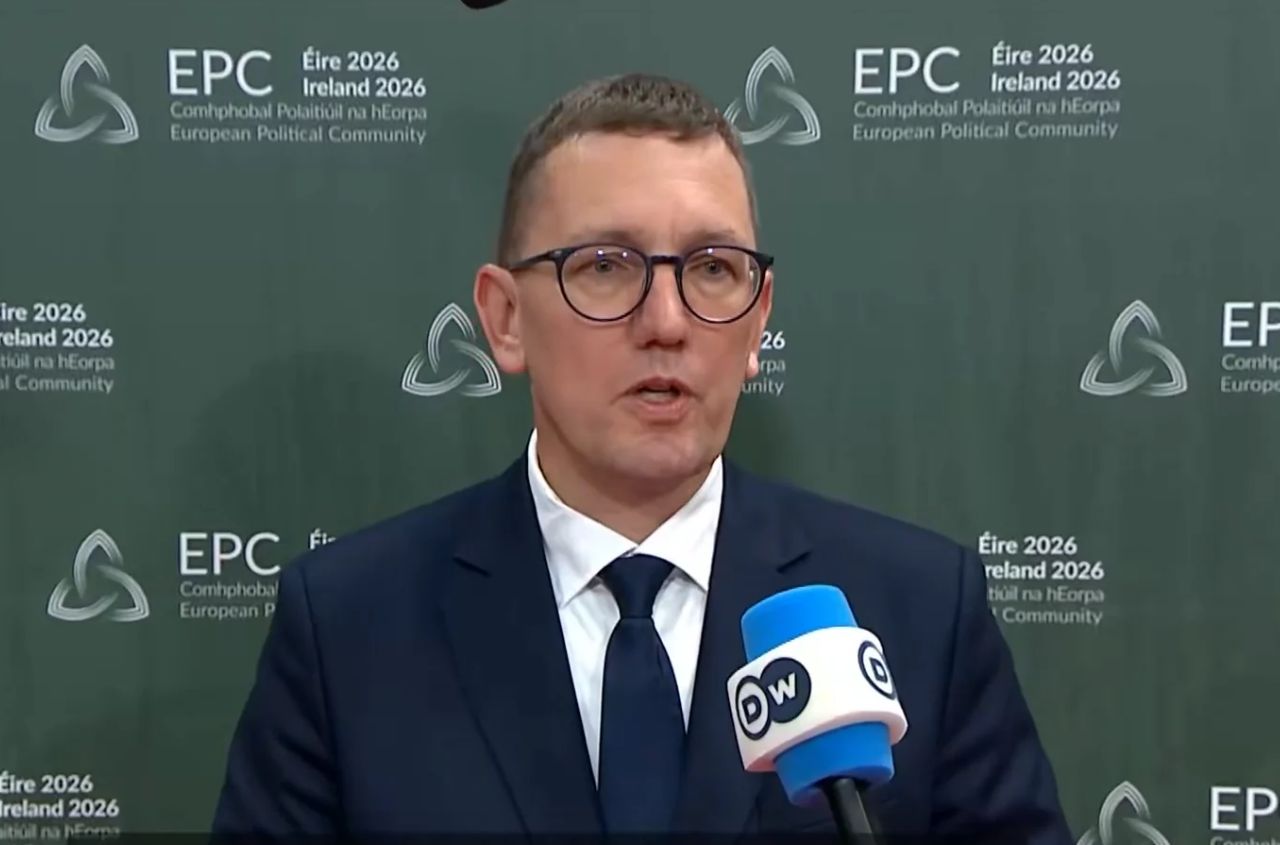

Russian President Vladimir Putin must change his objectives for peace to be achieved in Ukraine, while Europe must continue supporting Kyiv and maintaining pressure on Moscow, Estonian Prime Minister Kristen Michal said ahead of an informal EU summit in Dublin.
Michal stressed that discussions on the future European security architecture should take place only after peace has been established in Ukraine, rather than becoming part of negotiations before the war ends.
"The first and entirely obvious principle is that Putin must change his objectives. The war, aggression and killing of women, children and civilians would stop the moment Putin gives the order. But he constantly puts forward conditions, saying, for example, let's talk about European security," Michal said. "Our red line is absolutely clear: we must achieve peace on Ukraine's terms, and only after that can everything else be discussed — not before and not simultaneously."
According to the Estonian prime minister, attempts to discuss the European security architecture before securing peace represent a "mental trap" through which Putin seeks to distract European leaders from the central issue.
Michal also questioned whether anyone genuinely considered Europe a threat to Russia.
Addressing the potential participation of the European Union in peace negotiations, Michal argued that Europe is already involved through its political, financial and military support for Ukraine.
"I would say that Europe has always been at the table because we stand behind Ukraine. And our plan is very clear: we are not neutral mediators at this table, because who would then impose sanctions?" he said. "Europe's plan has been quite simple for a long time: help Ukraine and put pressure on Russia. And that is how it should remain."
Michal added that if Europe were to participate directly in negotiations, its representatives should have the appropriate mandate and represent European institutions.
He identified European Council President António Costa and EU High Representative for Foreign Affairs and Security Policy Kaja Kallas as potential representatives.
"Europe must be represented by people chosen by Europe itself, people who represent us. A situation in which someone else appoints our representatives makes absolutely no sense," Michal emphasised.
On financial assistance to Ukraine, Michal expressed support for German Chancellor Friedrich Merz's position that helping Ukraine is an essential component of Europe's own security.
The Estonian prime minister said he hoped the EU would find a solution to Ukraine's financing needs, as it had done on previous occasions.
Michal also reaffirmed his full support for Ukraine's accession to NATO.