

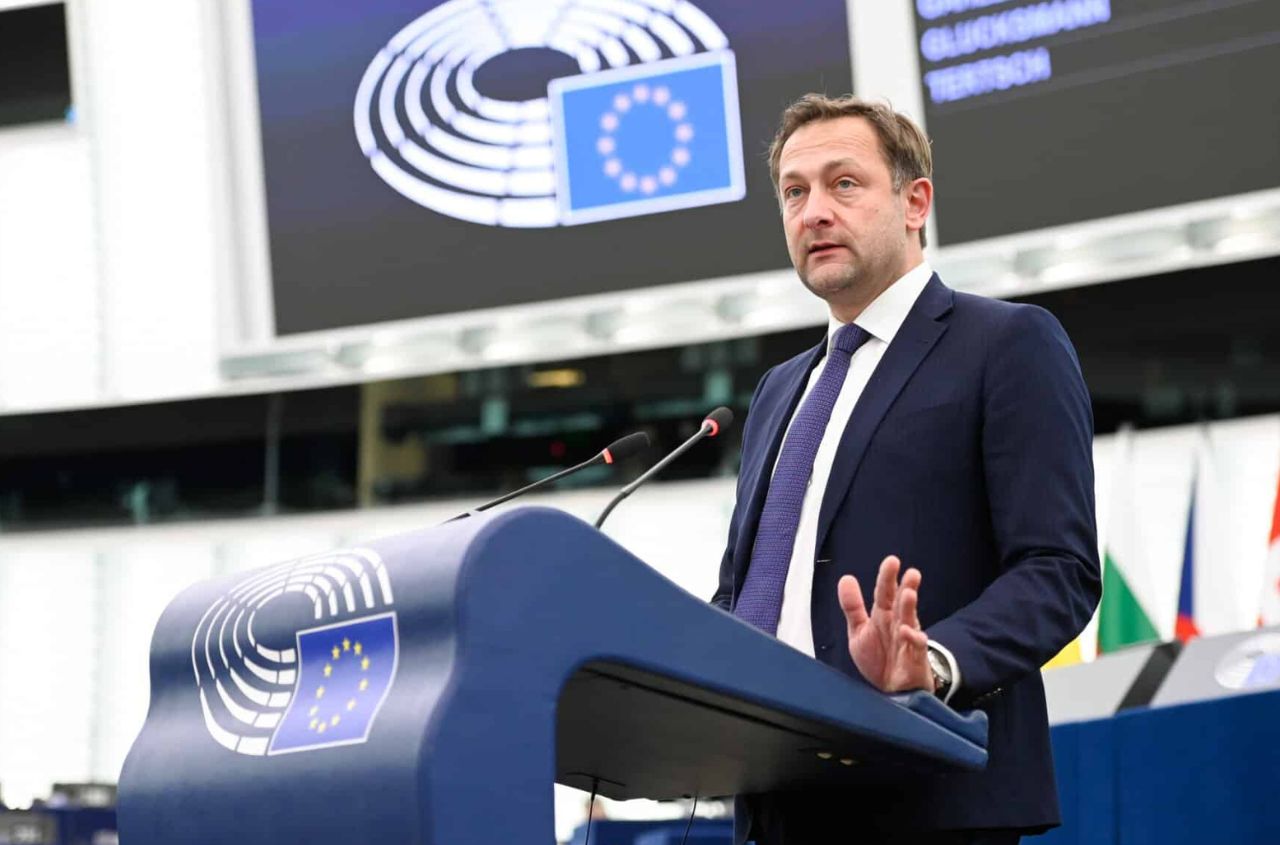

Ukraine’s accession to the European Union could strengthen the bloc’s food self-sufficiency and its position globally. However, integrating Ukraine’s agricultural sector would require harmonising production standards and a lengthy transition period. European Commissioner for Agriculture and Food Christophe Hansen said this in an interview with BFMTV.
Asked whether Ukraine’s membership would help ensure the EU’s agricultural sovereignty, Hansen said:
“Yes, and not only in terms of self-sufficiency. We also have a responsibility towards regions of the world that do not produce enough food. From a geopolitical perspective, it would be beneficial for us to have production capacity such as Ukraine’s within the EU.”
At the same time, he acknowledged that the scale of Ukrainian agricultural production raises concerns among many European farmers.
“Ukraine is frightening because it is a real production powerhouse,” the commissioner explained.
He separately stressed the importance of bringing Ukrainian production into line with EU standards.
“This alignment will be crucial, and it will not be easy for the Ukrainian side. If Ukraine does not bring its production into line with our standards by 2028, we will have the right to review these quotas,” Hansen warned.
He also recalled that the European Commission’s recently presented document on preparing the EU for enlargement allows for transitional arrangements, including in agriculture.
“In Ukraine’s case, fairly lengthy transition periods could be discussed. It is important not to jeopardise our model. However, we should not create obstacles from the outset either — we need to look for solutions,” the commissioner stressed.
Hansen also called for identifying areas where Ukrainian and European producers could complement one another, particularly mentioning protein crops that the EU currently imports from third countries.
“Why not encourage Ukraine to grow more soybeans instead of importing them from the United States or Brazil? It is closer, it is Europe, and it could be a solution for both sides.”