


In my view, it is a mistake to assess the prospects for how events might unfold based solely on the statements and personalities of those involved in the process. Individuals do play a role in history, but reducing everything to Trump (Orbán, Zelensky, Tusk, Macron, Magyar, and so on) is tantamount to repeatedly laying out rakes only to step on them again.
For Ukraine, the Russian-Ukrainian war is a matter of survival, including physical survival. For some Ukrainian elites, it is a matter of political survival. That is logical.
For Russia, the war is also a matter of survival. But not survival as a state. Rather, it is about survival as an empire aspiring to the status of one of the world's three superpowers. Failure in Ukraine would guarantee the loss of that status. Freezing the conflict from a position of strength, including political concessions from the EU and the United States, not just Ukraine, would give Russia an opportunity to compete for that status.
But what does the Russian-Ukrainian war mean for other countries? Let us break it down.
The US position.
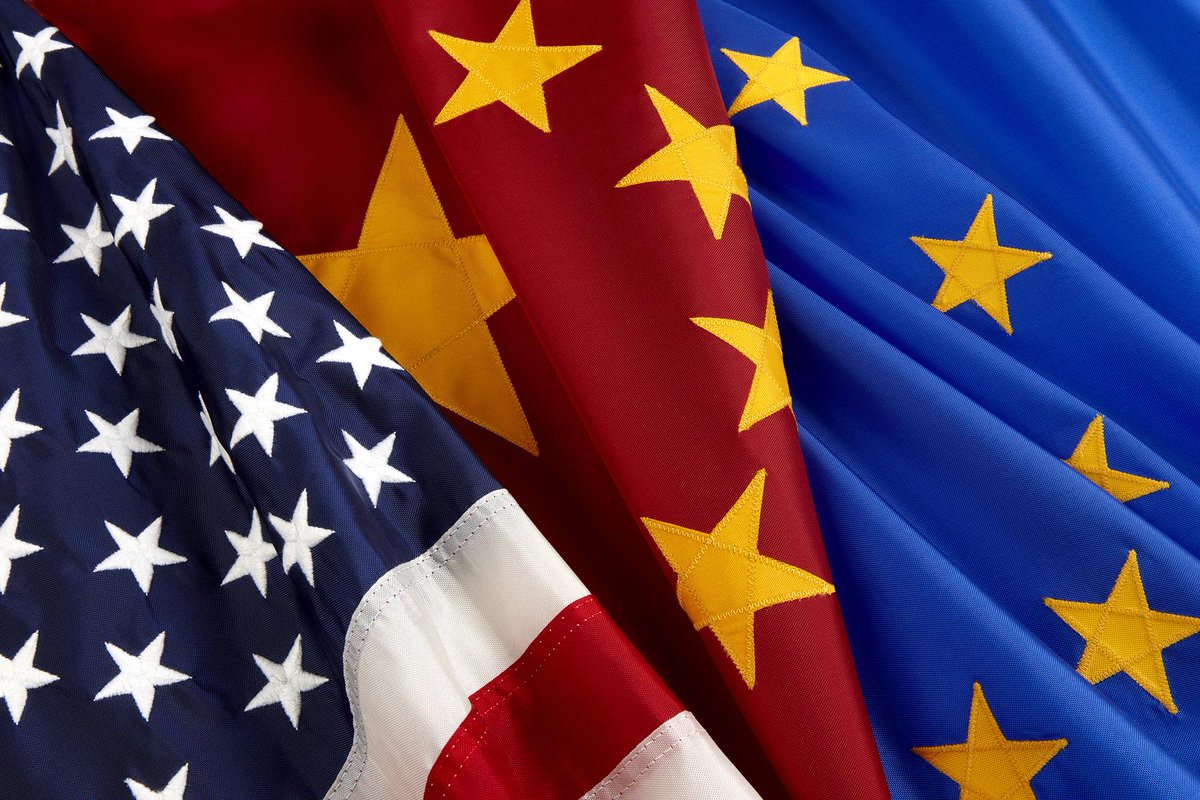
For the United States, the key challenge today is the transformation of the world order and the competition for global leadership. There is only one rival: China. Everything else is secondary. Let us examine the Russian-Ukrainian war through this lens.
1. First, logistics and production. China is the world's largest manufacturing base and is rapidly catching up with the United States in technological development. But China depends on access to resources for its industries and on export markets, because its products need to be sold somewhere. That is why the United States has focused on controlling key points in international logistics: Panama, manoeuvring around Egypt, the Persian Gulf, the South China Sea and the Strait of Malacca. Even Greenland fits into this logic: control over northern transport corridors, as well as a potential resource base for the United States, if that proves possible.
2. China's growing influence. China is not simply expanding its influence. It is offering what might be called a civilisational alternative. This is reflected in China's four global initiatives, including the Global Governance Initiative. At first glance, the concept is intended to guarantee equal rights for states and preserve the global system. But it challenges the principle of equality as it operates in reality, rather than as it is formally enshrined on paper. More specifically, it questions the moral, ideological, economic and civilisational superiority of what is broadly described as Western civilisation.
At the same time, these political initiatives are supported by economic projects, ranging from the well-known Belt and Road Initiative to industrialisation, green energy and telecommunications projects. The United States and the EU did not concern themselves with developing comparable civilisational and economic projects in the past. Creating such projects now, from the position of a competitor trying to catch up, would take a long time and cost a great deal. And while the money is available, time is becoming a problem. This creates an incentive to slow the pace of China's expansion, including by highlighting regional problems that Beijing cannot overcome without addressing them.
3. Weakening Russia benefits the United States because Russia would no longer be able to claim the role of a third major player. However, weakening it to the point where the Russian economy effectively becomes an extension of China's would be extremely disadvantageous. Beijing would then gain a resource base directly on its borders to complement its manufacturing capacity. This would strengthen China and undermine the American policy of controlling logistics, since Beijing would be able to obtain resources overland.
4. At the same time, it is highly advantageous for the United States if Russia retains the ability to compete for its shrinking sphere of influence, since China is also expanding into regions that Russia has traditionally considered its own backyard. This means that Russia must emerge from the war without becoming China's raw-material appendage, while retaining the ability to pursue geopolitical ambitions.
In this context, it would be extremely advantageous for the United States to gain access to Russia's resource base and to the development of the Arctic (resources and maritime routes). Most importantly, Washington would benefit from a Russia weakened enough to be unable to claim the role of a global player, but strong enough to attempt to restore its influence, even by fuelling regional conflicts, in Central Asia and the Caucasus, at the very least. These are regions where China's influence has grown enormously.
Even Iran fits into the same logic. The Islamic Republic was on the verge of becoming a regional superpower while serving as a key logistics partner for both India and China. The war is disrupting these plans.
China
For China, weakening the Russian Federation is no less advantageous than it is for the United States. It provides access to Russia's resource base and, while Russia is preoccupied with Ukraine, allows Beijing to develop its projects in the Middle East, Central Asia and the Caucasus.
Indeed, the transformation of the Shanghai Cooperation Organisation (SCO) is following a particularly interesting trajectory. An organisation originally established as pro-Russian has now become an instrument of Beijing. Moreover, reforms of the SCO's key structures are being carried out in a way that could eventually allow China to take control of the mechanisms of other Russian integration initiatives, namely the Collective Security Treaty Organisation (CSTO) and the Eurasian Economic Union (EAEU).
However, an excessively strong Russia, including militarily, is extremely disadvantageous for China. That is why the Russian army does not have Chinese weapons, even those manufactured in third countries, and why, instead of using Chinese satellite communications systems, Russia is developing its own Rassvet system. Arming an aggressive neighbour with whom you share a long border is simply dangerous.
But at this stage, Russia's collapse is not in China's interests either. As long as Beijing has not established its own projects in the Arctic (resources and logistics), and as long as it depends on Russia's role as a transit country (a land corridor), it is more advantageous to have one dependent partner than a dozen newly independent states or a zone of instability.
Moreover, if Russia were to become extremely weak, the scenario in which Europe and the United States effectively rescue Russia could be repeated. China remembers the American chicken legs known as "Bush legs". This means Beijing will try to prevent such a situation.
And this brings us to the central problem, or perhaps even tragedy, for us in the context of the Russian-Ukrainian war.
The United States does not benefit from Russia becoming strong enough to claim the role of a "third centre of civilisation". After all, it is easier to negotiate solely with Beijing than to play a triangular game between Washington, Beijing and Moscow.
But the United States does not benefit from Russia becoming excessively weak either, because that would mean a sharp increase in China's influence not only in Asia but also in Eastern Europe. Washington needs Russia to be strong enough to enter into conflict with China over the restoration of its influence in certain territories.
China does not benefit from Russia becoming strong enough to claim the role of a "third centre of civilisation". This is not a slip of the tongue. On this point, the interests of China and the United States coincide completely.
Moreover, it is in China's interests for Russia, following a freeze in the war, to lack the strength and capacity to fight to restore its sphere of influence, including to preserve the pro-Russian orientation of the integration structures created by Moscow, such as the CSTO and the EAEU.
On the other hand, an excessively weakened Russia is also extremely disadvantageous for China because it would create risks of instability along its borders and threaten transit routes.
In other words, the world's two key players are interested neither in Russia's victory nor in its complete defeat.
Consequently, when it comes to Ukraine, the failure and collapse of Ukrainian statehood would be extremely disadvantageous for both. But neither would benefit from Ukraine's complete and unconditional victory.
The European Union
For a very long time, the EU adhered to the principle of coordinating its foreign policy efforts with the United States. The question of greater strategic autonomy emerged only eight or nine years ago and became mainstream over the past four years.
Here, too, the issue is not really Ukraine or Russia.
When the world is being divided up and spheres of influence are being contested, the question arises: where do Europe's interests lie?
If the EU remains merely a passive observer, the Union becomes little more than a resource base for stronger players, China and the United States.
A generously laid dinner table for others, so to speak.
That is why Europe is trying to develop its own position, its own foreign policy course, one that allows for both cooperation and conflict with Washington, as well as cooperation and conflict with Beijing. At the same time, the EU is not a monolith: it is torn by internal contradictions. And the question of its survival comes down, among other things, to changing its decision-making mechanisms.
Against this background, Russia represents both an opportunity and a threat to the European Union today. The opportunity lies in raw materials and markets. The threat lies in Russia's ambitions and its potential desire to expand its sphere of influence. Moreover, Washington is attempting to negotiate with Moscow at the expense not only of Ukrainian interests but also of European ones.
Having recognised the threat posed by Russia, EU member states are preparing for potential challenges in the military, political and economic spheres. In this context, supporting Ukraine, where Russia has become bogged down, is advantageous. But it remains advantageous only as long as Europe itself is not ready. Put simply, to carry out its transformation properly, Europe must prevent Russia from succeeding in Ukraine.
The question is what happens when EU member states decide that they are "ready" to respond to Russian threats. Will there still be a reason to continue supporting Ukraine at the current level, or even at a higher one? A number of political forces in France, Germany and other countries are already discussing such a possibility.
However, despite all the threats, an excessively strong Russia is unacceptable to Europe, as is Russia emerging from the war in a position where it can attempt to restore or expand its sphere of influence.
What conclusions should Ukraine draw?
First, stop relying on intermediaries to do the work instead of making its own efforts. Nobody will develop a formula for freezing the war on Ukraine's behalf and in Ukraine's interests.
Second, stop assuming that support from partners is permanent and guaranteed. The experience with the United States has demonstrated this perfectly. And the reason lies not in individual personalities but in interests and timeframes.
This leads to a third conclusion: Ukraine must nevertheless try to navigate the balance of interests by engaging with all potentially interested parties. Where opportunities exist with the United States, it should pursue them. Where they exist with the EU, it should do the same. But it must remember that the list of influential countries does not end there.
After all, by launching the Dmitriev diplomatic track, Russia has demonstrated how it plays on the interests of others, in this case those of the United States.
The question is: where is Ukraine's own strategy of playing on interests and shaping the future? With the EU, Turkey, China, India and the United States itself?