

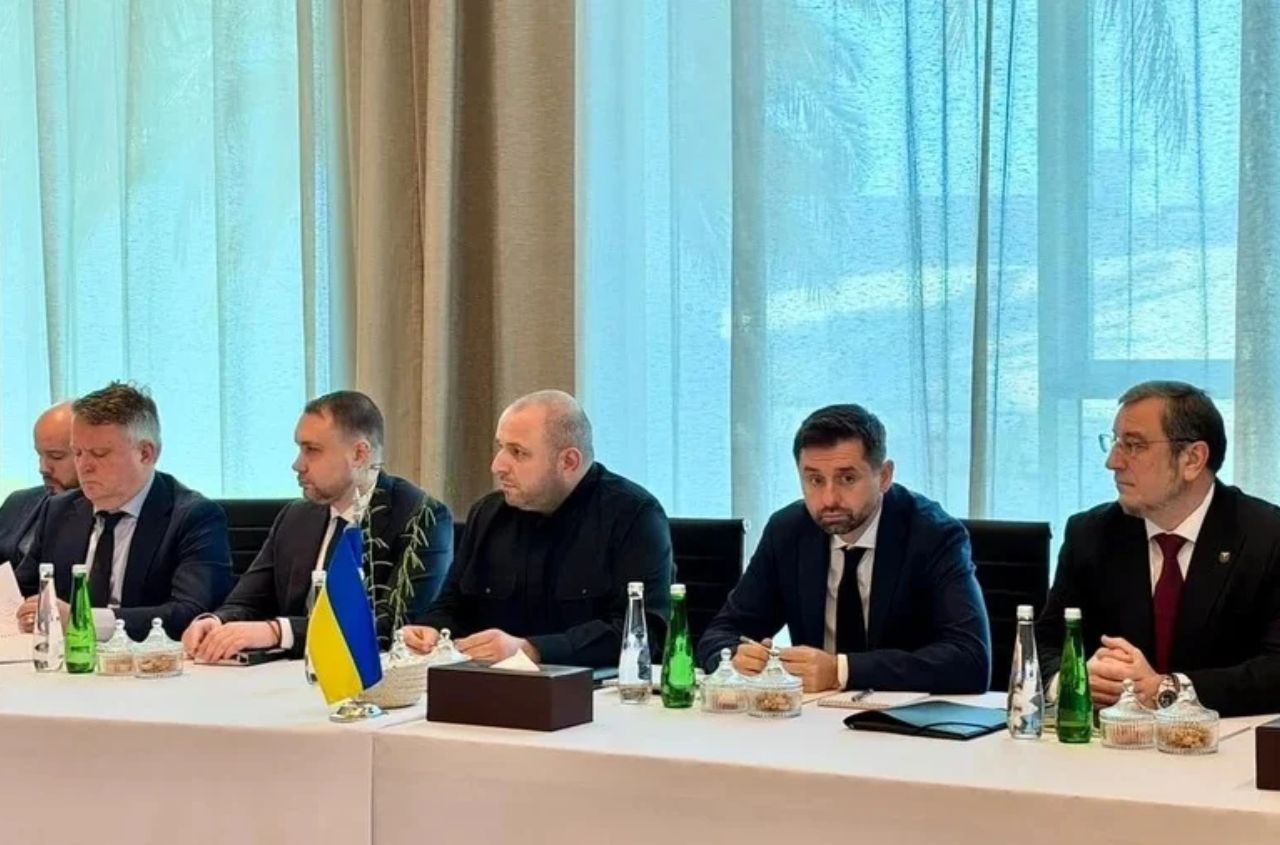

Every time the subject of negotiations comes up, we need to remember why previous talks failed. The key formal reason for their failure is Russia’s demand that Ukraine withdraw from Donbas. This is the starting position of the Russian delegation, while our inability to accept that demand is our starting position. Has anything changed in either Ukraine’s or Russia’s position? No.
Russia likes to argue that negotiations must be based on the “situation on the battlefield”. Well, this year that situation is better for us than in previous years. So far in 2026, Russian forces have captured three to four times less territory than they did in 2024 and 2025. Following Operation Vivaldi, their plans to capture Sloviansk and Kramatorsk by spring have once again become increasingly unrealistic.
However, the situation on the home front is considerably worse. As expected, the government has completely failed to prepare for winter. Yes, defending against ballistic missiles and jet-powered drones on this scale is extremely difficult. But neither I nor anyone with even a minimum degree of common sense can understand how Kyiv’s water utility ended up without backup power. Especially considering that the first water supply disruption occurred on 9 January. And no, this is not solely a matter for the local authorities, although they also bear responsibility.
So we are entering negotiations from a strong position on the battlefield but facing an extremely difficult situation at home. There is still no reason for us to give up Donbas.
Russia, meanwhile, is entering negotiations with unresolved problems on the battlefield. Russian officials promised Trump back in 2025 that they would capture all of Donbas. At the same time, however, Russia has an extremely strong financial and economic position. Oil prices have reached levels the Kremlin could never have dreamed of. As a result, Putin can easily address domestic economic problems while further increasing military spending. Just as in our case, Putin has no reason to abandon his ambition to seize all of Donbas — and more.
The parties are therefore heading into negotiations with no chance of reaching a compromise on the very issue that prevented them from doing so before.
After all, Vladimir Medinsky is once again travelling to negotiate on Russia’s behalf. He is a figure with no real influence whatsoever. Kirill Dmitriev has far more influence over the negotiations than Medinsky, a man of Ukrainian origin who has aligned himself with Russia.
However, there are two important variables that did not exist before.
First, Trump lost the congressional elections, which means his window of opportunity to facilitate a peace agreement runs only until January. After that, he will no longer be able to influence the negotiations, and reaching an agreement with the United States will not be possible until the inauguration of a new president in January 2029.
And since both Ukraine and Russia need the United States to be a party to any peace agreement, this timing matters. On the other hand, I would not overestimate Russia’s interest in this, since Putin believes the United States always betrays him.
Second, these negotiations will address the issue of European security guarantees for both Ukraine and Russia. That is why European representatives will be allowed to participate in the talks, something that has not happened before.
Again, there is very little room for agreement here. For Russia, security guarantees mean a weak Ukraine. For Europeans, security guarantees mean a strong Ukraine. Nevertheless, this is precisely the area where the negotiations could produce some movement or change.
Although these talks are unlikely to bring any good news about ending the war, we must remember that negotiations can always produce secondary agreements. These include prisoner exchanges, humanitarian operations and possible arrangements concerning the Black Sea.
All of these are important for us.