

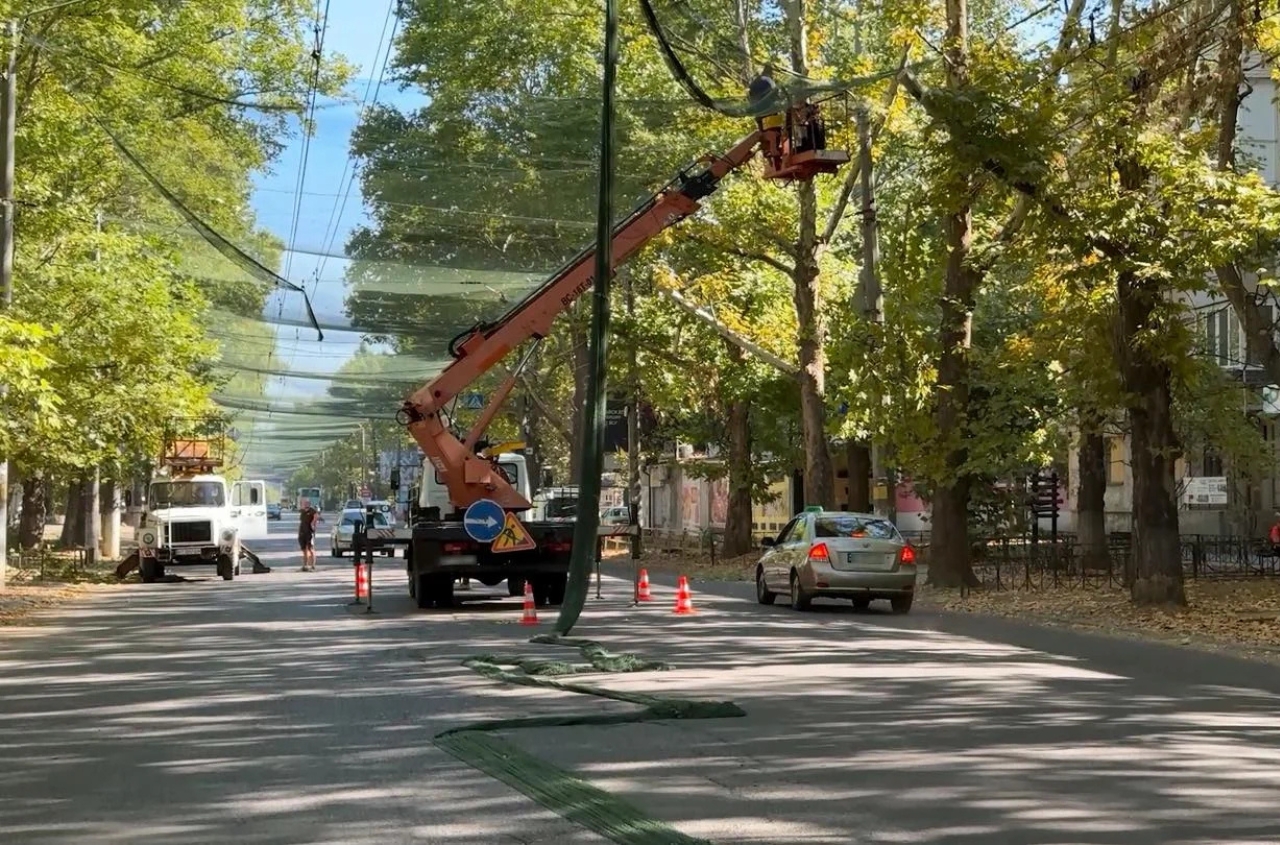

Three types of anti-drone nets that were tested in Kherson and proved effective have begun to be used in other directions as well.
This was announced at a press conference by the head of the Kherson Regional Military Administration, Oleksandr Prokudin.
“To protect against Russian drones, we use the nets that we test — it is a long process that began the year before last,” Prokudin said.
According to him, when selecting anti-drone nets, the priorities were durability, quality, optimal cost, and the possibility of integration into the existing defense system.
Prokudin noted that, among other tests, in summer the nets were placed in freezers for a week and then tested for strength — they do not burn the way ordinary nets do.
The testing took place at training grounds. As the head of the Regional Military Administration added, this made it possible to select three types of nets which, after being used in Kherson, have also started to be applied in other areas — their effectiveness has been confirmed by the military.
Currently, together with the military, 27 sections have been identified in the region to be equipped with net tunnels. This covers 217 kilometers of roads where anti-drone protective structures are planned.
According to Prokudin, the total funding required is about UAH 261 million. Work is ongoing, with military personnel and municipal workers involved daily. UAH 63.8 million has already been allocated from the regional budget.
He added that more than 100 kilometers of roads in the region have already been covered with nets.
Prokudin also explained that volunteer-provided nets from other countries vary in quality: some do not meet requirements, others are better, and some are of very high quality. He added that all volunteer-supplied nets undergo inspection before being used.