


Russian forces carried out 6 attacks across Ukraine between 2 and 10 November 2026, each involving alleged violations of multiple provisions of international humanitarian law, according to Ukraine's Ministry of Defence. In a statement, the ministry detailed strikes on humanitarian aid distribution points, emergency workers, hospitals, energy infrastructure, residential buildings and commercial premises.
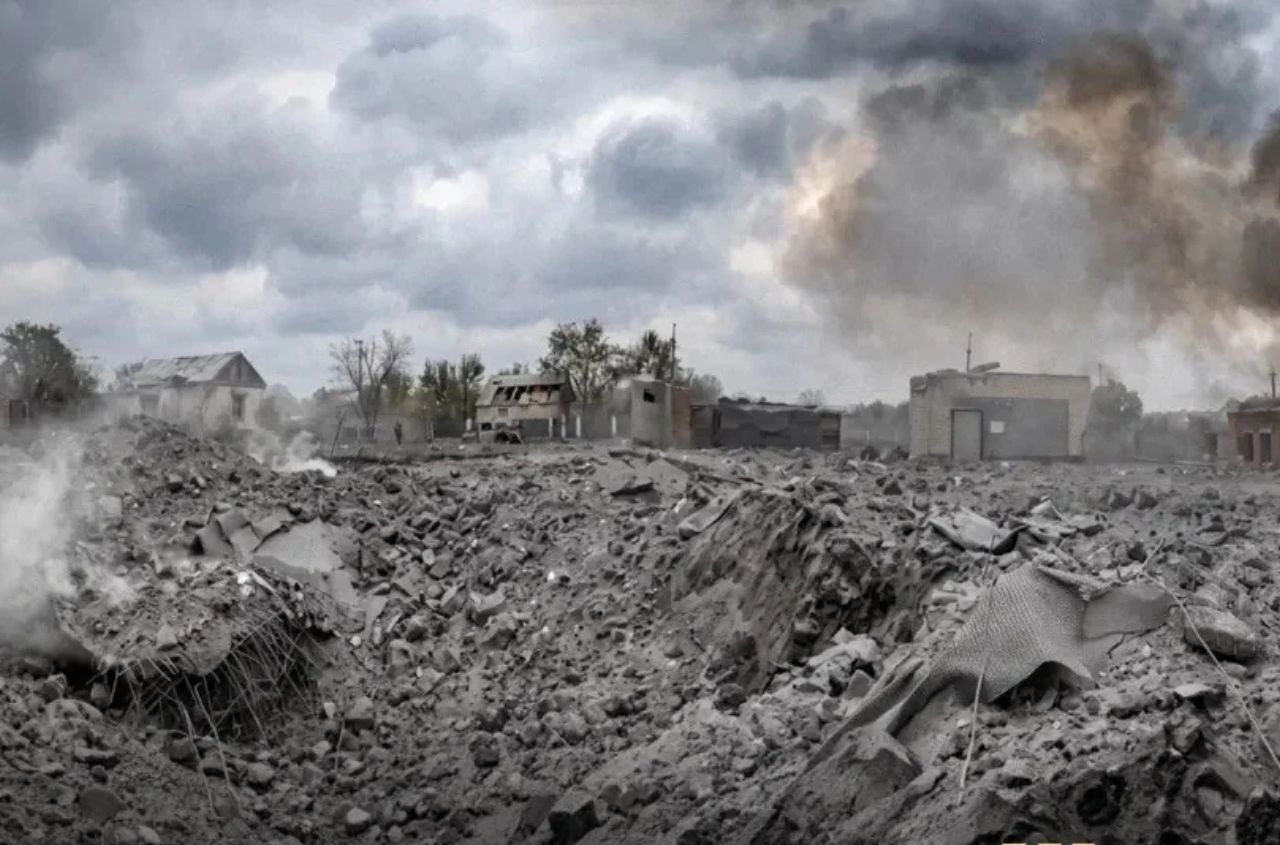
The deadliest incident occurred on 2 November in Komyshuvakha, Zaporizhzhia region, where Russian aircraft reportedly dropped bombs on a humanitarian aid distribution centre before striking a shelter where civilians had taken refuge. At least 57 people were killed. The ministry stressed that Russia remains bound by the Geneva Conventions, which were signed and ratified by the Soviet Union.
Six attacks and alleged violations of international humanitarian law
2 November: At least 57 killed in Komyshuvakha
Russian aircraft dropped nine aerial bombs on Komyshuvakha, targeting a humanitarian aid distribution point at the former Dzherelo Gymnasium. According to the ministry, a FAB-500 bomb first struck the school, followed by a FAB-3000 bomb that hit a shelter where survivors had sought refuge.
Two State Emergency Service rescuers and four police officers were among those killed. As of 12 November, police had recovered the bodies of at least 57 victims, 48 of whom had been identified. Search operations were continuing.
The ministry cited the UN Human Rights Monitoring Mission, which noted that the time and location of the humanitarian aid distribution had been announced in advance. The mission indicated that the attack appeared to violate fundamental principles of international humanitarian law.
Additional Protocol I to the Geneva Conventions, Article 51(2), prohibits attacks directed against civilians. The ministry identified potential violations of Articles 48, 51, 52, 57, 61–62 and 70–71 of Additional Protocol I, alongside Article 8(2)(b)(i)–(iii) of the Rome Statute.
8 November: Russian drones target rescuers in Komyshuvakha
Six days after the initial strike, emergency workers were still clearing rubble in Komyshuvakha when Russian drones reportedly attacked the rescue site three times in a single day, including with an FPV drone. Two rescuers were injured, and a fire and rescue vehicle was damaged.
Under Article 62(1) of Additional Protocol I, civilian civil defence organisations and their personnel are entitled to respect and protection. The ministry cited alleged violations of Articles 61–62 and 51(2) of Additional Protocol I.
3 November: Russian bomb strikes Kharkiv hospital
At approximately 3:20 a.m. on 3 November, a Russian aerial bomb struck a passage connecting buildings at a municipal hospital in Kharkiv. At the time, 236 patients and 31 staff members were inside the cardiology building. According to Ukraine's Prosecutor General's Office, 73 people were injured, while 226 patients were evacuated.
Article 18 of the Fourth Geneva Convention provides protection for civilian hospitals. The ministry also cited Article 12 of Additional Protocol I and Article 8(2)(b)(ix) of the Rome Statute, which addresses intentionally directing attacks against protected medical facilities.
3 November: Energy infrastructure attacked across nine regions
During a large-scale overnight assault on 3 November, Russian forces launched 289 attack drones, 17 ballistic missiles and 59 cruise missiles at Ukraine. The main targets were electricity generation facilities and substations across nine regions. A hospice, hospital and outpatient clinic in Dnipro were also damaged. According to the State Emergency Service, two people were killed and another 20 injured.
The ministry referred to Articles 52 and 57 of Additional Protocol I, which establish protections for civilian objects and require precautions during attacks. It also cited Article 8(2)(b)(ii) of the Rome Statute, concerning intentionally directing attacks against civilian objects that are not military objectives.
7 November: Residential building and kindergarten damaged in Kyiv
Russian forces launched 36 missiles and 172 attack drones against Kyiv and the surrounding region overnight on 7 November. According to the ministry, the operation targeted substations connecting the Rivne and Khmelnytskyi nuclear power plants to Kyiv. A five-storey residential building and a structure on the grounds of a kindergarten were also damaged. Kyiv authorities reported at least five people injured, including a 14-year-old child. In the wider Kyiv region, one man was killed, according to the regional military administration.
The ministry cited Articles 52 and 57 of Additional Protocol I, alongside Article 77, which provides special protection for children.
10 November: Russian strike hits shop in Kropyvnytskyi
On the morning of 10 November, a Russian strike hit a shop belonging to a retail chain in Kropyvnytskyi. The State Emergency Service reported two people injured.
The ministry identified potential violations of Articles 51(2) and 52 of Additional Protocol I and Article 8(2)(b)(ii) of the Rome Statute.
Why the Geneva Conventions still apply to Russia
The four Geneva Conventions were adopted on 12 August 1949 to protect people who are not participating, or are no longer participating, in hostilities, including civilians, wounded and sick personnel, and prisoners of war. The Additional Protocols adopted in 1977 expanded and clarified protections for civilians, civilian infrastructure and civil defence organisations. The Soviet Union signed the Geneva Conventions on 12 December 1949 and ratified them on 10 May 1954. It subsequently signed Additional Protocol I on 12 December 1977 and ratified it on 29 September 1989. Russia, which considers itself the continuator state of the Soviet Union, remains a party to these treaties.
In 2019, Moscow withdrew its declaration recognising the competence of the International Humanitarian Fact-Finding Commission.
Ukraine's Ministry of Defence emphasised that this decision did not constitute withdrawal from the Geneva Conventions or Additional Protocol I. The ministry noted that Russia's own Foreign Ministry had acknowledged that the withdrawal of the declaration did not affect Russia's participation in the protocol.
Russia therefore remains obliged to comply with international humanitarian law, including requirements concerning the treatment of prisoners of war, protection of civilians and accountability for serious violations. The ministry also stressed that the legal classification of an international armed conflict does not depend on the terminology used by the parties. Russia's description of the invasion as a "special military operation" does not alter its obligations.
Ukraine became a state party to the Rome Statute of the International Criminal Court on 1 January 2025. Russia signed the statute in 2000 but withdrew its signature in 2016 and is not a party. Nevertheless, the ICC has jurisdiction over relevant crimes committed on Ukrainian territory.
More than 73,000 civilian casualties verified by the UN
According to figures cited by the Ministry of Defence, the UN Human Rights Monitoring Mission in Ukraine verified 73,451 civilian casualties between 24 February 2022 and 30 September 2026. These included 17,605 people killed and 55,846 injured. The mission has repeatedly warned that the actual figures are likely to be considerably higher.
The ministry highlighted the increasing danger to civilians in 2026.
Between January and September, 2,570 civilians were killed and another 15,211 injured, representing a 59% increase in total civilian casualties compared with the corresponding period in 2025. The number of civilians killed during those nine months had already exceeded the 2,549 deaths recorded throughout 2025.
UN investigators classify attacks on Ukraine's energy infrastructure as international crimes
The Independent International Commission of Inquiry on Ukraine concluded that Russian attacks on Ukrainian energy infrastructure constituted war crimes and crimes against humanity, according to findings presented to the UN General Assembly on 26 October 2026.
The Ministry of Defence also provided figures illustrating the scale of attacks against protected civilian facilities and personnel.
- Healthcare: More than 3,400 attacks verified by the World Health Organization as of 3 November 2026.
- Education: 4,706 educational institutions damaged by shelling, including 428 completely destroyed, according to Ukraine's Ministry of Education and Science.
- Energy: At least 423 attacks against electricity infrastructure and 74 against heating facilities between October 2025 and March 2026, according to the UN.
- Emergency services: 130 State Emergency Service personnel killed since the beginning of the full-scale invasion, as of 17 September 2026.
- Humanitarian workers: 35 killed and 127 injured since 2022, according to figures from the International NGO Safety Organisation (INSO) as of 24 February 2026.
The ministry cautioned that these figures were compiled by different organisations over different reporting periods and should not be added together.
It also noted that there is no single official register of Geneva Convention violations, as formal legal determinations of responsibility are made by courts.
"Behind every line of these statistics are incidents like Komyshuvakha, where rescuers continued clearing the rubble of a shelter under drone attacks six days after the initial strike," the Ministry of Defence stated.