

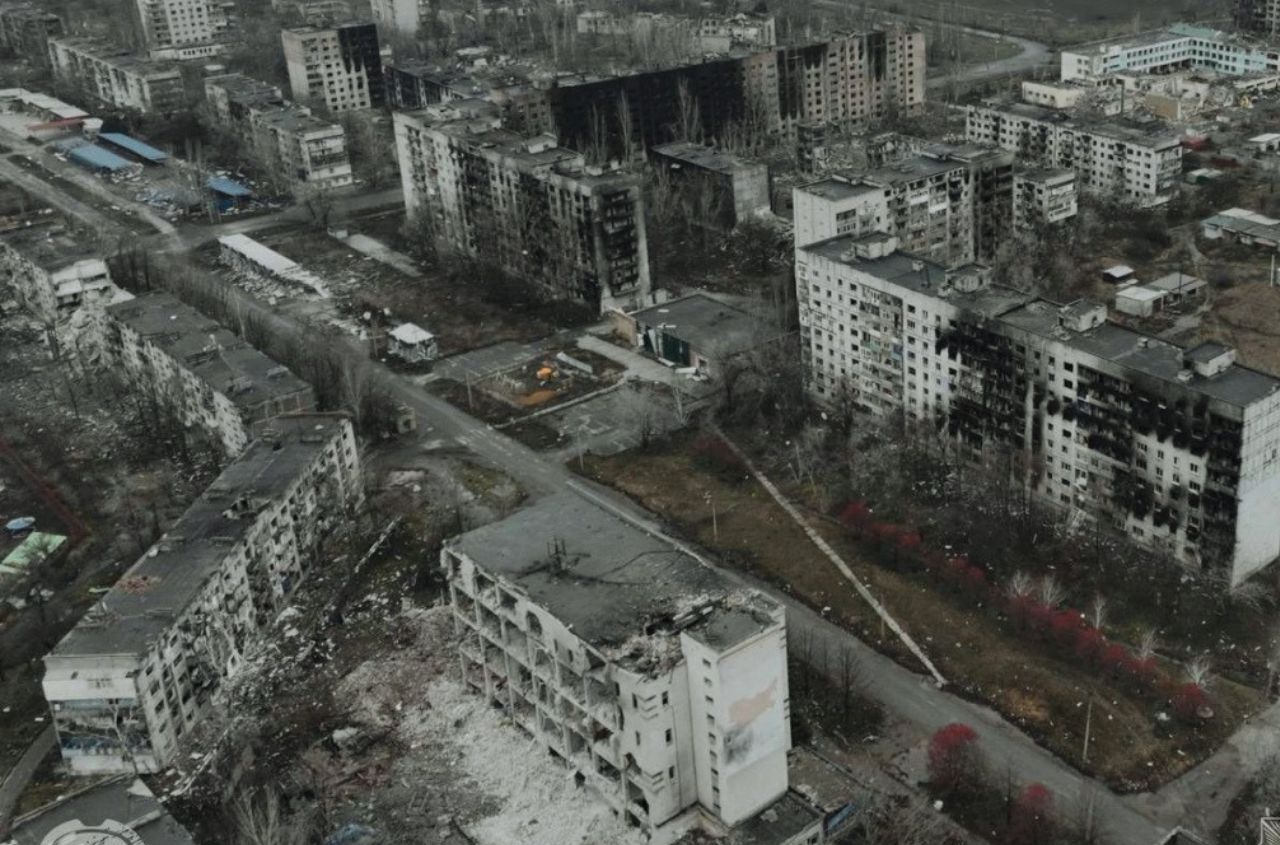

It is reasonable to conclude that the Russian offensive is continuing. Yes, progress has been relatively slow: over two months of intense and extremely costly fighting, Russian forces have managed to advance no more than 7.5–8 kilometres into Ukrainian defensive positions. However, it is important to understand that this advance has taken place along one of the key axes of Russia's broader Sloviansk–Kramatorsk offensive operation — the Kostiantynivka direction.
Moreover, a clear trend has emerged towards a further deterioration in the position of Ukrainian frontline units fighting within the Kostiantynivka defensive sector. Russian forces have managed to achieve a relatively deep tactical envelopment of the area from the northeast and southwest, reaching the vicinity of Illinivka and penetrating along the Novodmytrivka–Molocharka axis.
Combined with the advance of Russian forward units directly towards the city's southern and eastern outskirts, this has enabled them to launch and subsequently intensify their assault on Kostiantynivka itself. In operational terms, Russian forces are now essentially concentrating on the complete elimination of the Ukrainian defensive sector around Kostiantynivka and have come considerably closer to achieving that objective.
The situation is different along the Kramatorsk direction. There, Russian forward units have reached the Siverskyi Donets–Donbas Canal across a relatively broad section of the front, creating potentially favourable tactical conditions for a breakthrough towards Kramatorsk. So far, however, they have been less successful.
Ukrainian forces have been relatively effective in preventing further Russian advances towards Kramatorsk, engaging the attacking units in meeting engagements directly on the western bank of the canal.
The most dangerous axis for Ukrainian forces in this respect is Markove–Fedorivka–Bilokuzmynivka, where Russian troops have achieved their deepest penetration beyond the canal towards Kramatorsk, reaching up to 4.5 kilometres. However, this penetration has not expanded significantly.
In fact, over a month and a half of active infiltration along this axis, Russian forces have managed to crawl forward only 1–1.5 kilometres along the ridge of chalk cliffs stretching from Markove to Fedorivka.
In my view, the decisive factor shaping further developments along both the Kostiantynivka and Kramatorsk directions will most likely be the duration of the fighting around Kostiantynivka.
It is clear that the Russian force grouping concentrated on the left flank of the operational zone of the Southern Group of Forces will simply be unable to launch a broad-front offensive towards Druzhkivka and Kramatorsk from the south and southeast without first fully capturing Kostiantynivka.
This remains the case despite substantial support from forces and assets belonging to the right flank of Russia's Centre Group of Forces, which are attempting to break through towards Druzhkivka along the Kazennyi Torets River.
It is already evident that the battle for Kostiantynivka is consuming the lion's share of these forces and resources. One need only compare the intensity of Russian offensive operations in the Kostiantynivka direction with those directly along the Kramatorsk axis.
Furthermore, the fighting has clearly continued well beyond all the deadlines originally set and planned by the Russian command.
Essentially, the longer Kostiantynivka holds out, the greater the likelihood that the Russian command will eventually be forced to substantially revise its plans for a SIMULTANEOUS breakthrough towards Druzhkivka and Kramatorsk from the east and southwest.
Significantly, the Russian command appears to understand this and is already attempting to avoid such a scenario by sharply intensifying operations on the right flank of its Centre Group of Forces towards Druzhkivka.
The likely intention is to force Ukrainian troops not only to withdraw from the Kostiantynivka area towards Druzhkivka, but also to abandon a relatively extensive area north of Rusyn Yar.