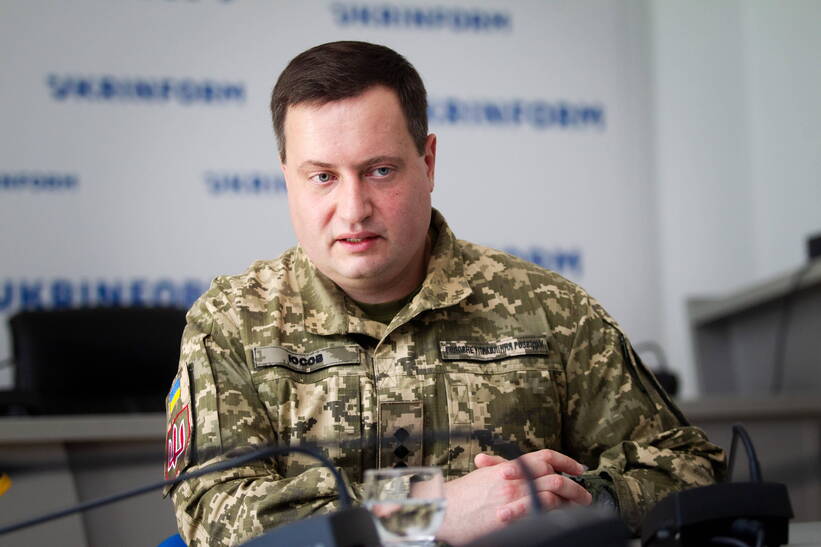


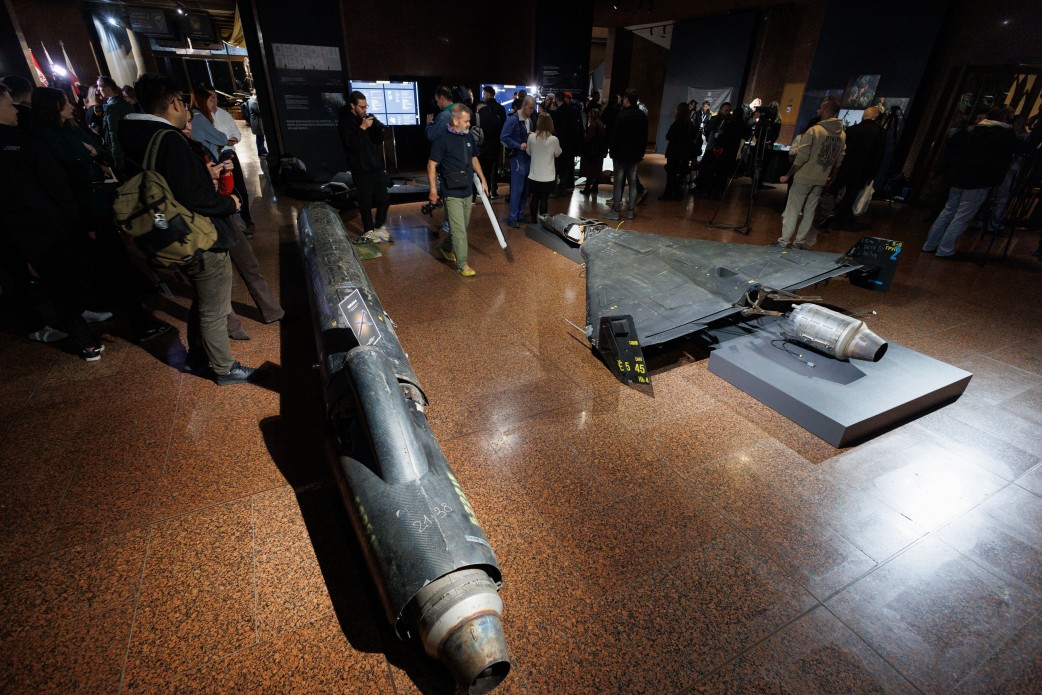

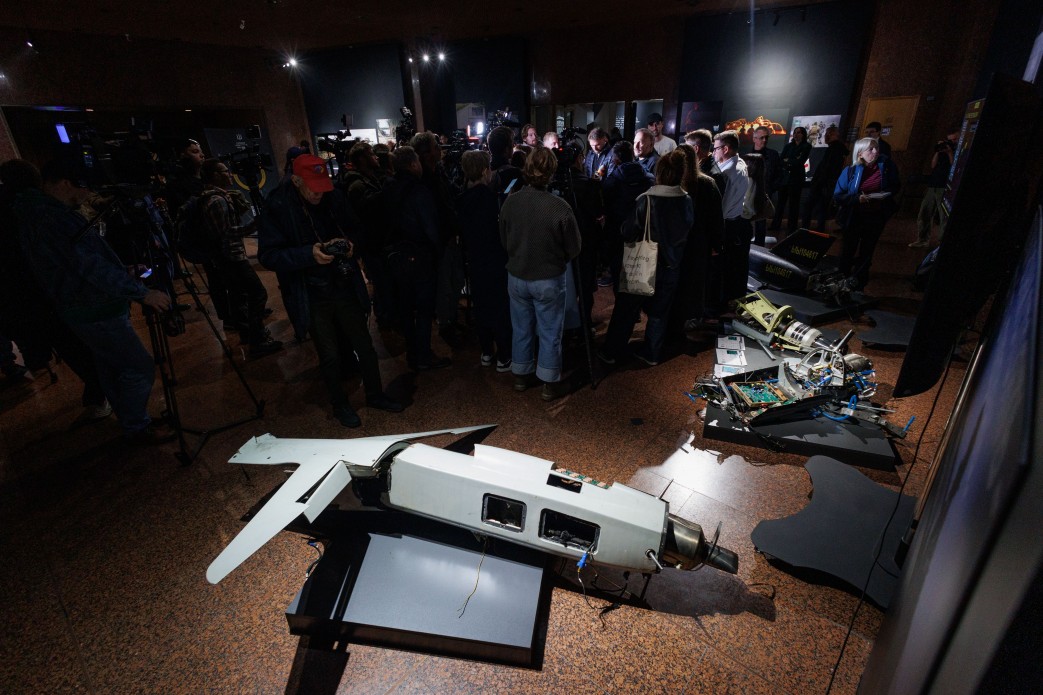
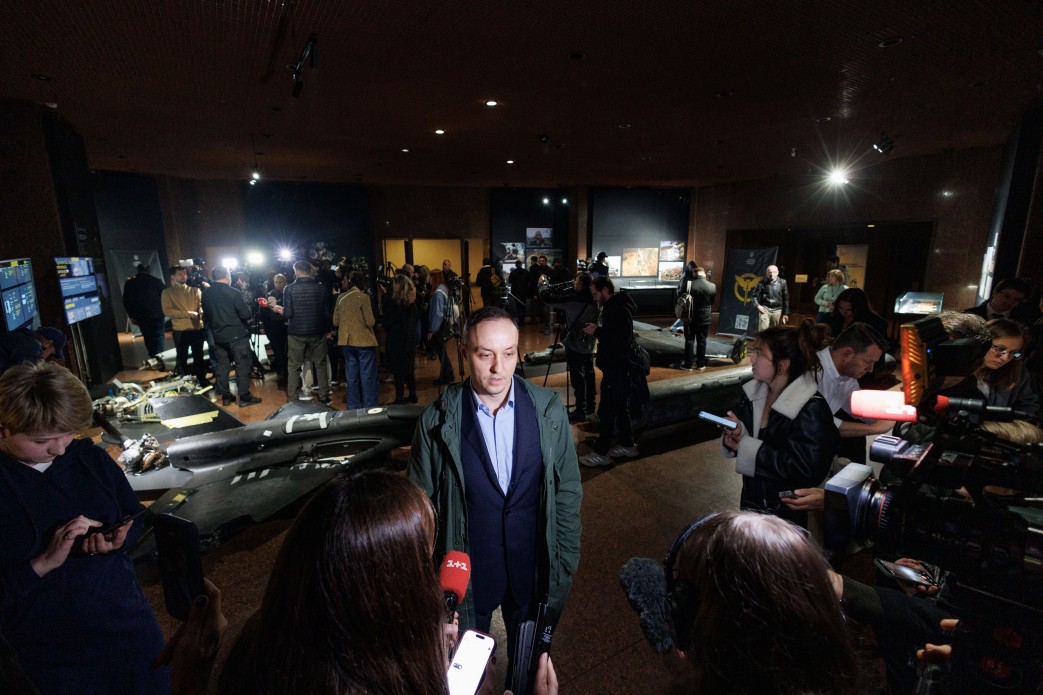
Vladyslav Vlasiuk, Adviser and Presidential Commissioner for Sanctions Policy, and Serhii "Flash" Beskrestnov, Adviser to the President of Ukraine on Defence Technology Development, held a briefing during which they presented Ukrainian and international media representatives with components recovered from Russian missiles and drones used to attack Ukrainian cities and communities.
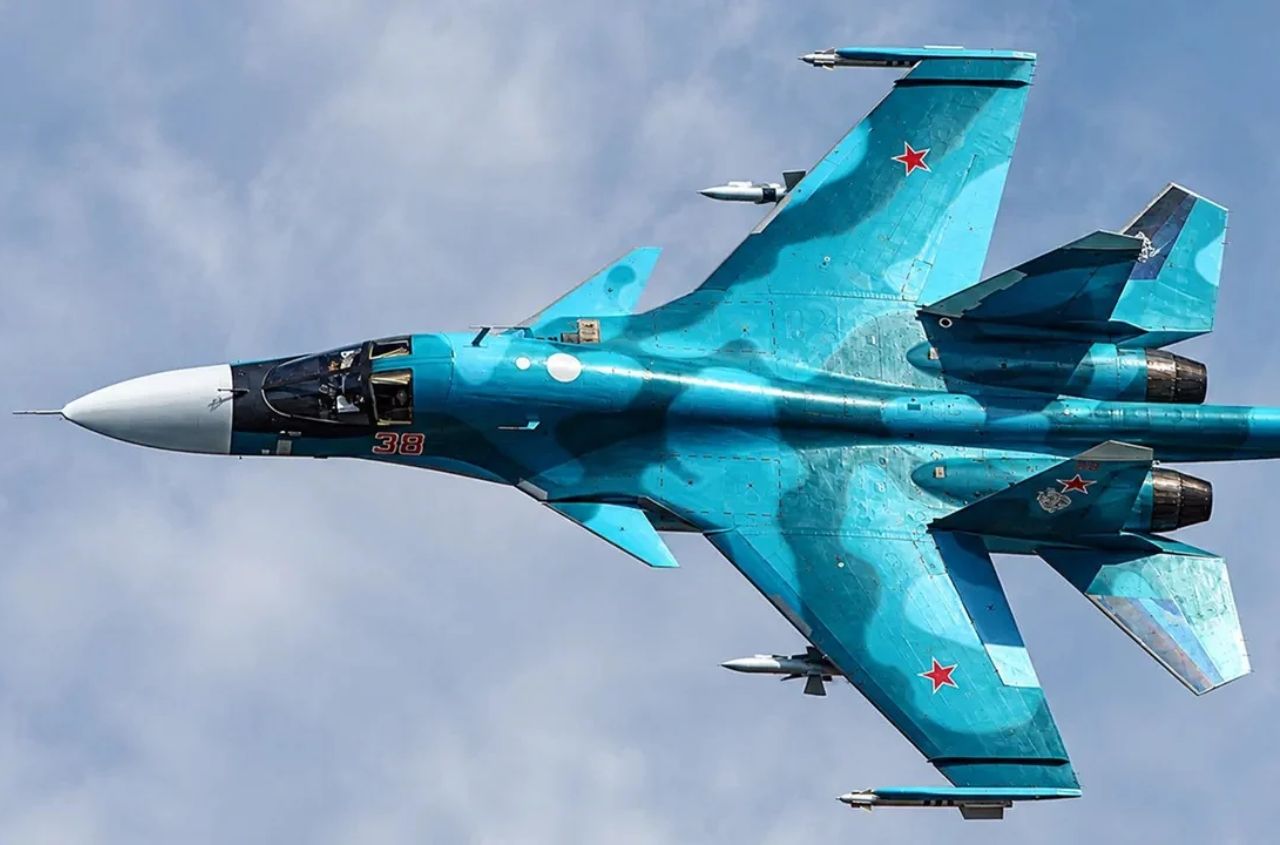
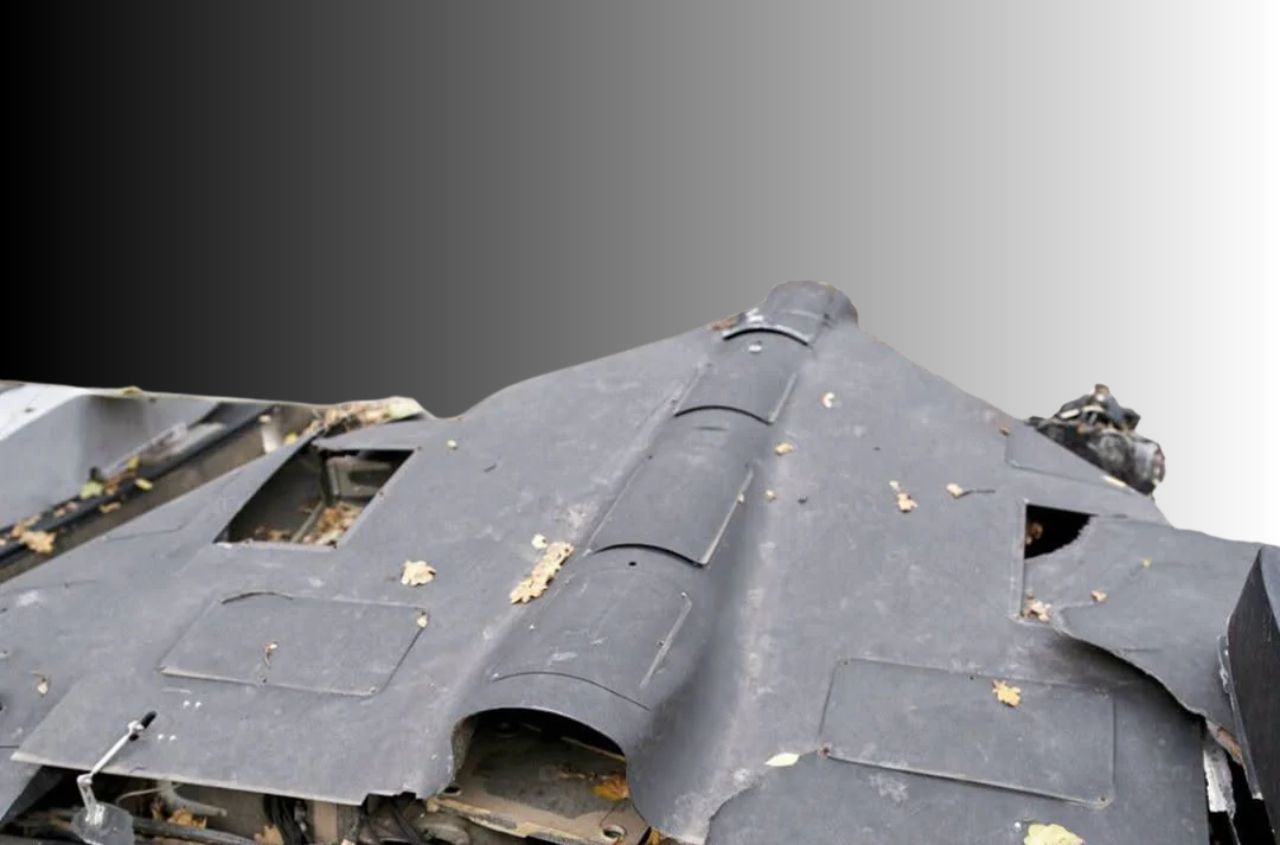
The exhibits included electronic components and parts from Geran-4 and Geran-5 UAVs, as well as Iskander-M, Kalibr, Kh-101, Banderol, Filin and Dan-T missiles.
According to Serhii Beskrestnov, Russia is using drones against Ukraine almost immediately after they leave the production line. Russia currently manufactures up to 3,000 jet-powered drones per month and is working to increase production. There are already five variants of the Geran UAV, while Russia is also scaling up production of Banderol, Filin and Dan-T missiles.
"This is a challenge we will face in the future. We need to develop jet-powered interceptors, but we also need our own affordable, low-cost surface-to-air missile. Why affordable? A standard Shahed costs $130,000, and when we shoot them down with missiles costing $300,000–500,000, it is not economically rational. We need to find weapons with a comparable cost. I know that our defence industry is currently working on this," he explained.
The presidential adviser on defence technology development also highlighted the importance of Starlink, which supports the operation of interceptor drones and Ukrainian aircraft used to shoot down Russian aerial weapons.
Vladyslav Vlasiuk noted that almost all the electronics found in the Russian drones and missiles on display were manufactured abroad, with the largest share originating from China.
In particular, Chinese-made antennas, engines and cameras are frequently found in Russian UAVs. Components manufactured in European countries and the United States have also been identified.
The Presidential Commissioner for Sanctions Policy explained that analysing the remains of Russian Kh-101 missiles had revealed attempts by Russia to replace certain American-made components, but these efforts had been unsuccessful.
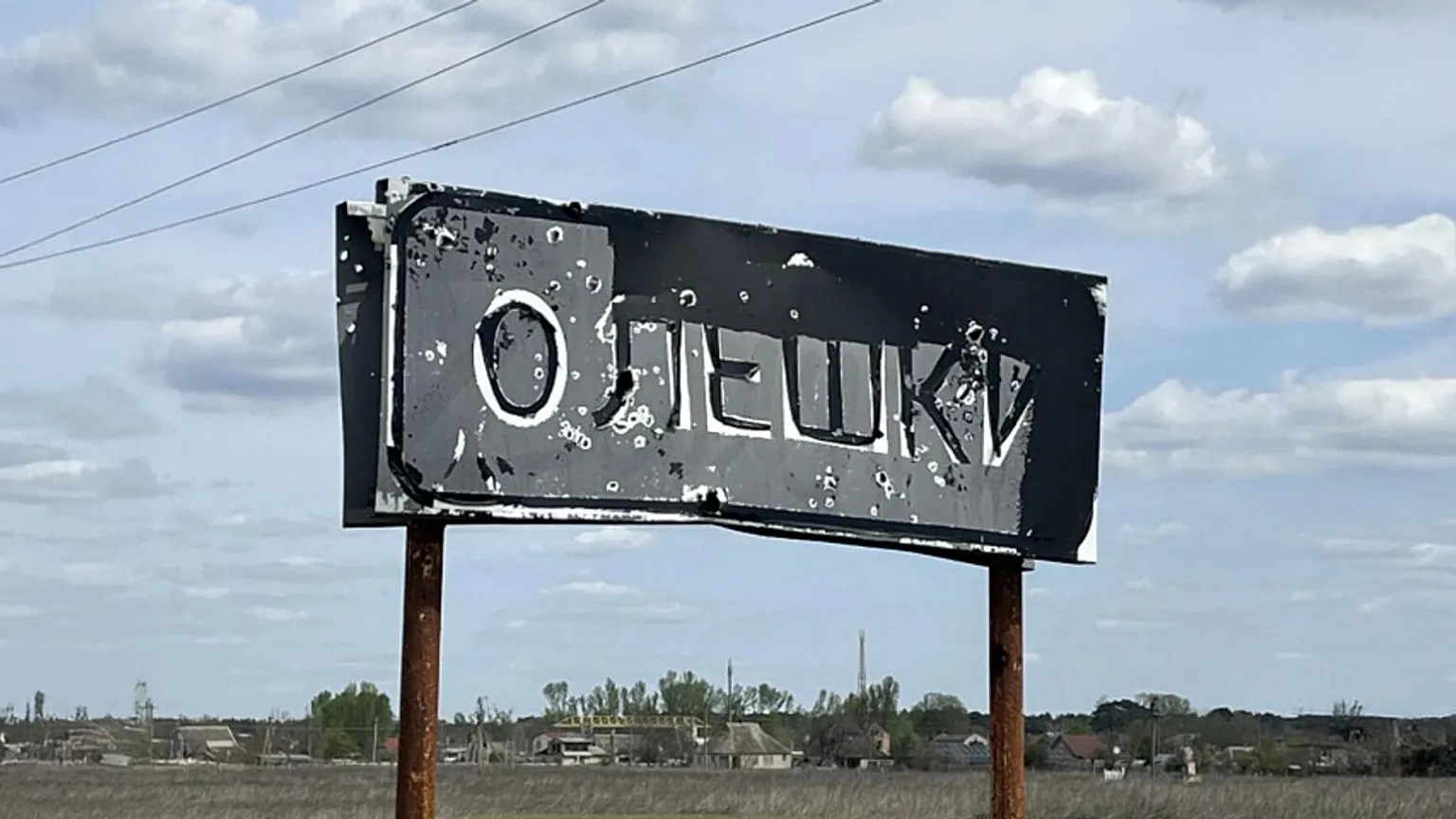
"Russia's defence industry is entirely dependent on foreign components. Without them, they would not be producing anything apart from the Oreshnik. That is why the priority of our sanctions efforts is to make all these components unavailable, or at least difficult to obtain, for Russia's military-industrial complex, Iran and North Korea. And we have achieved some success in this area," Vlasiuk said.
In particular, China amended its export control regulations several days ago, introducing a licensing regime for the export of numerous electronic products and components required for drone manufacturing, including jet engines.
The new rules will enter into force on 18 November.
At the same time, some direct supplies from China to Russia continue. Vlasiuk stressed the importance of ensuring that Russia does not circumvent these restrictions to import Chinese components used in the production of its drones.
The Presidential Commissioner for Sanctions Policy noted that Ukraine continues to provide its partners with the most detailed information possible about the serial numbers, manufacturers and components identified in Russian weapons.
"Only increased sanctions pressure will force Russia to engage in constructive negotiations towards a just and lasting peace. Accordingly, we constantly present very specific proposals to all our partners. Almost five years of war have taught us that technological systems are continuously evolving, and Russia is investing all its resources in their development. We must therefore be prepared and respond through sanctions measures," Vlasiuk emphasised.
According to him, reducing the scale of Russian weapons production requires the full alignment of sanctions against Russian manufacturers, particularly those producing ballistic missiles, across multiple national jurisdictions.
He also stressed the need for law enforcement agencies in the relevant countries to investigate and stop the supply of electronic components to Russia.