

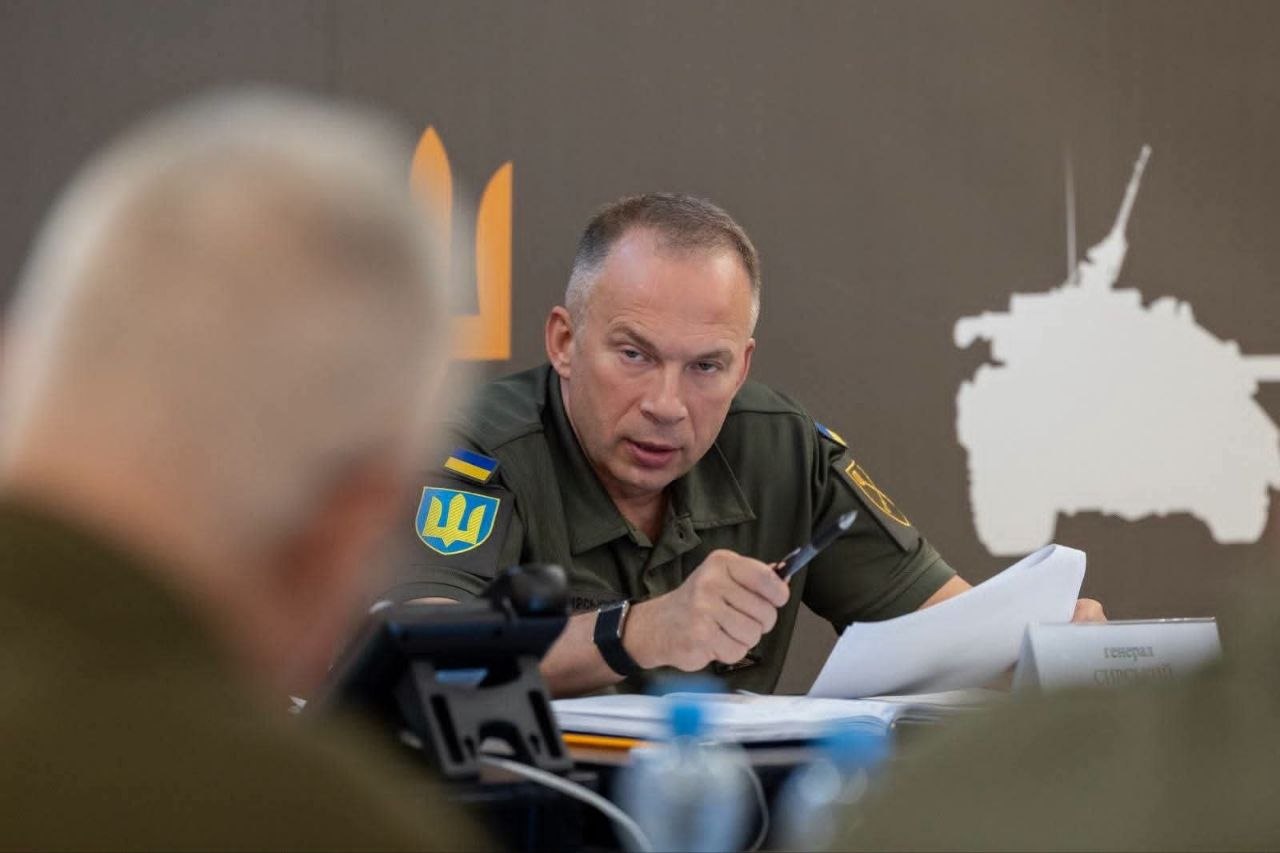

The pace of Russian troop advances more than halved during the first half of 2026, Commander-in-Chief of the Armed Forces of Ukraine General Oleksandr Syrskyi said on Telegram.
"We have reviewed the results of the first half of 2026—another stage in the difficult struggle of the Armed Forces of Ukraine for the freedom and independence of our state," Syrskyi said.
According to the commander-in-chief, "the enemy attempted to launch a large-scale offensive but ultimately failed to achieve any of its objectives, despite having nearly a twofold advantage in personnel and equipment. Whereas the Russian army previously conducted active offensive operations on 13 operational axes, that number has now been reduced to no more than six or seven."
Syrskyi said that "Ukrainian forces continue their defensive operation while combining it with stabilization measures and, on certain fronts, conducting active operations and maintaining the operational initiative. Currently, the ratio of our assault operations to those of the enemy is approximately 40 to 60. It is precisely due to the active actions of the Defense Forces that the pace of Russian troop advances fell by more than half during the first half of 2026."
At the same time, the commander-in-chief noted that the Russian forces average monthly losses amount to about 32,000 troops killed and wounded.
"We are consistently implementing a strategy of exhausting the Russian aggressor. In terms of the rate of territorial advances, the two sides have effectively approached parity. There is also a steady trend toward an increasing ratio of territory liberated by Ukraine's Defense Forces compared with the areas where the enemy manages to advance," Syrskyi said.
However, he stressed that "the enemy must not be underestimated. A turning point in the war is still far away. The aggressor has not abandoned its plans for the complete occupation of Luhansk and Donetsk regions, seeks to expand offensive operations into Dnipropetrovsk and Zaporizhzhia regions, and aims to establish and enlarge a buffer zone in Ukraine's northern regions. The intensity of missile and drone strikes is increasing, as is the use of guided aerial bombs and the number of crimes committed against civilians."
"That is why the Armed Forces of Ukraine are steadily strengthening their capabilities in order to deliver a worthy response to the enemy and ultimately compel the Kremlin to accept a just peace on our terms," Syrskyi said.
According to him, Ukraine's Deep Strike capabilities hit 697 targets inside the Russian Federation during the first six months of the year. The direct and indirect economic damage inflicted on the Russian forces are estimated at no less than $6.1 billion.
Syrskyi also highlighted the effectiveness of the Middle Strike campaign, noting that 7,028 Russian targets were hit during the same period.
The commander-in-chief reported that Ukrainian artillery carried out more than 456,000 fire missions. Missile forces launched more than 1,140 strikes, the Air Force conducted over 1,100 strikes, and support units carried out approximately 1,400 missions.
During the meeting, participants conducted a detailed review of several problem areas, including the operational organization of brigades in defensive positions and the excessive length of time soldiers spend on frontline positions.
Syrskyi stressed that "commanders are required to ensure personnel rotations at least once every 60 days. This is a matter of our soldiers' lives and health, their combat effectiveness, and fair treatment of our personnel."
The commander-in-chief also received reports on the performance of the Ukrainian Navy, logistics, the support system, the training and recovery of military units, and the state of law and order within the armed forces.
In particular, Syrskyi noted that the number of criminal offenses committed within the military decreased by 12% during the first half of the year.
"I have set ambitious objectives for the next period," Syrskyi said.