


By Viktor Yahun
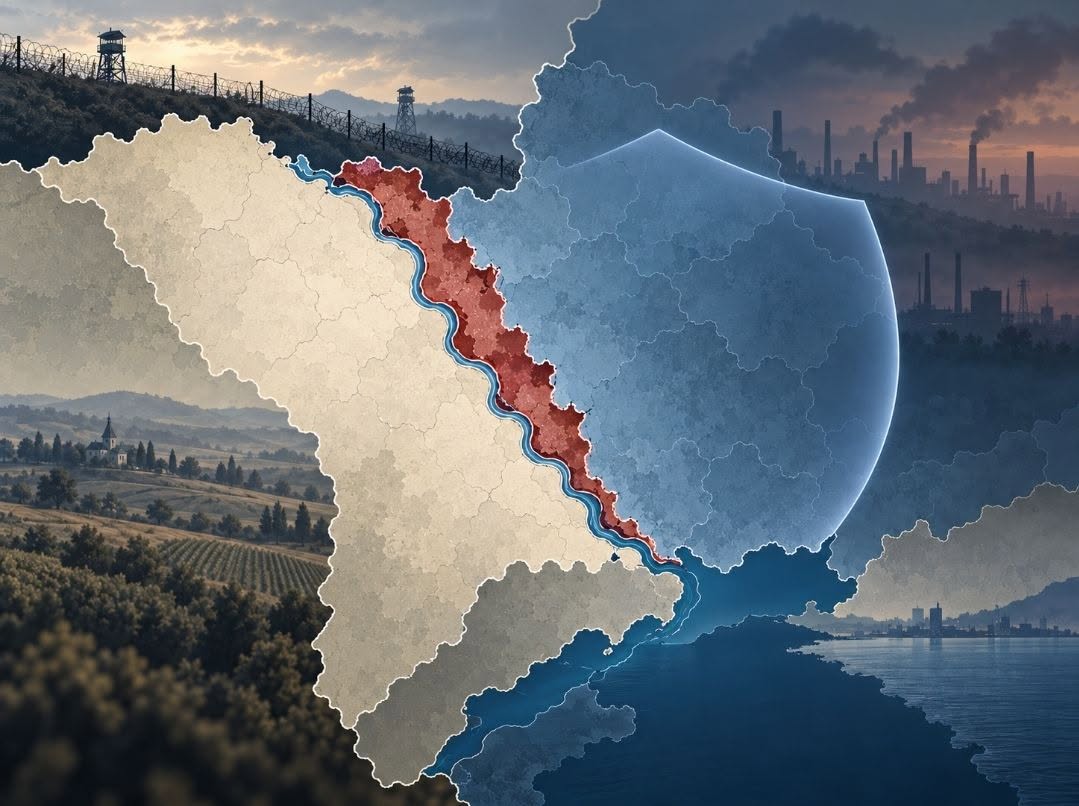
Transnistria is not merely a "frozen conflict" on Moldovan territory. It is a centre of Russian military and political presence near the Ukrainian border, through which the Kremlin has constrained Chisinau's sovereignty for decades and created additional security threats to southwestern Ukraine.
The main strategic conclusion is that Transnistria's economic model is collapsing, but Russia's military presence and mechanisms of political influence remain intact. Therefore, the weakening of the separatist regime does not automatically mean the elimination of these threats. On the contrary, the struggle over the region's future is entering a new phase, the consequences of which will shape the security of Moldova, Ukraine and much of Eastern Europe.
As of 24 October 2026, Transnistria finds itself at a strategic crossroads. Its old model of existence is losing viability, but a new system of political governance and security has yet to emerge.
Following the cessation of Russian gas transit through Ukraine on 1 January 2025, the region's economy lost its key advantage: access to exceptionally cheap energy resources.
According to data published by Ukraine's Foreign Intelligence Service in April 2026, industrial production fell by 27.3%, while real GDP contracted by almost 18%. Delays in public-sector salary payments were also reported. Gas continues to arrive through alternative arrangements, including financing linked to Russia, but the stability of these supplies remains uncertain.
At the same time, in the first half of 2026, the European Union accounted for 76.9% of exports by Transnistrian enterprises.
This is the central paradox: economically, Transnistria is becoming increasingly dependent on the European market and Moldova's legal mechanisms, while politically it remains under Moscow's influence.
Is Moldova ready to take advantage of this situation to pursue reintegration? Partially.
Chisinau is gradually extending unified customs and tax regulations to the region. Another stage of this process began in September 2026. A Convergence Fund is envisaged to support infrastructure development and social services. The possibility of an international civilian administration during a transitional period is also under consideration.
However, political intentions do not necessarily translate into administrative and security readiness. Integrating the judicial system, police, public finances and pension arrangements, resolving property disputes and ensuring accountability for human rights violations will require substantial resources and international support.
But the most difficult issue is not economic. It is the Russian military factor.
An estimated 1,500–2,000 Russian military personnel remain in Transnistria, a significant proportion of whom have been recruited from the local population.
This force does not possess sufficient capabilities to launch a large-scale offensive against Odessa independently. Its isolation complicates personnel reinforcement, resupply and the expansion of its combat capabilities.
However, assessing the threat solely by the number of military personnel would be a mistake.
Military infrastructure, security structures controlled by Tiraspol, intelligence capabilities and the potential for sabotage and provocations remain instruments of destabilisation. Under certain circumstances, even a limited military contingent can create disproportionately serious political and security challenges.
A separate threat is the ammunition depot at Cobasna. According to assessments by Moldovan intelligence services made public in 2026, approximately 14,000 tonnes of ammunition are stored there, some of which remain hazardous and potentially explosive. This requires international oversight and a technical solution, but it does not justify speculation about an inevitable "nuclear catastrophe".
Is Russia prepared to abandon Transnistria? The Kremlin's current actions provide no evidence of this.
For Moscow, the enclave is primarily of military and political significance. It allows Russia to maintain a presence on the territory of a sovereign state, influence Moldova's domestic political processes and complicate its European integration.
Putin's May decree simplifying the acquisition of Russian citizenship for Transnistrian residents indicates the continuation of this policy. The issuing of Russian passports expands opportunities for political pressure, creates potential pretexts for claims about "protecting Russian citizens" and increases the risk of recruitment for the war against Ukraine.
At the same time, open sources do not provide sufficient grounds to conclude that Moscow has already prepared a concrete plan for a military offensive from Transnistria.
On 23 October, a demonstration took place in Tiraspol against Chisinau's alleged "economic pressure". Moldovan authorities regarded it as an attempt to shift responsibility for the crisis onto the central government. However, the demonstration itself proves neither that the population is united behind the separatist administration nor that preparations for military escalation are under way.
It is important to distinguish between the interests of the local ruling elite and those of the population.
For Tiraspol's political and security structures, preserving the current status quo means retaining control over political power and financial flows. For most ordinary residents, the main priorities remain economic stability, employment, pensions, social protection and freedom of movement.
Trade with the EU does not, in itself, guarantee support for reintegration. Equally, an economic crisis does not mean the inevitable collapse of the separatist administration. Security, political and social developments follow different trajectories.
This is where Ukraine becomes decisive.
The resilience of Ukraine's defence and its control of the state border have effectively isolated the Russian contingent in Transnistria from Russia's main military forces.
For Moscow, a potential advance towards the Odessa region would fundamentally alter the military-geographical situation and create opportunities to increase pressure on Moldova.
That is why the security of Chisinau and Odessa is strategically interconnected.
However, Ukraine's interest is not in opening a new front along the Dniester. Rather, it is in preventing Transnistria from being used as a military and intelligence foothold, a source of sabotage threats and an instrument for destabilising border regions.
Accordingly, Ukraine and Moldova need to deepen cooperation in counterintelligence, border control, cybersecurity, critical infrastructure protection and countering Russian information operations.
Particular attention should be paid to the infiltration of intelligence agents, the activities of Russian intelligence services, possible provocations and attempts to exploit humanitarian or energy crises for political blackmail.
At the same time, genuine threats must be distinguished from disinformation campaigns designed to provoke panic and unwanted escalation.
Thus, three strategic processes are converging in Transnistria: economic integration with Europe, the local elite's determination to retain power, and the Kremlin's efforts to preserve military and political control.
Moldova is gradually gaining economic leverage for reintegration, but it needs considerably greater administrative, financial and security preparedness. Russia continues to retain instruments of influence, although sustaining the region's old economic model is becoming increasingly difficult.
Ukraine, meanwhile, is limiting Moscow's military capabilities through its defence efforts and has a direct interest in achieving a lasting settlement of the conflict.
A strategic resolution of the Transnistrian issue is impossible without the withdrawal of Russian troops, the dismantling of mechanisms of external military control, international security guarantees and Moldova's ability to restore effective state governance.
However, reintegration must protect the rights and security of the region's residents rather than create a new source of instability.
The most important thing today is not to confuse Transnistria's economic exhaustion with the disappearance of the Russian threat. As long as the Kremlin maintains a military presence and the capacity to destabilise the region, this conflict will remain a direct challenge to the security of Ukraine and Moldova.
The question is no longer simply whether Moscow can maintain its hold over Transnistria. Far more important is how to prevent the region's inevitable transformation from triggering a new crisis and how to turn conflict resolution into an integral part of the long-term security of Ukraine, Moldova and Europe.