


Postscript to the Iranian story is very simple: wars are won by those who are ready to die in them. War is about death and endurance, not about life and parades.
Iran’s victory over America is a consequence of the fact that several generations of IRGC leadership (which, as it has turned out through experimentation, is the real ruling force in Iran) were willing to be pulverized under American and Israeli bombs, but this did not affect the willingness of those who remained to continue resisting.
If Volodin understood the terrible truth he accidentally revealed when he said in what now seem like ancient times, “there is Putin – there is Russia, no Putin – no Russia,” he would have tried to take his words back. The difference between Russia and Iran turned out to be simple and obvious: the Iranian regime remains stable with Khamenei alive, with Khamenei dead, and even with Khamenei in a coma or in a mausoleum.
The moment the Americans understood this, continuing the war became impossible, because to defeat such an opponent one would have to be ready to die in large numbers, and in America no one was ready for that. In America, as in Russia, the mandate was not actually for a war where people die, but for a “special military operation” where people are killed. And as they say in Odesa, those are two very different things.
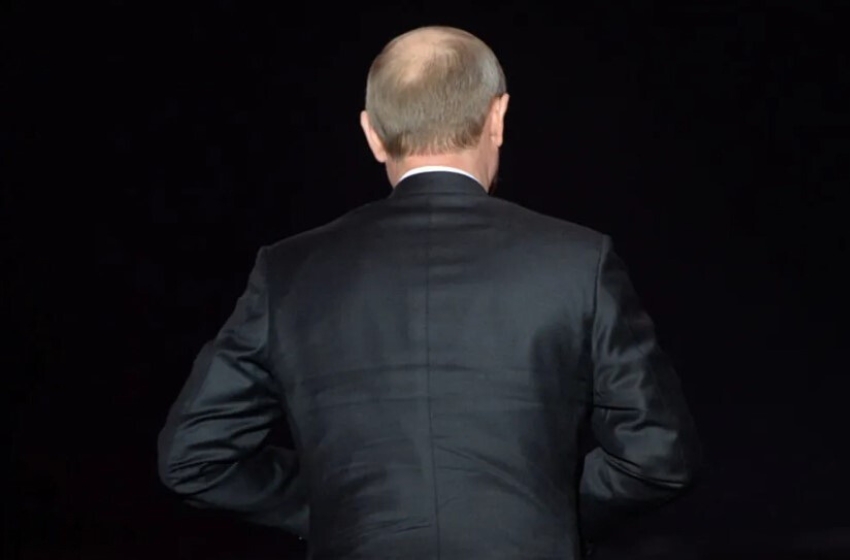
Putin is Russia’s main vulnerability in any serious war. Because if it ever comes to a real “nuclear melee,” he would become the main legitimate and desirable target. And this is something everyone understands implicitly. And it is not about Putin lacking personal courage or willingness to die. Perhaps he has it—another person’s soul is dark—but rather that Volodin is right: no Putin, no Russia (if one equates Russia with the regime currently established there).
And it is not even about Putin at all, but about the nature of the regime—about what distinguishes a real totalitarianism, based on an original pseudo-religious ideology, from a parody of totalitarianism, which ultimately rests on some secondary Dugine-Malofeev-style fake. In the first case, killing the leader merely accelerates the regime’s evolution (in different directions); in the second, it ends its existence.
Trump underestimated the indoctrination of Iranian society, taking Iran for Venezuela. Putin knows the value of “Surkov-style propaganda,” and therefore his main efforts are focused on ensuring his own personal security. This fixation on personal security is not necessarily a sign of cowardice. It may indicate Putin’s understanding that the “mission is impossible,” and that in the event of his death everything will collapse.
As a result of the Iranian war, as well as the Ukrainian war, serious conclusions will be drawn. Not immediately, but inevitably. And the main conclusion will be that those who are not ready to die should not start a war with those who are ready to die every day. As they say, “If you are not sure, don’t overtake.”