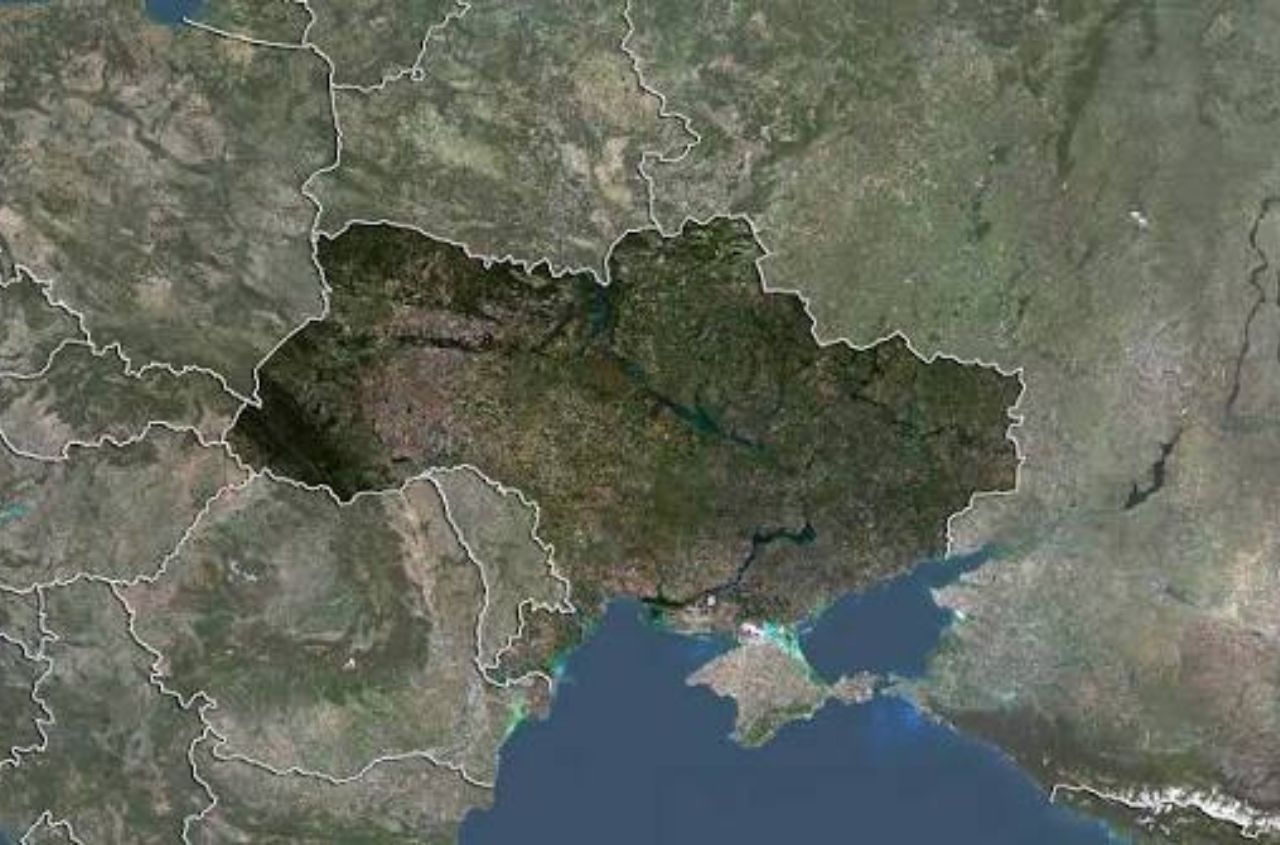


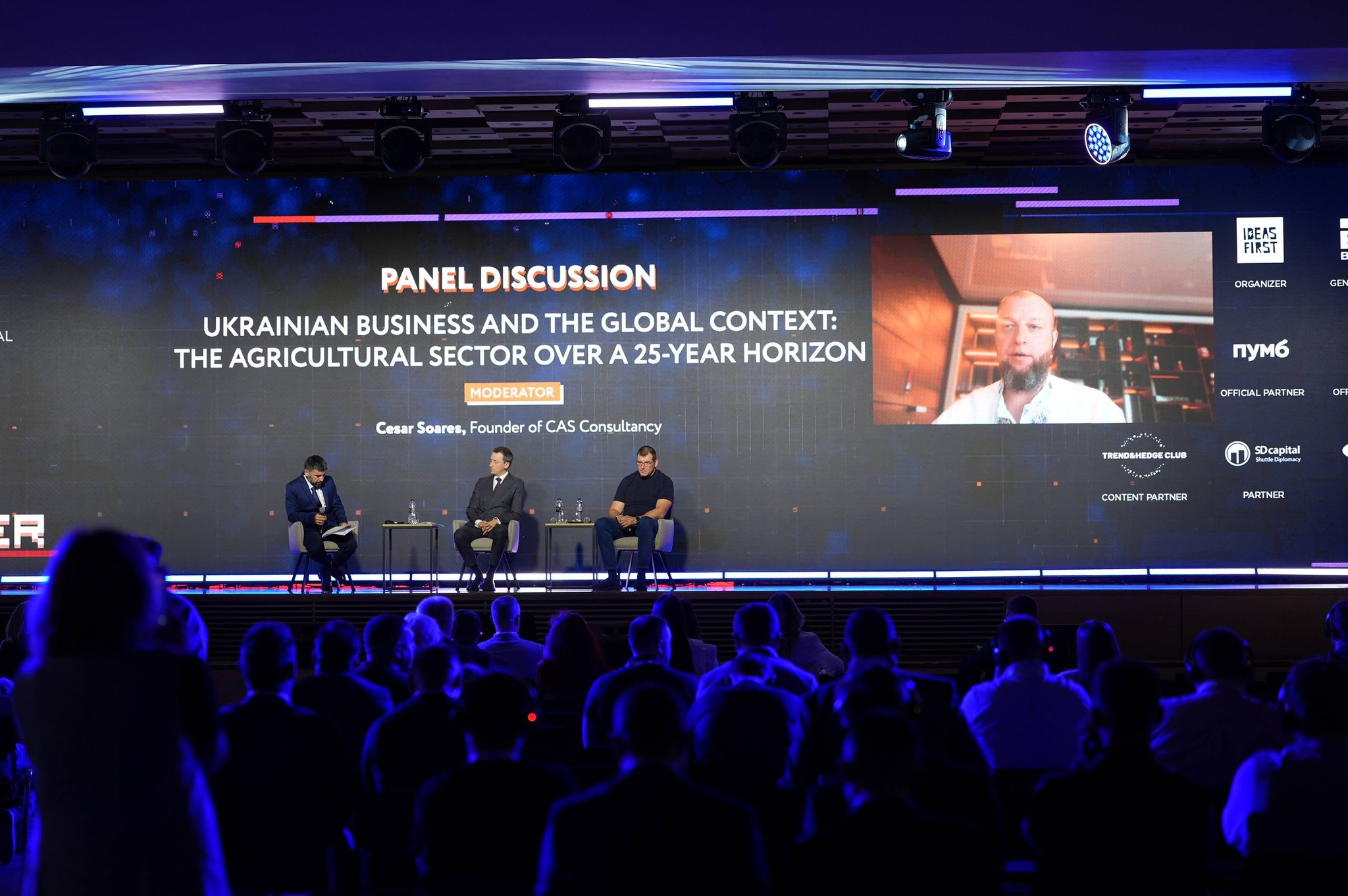

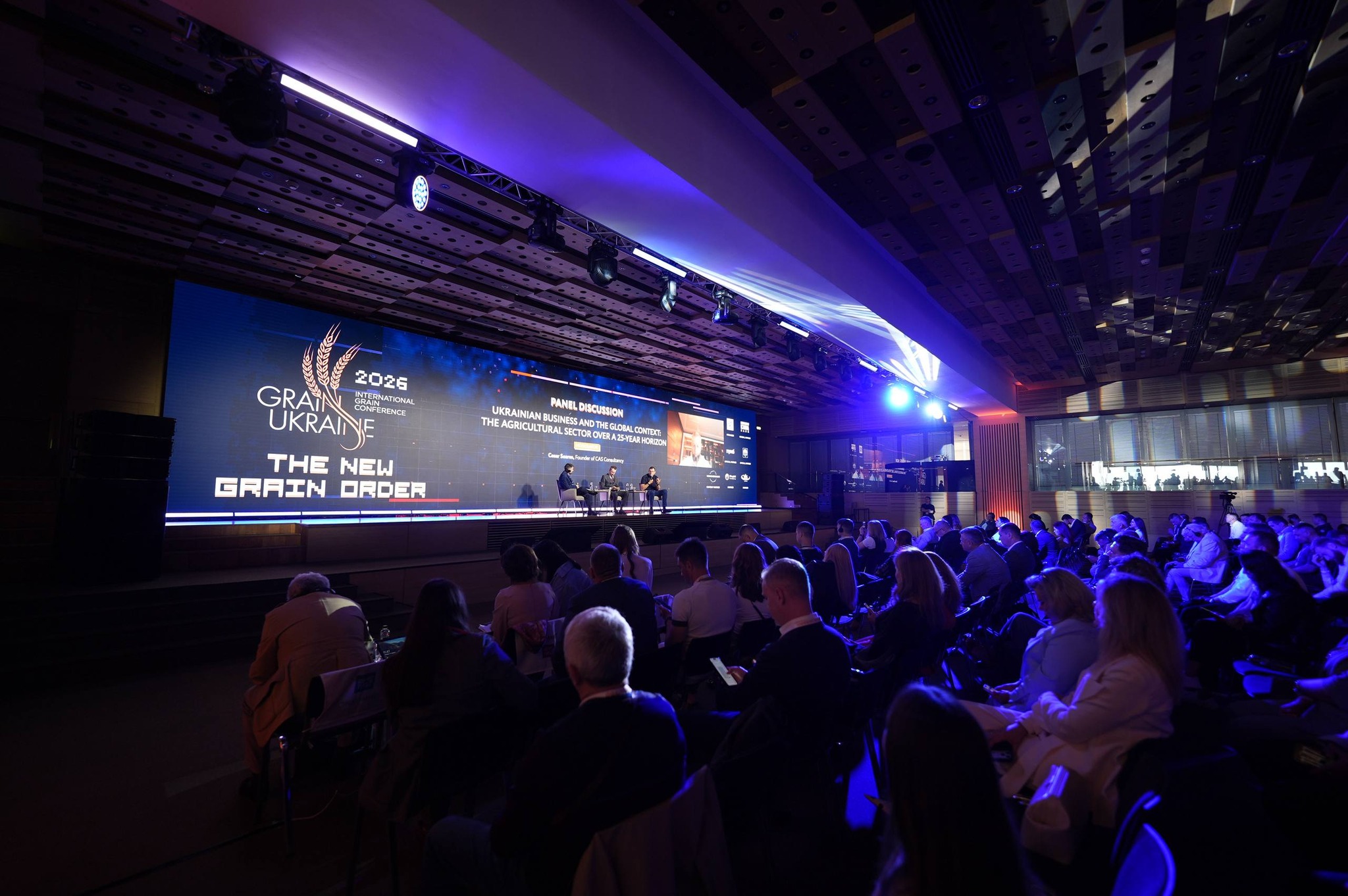
What will Ukraine’s agricultural sector look like in 25 years, and what will determine its global competitiveness?
This was discussed by participants of the first panel of Grain Ukraine 2026: Oleksii Sobolev, Minister of Economy, Environment and Agriculture of Ukraine; Andrii Stavnitser, co-owner and CEO of the TIS port and founder of Superhumans; and Yevhen Osypov, CEO of Kernel.
The discussion was moderated by César Soares, founder of CAS Consultancy.
Ukraine and the EU: from integration to joint leadership
“Together with the EU, Ukraine can become the world’s number one provider of food products,” said Oleksii Sobolev.
According to the participants, integration into the EU opens access to a large market, investment, and creates conditions for the development of high value-added products.
Future competitiveness lies in technology and efficiency
“We will not be able to compete with Brazil or Argentina on price. Our advantage lies in resilience, technological development, and the ability to quickly adapt to change,” the minister emphasized.
“Business is actually integrating into the EU very quickly. Almost 50% of Kernel’s exports already go to EU countries,” added Yevhen Osypov.
At the same time, one of the main challenges remains compliance with European quality and certification standards.
Logistics, processing, and bioenergy as the foundation of the next stage of development
“We need investments in logistics and integration into European transport networks,” said Andrii Stavnitser.
Participants also identified promising areas such as deeper processing, biomethane and bioethanol production, and increasing exports of value-added products.
Ukraine 2050
“We need to build a system with high added value, technological advancement, and stable exports. This requires investment, cooperation between business and government, and successful integration into the European market,” concluded Oleksii Sobolev.
Ukraine and the EU can strengthen each other
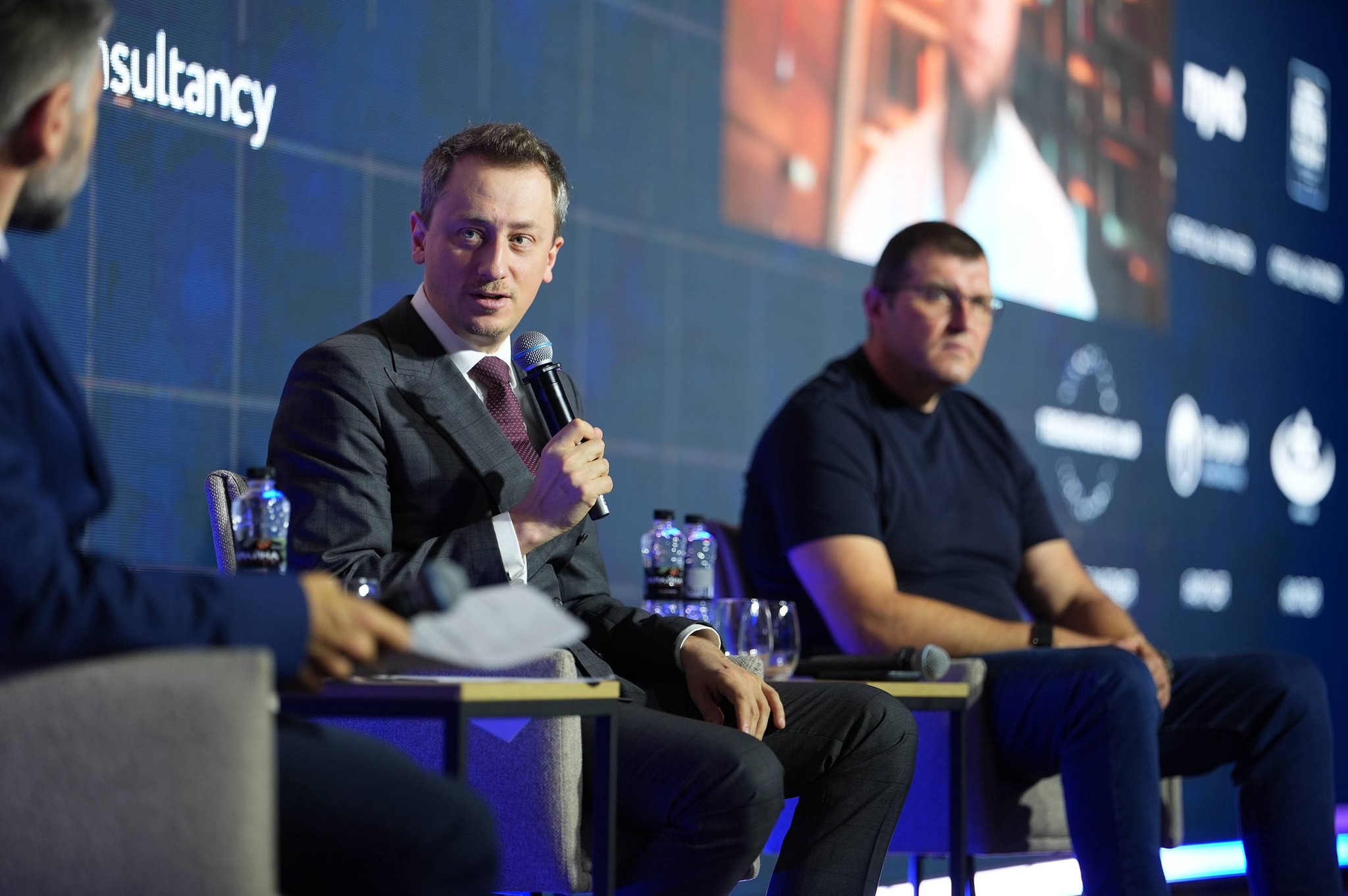
Speakers repeatedly emphasized that future integration is a two-way process. The European Union provides standards, regulatory frameworks, and access to a large market, while Ukraine’s agricultural sector demonstrates high adaptability, technological capability, and the ability to operate under constant challenges.
“We must not only adapt to the EU. Our experience of resilience and transformation can also become an important example for European partners,” said Yevhen Osypov.