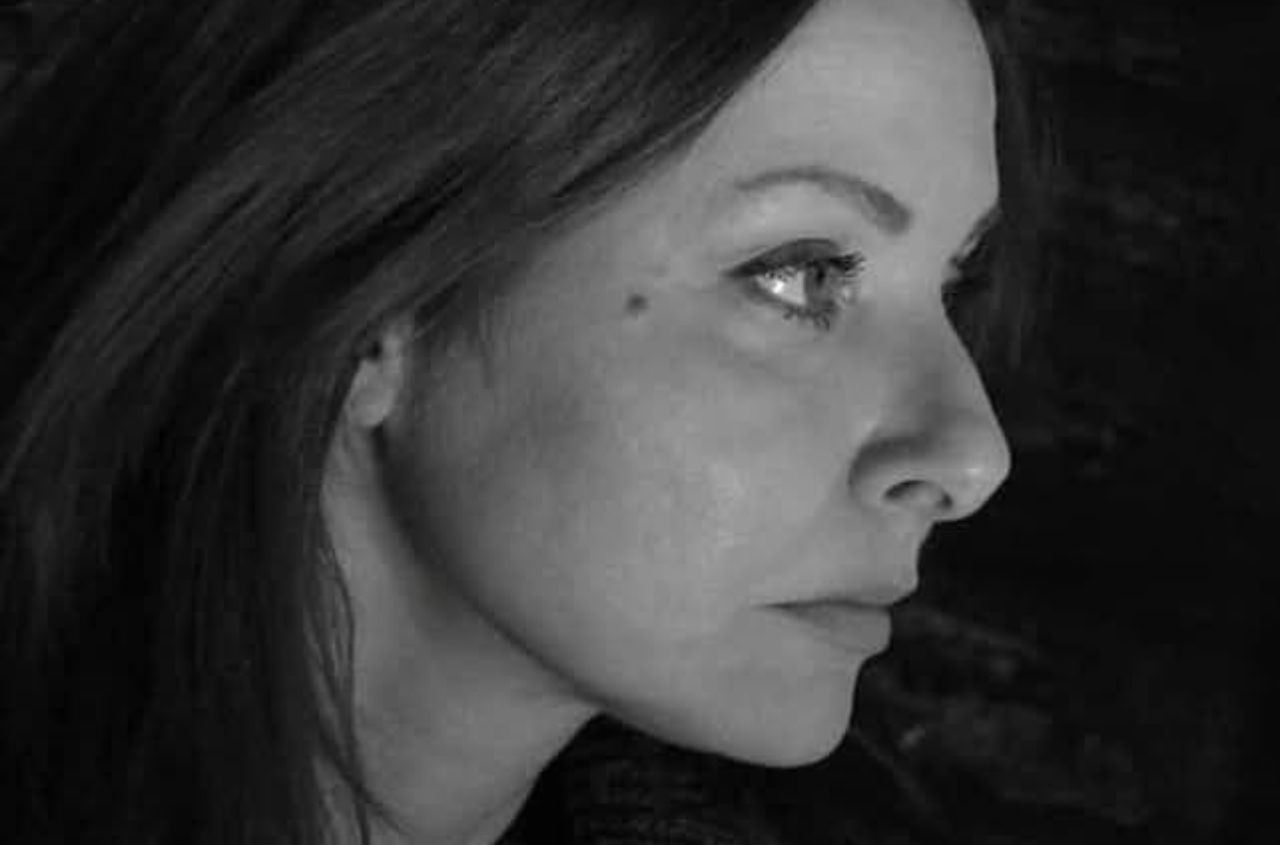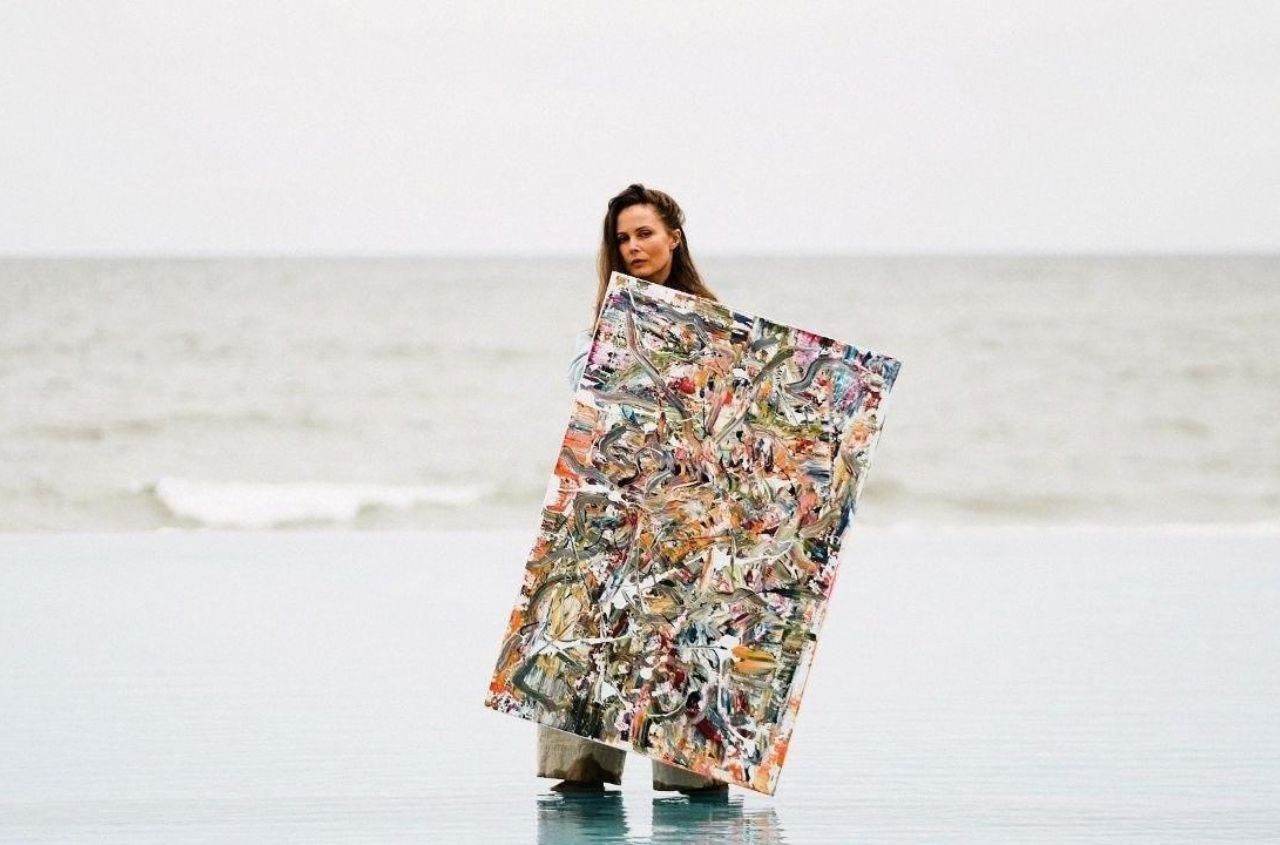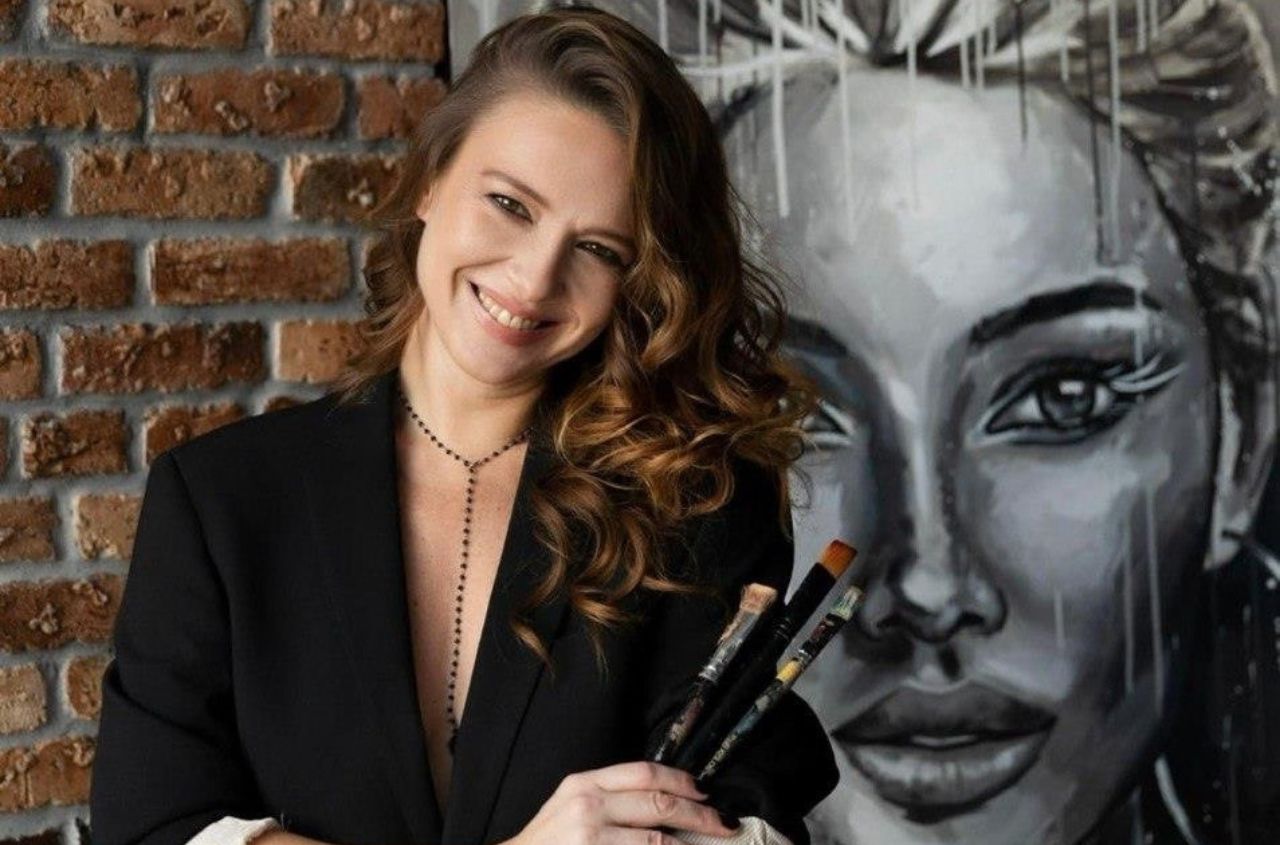


Main image: Liza Kniga's FB cover
The nineteenth interview through images by Andrew Sheptunov
Odessa is a city woven of contradictions, and the creative path of Liza Kniga is the best confirmation of this fact. A graduate of the Law Academy, destined to operate with dry facts and legal statutes, she chose a completely different medium - raw emotion and work at the Odesa Fine Arts Museum (OFAM).
But Liza is not just a museum employee surrounded by a magnificent past. She is the voice of the present. Her art is not classical painting in heavy frames. It is graphic art that resembles an exposed nerve. It is a visual diary where text and image are inseparable. As the artist herself admits, the title or a phrase often comes to life before the drawing does.
Her works are a manifesto of vulnerability. They lack pretension but possess a disarming honesty. Liza draws what is often too scary to admit even to oneself: the fear of loneliness, the attempt to squeeze into beauty standards, the awkward moments of growing up, and the surrealism of war.
Take, for instance, the striking image of a girl shaving her legs during an air raid "so as not to be ashamed in front of the emergency rescue workers." In this, we see the essence of Liza: mixing horror with the mundane, irony with tragedy, to create a document of the era.
Her heroines - often faceless self-portraits - live in a world where "all crushes are unrequited," yet "sleep is sound even during alarms." They claim the right to be creators for themselves, not muses for others: "Always an artist, never a muse."
We asked Liza 12 questions - about fear, inspiration, war, and self-acceptance. She answered them with 12 works from her archive. Accompanying each piece are the artist’s own written reflections. We have also provided translations of the Ukrainian text inscribed on the artworks so you can fully experience the narrative.
There are no right or wrong answers here. There are only honest lines, ironic captions, and colors that speak louder than words. We invite you to take a look.
1. Which work would you choose as a business card to introduce yourself to a stranger?
I would choose this work as my business card for a stranger because it most accurately symbolizes me as a person. It is about my internal space, a kind of protective shell in which I try to exist during times of excessive tension, high expectations of myself, and constant internal demands. This work is about my comfort zone - not as an escape from reality, but as an honest acceptance of its complexity. Here, I acknowledge all the troubles; I do not deny them or embellish them, yet simultaneously, they do not sadden or frighten me. They are perceived as something natural, inevitable, as a state in which it simply cannot be otherwise. In this work, there is no struggle - there is coexistence, peace, and internal accord with who I am in this moment.
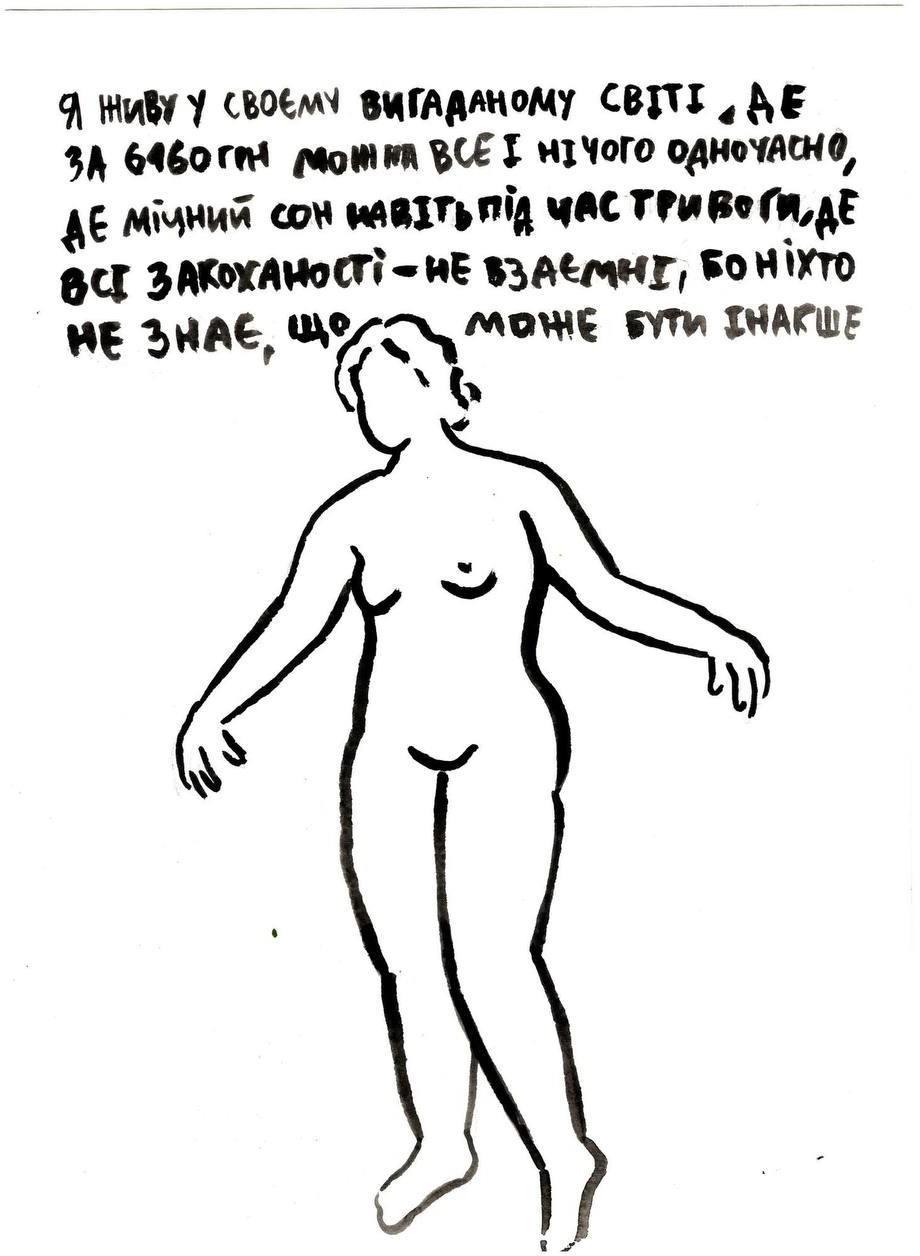
I live in my own imaginary world, where 6,460 hryvnia can buy you everything and nothing at the same time, where you can sleep soundly even during times of unrest, where all love is unrequited, because no one knows that it could be any other way.
2. Show us the painting that would be the hardest for you to part with.
This work appeared during a period when I was considering getting a second degree (my first is in law). To apply to the Graphic Arts faculty, I needed to write a formal motivation letter. In parallel, the idea arose to create an ironic piece about what actually motivates me. This image turned out to be much more honest and candid than any official text. That is why this work is deeply intimate to me. I do not perceive it as an object that can be passed on to someone else. It belongs only to me and captures a state that requires no outside feedback.
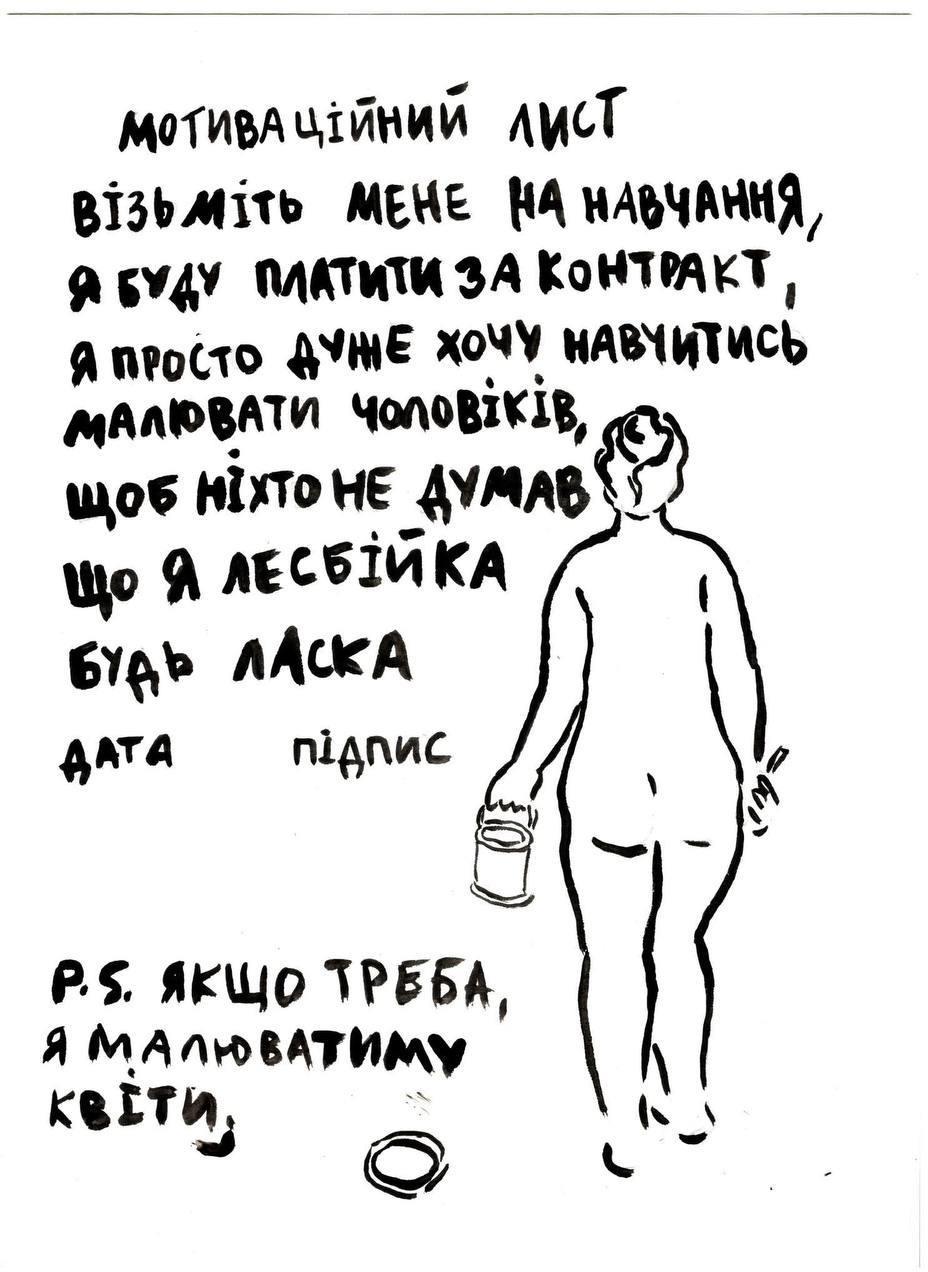
Motivational letter: Please accept me for training. I will pay for the contract. I just really want to learn how to draw men so that no one thinks I'm a lesbian. Please.
Date, signature. P.S. If necessary, I will draw flowers.
3. In which work, in your opinion, did you find the perfect color combination?
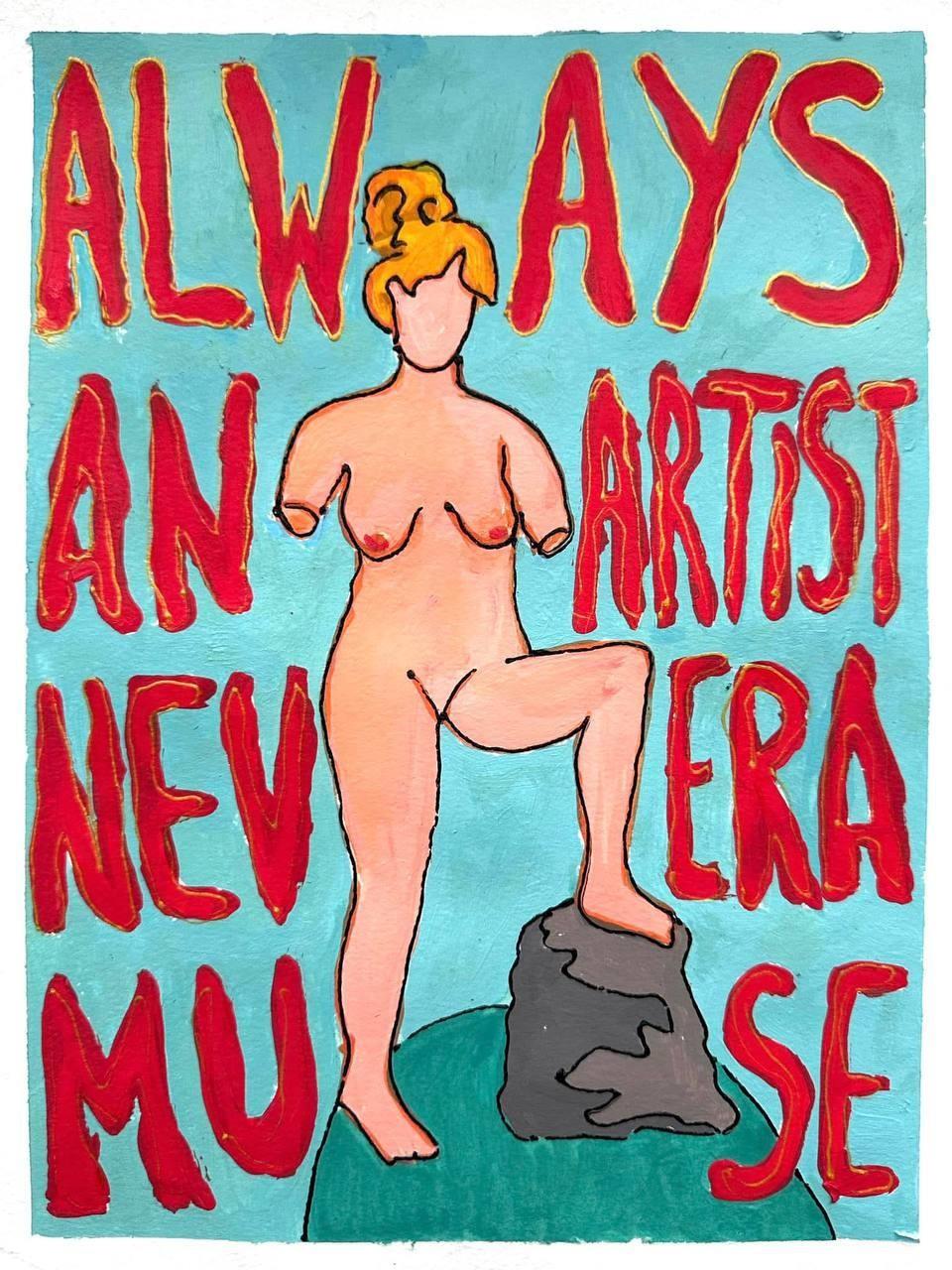
This is one of the early works in my creative life, and that is why I have special sentiments towards it. It still surprises me with its color combination, which at that moment became a kind of declaration of my state. The heroine has no face, but the text is present as a voice-it needs to be seen through color and meaning, rather than heard. It is not symmetrical or calibrated, but rather free, which adds internal dynamics to the work. The heroine's pose is calm, firm, and conscious. The absence of arms is a reference to the Venus de Milo, the traditional image of a muse, which I consciously reinterpret. This shift is crucial here: "Always an artist, never a muse."
4. Find the canvas that became a turning point in your creativity.
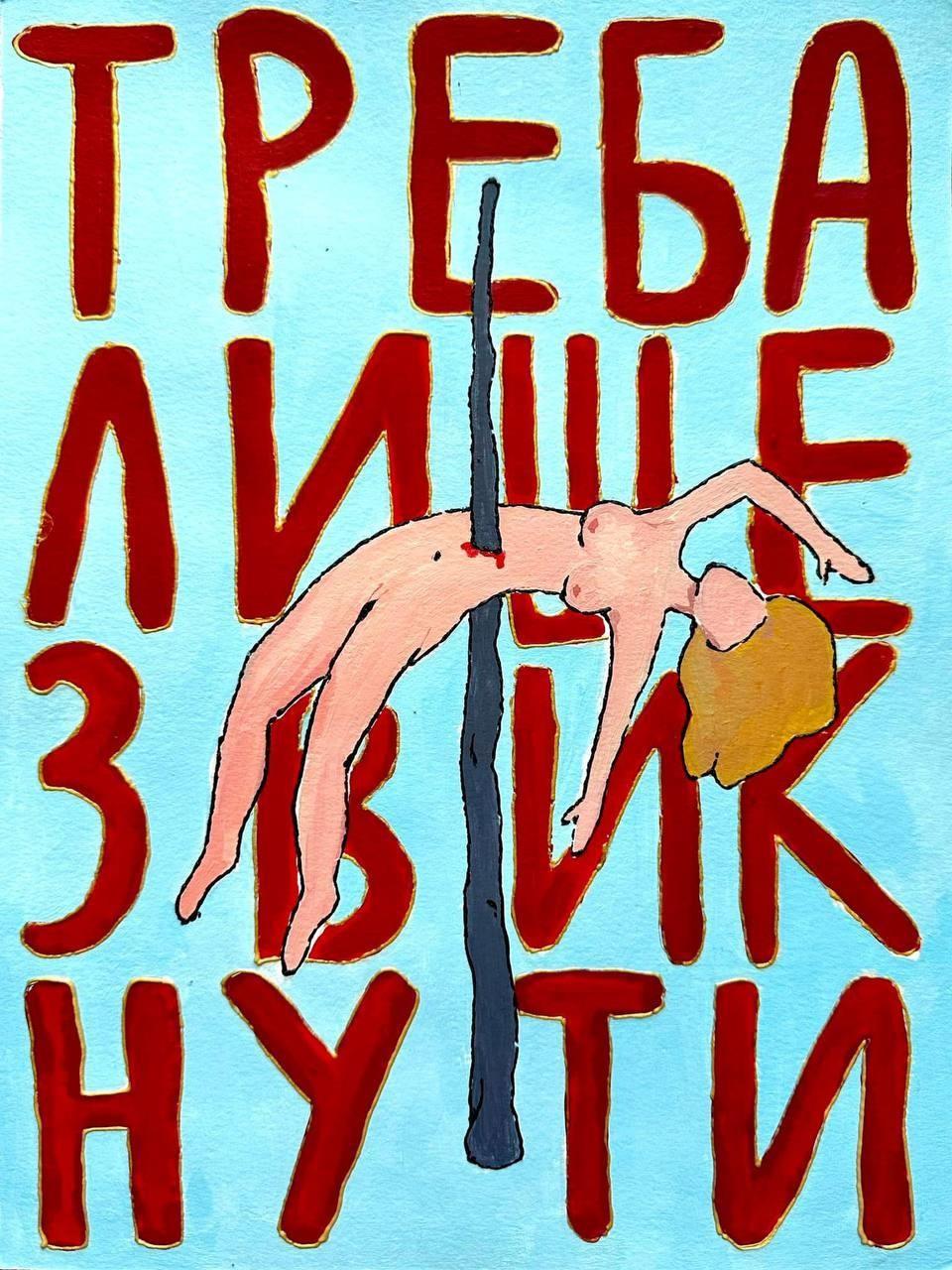
This work became a turning point for me. When I drew it, I poured in my own war experiences and fears, which a 17-year-old girl could not change-only learn to live with. After I published the drawing on social media, it was noticed by the Odessa curator and artist Volodymyr Umanenko, who included it in his project "VOLYANESMERT" (Freedom Is Not Death), which already includes over a hundred open-air exhibitions on the streets of Odessa. Through this project and social networks, people saw the work, discussions began, and it became a certain "calling card" of my style. I was introduced to the Odessa art community through it, and although the work was not always associated with the war, that is even better-it remained more universal.
5. Which picture was painted the fastest, literally in one breath?
The idea came instantly during a standard night routine before bed-familiar to any girl-in the bathroom, when an air raid alert and mass shelling of Odessa began. The thought flashed through my mind that life could break through at any moment, and I immediately began to draw. This work also became part of Volodymyr Umanenko's "VOLYANESMERT" project and was pasted up on Deribasovskaya Street. Recently, this location was covered with festive banners, and hundreds of works by contemporary artists were removed, but for me, this is symbolic-just as life can burst through at any moment, so can this work.
Thank you to the Armed Forces of Ukraine and the State Emergency Service (DSNS) for giving me the opportunity to continue my night routines to this day.
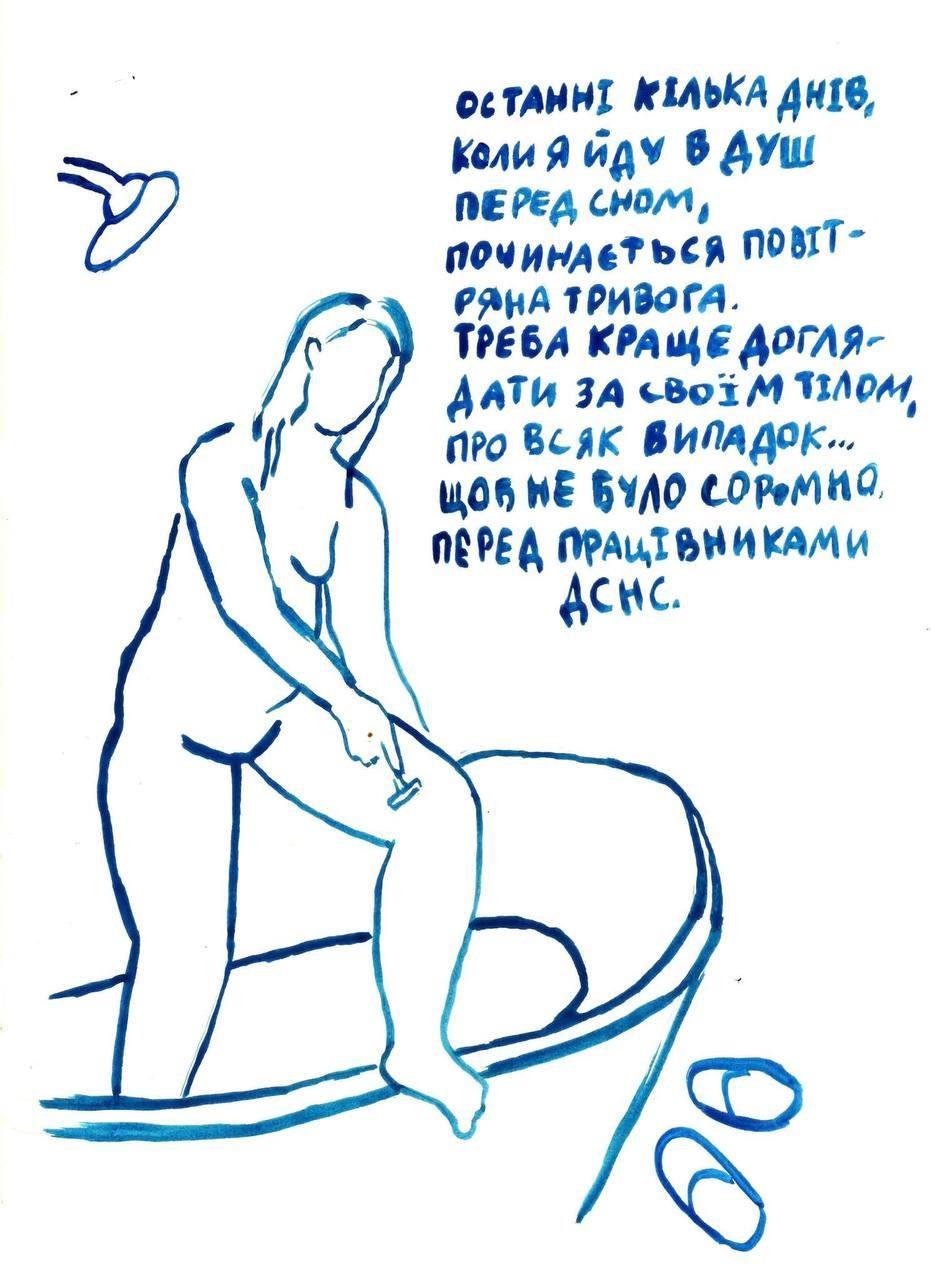
For the past few days, when I take a shower before bed, an air raid siren goes off. I need to take better care of my body, just in case... So that I don't feel ashamed in front of the State Emergency Service employees.
6. Choose a work that hides a secret known only to you.
This work is one of my favorites. It contains very deep experiences and symbols; it is like an excerpt from real life, influenced by real events that affected me. If we are talking about a secret hidden in it that is known only to me, then let it remain mine alone.
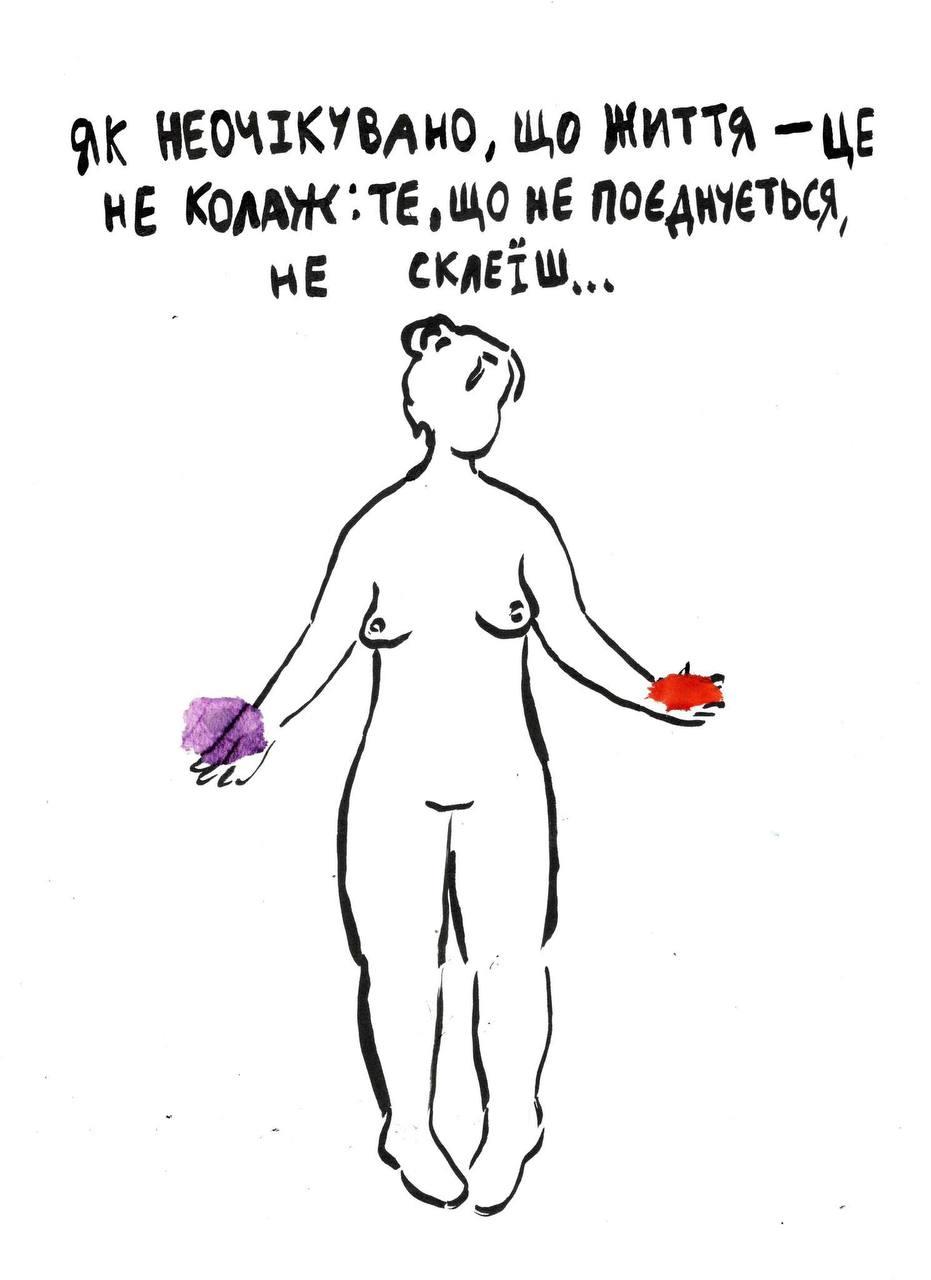
How unexpected that life is not a collage, that what does not fit together cannot be glued together...
7. Choose a painting where the title was born before the work itself.
The title of this work was born only after it appeared itself. Actually, in almost every one of my works, I invent the text first, and then add something visual, drawing characters or plots. And almost always, the text is from real life- something I heard or thought about. It is the same in this work: I thought it, and even said it in a conversation with another person, and then decided to draw how I felt at that moment. Now I understand that I often encounter stereotypes and unfair judgments, and this work is my answer to everyone who tries to judge me, because I can assign meaning to my actions myself when needed, and, of course, I will do it better than others.
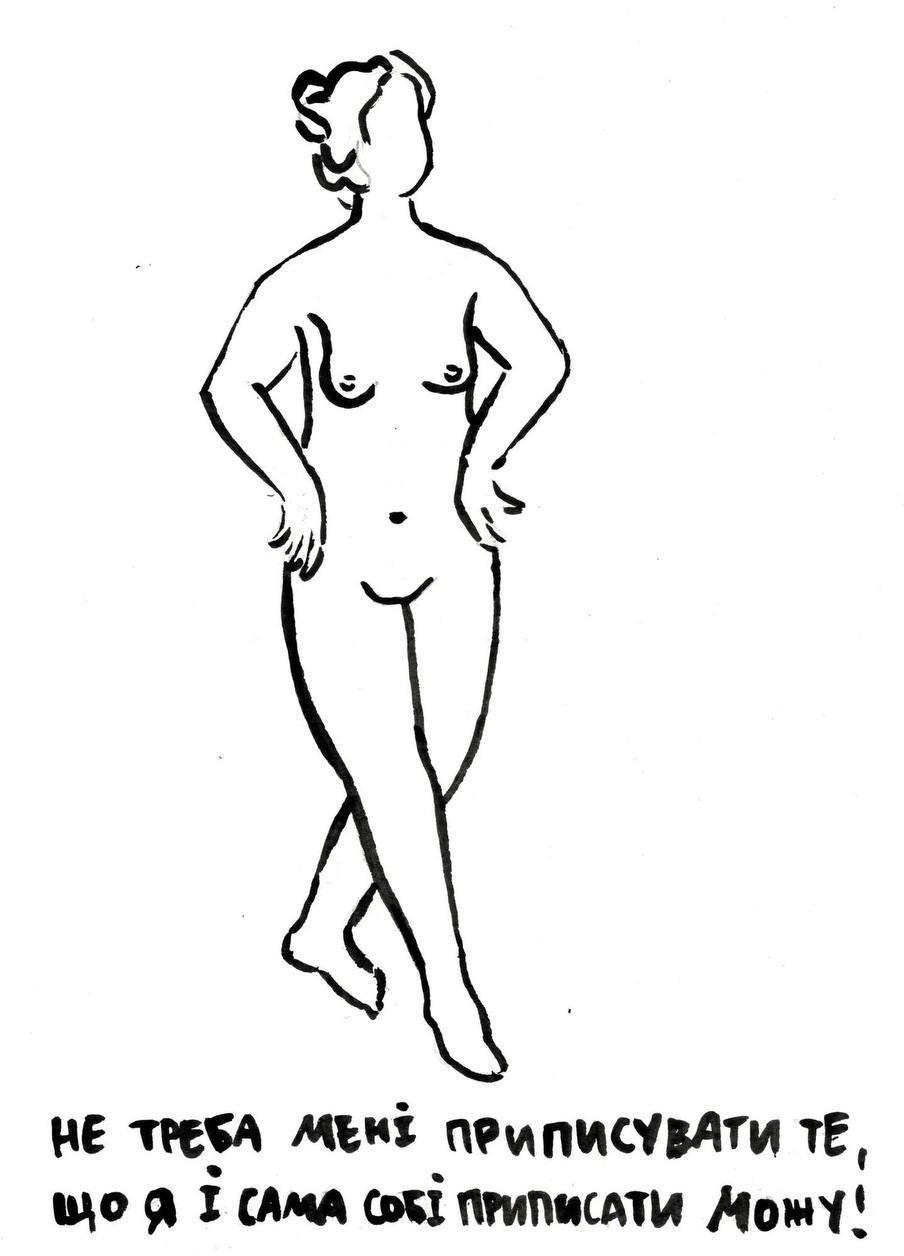
Don't attribute to me what I can attribute to myself!
8. Which of your paintings evokes a sense of nostalgia in you?
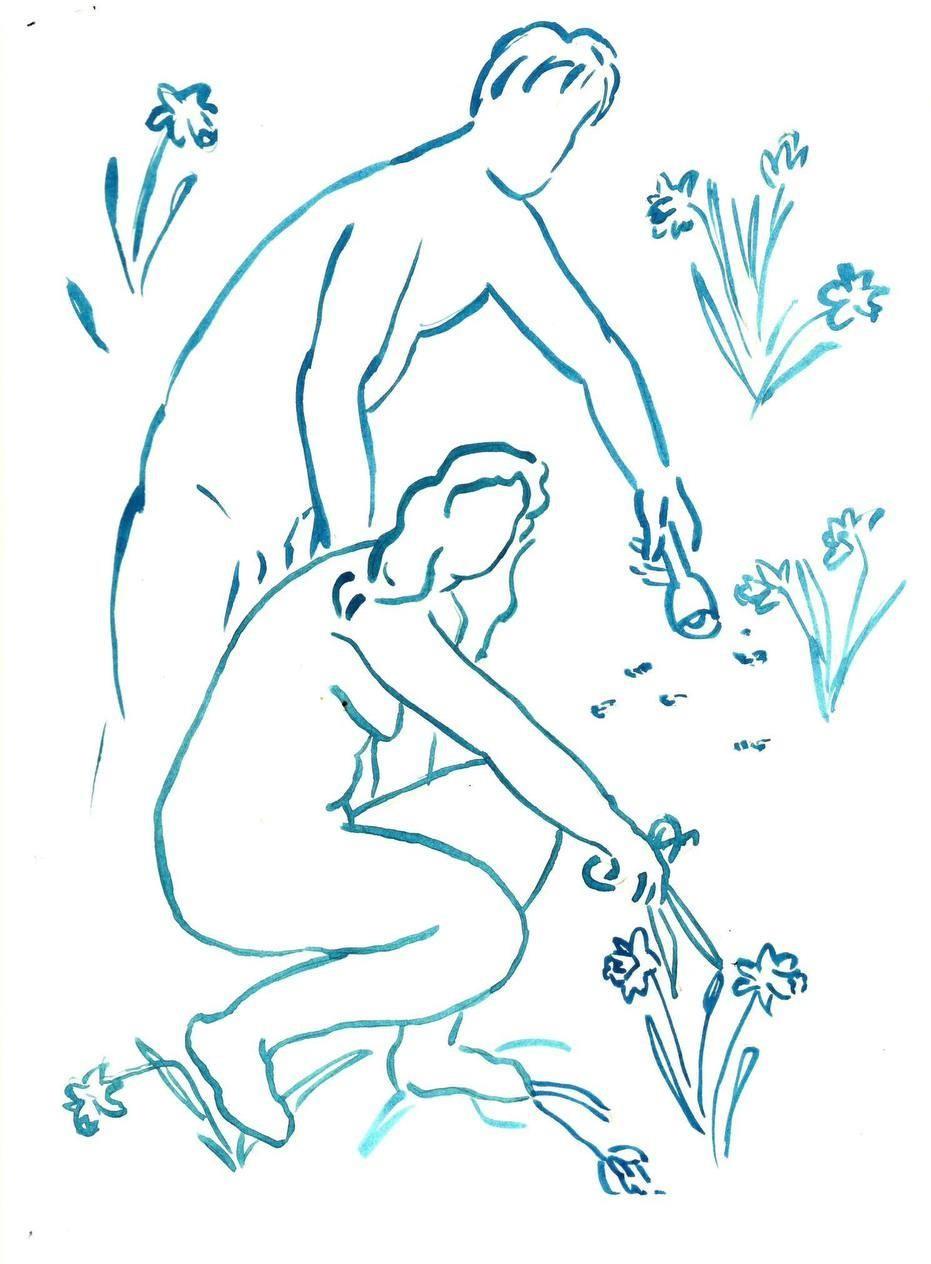
About three years ago, at night, I was cutting daffodils in a public park near my dormitory-fully clothed, of course. I recall this night with a smile; it was fun and spring-like! And much further north compared to my native Odessa.
9. Point to the work that viewers most often misunderstand.
Viewers often perceive this work incorrectly, through an erotic prism, although in reality, it is about something completely different. One hero opens up to another person with the best wishes and selflessness, wants to bestow warmth, trusts, and is ready to give the most valuable thing. The breasts simultaneously symbolize defenselessness, openness, intimacy, and selflessness. The other hero seems to accept these gifts, does not push them away, but at the same time does not give back a single particle of his soul, remaining detached.
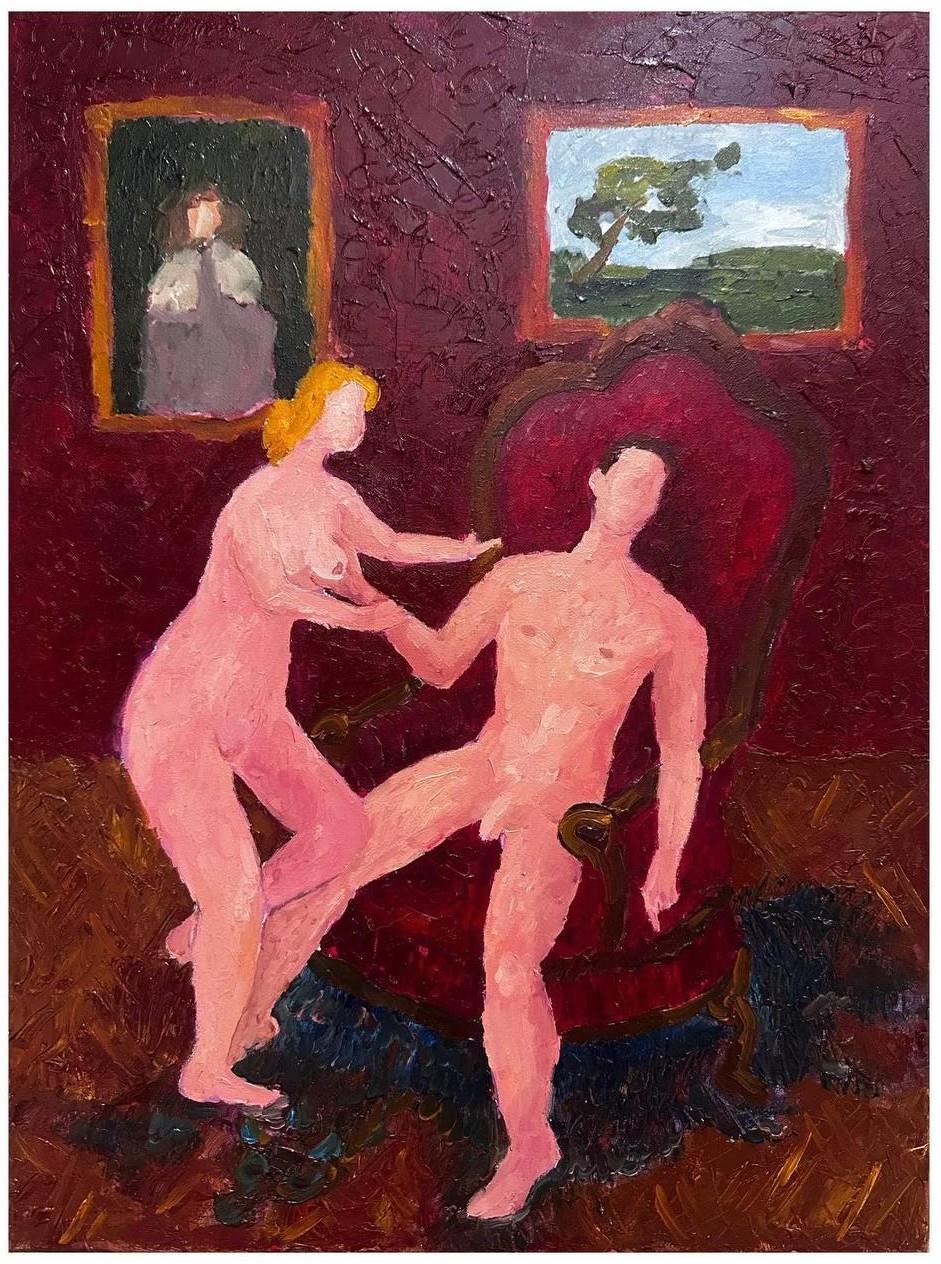
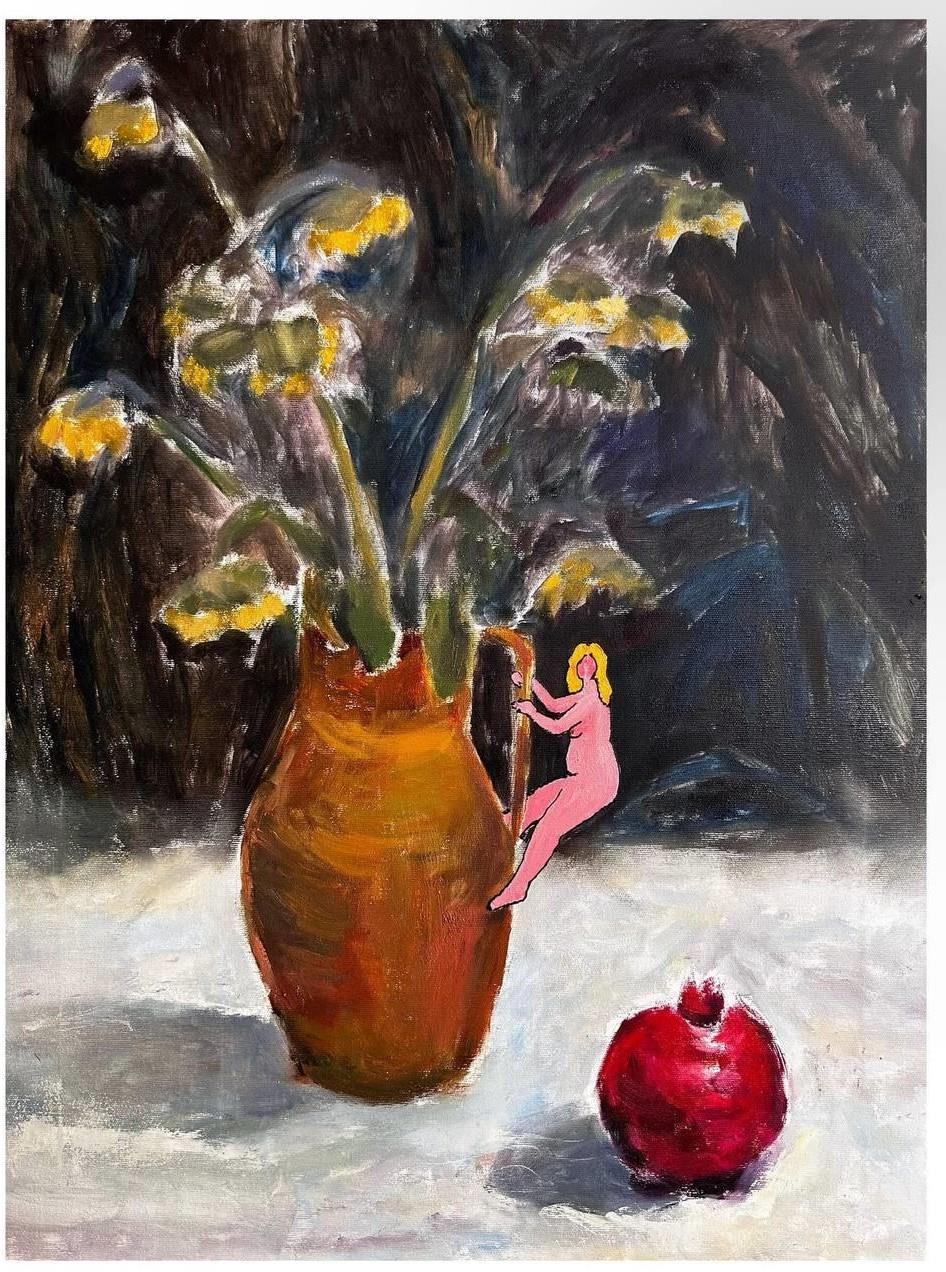
At first, this was a sad, unfinished still life in which I had lost interest and which lay on the shelf for a long time. And then I decided to add a girl characteristic of my style to it, and the work shone in a new way. It remained "imperfect," but that is precisely what is interesting about it, and I still love it.
11. Show the work that was the most emotionally difficult for you.
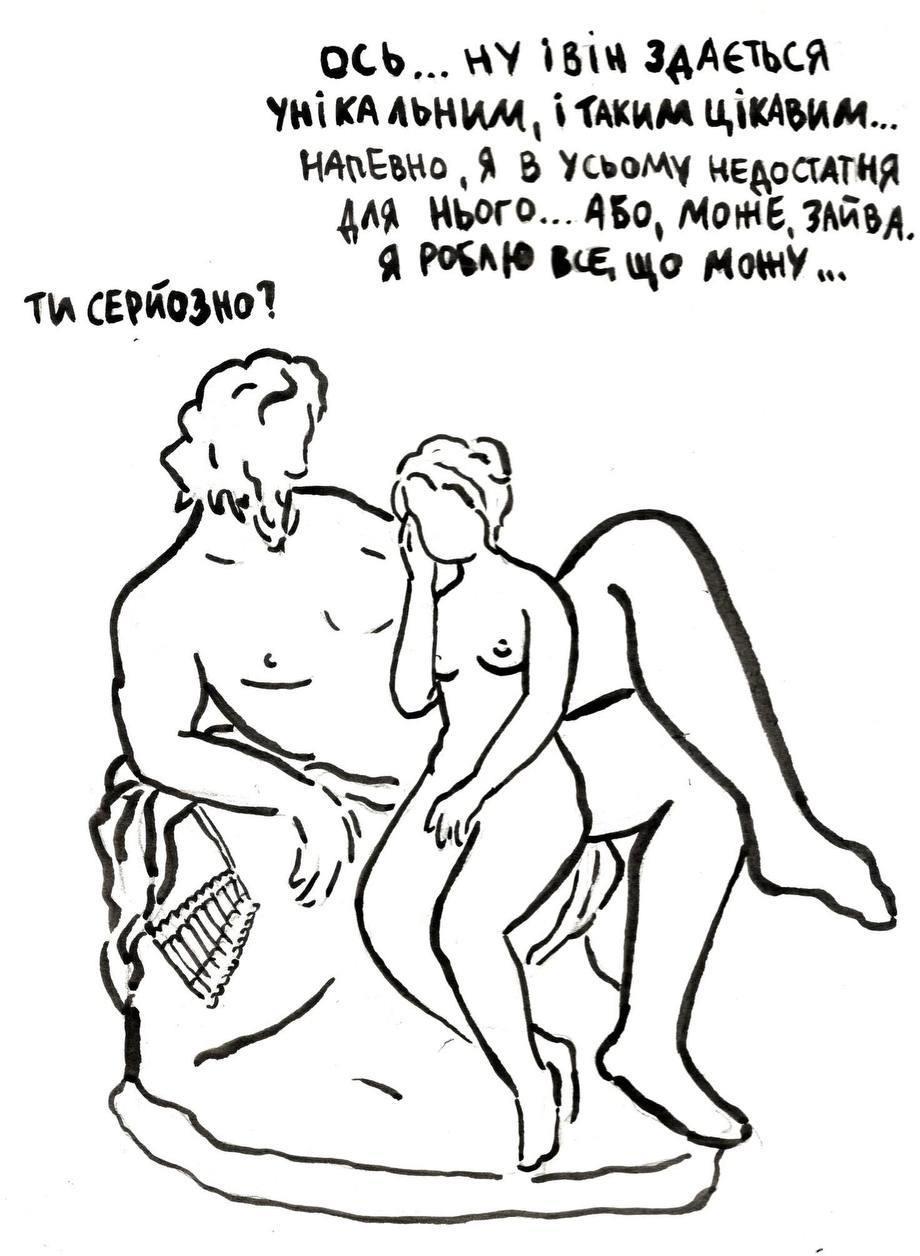
Almost every one of my works is not easy on an emotional level, but this one was especially so. It is quite obvious and full of strong experiences. Working on it was difficult because you simultaneously feel the intensity of emotions and the conflict of understanding their worthlessness and absurdity-as if these experiences are simultaneously important and meaningless.
- Well... He seems unique and so interesting... Perhaps I am not good enough for him in every way... Or maybe I am too much. I am doing everything I can...
- Are you serious?
12. Which canvas would you call your self-portrait, even if there is no face?
No comment))
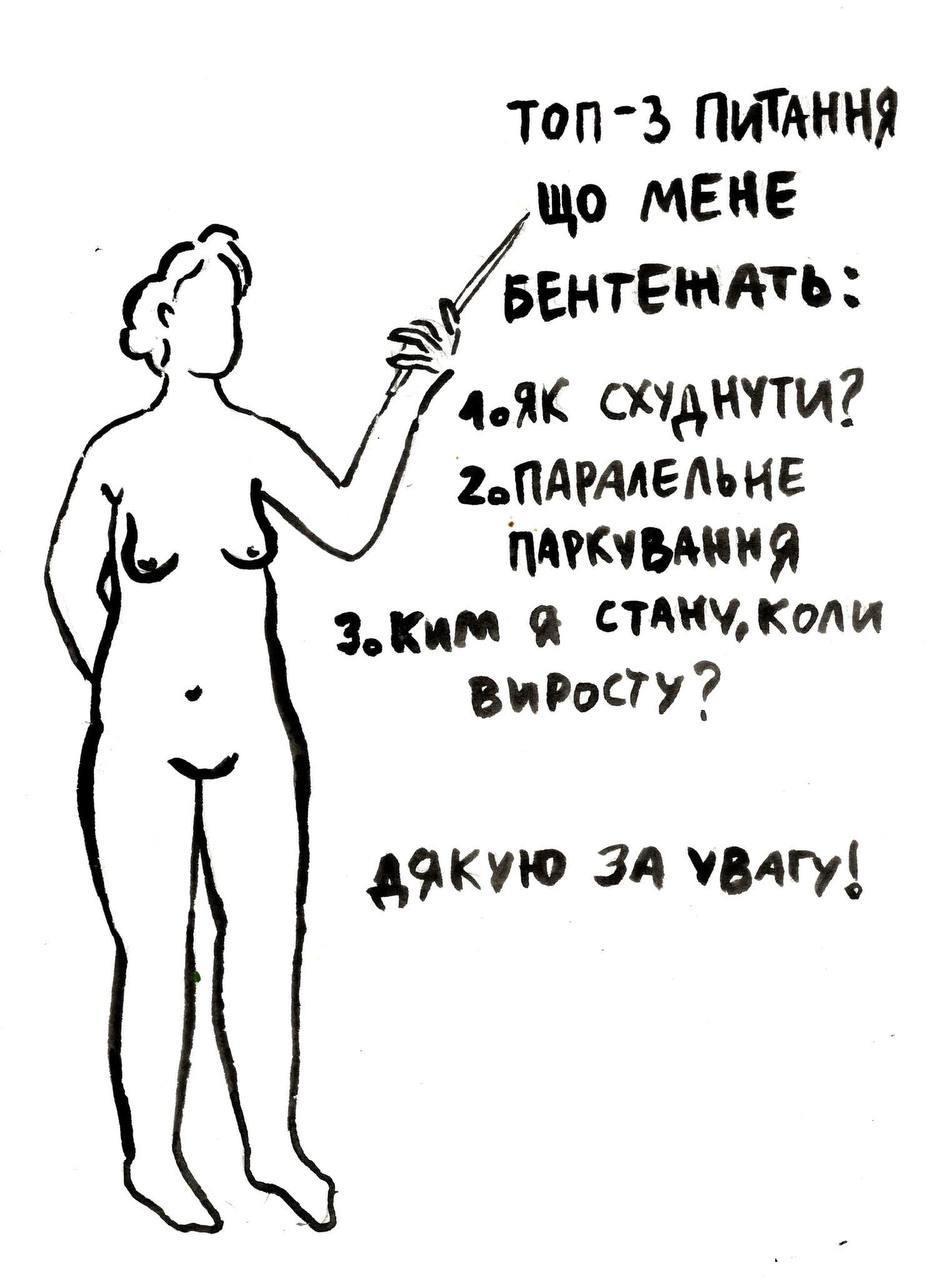
Top 3 questions that bother me: 1. How to lose weight? 2. Parallel parking 3. What will I be when I grow up? Thank you for your attention!
Twelve questions are behind us, but Liza's visual diary continues. Every day brings a new plot: from a night alarm to a random bouquet of daffodils. Her paintings prove that art does not have to be complicated to be profound. Sometimes it is enough to simply answer the question honestly: "Who am I in this moment?"
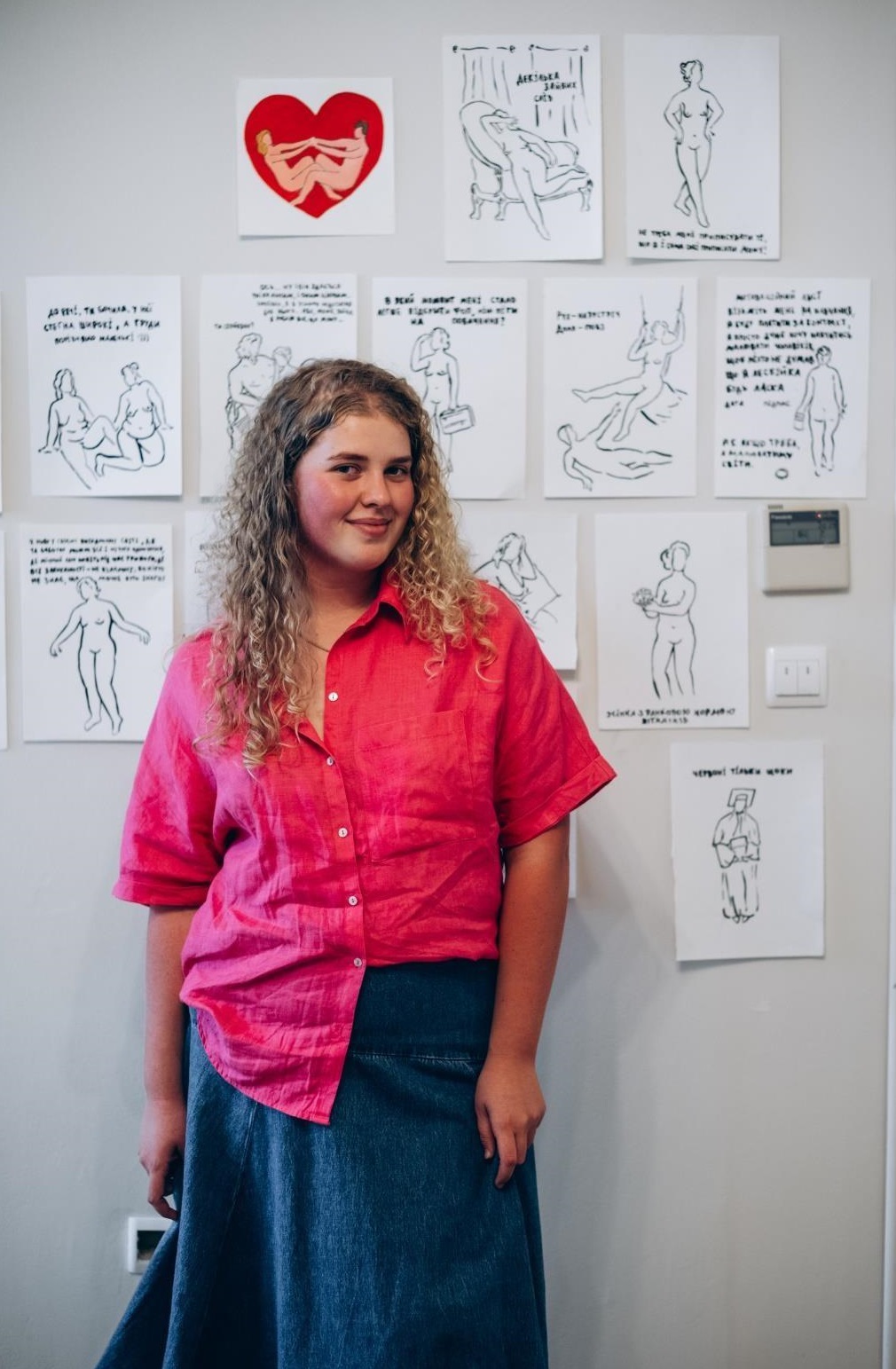
Follow the art of Liza Kniga: