

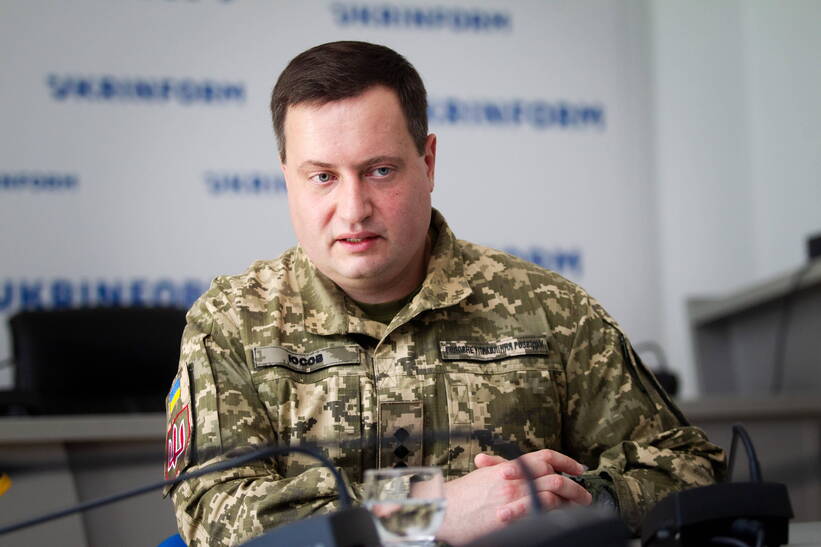

The Russian Federation recruits approximately 1,800 foreign nationals into its armed forces every month. This was reported by Andrii Yusov, Deputy Head of Ukraine's Coordination Headquarters, according to hromadske.
According to Yusov, fewer than 100 foreign nationals were known to have joined the Russian army in 2022. In the first nine months of 2026 alone, their number exceeded 16,000.
Intelligence reports indicate that Russia planned to recruit 18,500 foreign nationals in 2026. However, Yusov said this target would most likely be exceeded in the near future.
"Every month, 1,800 foreign nationals agree to go and kill Ukrainians," he added.
In total, the Coordination Headquarters has obtained personal data on almost 49,000 foreign nationals who signed contracts and have served or are currently serving in the Russian military.
"For comparison, Belgium's entire army numbers around 20,000 personnel, Austria's around 22,000, and Slovakia's, I believe, up to 16,000. This is therefore a truly global threat, extending far beyond Ukraine. And it is gaining momentum, with the scale continuing to increase," Yusov stressed.
The recruitment of foreign nationals allows Russia to reduce social tensions and demographic losses among its own population, the Coordination Headquarters representative explained.
"Foreign nationals are not recruited with the intention of bringing them home or thanking them for their service. A mercenary or foreign national in the Russian army costs less in any case than a Russian citizen. And there is less interest in bringing them back, because doing so automatically leads to enquiries from their countries of origin," Yusov added.
At the same time, Russia is refusing to release foreign nationals whose military service contracts have already expired. According to the Coordination Headquarters, more than 3,000 such cases have been documented.