


The chain of Middle Eastern escalation: a clash between the Houthis and the Saudis – Iranian strikes – Pakistan's entry into the war.
Saudi Arabia's infrastructure is extremely fragile and vulnerable.
It would be relatively easy for Iran to cripple it by destroying key desalination and energy facilities.
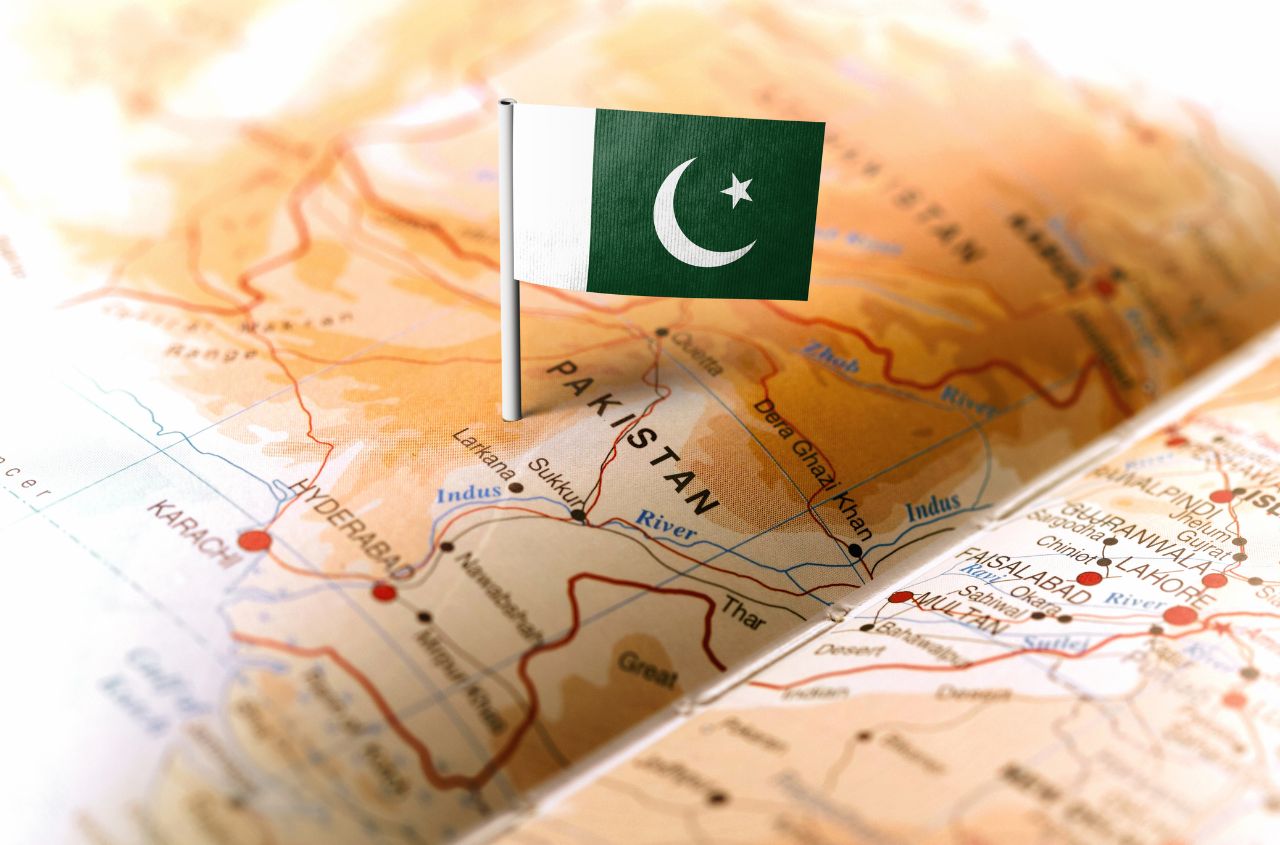
However, Saudi Arabia has a defense agreement with Pakistan, which has already deployed its troops to the kingdom.
Kuwait is conducting a voluntary mobilization campaign and also wants to conclude a military agreement with Islamabad.
The Gulf monarchies' interest is obvious: Pakistan has the region's largest army, air force, ballistic missile capabilities, and nuclear weapons.
Islamabad's interest is equally clear: the Gulf monarchies have plenty of money and oil.
In other words, each side has a great deal of what the other lacks.
Pakistan's entry into the war would become the largest fitna in the history of the Muslim world, surpassing even the scale of the Iran-Iraq War of 1980–1988.
For Israel, such a scenario—a war between Iran and Pakistan and a clash between Shiites and Sunnis—would be a geopolitical jackpot.
Pakistan has gotten off to quite a remarkable start: one moment it is mediating negotiations between Iran and the United States, the next it is threatening Tehran with war.
Turkey, for example, despite its friendly relations with Qatar, does not view attacks on that kingdom as grounds for entering a war against Iran.
In Islamabad, two political camps are currently competing for influence.
The Pakistan Muslim League (Nawaz), whose leader Shehbaz Sharif is now prime minister, supports cooperation with the United States in order to secure financing, including loans from the International Monetary Fund.
In opposition is former Prime Minister Imran Khan's Pakistan Tehreek-e-Insaf (Movement for Justice), which favors a more China-oriented course.
Although this distinction is somewhat conditional, as Pakistan's overall strategy has long been to balance between China and the United States.
Field Marshal Asim Munir is a vivid example of such balancing.
But the moment of geopolitical choice is closer than ever.
Turkey, Iran, and Pakistan have only two options: either divide the Middle East among themselves and, instead of the United States, "milk" the Gulf monarchies.
Or become instruments in the game of the United States and Israel, which would lead to the creation of a "dual-nuclear" Abrahamic cluster with two centers—Israel and Saudi Arabia—each possessing nuclear weapons to maintain the balance within the cluster.
Under this scenario, Iran, Pakistan, and Turkey would be left on the sidelines, displaced by the Semitic Abrahamic cluster centered on Israel and Saudi Arabia.
But the role of an "instrument" means that one participant in the confrontation, or perhaps two, will have to perish.
According to Nash equilibrium, the second scenario is more likely because, in the first scenario, each participant would fear that the others would become stronger through a positive outcome and would therefore choose the negative scenario for everyone.