

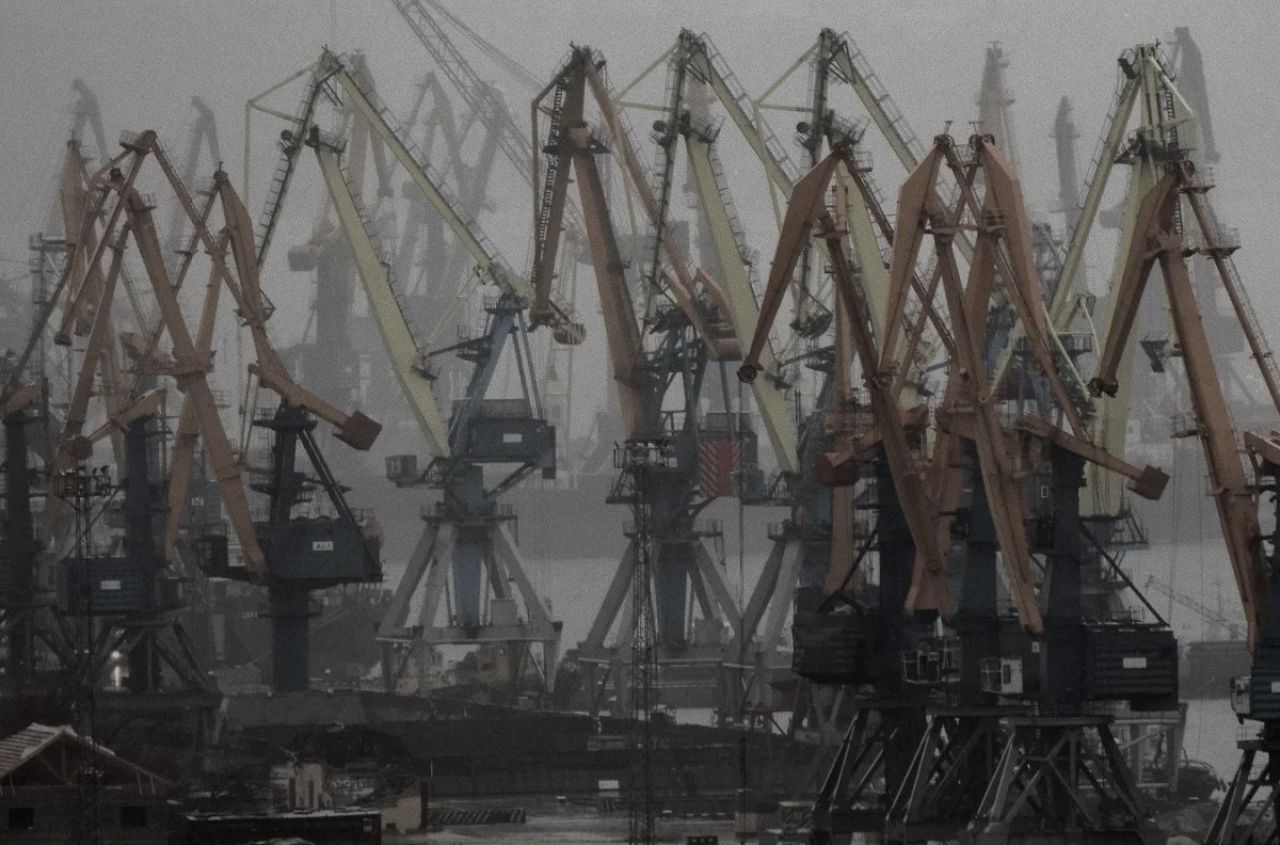

Russia's port industry is facing deepening problems as security conditions in the Azov–Black Sea basin deteriorate amid its war against Ukraine. Cargo shipments through southern ports have almost come to a standstill, with a significant share of freight redirected towards northwestern routes. In September, cargo handling volumes at some southern terminals fell by 95–100%.
The situation has become particularly critical for grain and agricultural exports, which traditionally account for a substantial share of cargo traffic through Russia's southern ports. In July–August, handling volumes for these commodities more than halved, falling from 7.9 million to 3.8 million tonnes compared with the same period last year.
Amid the crisis, regional authorities and port industry representatives have unsuccessfully appealed to the federal government for substantial financial assistance. Their requests include wage subsidies for employees, some of whom have already lost their jobs or been placed on reduced working hours, compensation for equipment maintenance costs, preferential loans, tax and rent deferrals, and increased insurance coverage for war-related risks.
The Russian authorities' reluctance to support businesses suggests an unwillingness to take on additional expenditure amid mounting pressure on the federal budget from the war. Compensating port workers' wages alone could cost the federal budget between 6.6 billion and 8 billion roubles annually.
The situation is no better regarding other forms of assistance. Russia's Ministry of Finance has stated that it cannot administratively determine the terms of reinsurance for war-related risks. Meanwhile, deferrals of rent payments for federally owned property may be granted only on a paid basis, at an interest rate equal to the central bank's key rate plus 5.18 percentage points annually.
As a result, Russian businesses already struggling to operate because of security risks would face additional financial burdens.
Russia's war against Ukraine is generating not only direct reconstruction costs but also substantial indirect economic losses, ranging from disrupted exports to the deteriorating financial position of businesses left without government support.