

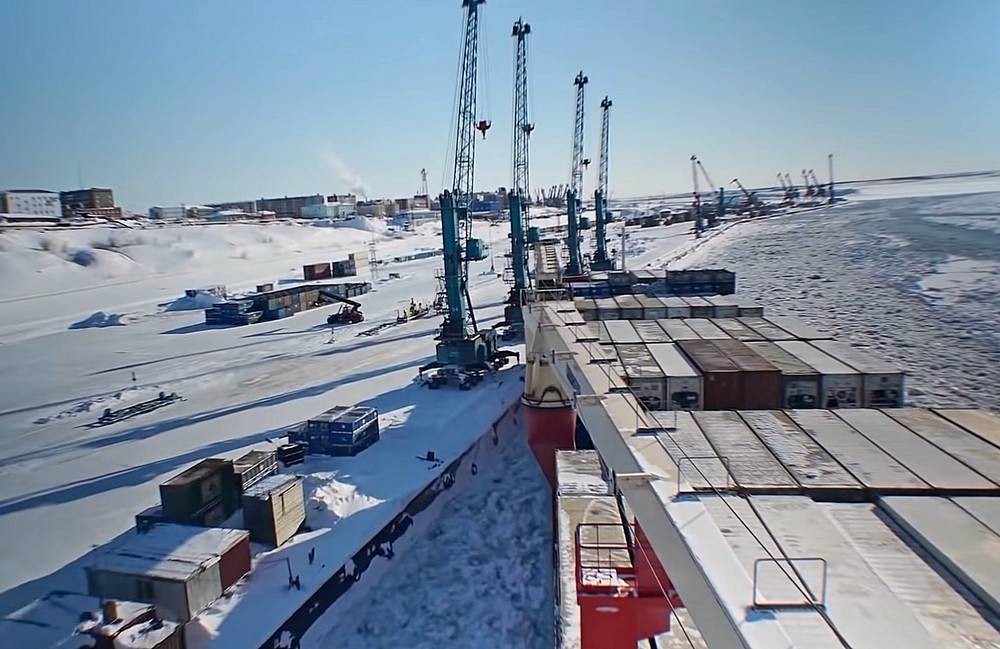

Moscow’s plans to turn the Northern Sea Route (NSR) into a full-fledged transport artery are running up against fundamental infrastructural incapacity. Over the next five years alone, ports along the NSR will require dredging totaling about 60 million cubic meters. Similar work is also needed in ports in other regions of Russia, which only multiplies the scale of the problem.
Previously, Moscow systematically relied on foreign contractors that possessed the necessary fleets and technologies for large-scale dredging. The sanctions regime has effectively cut off this channel. Russia has failed to create domestic alternatives: statements about designing and building dredgers at the Admiralty Shipyards in St. Petersburg remain declarations without tangible results.
The actual figures are telling. In 2025, Russia managed to carry out dredging across all its ports using its own resources at a level of only about 2.2 million cubic meters. Against stated needs, this is a marginal volume that does not change the situation in any systemic way.
In theory, Moscow is counting on China’s involvement in developing northern port infrastructure. However, Beijing’s interests are fundamentally different. China is interested in uninterrupted transit along the entire NSR, not in developing individual Russian ports as logistics hubs. In the coming years, this translates into a simple reality: large vessels will pass by without stopping.
Even if China agrees to participate in dredging operations, it will be Beijing that determines where and in which ports the work will take place. For Moscow, this would mean a loss of control over spatial development, an inability to deliberately support specific regions, and de facto dependence on external influence.
Taken together, the situation demonstrates a systemic gap between Russia’s declared Arctic ambitions and its actual capabilities.