


Trump is burying the UN — and with it, the old order.
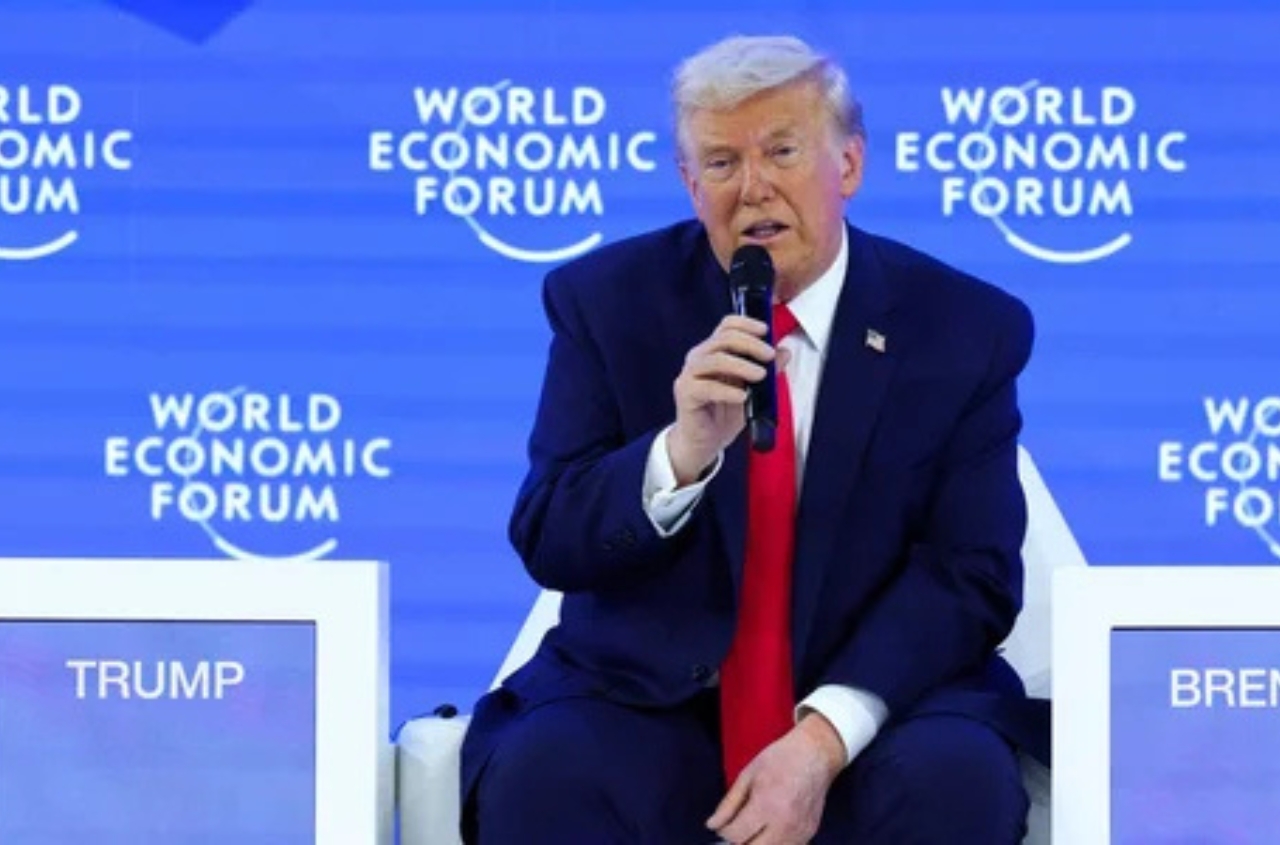
Trump’s activity around forming a “Peace Council” and the announcement of expanding its scope of authority point to an attempt to create a conditionally “pro-American” international organization. More precisely, “pro-American” not at the level of values, but in terms of U.S. leadership — and a format in which Trump (at this moment, it is him) would decide who participates and on what terms.
Why is this happening? Let’s break it down step by step.
- Trump announces the creation of a “Peace Council” — a body that would manage reconstruction and, more broadly, govern the Gaza Strip. The structure is supposed to include three conditional tiers of participants. The core — those who will manage the process. The second tier — key partners and those who will set priorities. The third — everyone else. Formally with a vote, but a vote effectively bought by contributing to a fund that Trump himself is expected to control. The entry price is $1 billion.
- In parallel, the United States sharply criticizes the UN and withdraws from a number of bodies operating within the UN system. This is logical: the UN is based on the formal equality of votes (with the exception of the Security Council), which is in no way compatible with “America First.” Moreover, veto power in the Security Council is not held solely by the United States, and initiatives — including Trump’s own — can be blocked there.
- There had been hope of twisting the arms of NATO partners and asserting unconditional American leadership. But most European states suddenly showed little enthusiasm for the prospect of becoming resource donors to American initiatives without having a meaningful voice of their own. The crisis within NATO became evident. Events surrounding Greenland are just one (and not the main) manifestation of this crisis — but one that could “bury” the functional capacity of the North Atlantic Alliance.
As a result, Trump found himself in a situation where there is no international structure capable of legitimizing his ideas for transforming the world order.
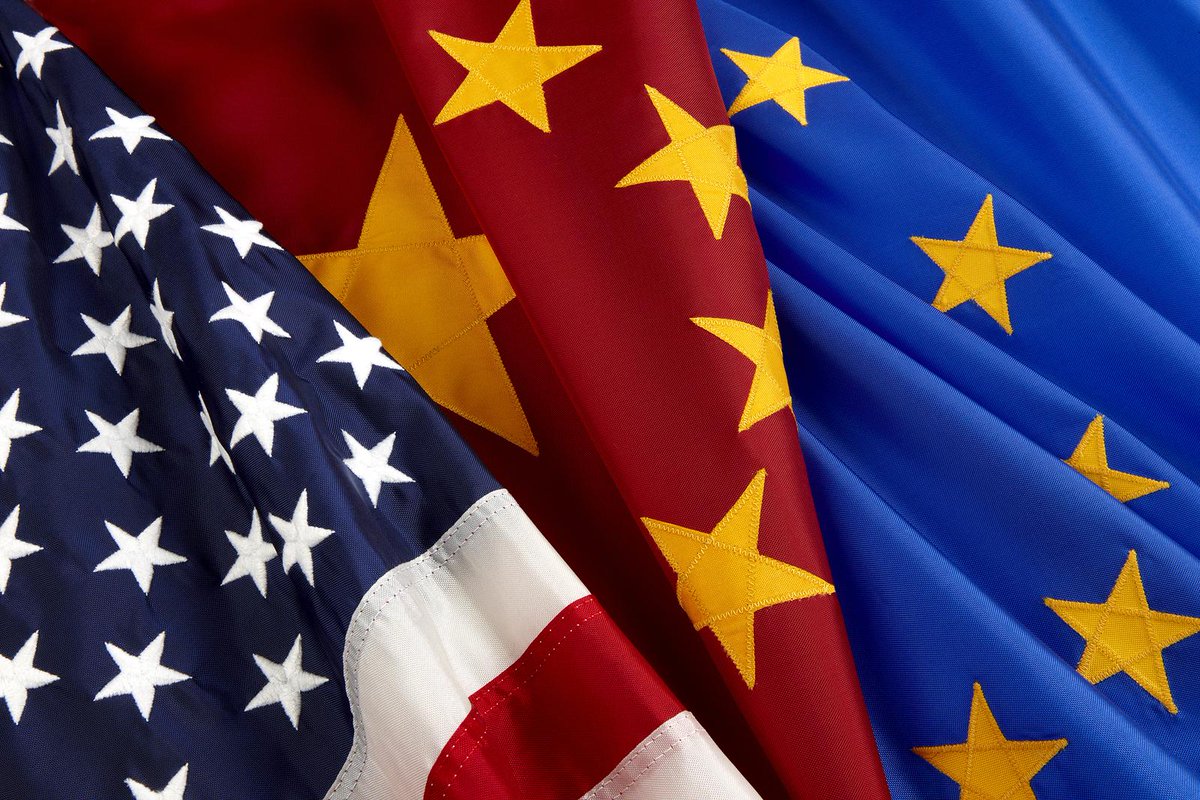
At the same time (over the course of 2025), the United States’ key competitor — China — significantly increased its influence within BRICS. More importantly, it created the SCO+ format — an unmistakably Sinocentric organization. It is worth noting that Beijing’s partners in this format came together not because of shared values, but because they understood the risks of the collapse of the old world system — including the risks posed by the excessive activism of the U.S. president. At least some SCO+ participants could until recently primarily be described as “partners of the United States.”
In other words, China is building parallel UN-type structures, while U.S. policy is, if anything, scaring partners away.
It is against this backdrop that the idea of transforming the “Peace Council” emerges — which the United States will apparently position as a key international structure focused on freezing interstate conflicts, and possibly more.
However, the narrow circle of potential participants and the expensive “entry ticket” for everyone else made such an idea unworkable.
The solution is to defer the entry fee (to recall, this is $1 billion) for three years. In other words, the initial invitation is “temporary.” After that, Trump decides which of the “temporary” members stay and which leave. The alternative — and the guarantee of permanent membership — remains unchanged: $1 billion under the management of the U.S. president.
Then come two waves of invitations. The first wave already reveals the objectives of this structure. Among those invited first (besides a number of European states) are Vietnam, South Korea, Japan, Saudi Arabia, the UAE, and India — states that the U.S. has, in one form or another, considered using as a counterbalance to Chinese influence. Then come Russia, Turkey, Thailand, Indonesia, Pakistan, the countries of Central Asia, and even Belarus — states in which the U.S. intends to balance Beijing’s influence, and in some of them attempt to play against China.
At the same time, for most of those invited, the very option being proposed is precisely the “three years with deferred payment.” This format may appear to them as an attractive way to temporarily shield themselves from new tariff moves (and other impulses) of the American president. And a significant number of them will agree. In doing so, they fall into a trap: voting against American initiatives within such a Council becomes even more dangerous than demonstratively refusing to join it in the first place.
And finally, one more point — the invitation of China. Not immediately, but a little later. This, too, creates traps for Beijing. China declares its readiness to discuss problems in broad, inclusive formats on an equal footing. It is being invited to join and discuss — but only within an organization that would exist “under U.S. leadership.” This is a dilemma for a state that claims the status of a second pole of power:
-
Not joining would make it easier for Trump to impose an “either–or” choice on a number of countries that are only beginning to enter China’s sphere of influence.
-
Joining without conditions would mean recognizing the formal leadership of the United States, which is politically unacceptable for China today.
Most likely, Beijing will join — but in a specific, modified format that could be negotiated at a Trump–Xi meeting. The reason is the same as above: allowing the creation of an exclusively pro-American structure that includes your own partners is risky.
And at this point, one could begin ordering funeral services for the United Nations. After all, that organization was created primarily to maintain peace “throughout the world.” Now there is a new one — the “Trump Council.” Or the “Trump–Xi Council.” Or it may have another name; that is not what matters. What matters is the question: what, then, is the UN for?
The moment this question is openly voiced will become decisive for the old world system. It will signify its death.
In parallel, this will also mark the “death” of hopes for “international norms” and “principles” based on UN mechanisms or the organization’s documents.
Therefore, for small states the question of survival becomes critically important — already now. And apparently, the key answer to it will be the creation and development of various kinds of regional alliances: both large, comprehensive ones and more limited systems of economic, humanitarian, or military cooperation among neighboring states. Playing on interests and balances of power will also become important — not only among hegemonic powers, but among regional superpowers as well, which, incidentally, will not consider it beneath them to participate in such regional coalitions. In our region, there are three contenders for such a status: Turkey, Poland, and possibly Romania.
Finally, Trump’s initiatives (together with the idea of seizing Greenland) have accelerated the processes of transformation within the EU. For the European Union, the era of old politics and prolonged searches for compromise in decision-making has passed. Time is no longer money — it is a matter of survival. A large, wealthy union incapable of rapid action becomes a natural “feeding ground” for more decisive geopolitical players. Therefore, there will also be “internal coalitions” within the EU, some of which are already beginning to take shape today. And this is yet another opportunity for small states to find support amid the collapse of the old system.