


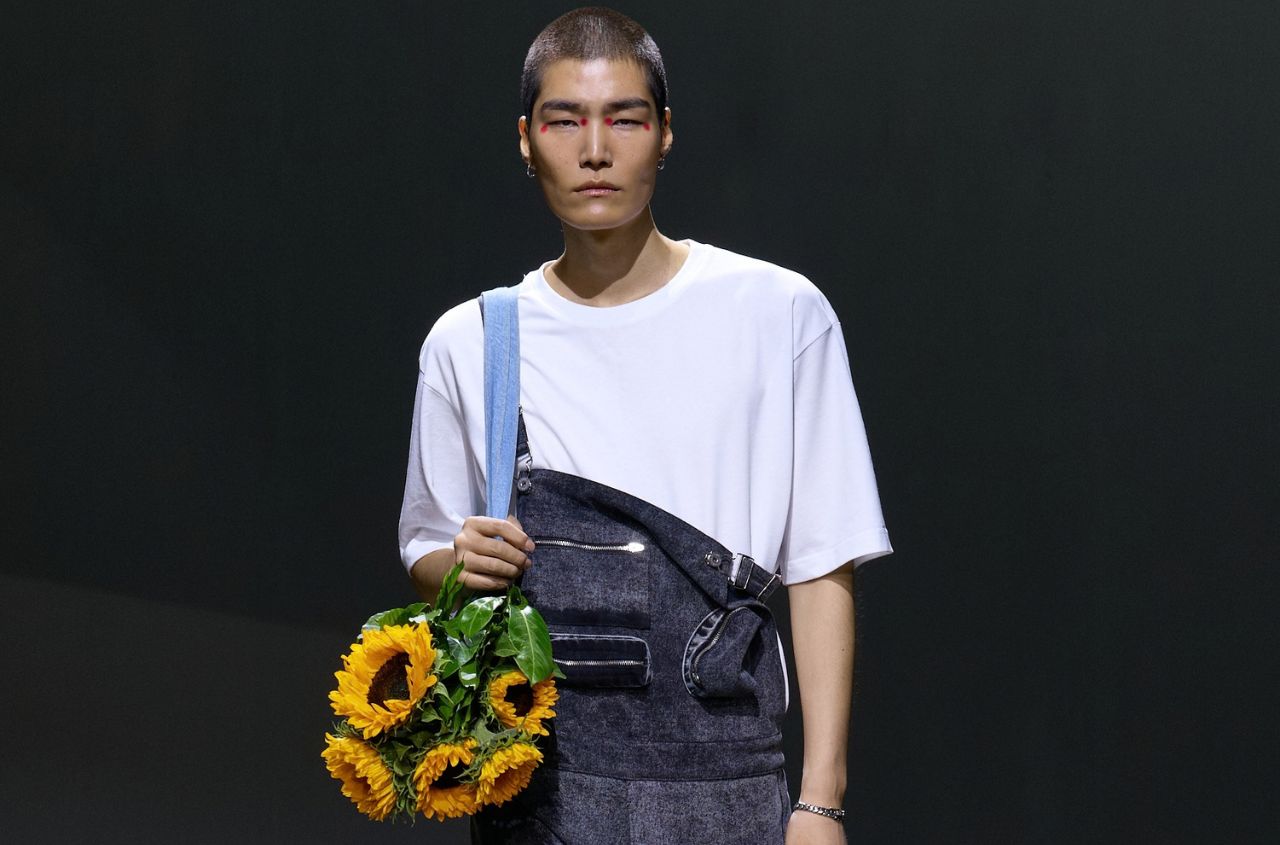

Ukrainian fashion brand Ksenia Schnaider presented its new UTC+1 collection at London Fashion Week, exploring ideas of belonging and identity through sportswear, graphic design and invented symbols.
The show marked the first time Anton Schnaider has taken on the role of creative director alongside Ksenia Schnaider since they founded the brand in Kyiv in 2011. His background in graphic design shaped the collection, which draws on football kits, racing uniforms, club merchandise and travel clothing.
Logos, numbers, names and flags appear throughout UTC+1, but their meanings are deliberately unstable. Instead of representing existing teams, countries or organisations, the collection creates fictional identities.
“I like the idea of belonging, but I don’t necessarily want to belong to something all the time,” Anton Schnaider said. “So I thought: why not start inventing my own?”
_1790668433.jpg/y7O10Cp8WLMWGQAb3hg1udPqnYey3wcCgL4t8OQR.jpg)
_1790668448.jpg/ZU0yZ0yYEvKEg6OI76t3LZDH2YTiqbE0tmoSmbSs.jpg)
The collection includes T-shirts, shirts, denim and leather suits, cargo and trekking trousers, alongside what the designers describe as “walkwear” — functional clothing for travellers and urban nomads. Every piece was produced at the brand’s Kyiv atelier, continuing its work with upcycling, zero-waste techniques and experimental denim.
The London show also presented the first results of a collaboration with French footwear brand Palladium, which has been under discussion for six years. Its classic Pampa boots were reworked in Kyiv with old denim into taller boots and over-the-knee versions. A commercial Ksenia Schnaider x Palladium footwear collection is planned for 2027.
_1790668464.jpg/wlIC4H2UtW5oubdfcwQtxkIejGsZefsTauzzIoZy.jpg)
_1790668478.jpg/IjVvtIh8ShrezxAlA6i5A2kFjAOVc3rbqCh9tS1Y.jpg)
UTC+1 also features Ksenia Schnaider’s third collaboration with Lee Cooper, including lightweight utilitarian jackets, cargo trousers, skirts, dresses and jumpsuits.
The result sits between sportswear and streetwear, function and experimentation — using the familiar visual language of belonging without allowing it to define exactly where, or to whom, the wearer belongs.