

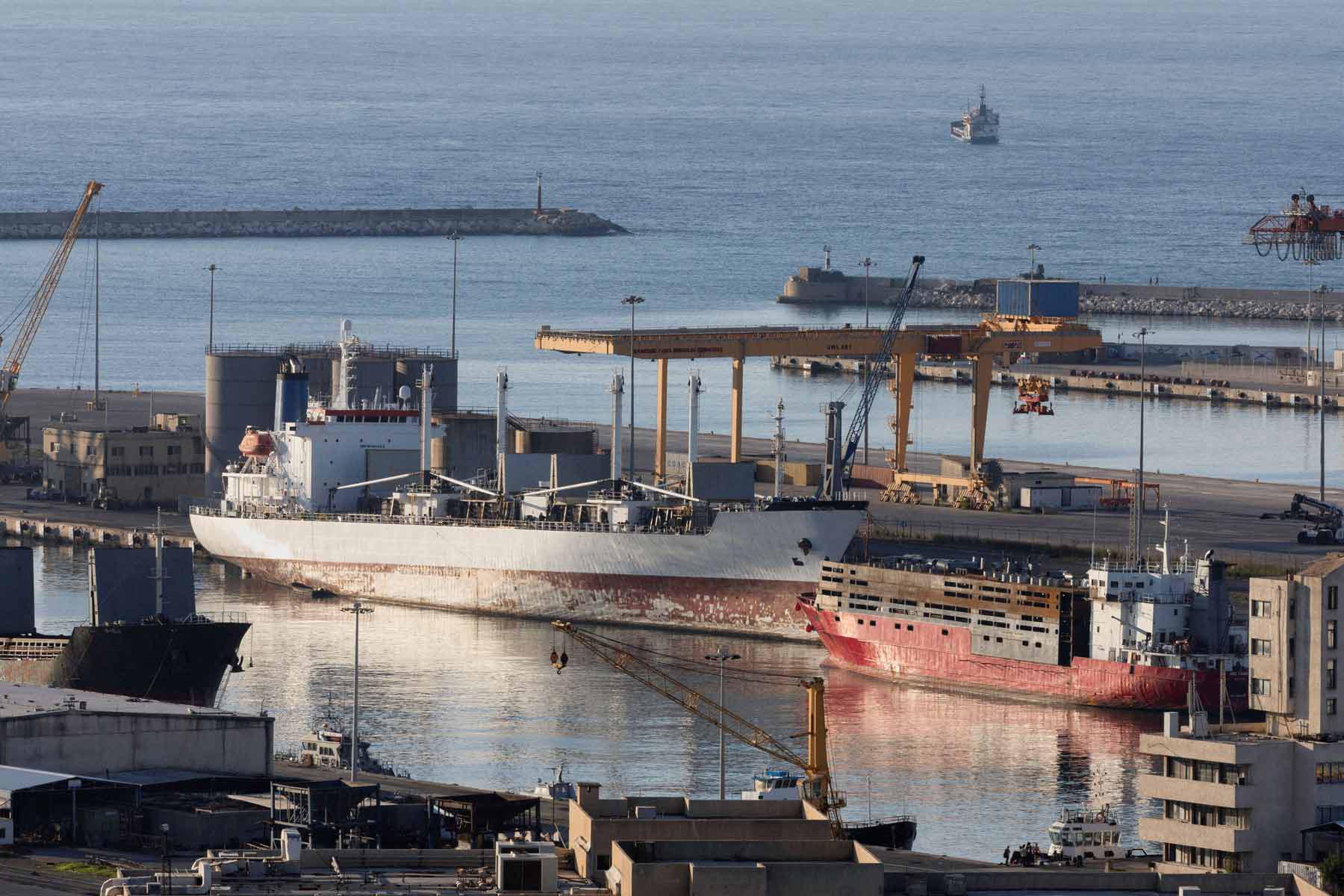

It appears that Russia is creating a commercial logistics hub in the Syrian port of Tartus in an effort to preserve and expand its influence in Syria through economic channels. Moscow reportedly plans to launch the trade hub by mid-July 2026. It will be located on one of the two piers of the naval base that Russia leases in Tartus, while the second pier will remain fully under Russian military control, according to Middle East Online.
The new hub is expected to handle a wide range of Russian goods, including wheat and grain, with an initial cargo turnover of around 250,000 tonnes per month. The economic project has become a central element of Moscow’s strategy to maintain its position in the region after the overthrow in 2024 of former Syrian President Bashar al-Assad, whose fall deprived Russia of its most loyal ally in the Middle East.
Moscow had supported Syria for decades and intervened directly in the conflict in 2015 to save Assad’s regime during the 14-year civil war. Assad’s downfall immediately raised questions about the future of the agreements allowing Russia to use the naval base in Tartus and the Hmeimim airbase located southeast of Latakia. Syria’s new government in Damascus is now seeking closer ties with Western countries and Gulf states but continues to cooperate with Moscow on food imports, energy supplies, and military issues. The two sides are currently negotiating the future of Russian military facilities.
In 2025, Syria’s new authorities terminated a 49-year contract that had allowed the Russian company Stroytransgaz to develop commercial facilities in Tartus. Instead, the UAE-based company DP World signed a 30-year, $800 million concession agreement to reconstruct and operate the port.
Despite this, on June 6 the Russian-Syrian Business Council under Russia’s Ministry of Industry and Trade announced that a distribution and assembly center for Russian goods would be established in Tartus. Official statements, documents, and government data reveal the project’s parameters. The hub is scheduled to begin operations in mid-July, with implementation being carried out by the Syrian logistics company Rus Line together with Russian firms from the Business Association. Project organizers have already reached an agreement with Syria’s Sovereign Fund on joint management of the center, directly linking it to the country’s main investment fund.
According to Rus Line CEO and Business Association adviser Ossama Ajaj, the first stage of operations will involve receiving Russian wheat, grain, animal feed, vegetable oils, timber, steel, clinker, coal, rice, sugar, and mineral oils. Another Rus Line executive, Jinan Mubadda, clarified that the logistics hub will occupy Pier No. 4, which Ajaj described as a closed area of the naval base. The second pier will remain assigned to the Russian Navy. Syrian customs and port authorities declined to comment.
Russian officials have also not officially commented on the information. However, Russian Foreign Ministry spokesperson Maria Zakharova said in June that Moscow and Damascus were holding talks on the restructuring of military facilities and that bilateral cooperation was continuing to develop.
According to Ossama Ajaj, operations are scheduled to begin in mid-July with the shipment of an initial 30,000-tonne grain consignment, after which the hub is expected to reach a monthly capacity of 250,000 tonnes. He also suggested that Russia would retain a reduced military presence in Syria.
Ajaj and two Syrian Foreign Ministry officials confirmed that the project was discussed in detail on January 28 in Moscow during a meeting between Syrian President Ahmed al-Sharaa and Russian President Vladimir Putin, which became a turning point in the revival of economic cooperation between the two countries.
The initiative aims to establish a regular maritime route from Russia’s Novorossiysk port to Tartus, from where goods would be distributed throughout Syria and neighboring countries. Ajaj identified Iraq and Jordan as the main target markets, with Saudi Arabia, Kuwait, Qatar, and Bahrain as potential second-stage destinations.
A May concept document from the Russian-Syrian Business Council states that, if necessary, cargo security would be handled exclusively by Syrian private security companies, with Russian private military and security firms excluded from participation.
The trade hub is intended to further strengthen Moscow’s economic leverage. According to customs documents, around 85% of all wheat imported into Syria — 2.9 million tonnes during the 2025–2026 season — comes from Russia and occupied Crimea. Syria’s dependence on Russian oil has also increased sharply since Assad’s fall: in 2025, the country purchased 16.8 million barrels, and in the first months of 2026 it imported around 60,000 barrels per day.