

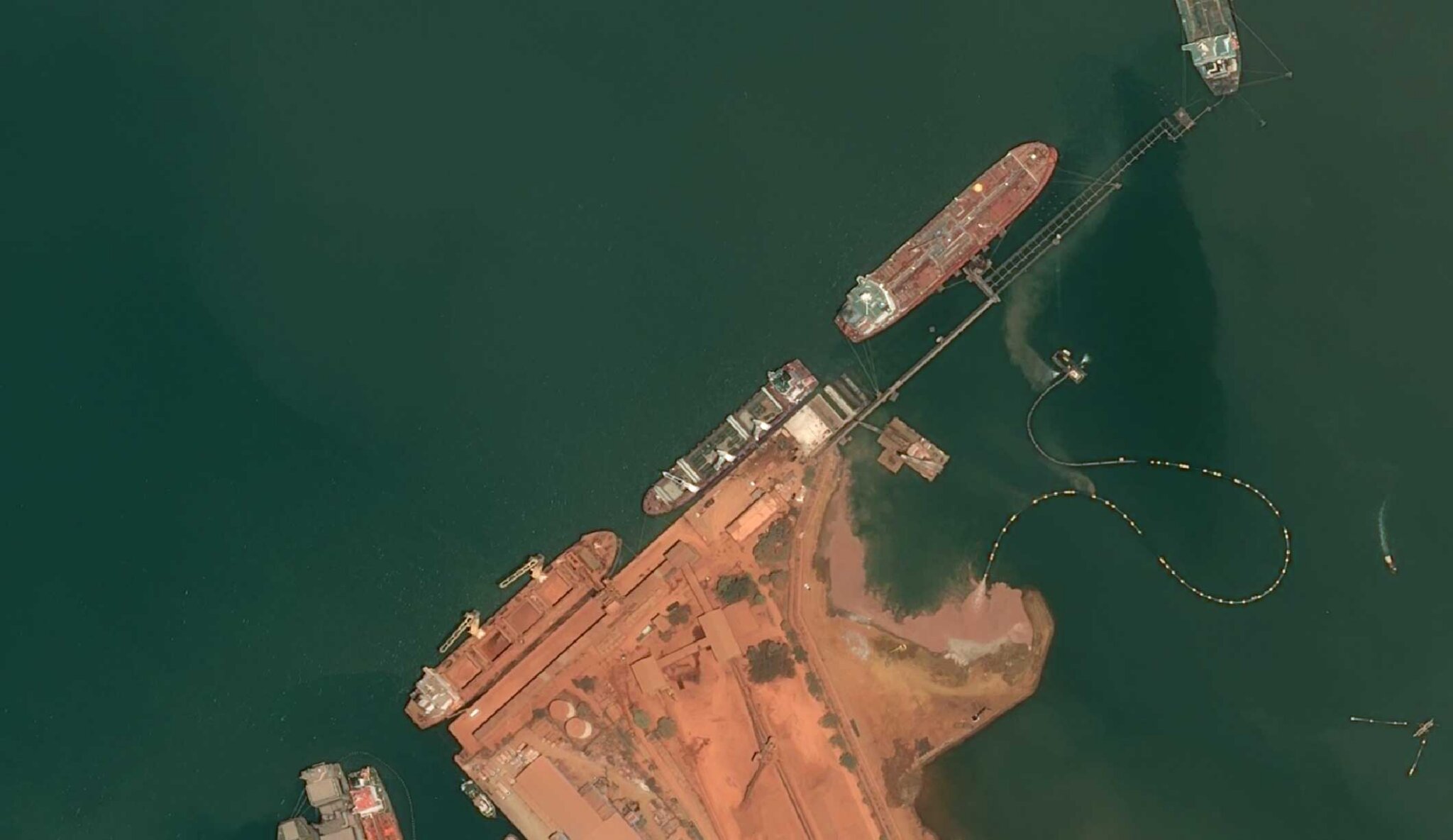

Main image: The cargo ship Sabetta unloading Russian military equipment at the port of Conakry, 21 March 2026. By Airbus.
Russia is transporting military equipment to African countries aboard civilian vessels accompanied by intelligence officers travelling under false identities, according to a joint investigation by the Dossier Center, Follow the Money, Süddeutsche Zeitung, Danwatch and Delfi.
Journalists identified 28 passengers whose names, dates of birth and identity document numbers could not be found in publicly available databases or leaked records.
According to a source in European intelligence, these individuals are likely to be Russian intelligence officers.
"Usually, people for whom there are no other matches [in databases or leaks] are our colleagues [from Russia]. It would be extremely unusual for anyone else to use forged identity documents," the source said.
The passengers travelled on international passports without biometric chips. Some documents differed only in their final digits, while two had consecutive numbers, suggesting they may have been issued in batches.
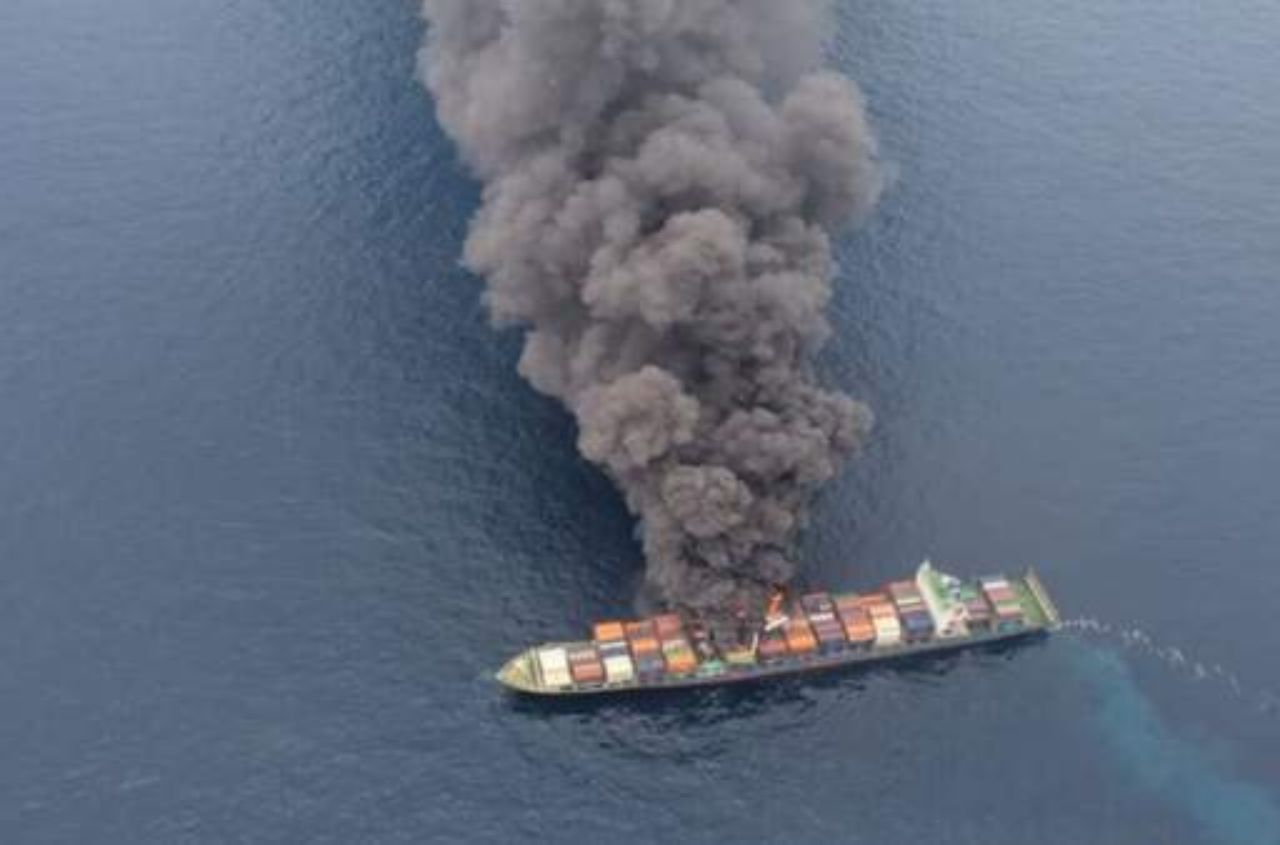
All 28 individuals travelled aboard three roll-on/roll-off vessels and four cargo ships, each carrying military equipment primarily intended for the Africa Corps, a Russian Defence Ministry formation that replaced the Wagner private military company.
One of the vessels was the Sabetta, which docked on March 19 at the port of Conakry, the capital of Guinea.
According to the investigation, the ship, owned by Severny Proekt, a company involved in Russian state defence contracts and special projects for Rosatom, delivered approximately 50 vehicles, including armoured vehicles and fuel tankers.
The equipment was subsequently transported from the port to Mali, where the Africa Corps is based. Four passengers whose personal details could not be found in any other records were also aboard the vessel.
Stig Wæver, a former officer of the Danish Security and Intelligence Service, believes these were cover passports used in intelligence operations.
Analysts at C4ADS, a US non-profit organisation specialising in global security, also believe the passengers' personal information was fabricated.
Individuals travelling under such identities were also identified aboard the roll-on/roll-off vessels Adler, Askalon and Baltic Leader, operated by MG-Flot. The company is subject to EU and US sanctions over its assistance to Iran and involvement in supplying ammunition and components for Russian drones.
The investigation also identifies the cargo ships Mikhail Britnev and Mys Zhelaniya, operated by Arctic-Trans and Eco Shipping.
Eco Shipping is under US sanctions for its involvement in the logistics network supporting the Arctic LNG 2 project.
The seventh vessel, Siyanie Severa, which had previously transported grain from Russian-occupied Ukrainian territories, belongs to the Northern Shipping Company.
During their voyages to Africa, all these vessels frequently switched off their Automatic Identification System (AIS) transponders to conceal their locations.
A source at an EU intelligence agency believes the heightened secrecy is linked to the nature of the cargo — military equipment.
European intelligence services monitor such shipments, which may explain why Russia has involved officers from the FSB or GRU.
Michelle Bockmann, a senior analyst at maritime intelligence company Windward, believes these individuals are responsible for monitoring the crews, including ensuring that they do not stop their vessels at the request of European authorities.
The shipments involve valuable and potentially dangerous cargo, so it is unsurprising that they require special protection, Bockmann noted.