

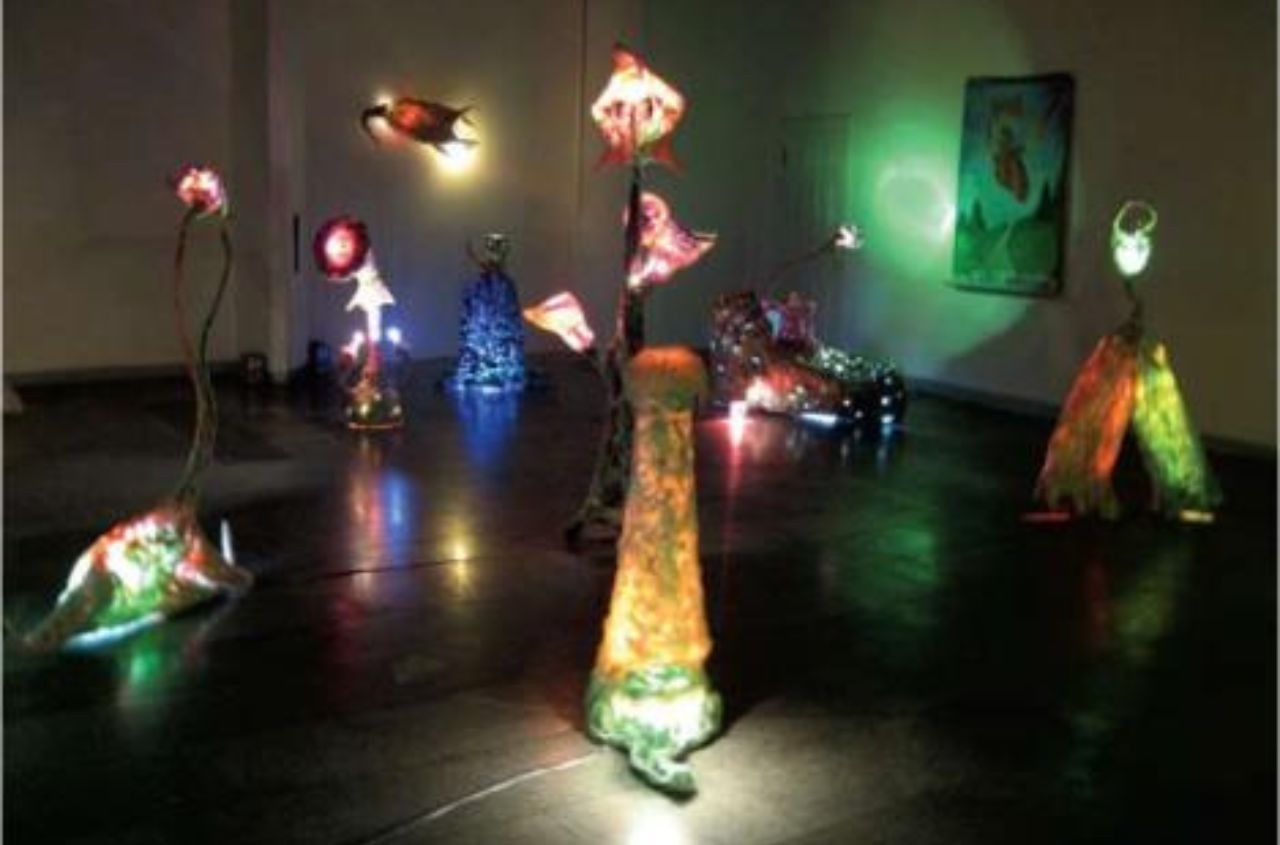

Main image: "Sculptural Salon" by Dmitry Dulfan
The sixteenth interview through images by Andrew Sheptunov
Dmitry Dulfan is an artist whose name entered the history of the Odessa school not as an episode, but as a self-contained layer. His works were always perceived not just as painting, but as a unique act of observing people and time. He possessed the skill to merge visual precision with inner tension, transforming every painting into a space where the viewer seems to hear the author's breath.
Dmitry was born into a creative environment: his father, Lucien Dulfan, was one of the key Odessa masters of the post-war generation. In a home where art was not a "profession" but a way of thinking and existing, Dmitry absorbed the spirit of the studio, respect for craft, and the habit of self-discipline and independence from an early age. However, despite being the heir to a strong artistic name, he never followed the path of repetition or imitation. His visual language grew out of a dialogue with his own sensitivity, with the urban visual culture, and with the experience of solitude and searching.
Dmitry's education and first steps occurred during a period when the Odessa art scene was undergoing significant shifts—moving from late-Soviet isolation toward a new inner freedom. Against this backdrop, he quickly established himself as an independent author who did not conform to fashion, did not seek loud gestures, but created his own enclosed world. His painting was dense, thoughtful, slightly slow-paced—as if resisting the hustle and bustle and demanding attention.
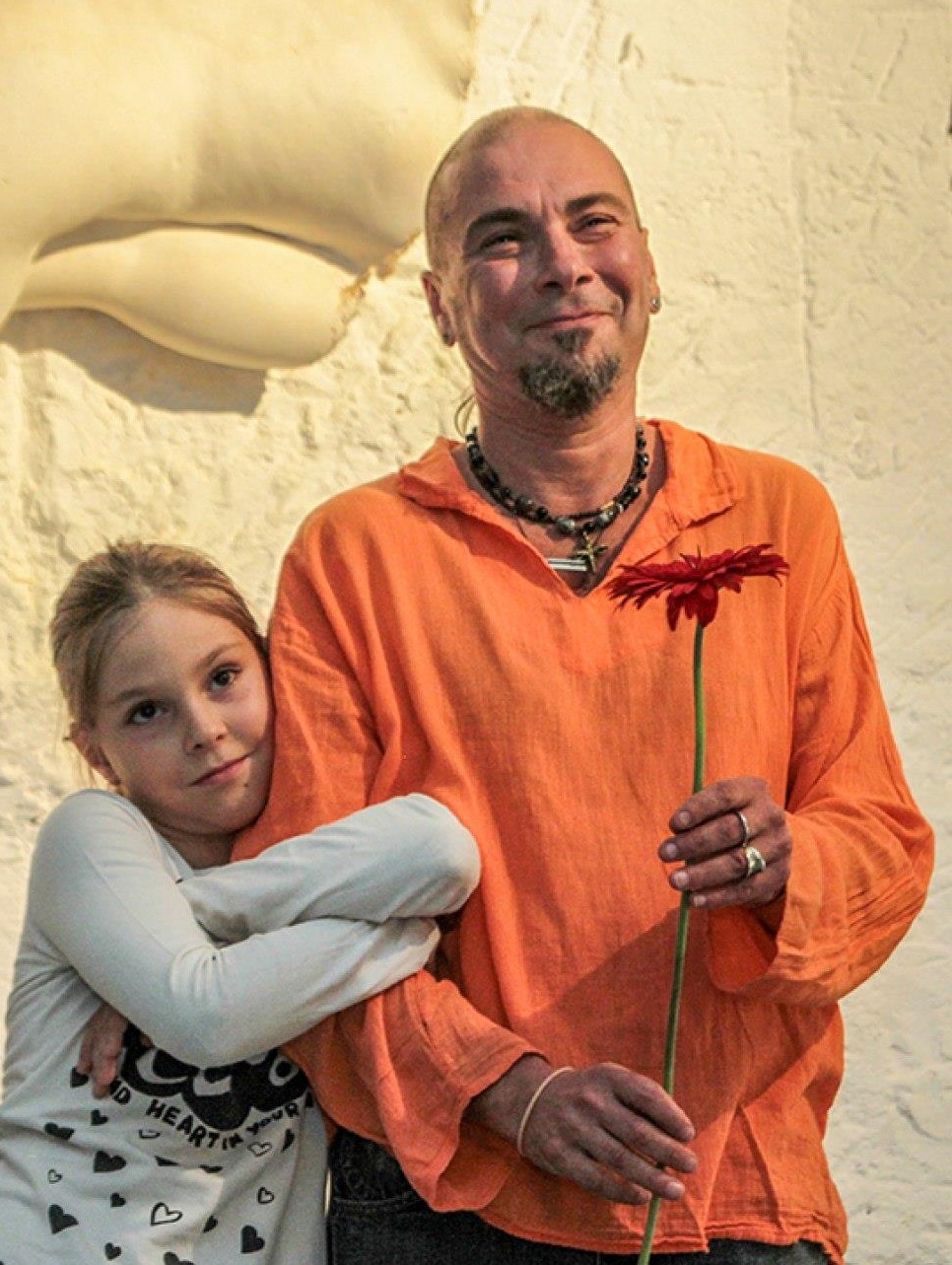
Dulfan's influence on Odessa art is hard to overestimate. He became one of the figures who shaped the perception of "Odessa painting" as a space where not only form but also thought is important. Young artists looked up to him, trying to understand how one could be simultaneously rigorous and free, how not to lose individuality in the polyphony of artistic trends. His studio was a place where people came for advice, conversation, and an external perspective—and where they invariably found honesty and respect for labor.
But an artist's life is always broader than exhibitions and catalogs. Dulfan had his own unique understanding of time, his own work rhythm, and habits known only to those closest to him. He could circle around a single idea for a long time, doubt, repaint, put aside, and return again—and it was precisely in these "invisible" efforts that the depth of his painting was born. Home and studio were a single organism for him, where creativity became an extension of daily life.
Those who were close saw not only the artist but also the man—with his softness, principled stance, anxieties, and irony. And it is this human layer that is especially important today, as we try to understand his art in a new, more intimate dimension. The family's perspective allows us to see Dmitry as he was known at home: observant, precise, sometimes sharp, sometimes surprisingly tender.
Therefore, in this section, we decided to give the floor to the people closest to him. Dmitry Dulfan's paintings became the starting point for a series of questions—about what stood behind those images, what was happening in his life during the periods he worked on them, and what emotions he invested in his canvases. Answering our questions will be his daughter, Ulyana Dulfan, and his wife, Yuliya Midko. Their voices reveal the side of the artist that cannot be seen in exhibitions: the inner truth of a man who lived art as naturally as he breathed.
Their answers are not biographical facts or art historical analysis. They are memory, warmth, details, notes from the inside. And through them, we meet Dmitry Dulfan once again—not only as a master but also as a person whose presence continues to be felt in every one of his works.
1. Which of Dmitry Dulfan's works best reflects his character at home, outside the studio?
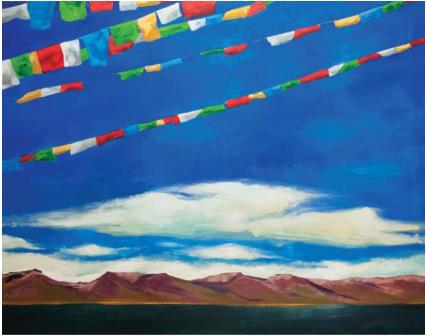
2. Which painting, in your opinion, was the most personal for him?
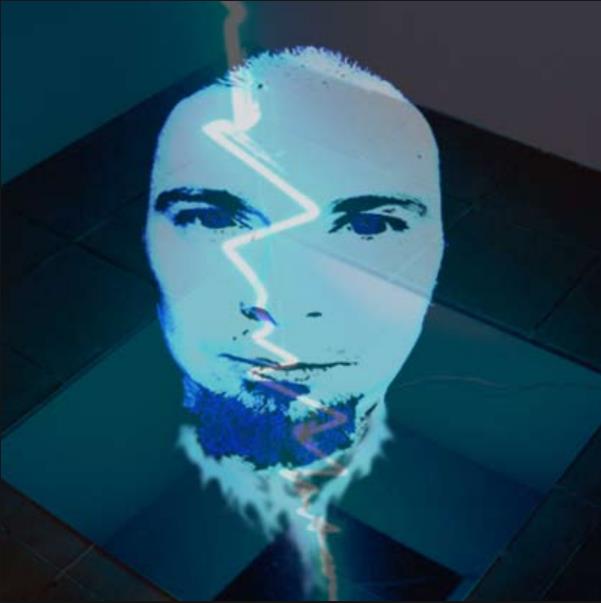
3. Which painting particularly highlights his attitude toward Odessa?
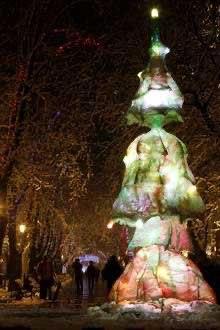
4. Which work best conveys the atmosphere in which he created his pieces?
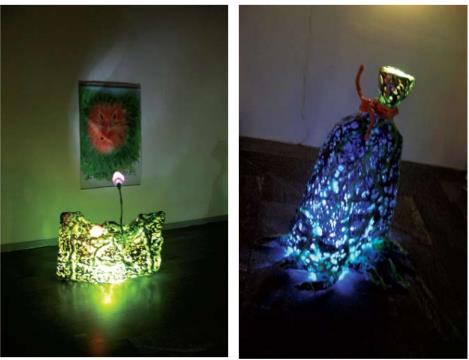
5. Which painting maximally conveys his sense of humor?
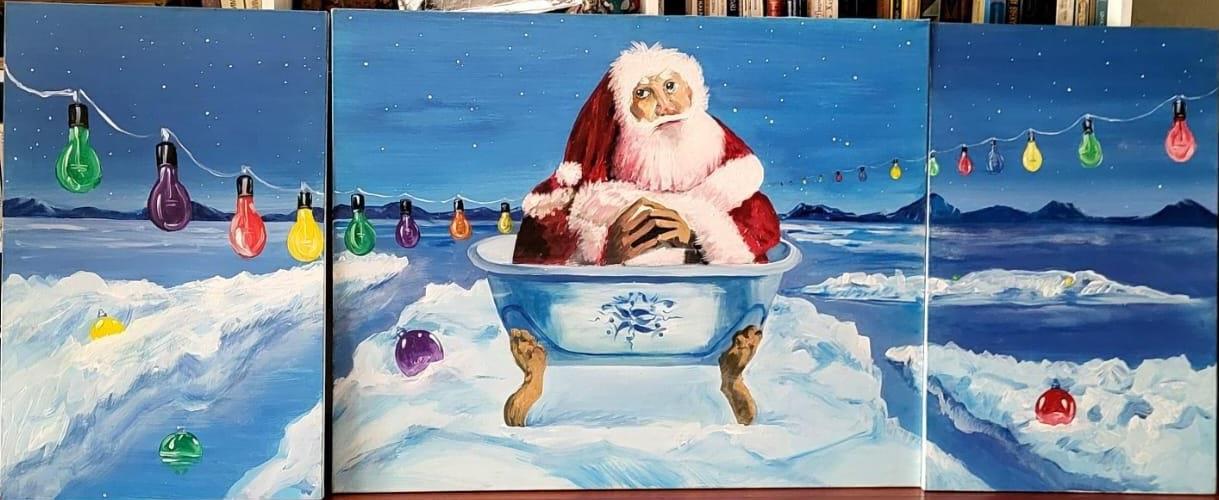
6. Which painting in the house always elicited a special reaction from him when he walked past it?
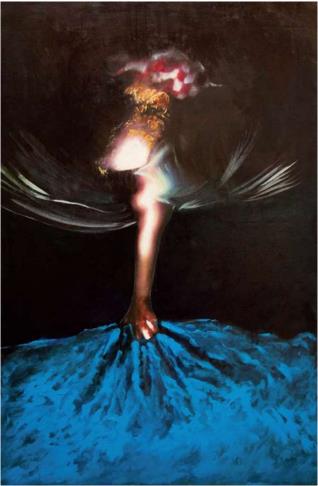
7. Which of the works do you consider to be the most underrated by viewers?
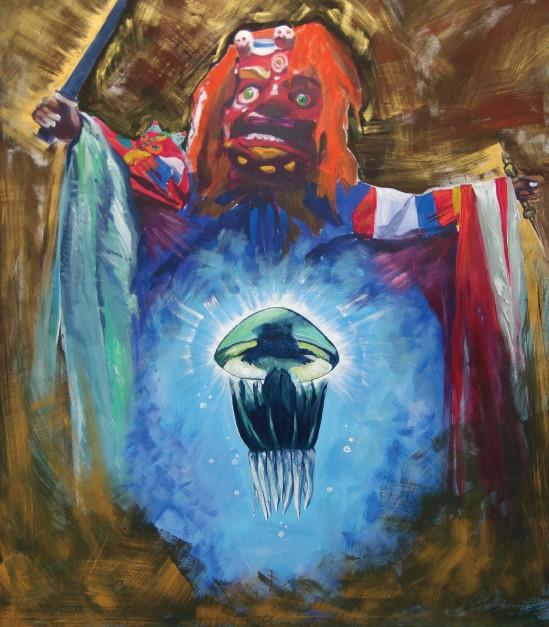
8. Is there a painting that he treated with particular reverence and did not want to sell?
 in space_1766744696.jpg/wLeh4zTXpicd6H1OWssxXmMy5KxTzw3JGVOXeQre.jpg)
9. Which work best shows how he saw the people around him?
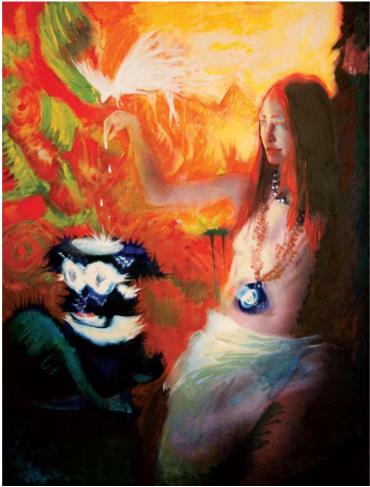
10. Which painting became a kind of turning point in his creative work?
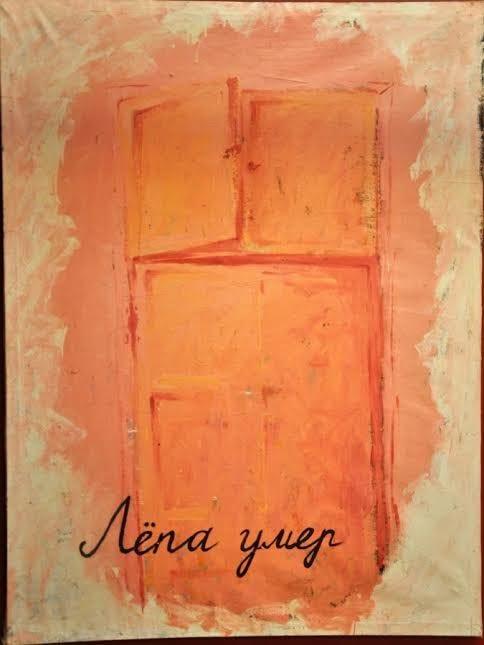
Dmitry Dulfan's art is a rare example of painting that does not age with time but unfolds ever more deeply. Something personal is hidden in every canvas, yet it is also surprisingly comprehensible to anyone willing to pause and look closely. Today, as we open his world through the memories of his family, it becomes especially clear: Dulfan's strength lies not only in technique and imagery but also in the human honesty that permeates his art.
His works continue to live their own lives—in collections, at exhibitions, and in the memory of people who have stood before his canvas even once. And if, after this article, you wish to see more, immerse yourself in the atmosphere of his visual language, and expand your own understanding of Dulfan's scope, be sure to visit "Hudpromo". There, you can get closer to his works, discover new perspectives, and feel the depth that is so difficult to convey in words.
Dulfan's art is an invitation to a dialogue. And everyone who answers it with a glance becomes a part of the continuation of this story.