

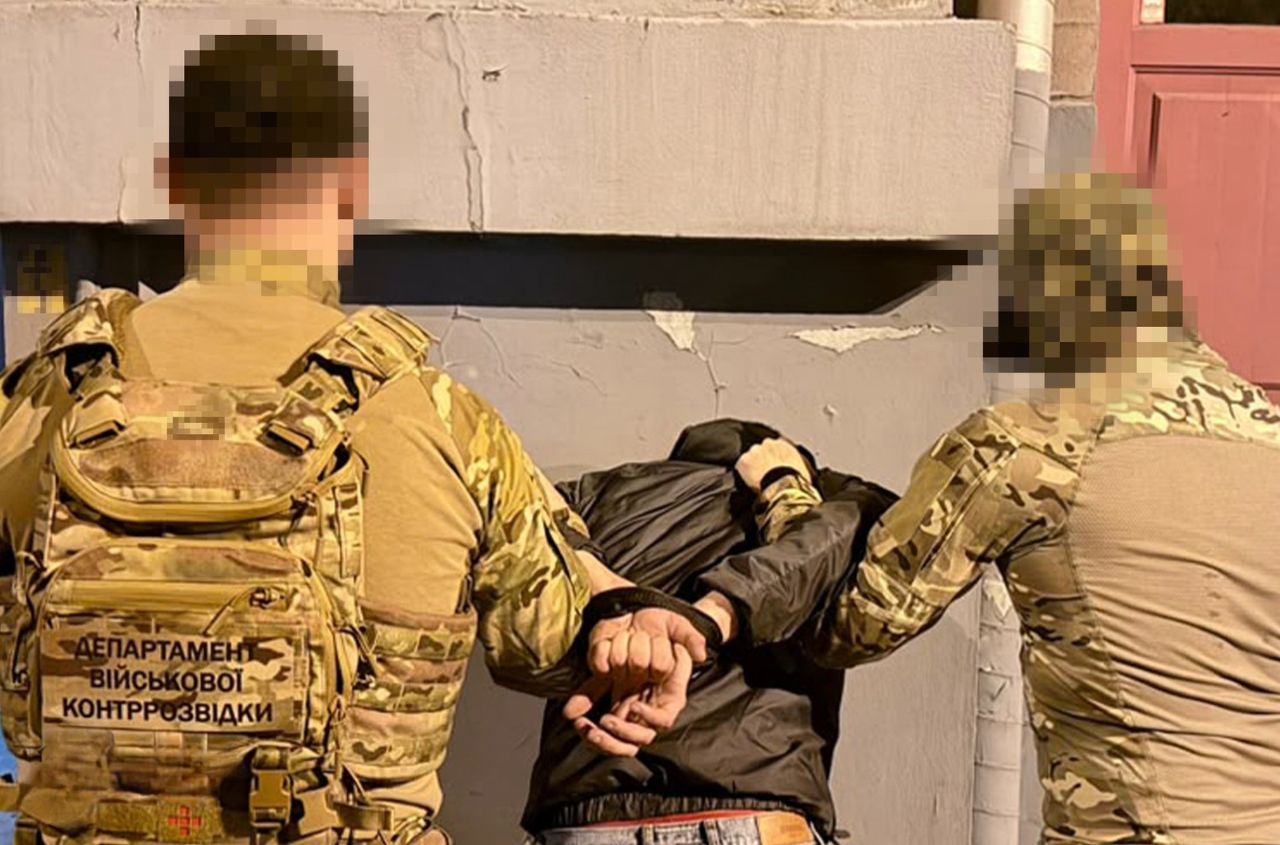

The SSU’s Military Counterintelligence, together with the National Police and with the assistance of the Commander-in-Chief of the Armed Forces of Ukraine, detained an FSB agent who collected information on defence and critical infrastructure facilities to help direct large-scale attacks on Kyiv between September 21 and 24 this year.
According to the investigation, over four days the suspect monitored potential targets to help guide Geran-5 jet-powered drones and ballistic missiles towards the capital.
The attacks carried out during those days killed and injured civilians in Kyiv. The combined strikes also damaged residential buildings in several districts of the city and a maternity hospital.
Investigators established that the Russian attacks were being directed by a serviceman of the Armed Forces of Ukraine who had recently been mobilised in Ternopil region.
Shortly after being called up, he went absent without leave from his military unit in Kyiv region, moved into a hostel in the capital and began looking for “easy money” through Telegram channels.
He was recruited through the messenger by a Russian intelligence officer who, in exchange for the promise of “quick money”, instructed him to help direct strikes on Kyiv.
The agent sent Russia the locations of facilities that he believed could be used by Ukraine’s Defence Forces. After Russian attacks, he visited the sites to inspect the consequences of the strikes.
The suspect was also preparing to set fire to service vehicles belonging to Ukrainian servicemen and carried out a reconnaissance trip to Poltava region to assess the situation there following recent attacks.
SSU officers detained the suspect near his temporary residence. During searches, they found two smartphones that he allegedly used to coordinate his activities with the FSB. Officers also seized a flammable mixture that he allegedly planned to use to set fire to a Ukrainian serviceman’s vehicle.
SSU investigators notified the suspect that he is suspected of high treason committed under martial law under Part 2 of Article 111 of the Criminal Code of Ukraine.
The suspect remains in custody. If convicted, he faces life imprisonment with confiscation of property.