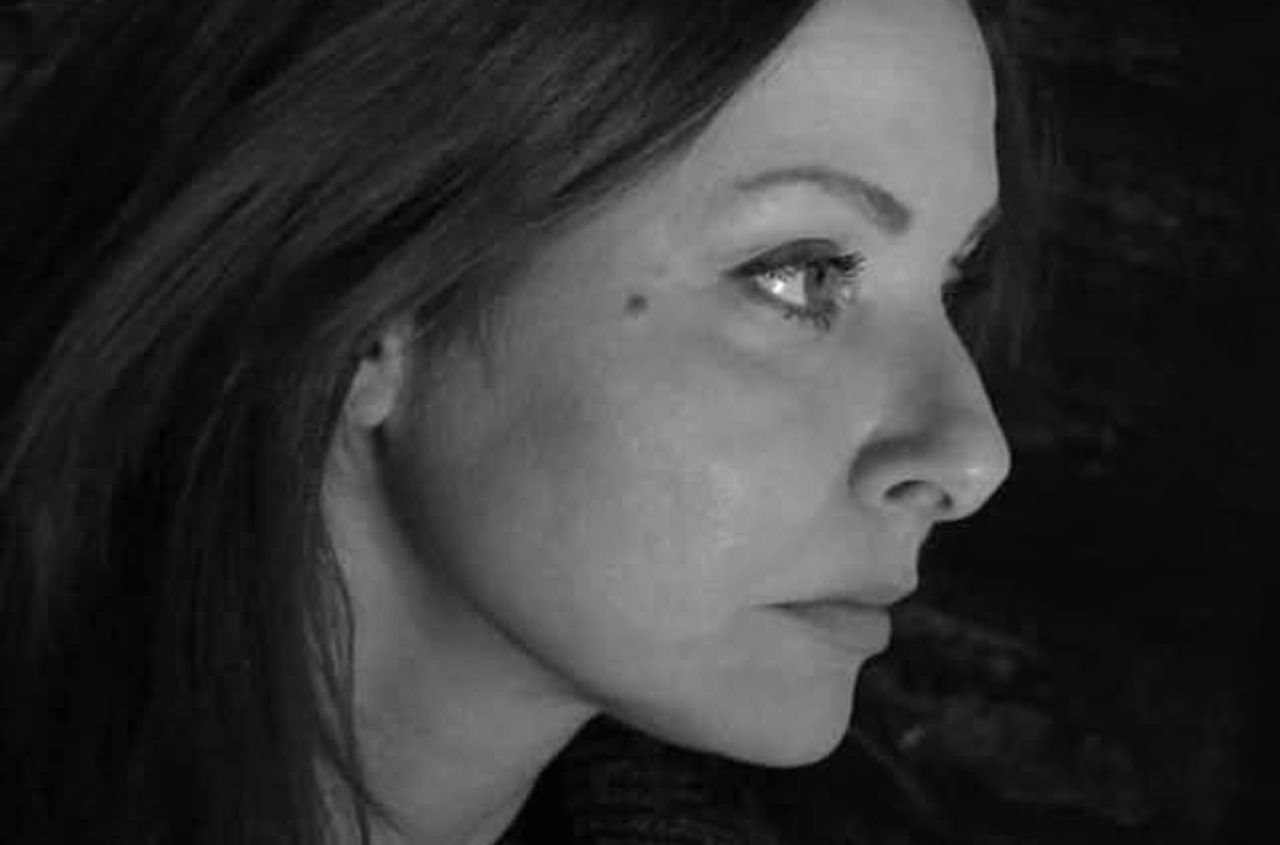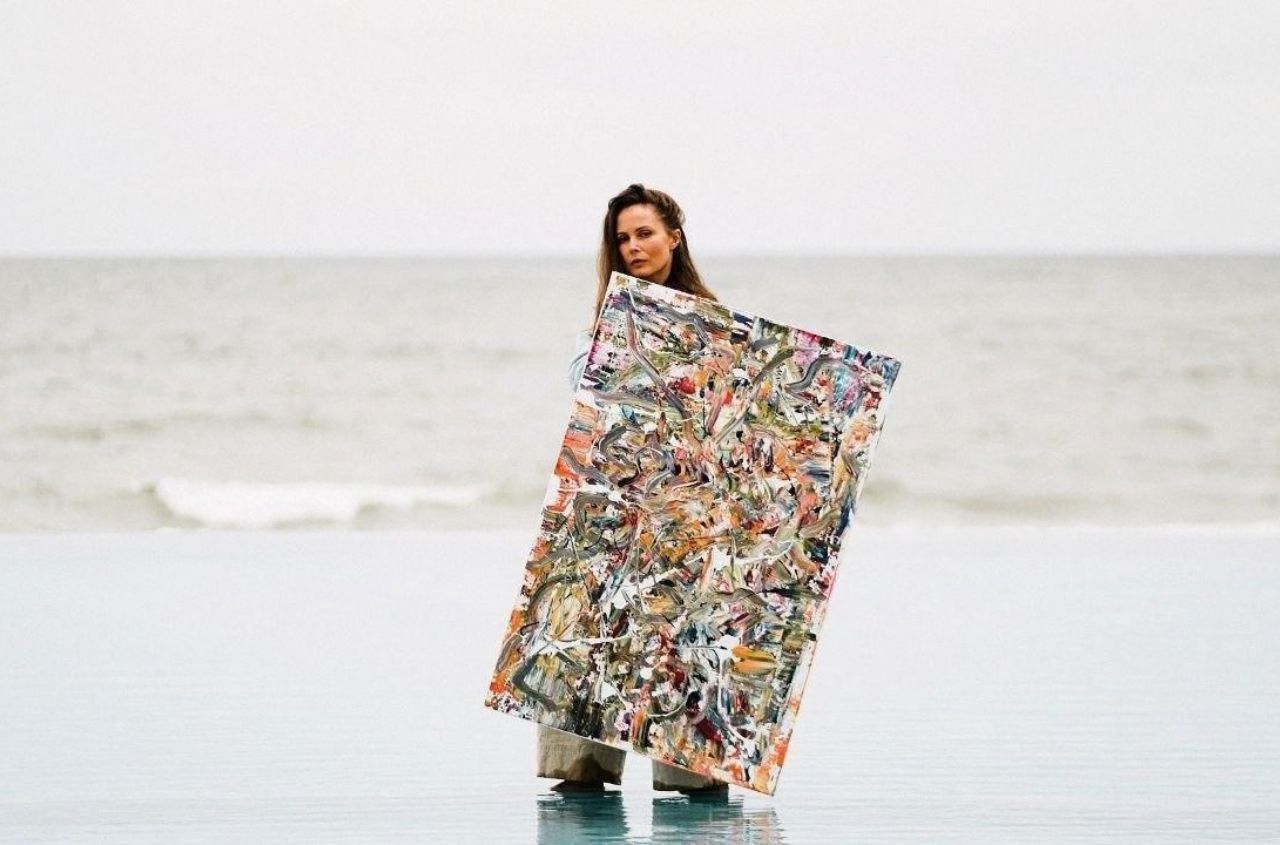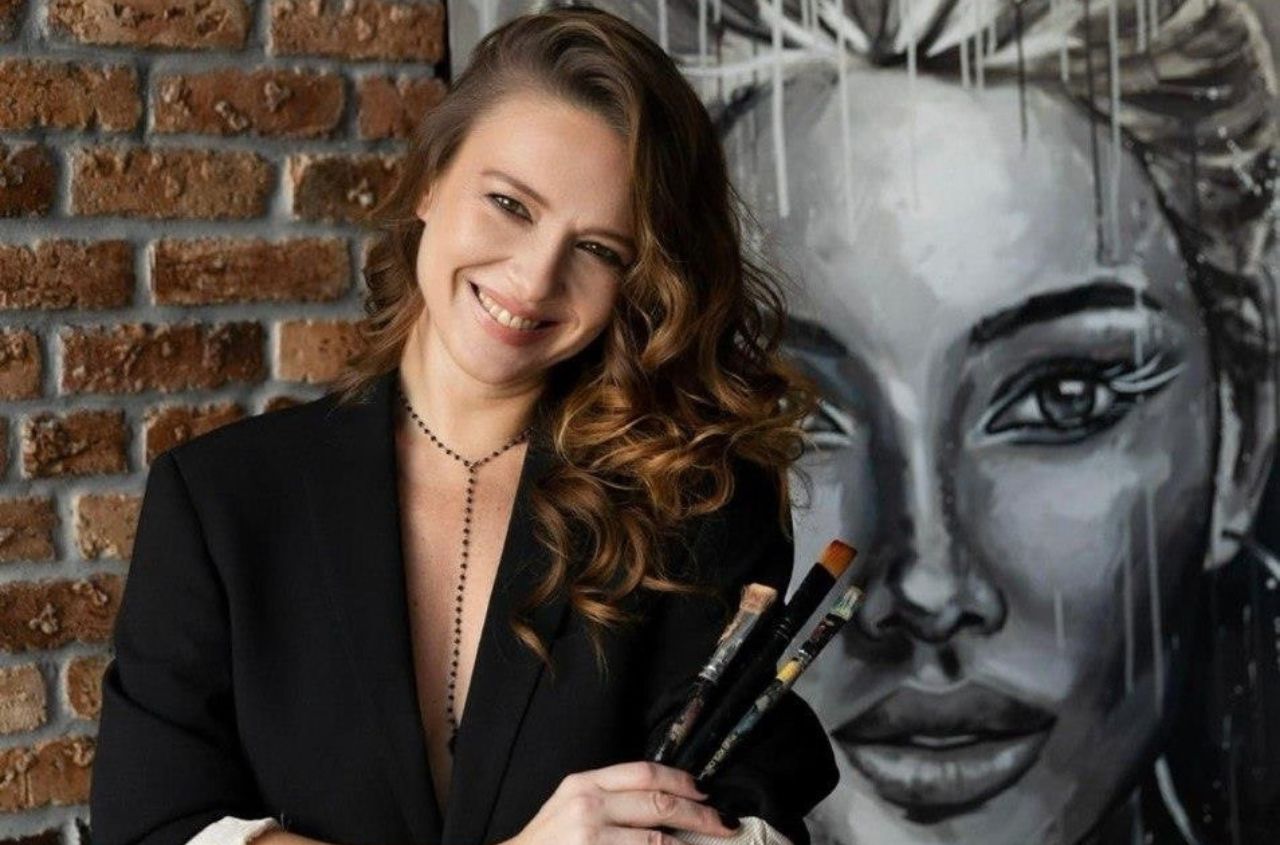


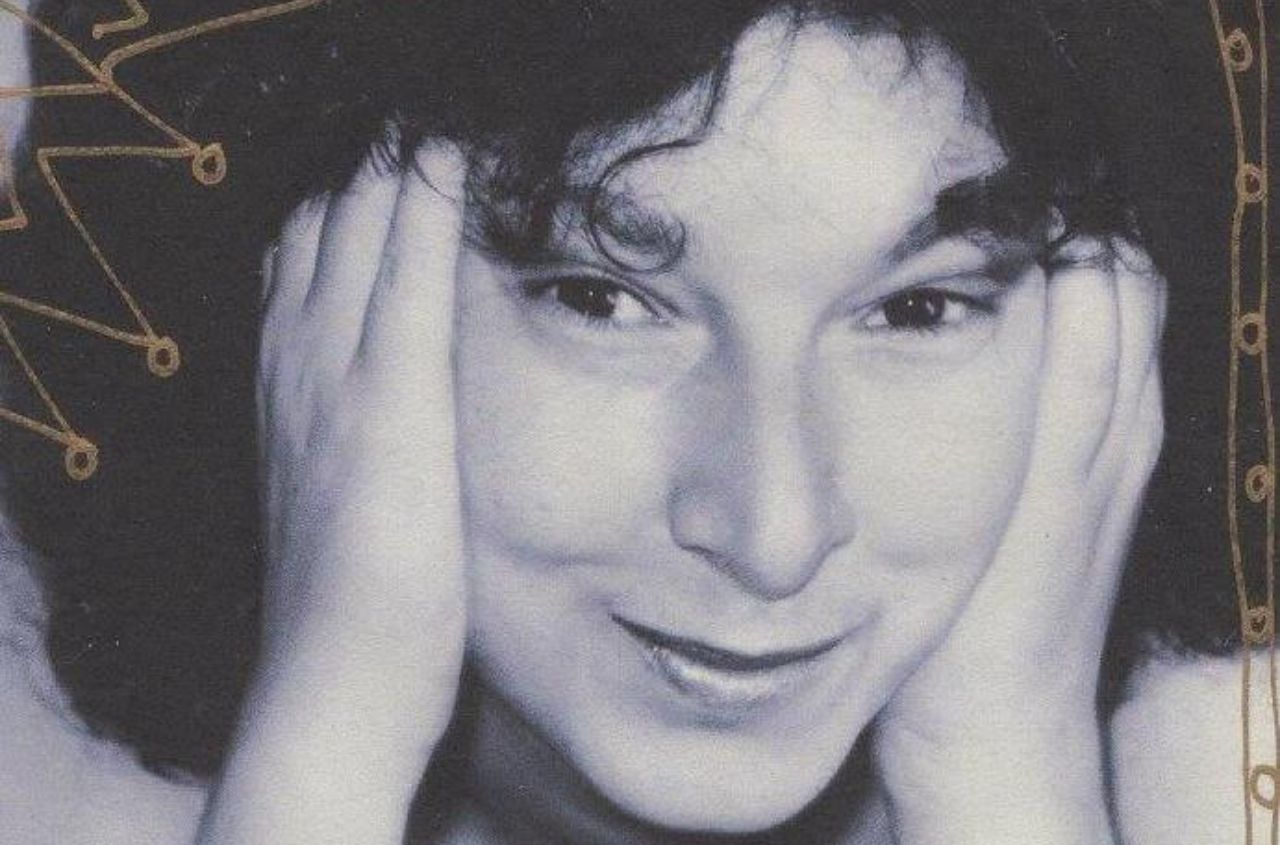

Main image: Julia Belomlinskaya
The fifty-sixth interview through images by Andrey Sheptunov
It is futile to examine the artistic practice of Julia Belomlinskaya in isolation from her biographical geography. Yet, behind the trail of her cult texts and cinematic myths, there often lies an exceptionally precise, material-rooted visual plastic language.
Belomlinskaya works not so much with a pure image, but with the very flesh of art, turning every canvas, sheet, or wooden board into a space of total costumed action. Her method is always an expressive gesture balanced by the professional discipline of theatrical and textile craftsmanship.
The main technical feature of her early and iconic cycles, including the 1996 series, lies in the paradoxical alliance of materials: watercolor, gouache, and wood. The layering of transparent, flowing watercolor and dense, matte gouache pigment onto a rigid, absorbing wooden base creates a unique matte texture.
Here, wood is not merely a passive support; it acts as an active co-author. Its fibers, rough textures, and density force the paint to settle with a characteristic resistance, stripping the drawing of academic smoothness and giving it a raw, almost poster-like conviction.
The influence of the Leningrad staging school and her long-standing practice as a costume designer manifest in how Belomlinskaya constructs the space within the frame. Every figure—be it an Angel, a Skomorokh, or characters from Babel's stories—possesses a sharp, almost silhouette-like character.
The logic of the cut penetrates the logic of painting: the artist thinks not in abstract spots, but in weighty, tangible volumes where a fold of clothing or the contour of a headpiece holds the entire composition, transforming a graphic sheet into a frozen mis-en-scène.
A special place in her creative arsenal belongs to the decorative intuition of a textile designer, which developed during her American period. From this stems a specific internal rhythm in her works, reminiscent of a textile repeat—a repeating pattern that organizes chaos. Even where the color seems spontaneous,
Belomlinskaya sniper-targets the color dominants, making pure local colors vibrate in contrast with the raw texture of the base, whether it is paper, hardboard, or wood.
The evolution of her style, from graphic sketches for "Thumbelina" in the mid-1980s to the mixed media in the monumental triptych "Wet Dreams. Death of Koschei" of 2026, demonstrates an astonishing integrity. Belomlinskaya consistently deconstructs the fairytale and mythological canon, exposing its erotic, chthonic underbelly.
A fine marker in "Hebrish Tales" or the multi-layered collage of her recent "Magical Paintings" work toward a single goal—to capture the ultimate, sometimes ruthless honesty of human impulse.
For the exhibition "Lust" (Khity) at the FREEDOM gallery in Odessa, the artist created a visual manifesto where her former theatricality has ultimately yielded to the concentrated magical power of the material. This is mature art that does not flirt with the viewer but rather confronts them with the fact of its radical presence.
Here, there is no division between high and low art; the archaism of Lemko songs coexists with the brutality of a modernist poster, and tenderness shares space with a sharp, ironic gesture.
In this interview, we move away from the usual chronological questions and invite Julia Belomlinskaya to look at her own creative trajectory through the lens of her main visual testimonies. Before you is the direct voice of the artist, where behind each answer stands a concrete plastic form, a sketch, or a finished painting, capturing moments of absolute inner freedom.
1. Which of your visual works or sketches best conveys the inner freedom you felt when you first arrived in Odessa to work on set with Kira Muratova?
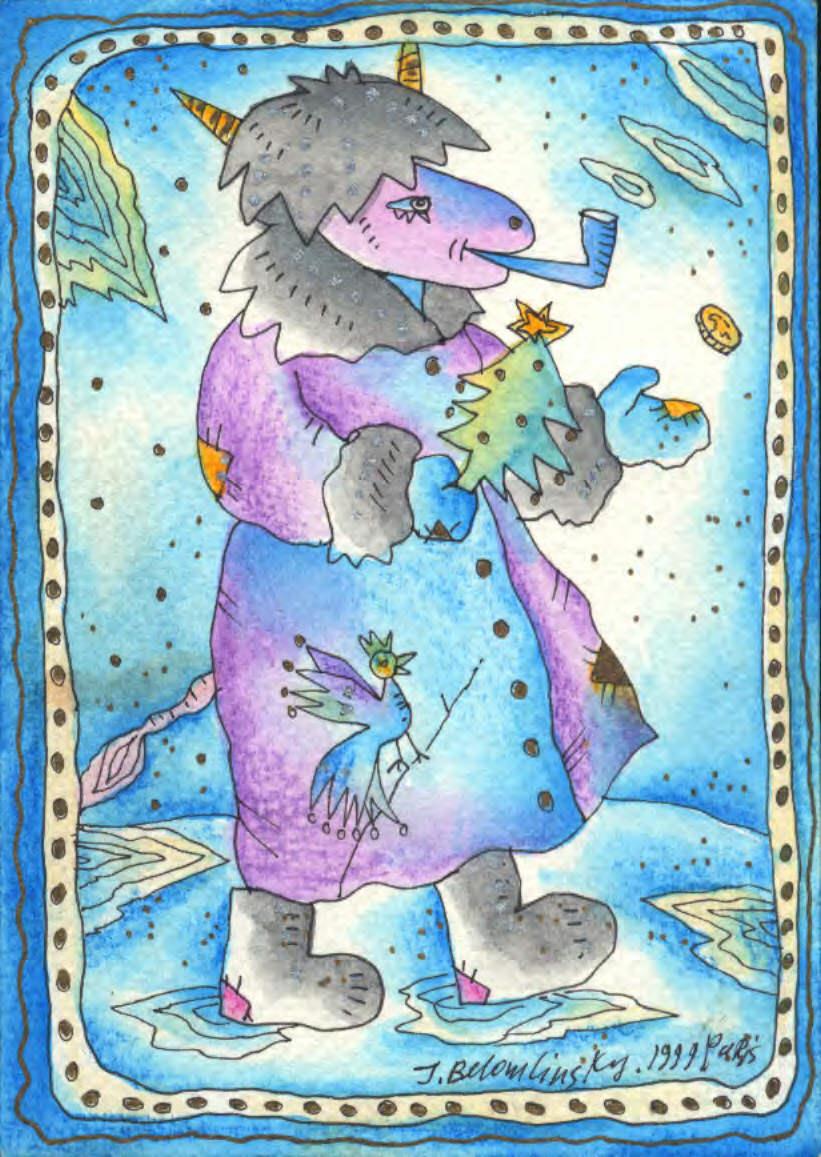
2. Show us a work in which the texture or color of the fabric still reveals your American past as a textile designer.
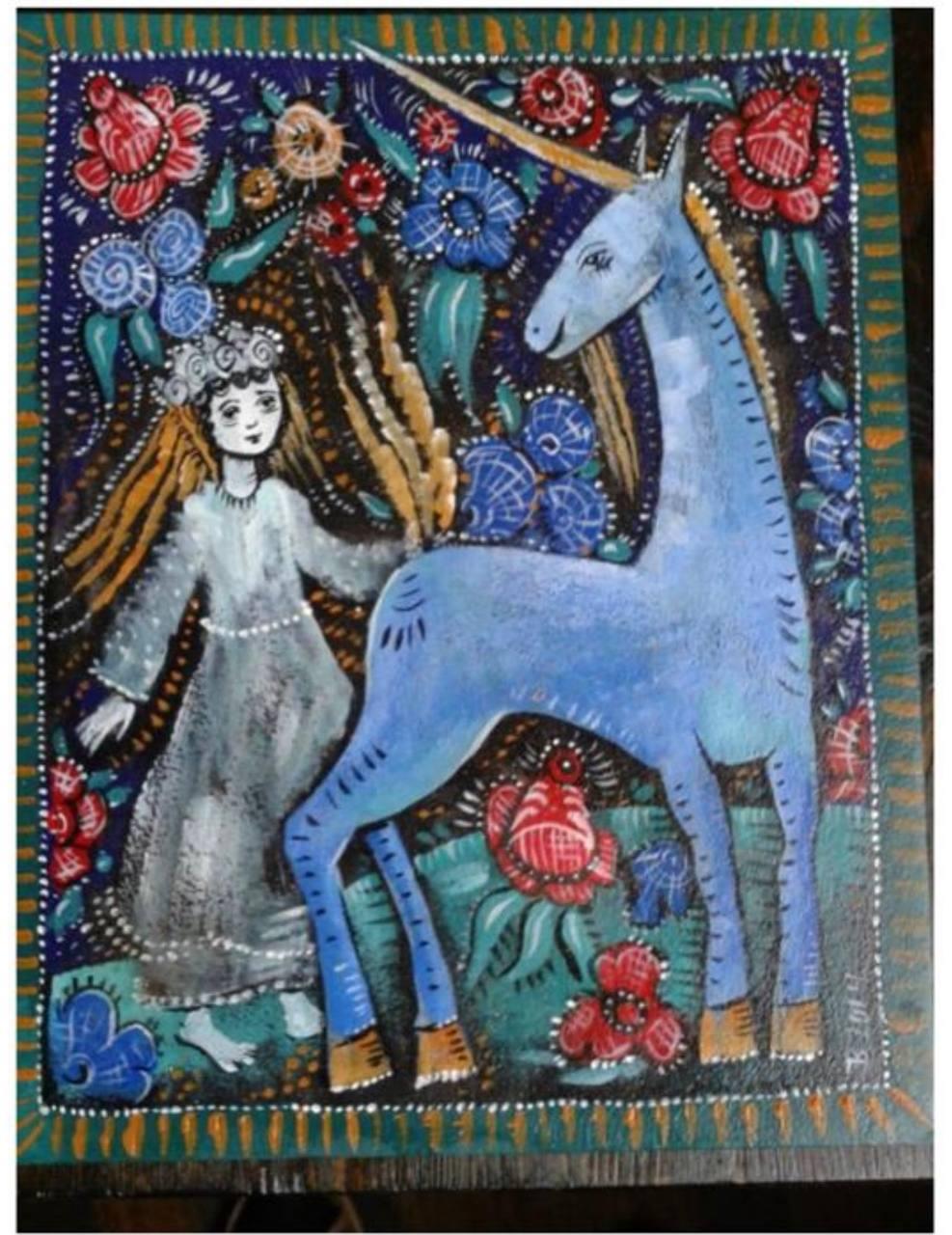
3. In which of your graphic or painting works is your experience as a theatrical costume designer most vividly expressed?
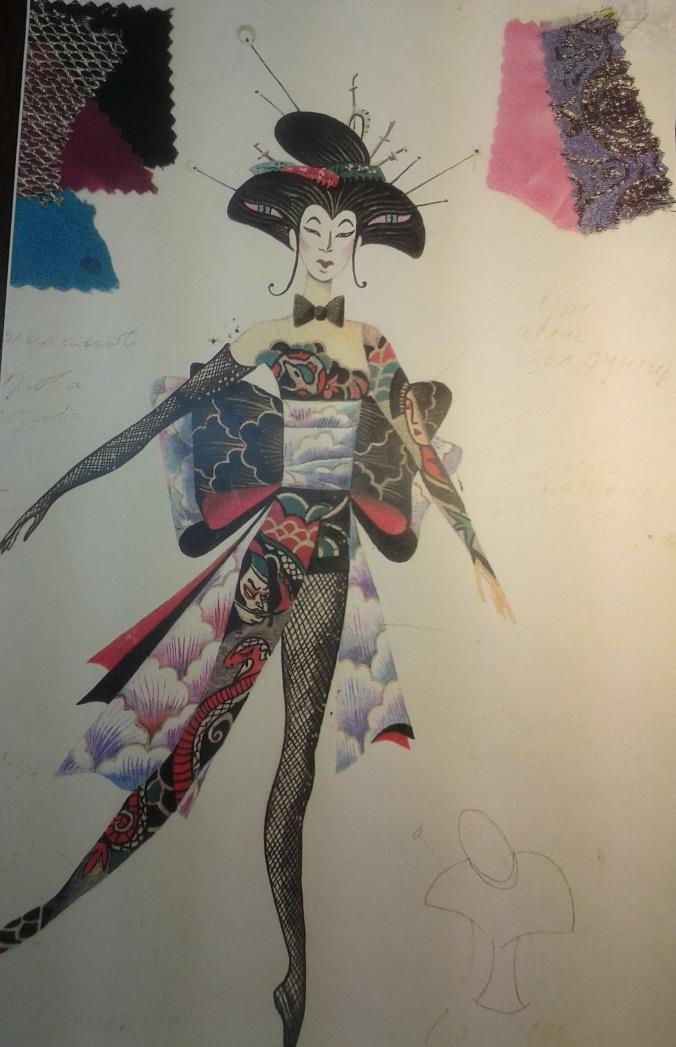
4. Show us a fragment of the triptych "Wet Dreams. Death of Koschei" where myth and irony intertwine so closely that it surprises even you.
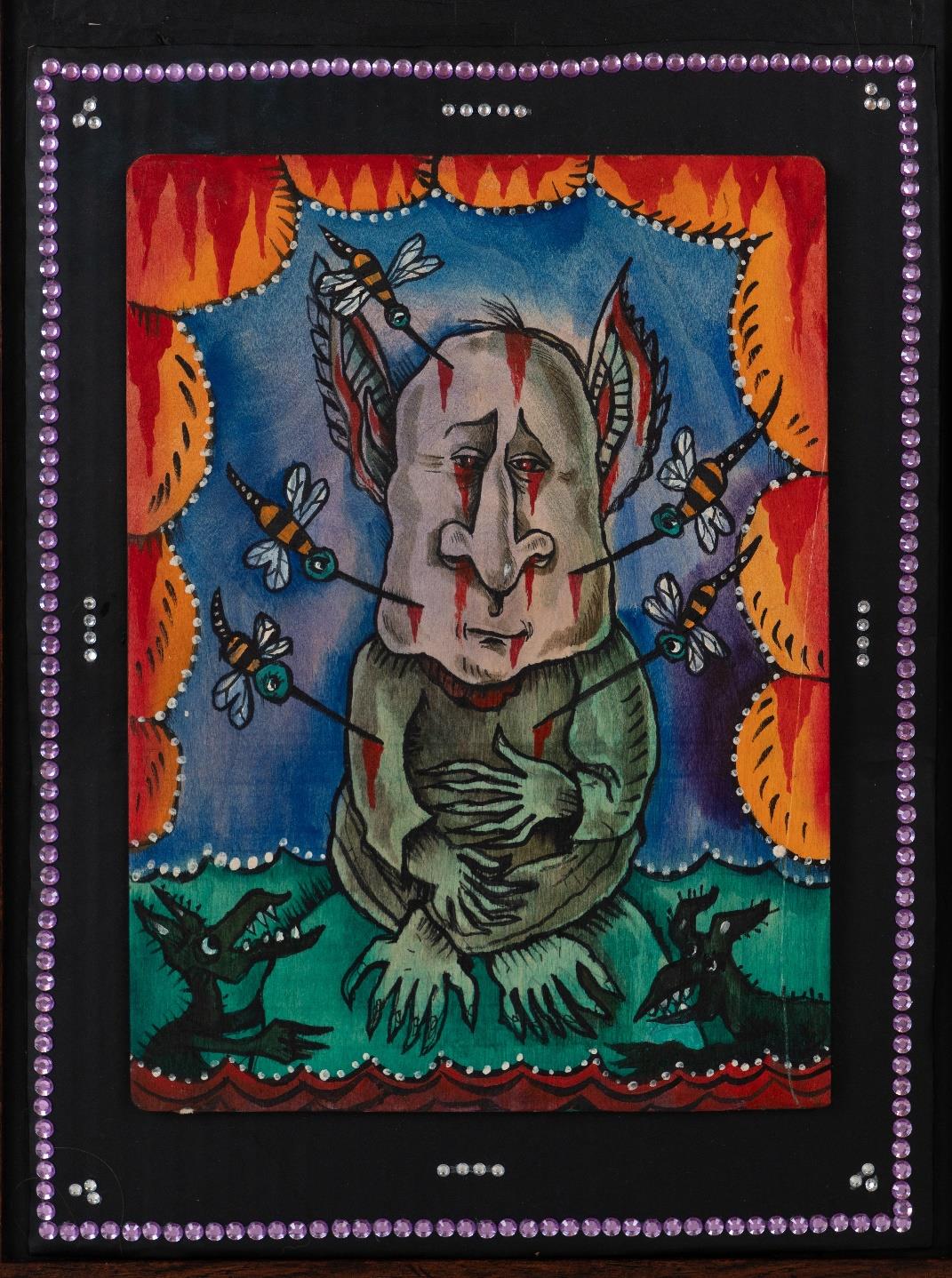
5. Which of your art pieces best translates that specific boundary of female vulnerability and strength that you reflect upon in your literary writing?
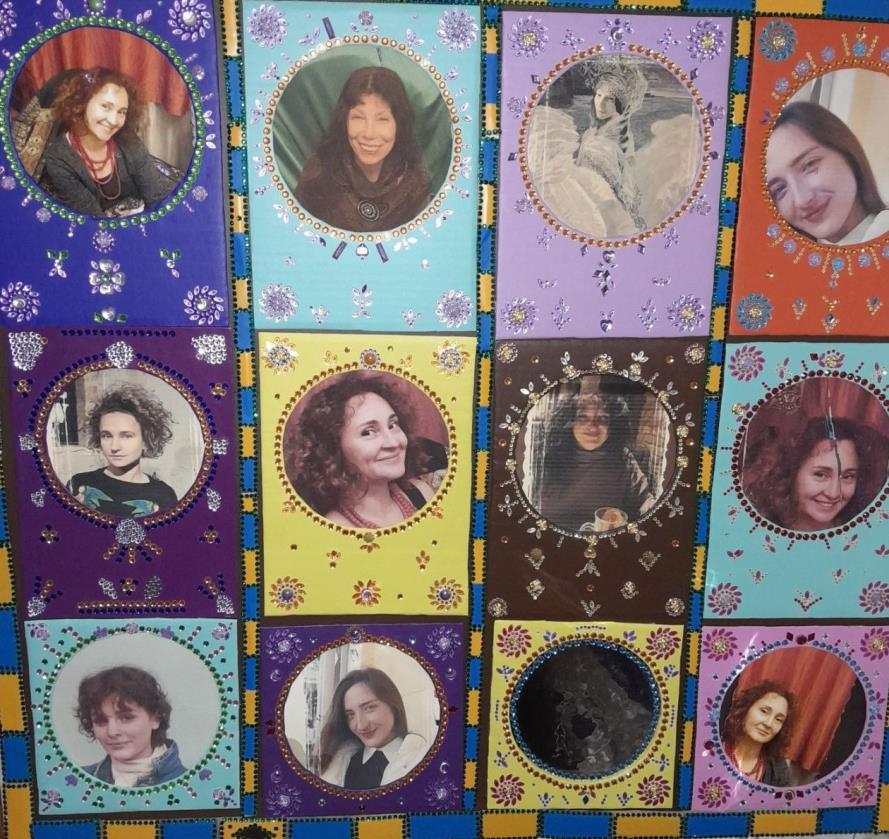
6. Which of your paintings or graphic series would make the ideal stage set for the performances of the group "CHARIVNI MOTANKY"?
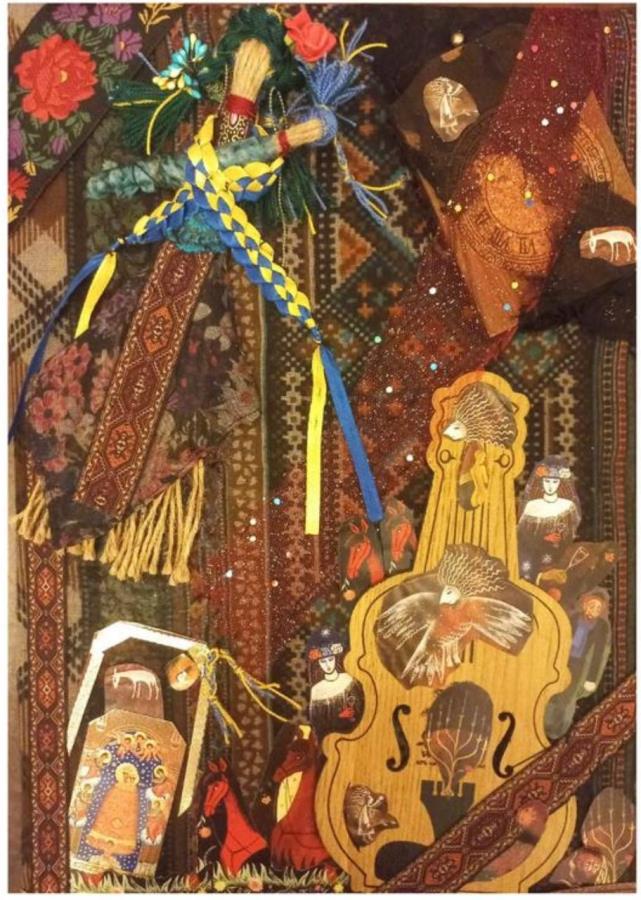
7. Show us a visual work that was born as a direct continuation of, or reaction to, one of your most resonant Facebook posts.
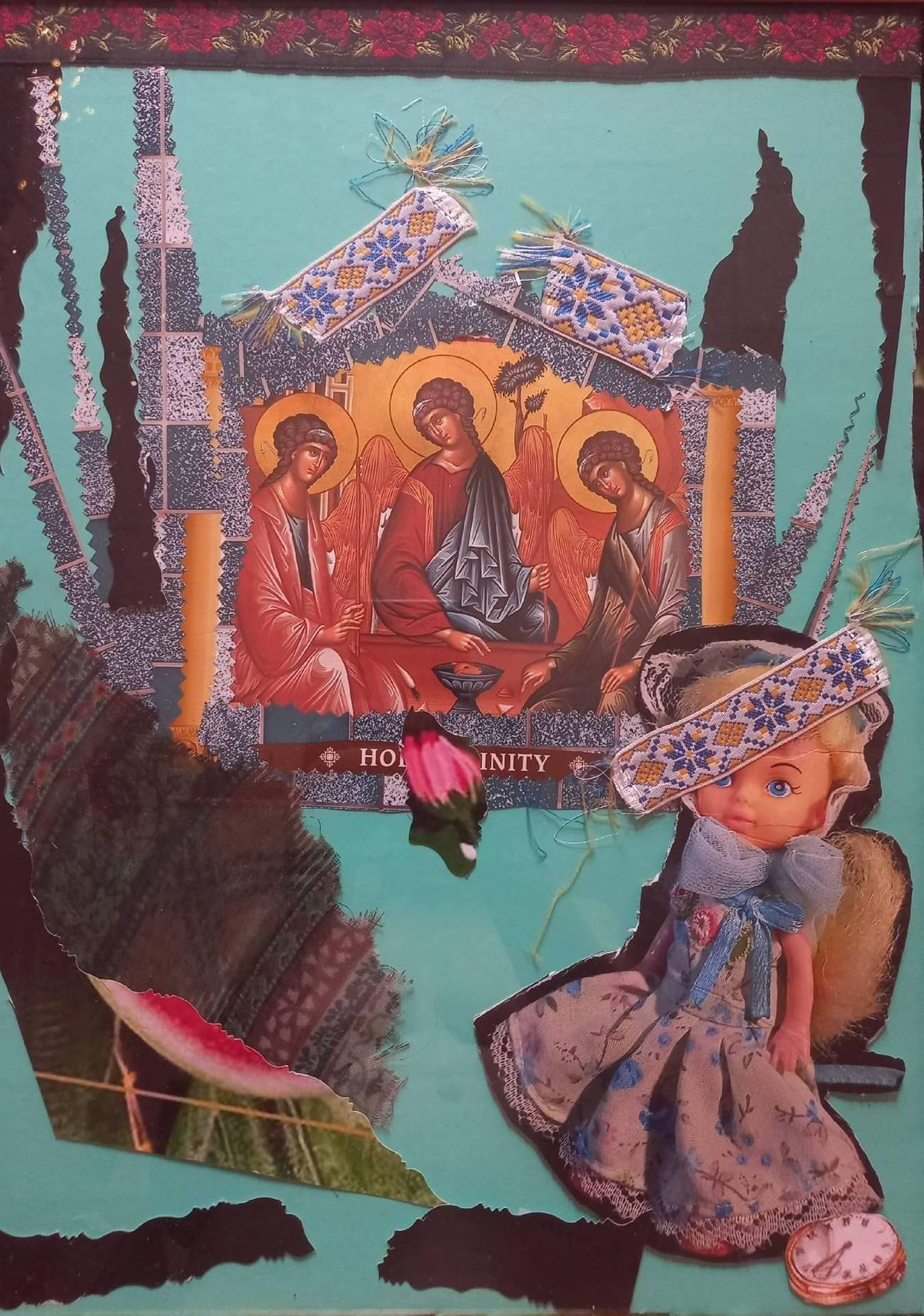
8. Show us an early drawing or graphic piece where one could already glimpse the daring, rebellious spirit that has fully unfolded in your current projects.
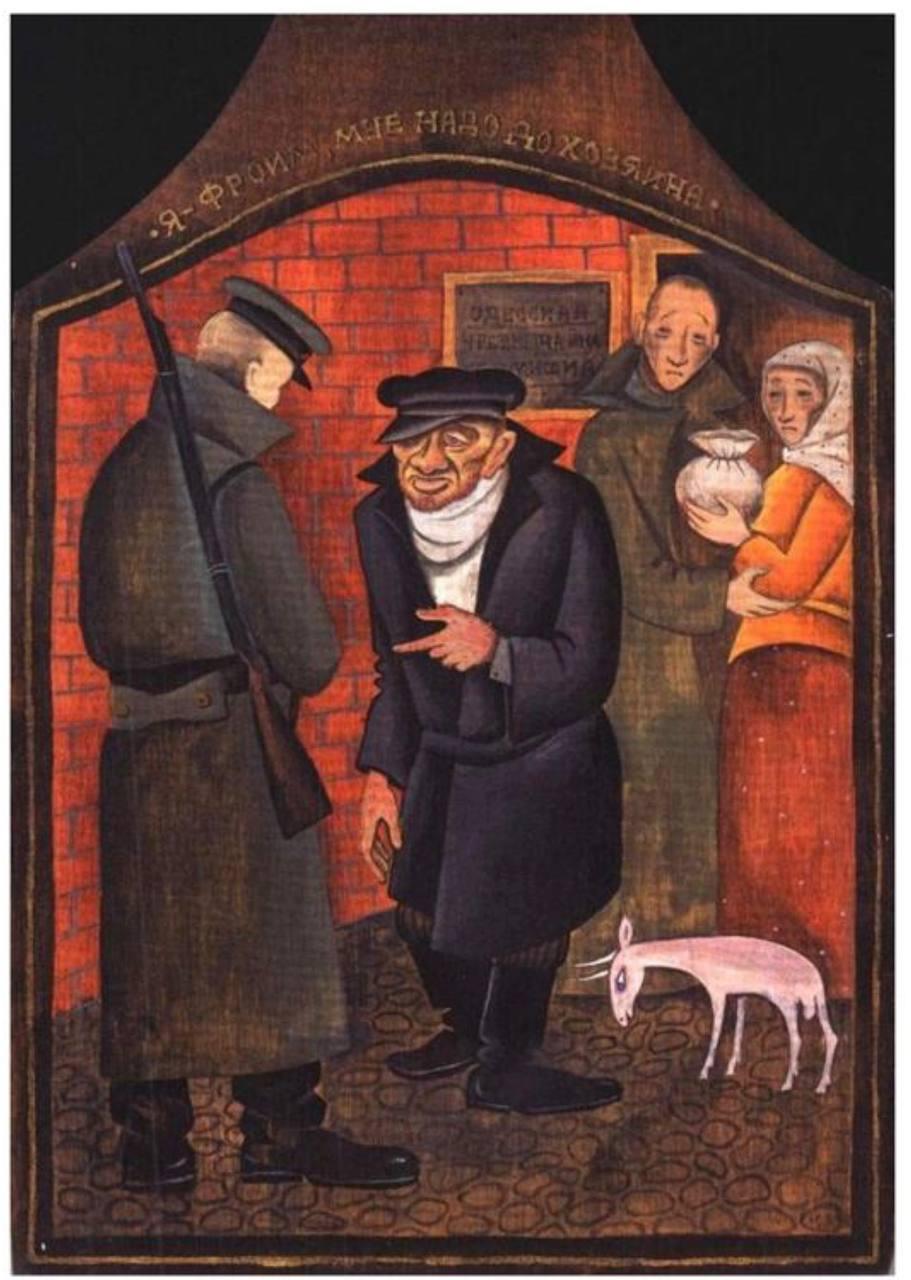
9. Which of your paintings best illustrates the concept of "wet dreams," going far beyond the usual fairytale or mythological theme?
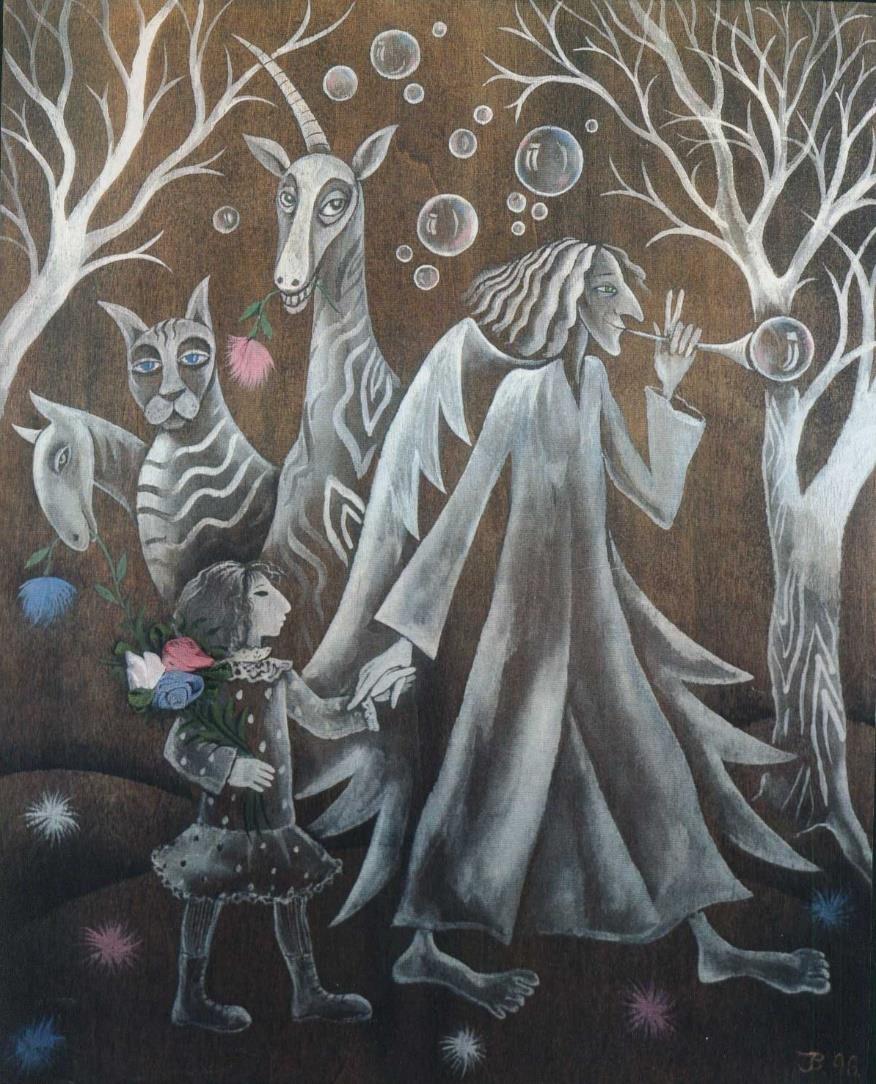
10. Show us a piece or art object of your creation in which a fairytale motif (like Koschei or Thumbelina) suddenly takes on a completely adult, unexpected, or even sinister context.
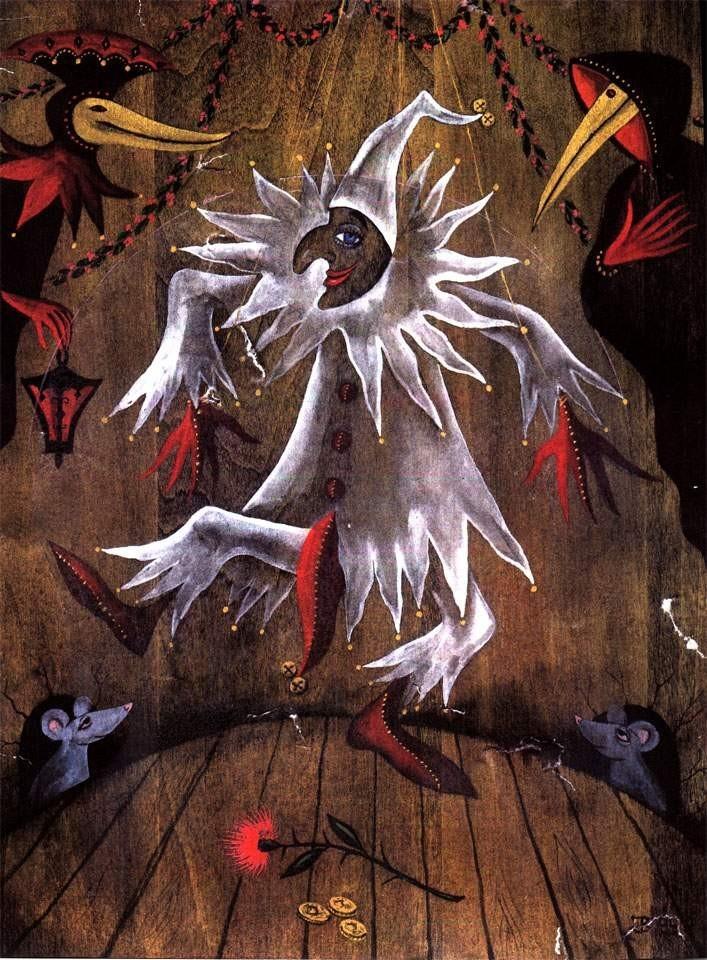
11. Which of your recent works is filled with the same uncompromising honesty with which you created your autobiographical texts?
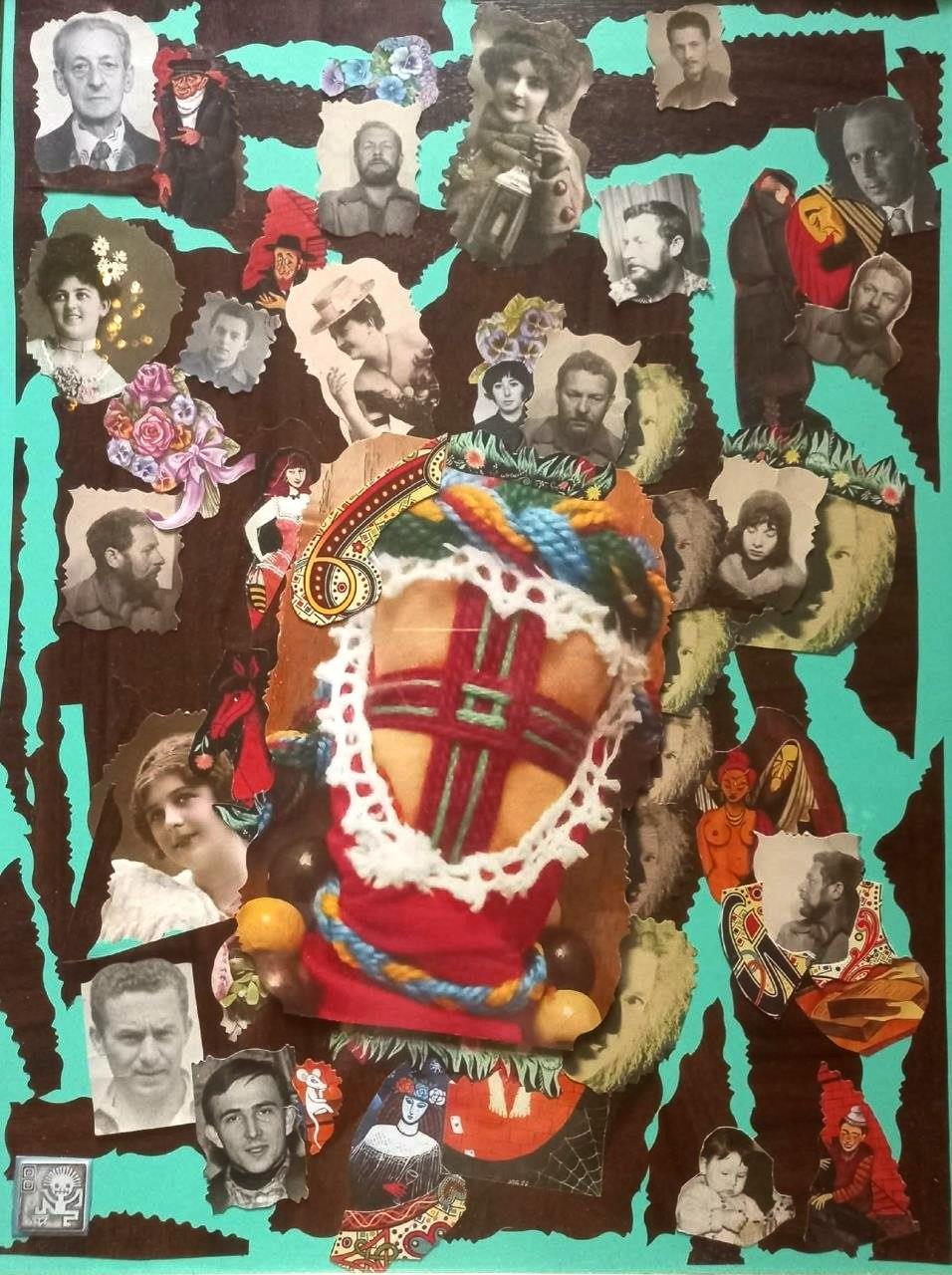
12. Which of your works from recent years do you personally consider a manifesto of your current personal and creative maturity?
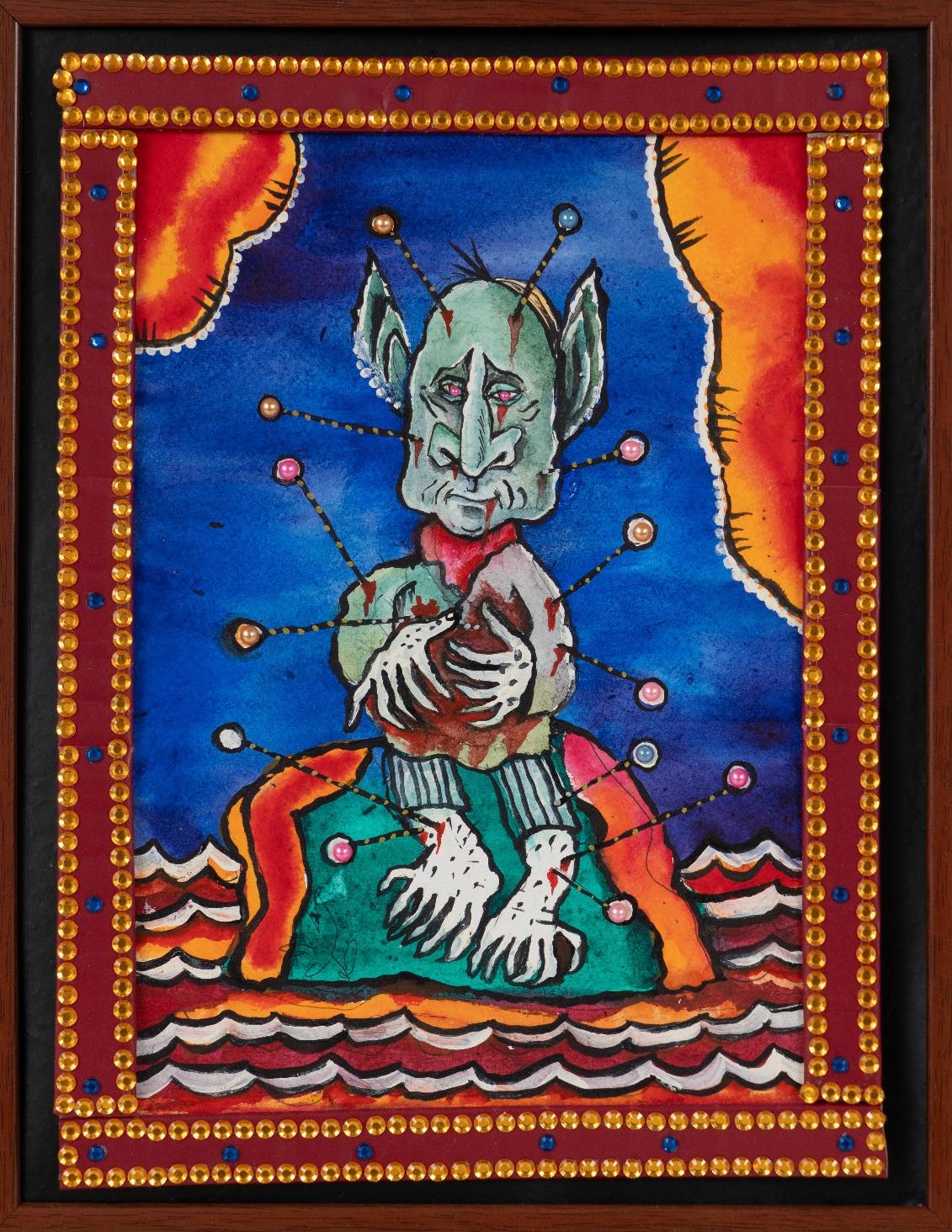
The visual world of Julia Belomlinskaya is an ongoing, fluid performance where personal myth is instantly converted into plastic form, and the line of a cut easily coexists with the brutal texture of wood. This blitz interview clearly proves: Belomlinskaya the artist does not lag a single step behind Belomlinskaya the writer in her total, disarming directness.
Each work presented here—from early watercolor sketches to the monumental collages of 2026—captures a quality rare in contemporary art: absolute autonomy from others' expectations and market trends. Unraveling this complex, erotic, and deeply theatrical code is an endless process, revealing new layers of meaning behind every stroke of gouache.
To follow Julia Belomlinskaya's new art projects, her literary texts, as well as the schedule of her exhibitions and performances of the group "CHARIVNI MOTANKY", you can visit the author's official social media pages: