


By Viktor Yahun
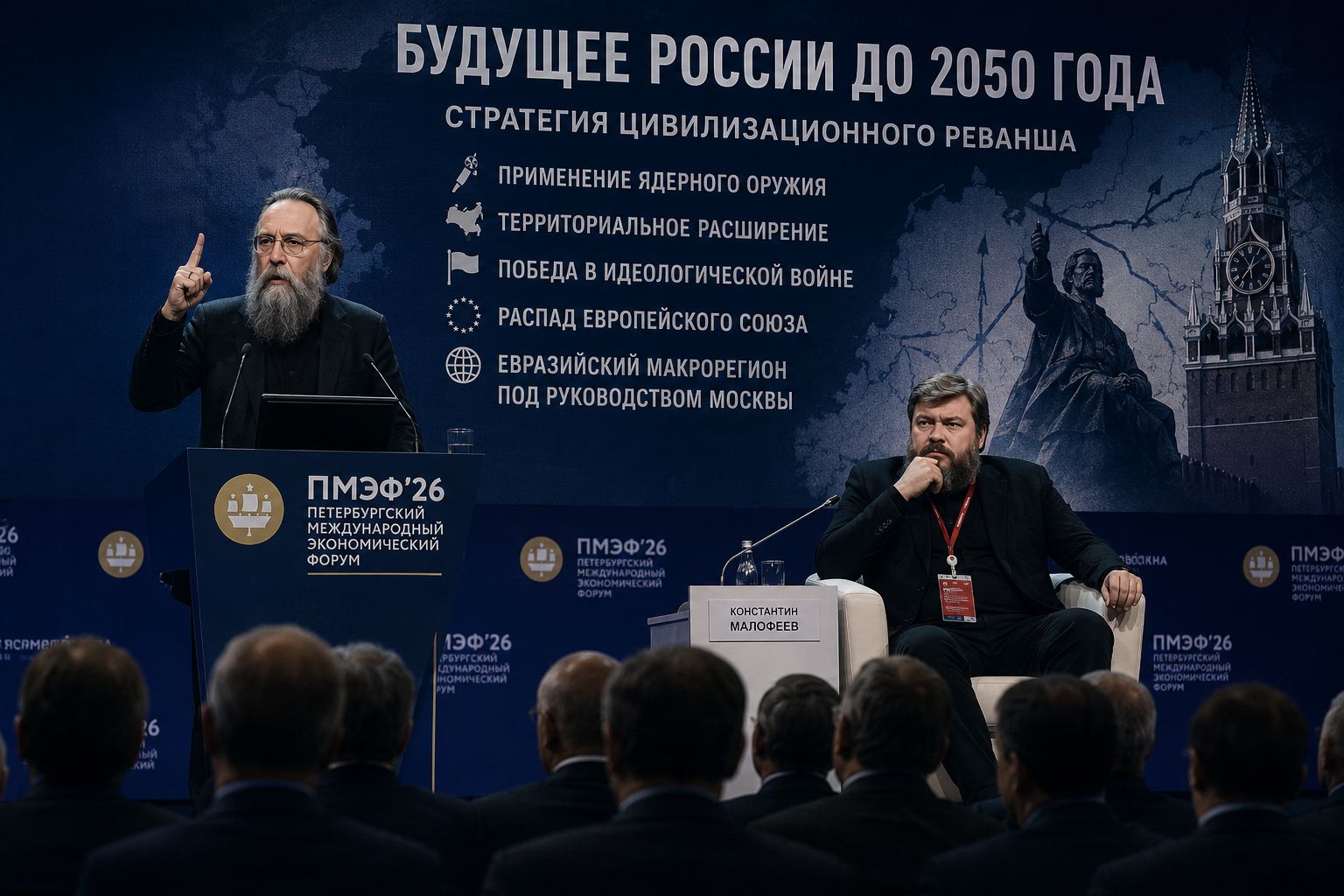
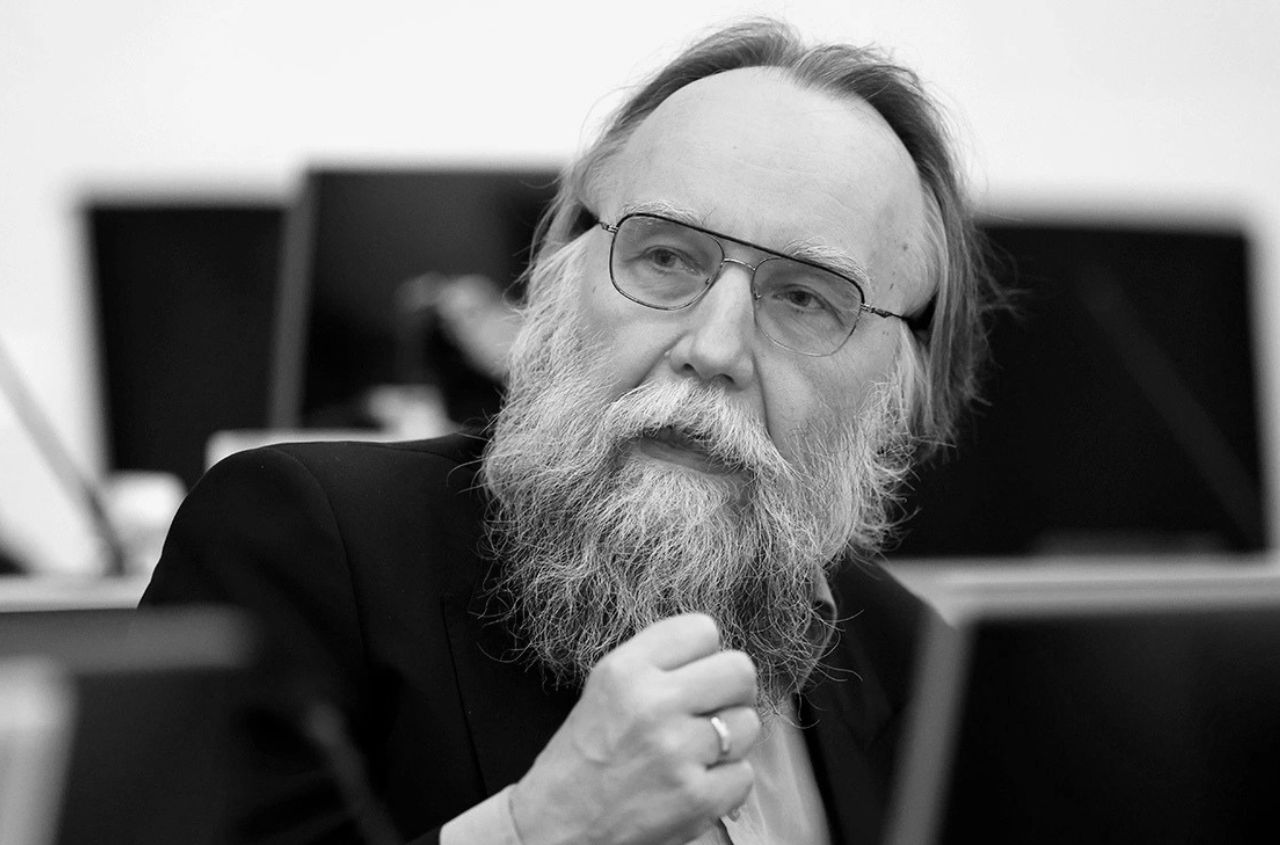
At the St. Petersburg International Economic Forum 2026, the “Tsargrad” Institute of Konstantin Malofeev, with the participation of Alexander Dugin, presented a report on Russia’s future up to 2050. This fact alone could have been dismissed as yet another extravagant initiative by Russian ultra-conservatives, if not for one important circumstance: according to the authors themselves, the document had already been discussed at the Academy of the General Staff of the Russian Federation, and questions of state ideology are regularly considered within the circles of Russian power.
Therefore, what matters is not only the content of the document, but also the very fact of its appearance at one of Russia’s main state forums.
In the so-called “positive scenario” of Russia’s development, the authors envision the use of nuclear weapons, territorial expansion at Ukraine’s expense, a “victory in the ideological war,” the collapse of the European Union, and the formation of a Eurasian macro-region under Moscow’s leadership. At the same time, the main threats identified include defeat in war, “replacement migration,” biotechnology, artificial intelligence, and the loss of financial sovereignty. The proposed remedies include autocracy, the “nationalization of elites,” and de-Westernization.
At first glance, this may look like a set of radical fantasies. In reality, however, the document is interesting not so much for its predictions, but for how it reflects the vision of part of the Russian elite regarding the desired future.
In effect, what we are seeing is not a state development strategy, but a strategy of civilizational revanche.
In this vision of the future, there is no competitive economy, innovation, political modernization, or improvement of citizens’ welfare as a primary goal. The future is defined through external expansion, territorial growth, confrontation with the West, and the establishment of ideological control within the country.
Particularly striking is the point regarding the use of nuclear weapons. For decades, Russia’s official nuclear doctrine has presented the nuclear arsenal as a tool of deterrence and a guarantee of state survival. In the report, however, the use of nuclear weapons is effectively considered one of the elements of a successful geopolitical scenario. This indicates a dangerous transformation in the thinking of part of the Russian political class, where the nuclear factor is increasingly perceived not only as a means of preventing war, but also as a potential instrument for achieving political outcomes.
Equally important is another point. The authors effectively acknowledge that Russia is entering into conflict not only with the West, but also with the very logic of modern global development. Global integration, technological change, artificial intelligence, biotechnology, and international interdependence are declared threats — that is, precisely those factors that will define the world’s development in the coming decades.
From Ukraine’s security perspective, the key conclusion is not that Russia will necessarily implement this scenario tomorrow. Most of its provisions appear unrealistic or openly utopian.
What is far more important is this: in the proposed vision of Russia’s future, there is no model of peaceful coexistence with neighbors at all. Victory is defined through expansion. Security through dominance. Stability through autocracy. And development through confrontation with the outside world.
That is why the current war is not only a war for territory. It increasingly takes on the characteristics of a conflict between two fundamentally different models of the future. Ukraine is fighting for the right to be part of an open world. A segment of the Russian elite continues to build a project of a state that sees its future only through revanche, control, and coercion.
And it is precisely this circumstance that poses a far longer-term and deeper threat than any individual statements by Putin, Dugin, or Malofeev.