


Let me tell you what will happen with the defense architecture and all of this.
1. When Ukraine’s Acting Minister of Defense, General Yevhen Khmara, meets with foreign counterparts, they will be asking to take photos with him.
A photo with General Khmara will give an average European country +5 to defense and +15 to attack. For some countries, these photos will double their defense potential and will be listed as a contribution to NATO’s defense infrastructure.
2. We should thank General Mykhailo Drapatyi for everything he has done so far. Until commanders are fully reassigned at the operational level and tested in their new roles, there will inevitably be some concern.
It is also worth wishing Drapatyi lasting support. Because being a commander-in-chief is a particular kind of position: today you are worshipped and everyone loves you; tomorrow not everyone does; and the day after tomorrow you are blamed for everything, with no achievements seeming to matter anymore. But they should matter.
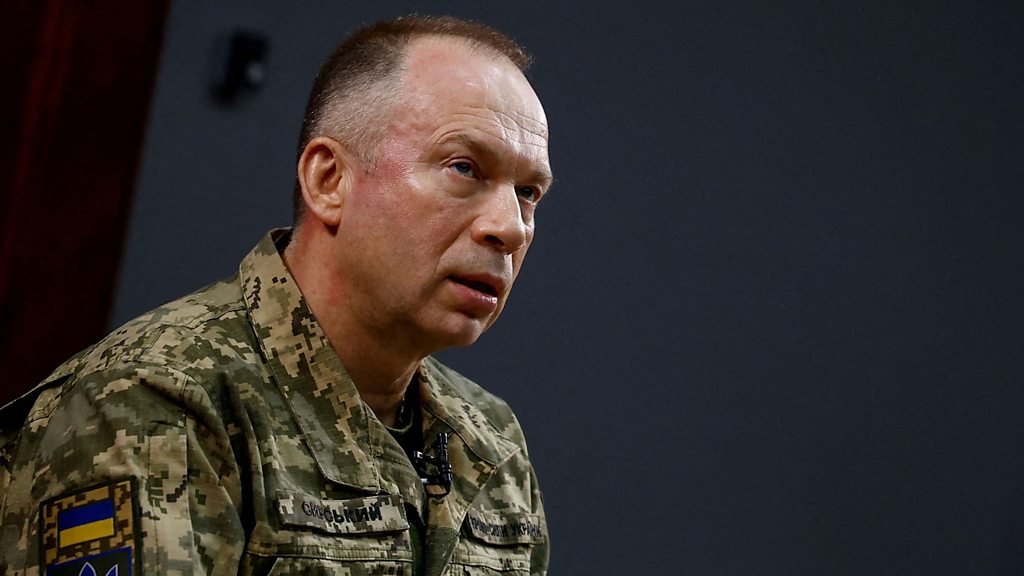
3. If I were NATO Secretary General Mark Rutte, I would already be calling General Oleksandr Syrskyi — or even heading to the airport to catch a train tomorrow and personally persuade him to join the Alliance.
There might not be enough time, because European Commissioner for Defence Andrius Kubilius or German Defense Minister Boris Pistorius — as the most pragmatic figure who has to carry the burden for everyone — may already be trying to reach Syrskyi first.
If we put emotions aside, the facts are as follows.
On planet Earth, only a handful of generals possess comparable practical experience of war on this scale — with all its horrors. There are perhaps a dozen and a half of them in total: several Americans, several Russians, and Syrskyi.
Neither the Turks nor the Israelis have such experience. European military commanders — including the British — are not even close.
Moreover, Zaluzhnyi and Syrskyi (to an even greater extent) possess unique experience in conducting a full-scale war against a significantly larger adversary under conditions of:
- mass transition to Western-made weapons systems;
- revolutionary technological transformation of the battlefield.
No one else in the world has this combination of experience except our commanders-in-chief.
The Russians are fighting with numerical and resource superiority, relying primarily on their own weapons.
Ukraine, meanwhile, has faced an extreme level of uncertainty and novelty — something almost unprecedented for a military force. This has shaped unique characteristics of both the armed forces and society.
There are no higher-ranking military positions in Ukraine left for Syrskyi. And, as far as can be judged, he does not appear interested in political-military roles.
He cannot be appointed Chief of NATO’s Military Committee — that position is traditionally tied to the alliance’s military structure, where maritime experience also plays a role. But finding him a comparable role to help modernize and sharpen the armies of European NATO members would make perfect sense.
The recent criticism should not erase what was achieved in Kharkiv in the spring (which many people forget) and in the autumn of 2022.