


Soviet Russia, seeking to seize yet another piece of territory, almost always followed the same pattern. First came talks of peace, then an invasion and the capture of a small portion of land, followed by the proclamation of a Soviet republic there, then a request for help from the Kremlin, and finally—occupation, executions, looting, the Red Terror, and the establishment of Soviet authority.
Therefore, all the talk that Russia supposedly “granted independence” to anyone is worthless. Poland gained independence after the Bolsheviks were defeated near Warsaw. The Baltic states gained independence after victories in the Estonian War of Liberation. The Bolsheviks seized Narva (surprise, surprise), proclaimed the Estonian Labour Commune there (surprise, surprise), organized the Red Terror (surprise, surprise), but were eventually driven out and forced to recognize independence. In Finland, the Bolsheviks actively participated in the civil war, created the Finnish Socialist Workers’ Republic, but lost.
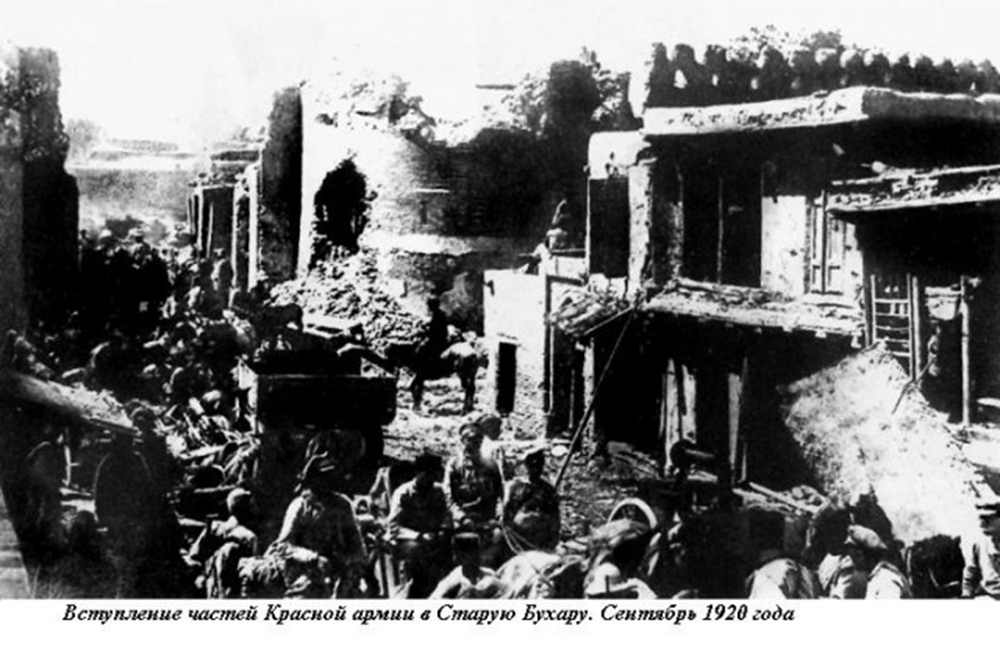
I want to recount the half-forgotten story of the assault on Bukhara. At first, they wanted to annex the Bukhara Emirate by force, but the first attempt failed. The Bolsheviks then said: “All right, all right, we overreacted, we want peace.” A treaty was concluded in which the RSFSR unconditionally recognized Bukhara’s full sovereignty and independence. Mikhail Frunze declared in a meeting with the Emir that Soviet Russia was “extremely interested in the territorial integrity of Bukhara.” Meanwhile, reserves were being brought up.
Soviet troops invaded the Khivan Khanate and proclaimed the Khorezm People’s Soviet Republic there (never done before). Local communists, led by Valerian Kuybyshev, staged an uprising and appealed to Moscow for help and annexation. On the same day, Frunze issued an order defining the operation’s goal as “revolutionary fraternal assistance to the people of Bukhara in their struggle against the despotism of the Bukhara autocrat.”
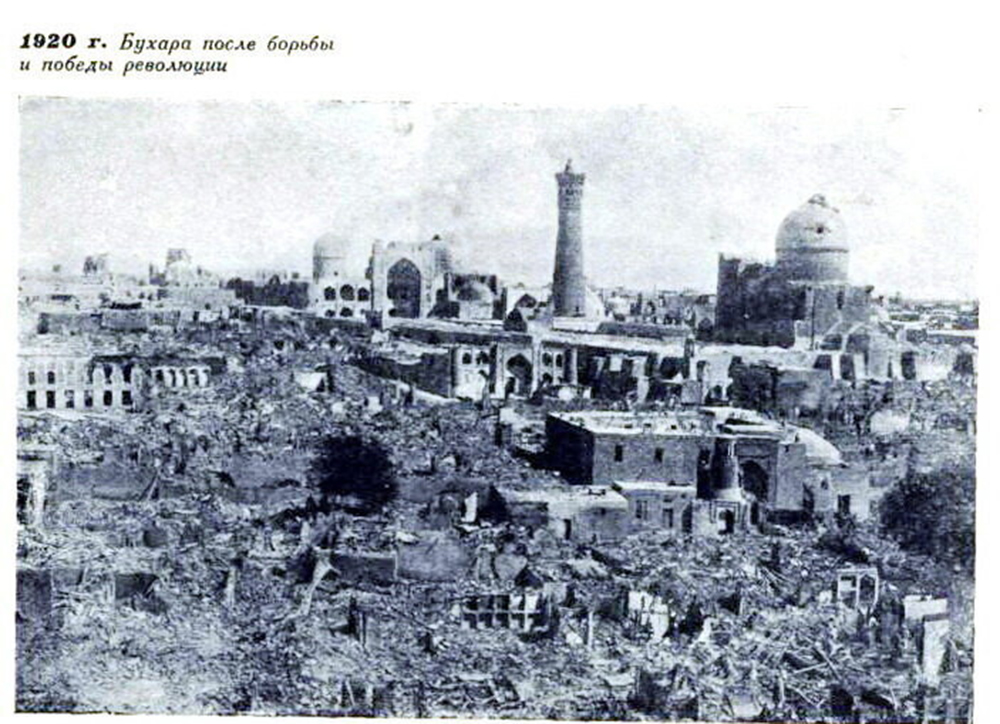
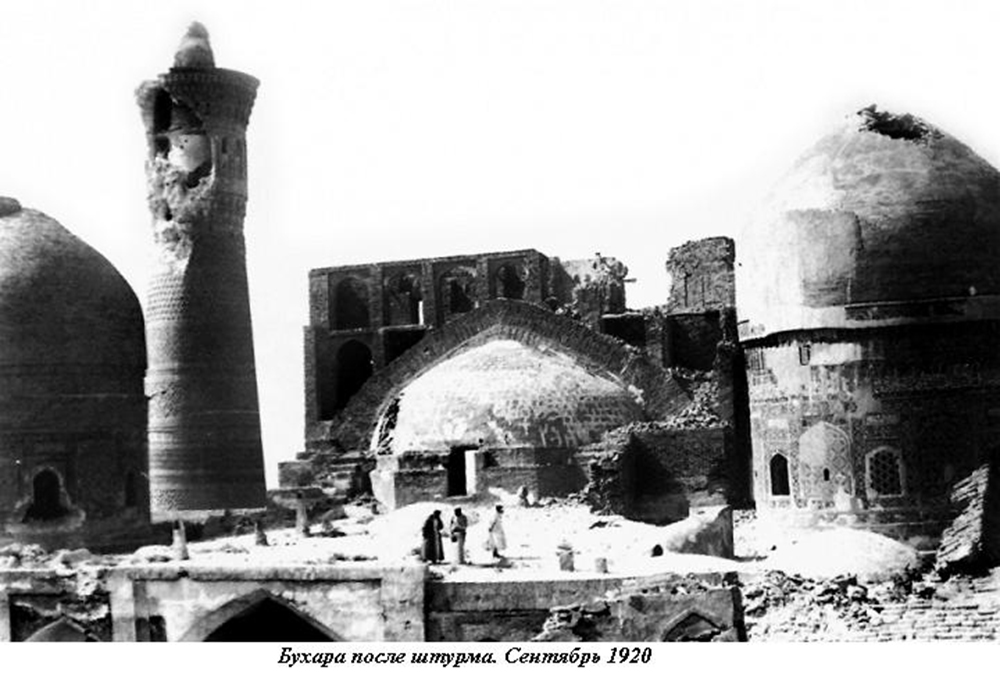
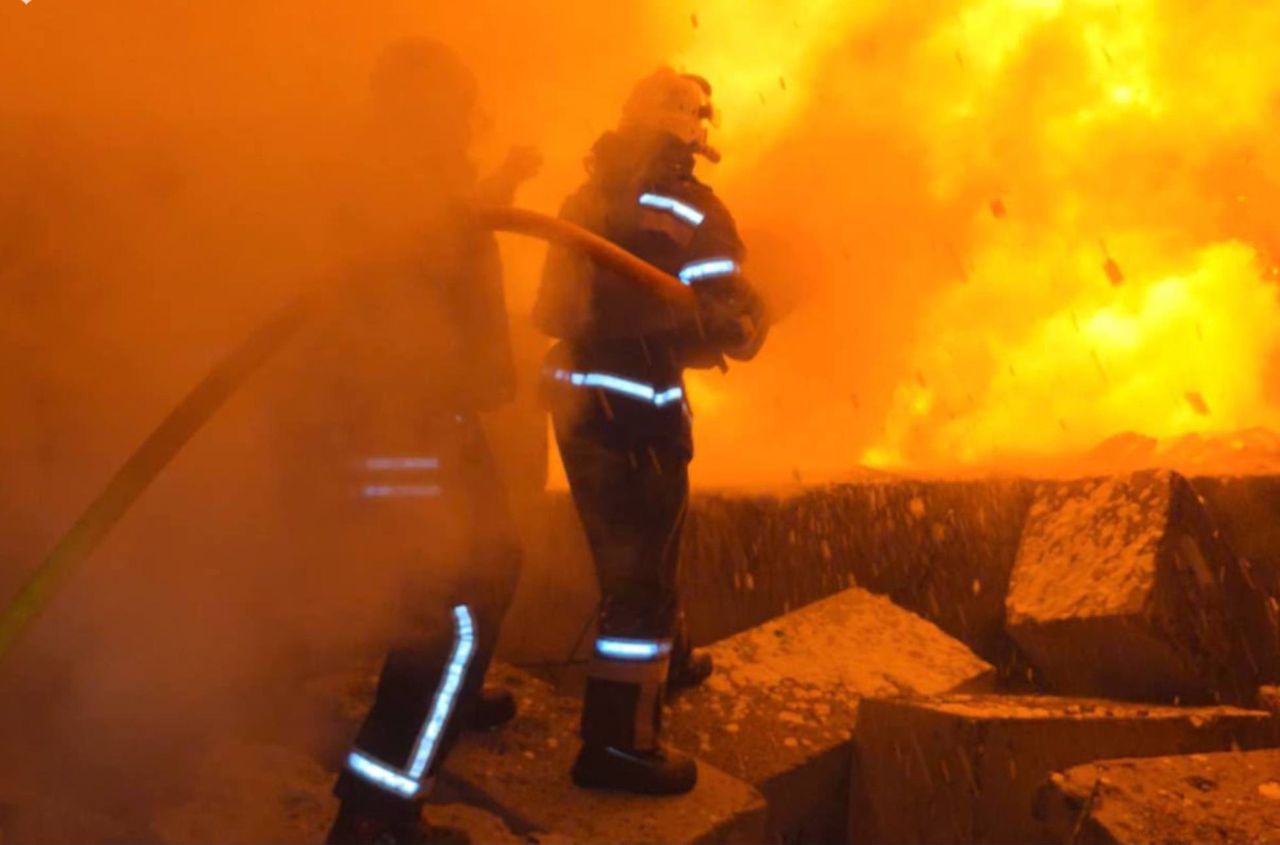
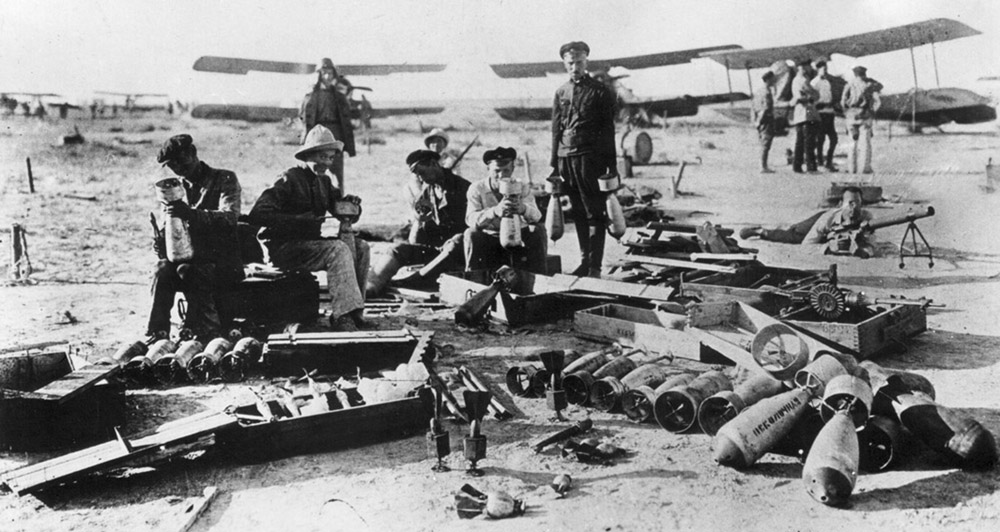
Aviation was sent to Bukhara, along with heavy 152-mm fortress guns. The operation was commanded by Georgy Zinoviev, commander of the 1st Turkestan Army. From the nearby Kagan airfield, “Farman,” “Nieuport,” and “Sopwith” planes bombed Bukhara. The raid involved twelve aircraft, each carrying two to four poods of high-explosive and fragmentation bombs. The pilots risked almost nothing, as the city had no anti-aircraft guns or machine guns. About 200 bombs were dropped on the ancient city. A fire of “unheard-of intensity” broke out. Everything that could burn—palaces, bazaars, warehouses with tea, sugar, bread, and silk—was consumed by flames.
Five armored trains continuously shelled the city. Ammunition was abundant and constantly delivered by rail. A total of 12,000 shells, including chemical ones, were fired at Bukhara. The number of casualties is unknown. Immediately after the capture of Bukhara, mass looting began. Political officers explained the crimes as “the result of the monstrous weakness of the local revolutionaries.” However, the other troops were no less ruthless.
Frunze sent a telegram to Lenin:
“The fortress of Old Bukhara was taken today by the combined efforts of Red Bukhara and our units. The last stronghold of Bukhara’s obscurantism and Black Hundredism has fallen. Over Registan waves the victorious red banner of the world revolution.”
And then the Red Terror began.