

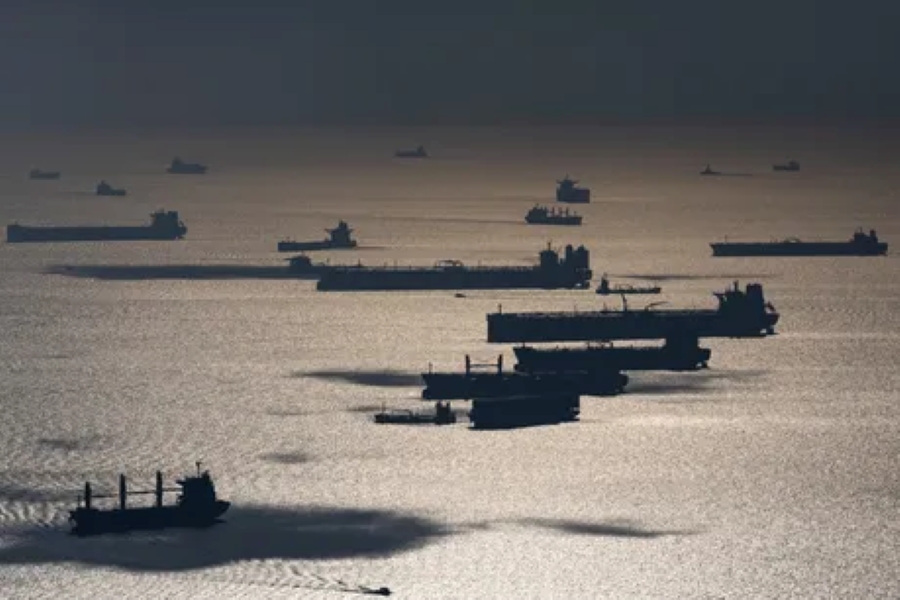

Between 2023 and 2025, nearly 700 tankers were involved in transporting oil from Russian seaports, of which 476 operated in 2025. The main buyers of Russian oil remained unchanged—India, China, and Turkey.
Under the impact of sanctions, more than 20% of oil tankers stopped participating in Russian oil exports. To maintain stable maritime exports—around 170 million tons per year—Russia has been engaging new vessels. Last year, the number of such ships exceeded 40. Nearly 20 of these tankers have owners and operators registered in Greece, and another nine in China.
All of these vessels contribute to generating revenue for Russia to fund its war.
At the end of 2025, Russia’s oil and gas revenue for the budget was 24% lower than in 2024, a consequence of sanctions pressure on oil prices. Russian expenses for chartering and insuring tankers used in oil exports are increasing, while buyers demand significant discounts. By the end of 2025, according to Argus, the price of Urals crude at ports on the Baltic and Black Seas fell to $33–34 per barrel.
In 2026, pressure on Russia’s “shadow fleet” is expected to increase. The US has demonstrated effective methods, which will almost certainly be used more frequently in the seas around Europe. There are sufficient formal grounds for this; we inform our partners and work together to weaken the aggressor’s capacity to continue the war against Ukraine and escalate its aggression.