


Against the backdrop of a setting sun, with the dome of Odesa’s Opera House rising above the city skyline, a new sculpture quietly challenged expectations on a rooftop in the historic center of the city.
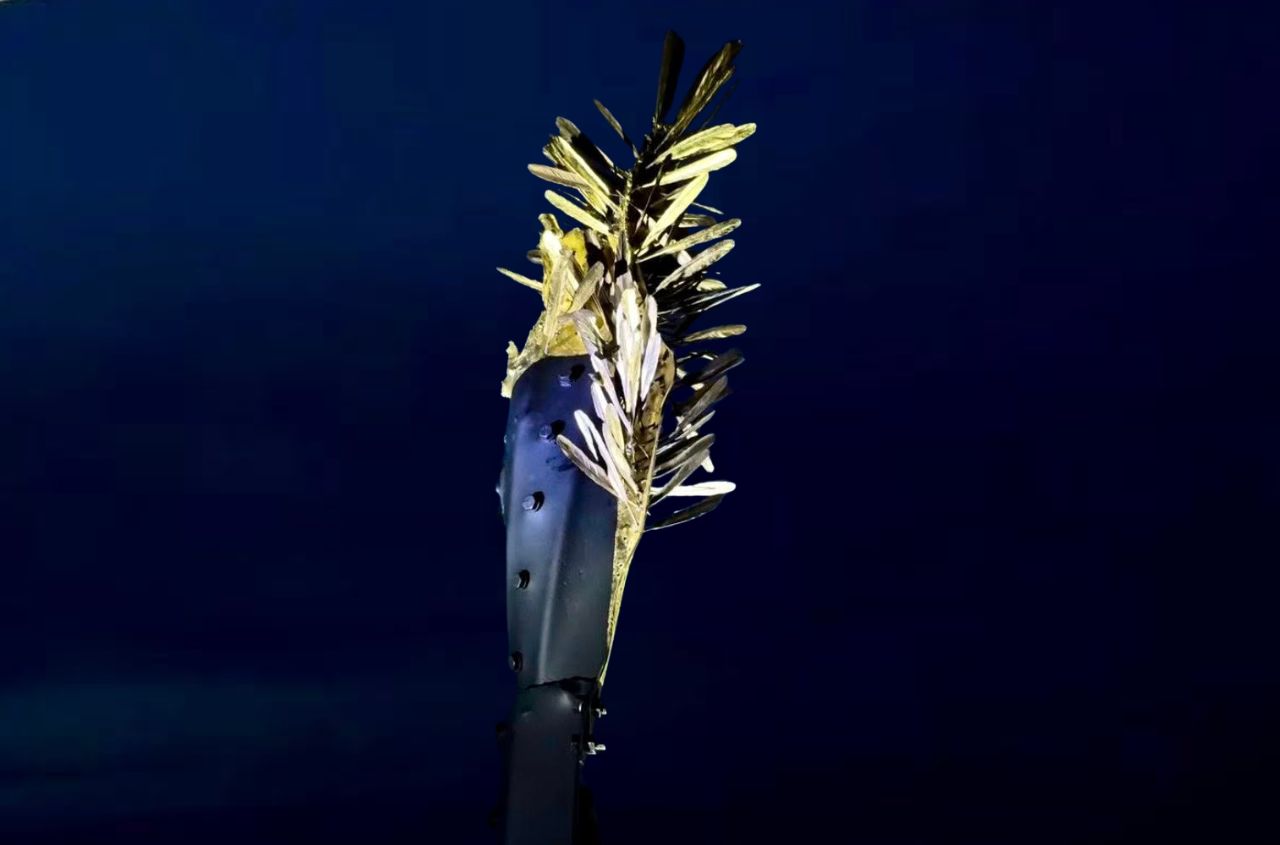
During the closing ceremony of the Black Sea Security Forum 2026, renowned Ukrainian sculptor Mykhailo Reva unveiled “Phoenix,” a monumental work created from fragments of metal scarred by war. Installed on a terrace opposite the Opera House, the sculpture became one of the forum’s most memorable artistic statements — a reflection on destruction, resilience, and the possibility of renewal.
The work is part of Reva’s ongoing project, Studies of Evil, a series he began following Russia’s full-scale invasion of Ukraine. Since 2022, the artist has transformed fragments of missiles, shells, and destroyed structures into sculptural works that explore the human response to violence and devastation.
The origins of the series are deeply personal. Reva recalls that the first piece was created from fragments of a Russian missile that landed just 100 meters from his seaside home near Karolino-Buhaz.
“The collection began in 2022,” the artist said. “A missile struck near my dacha, and neighbors gathered the fragments. From those pieces, the first work emerged. Later, soldiers, volunteers, and businesspeople began bringing me fragments from the front and from sites damaged by attacks.”
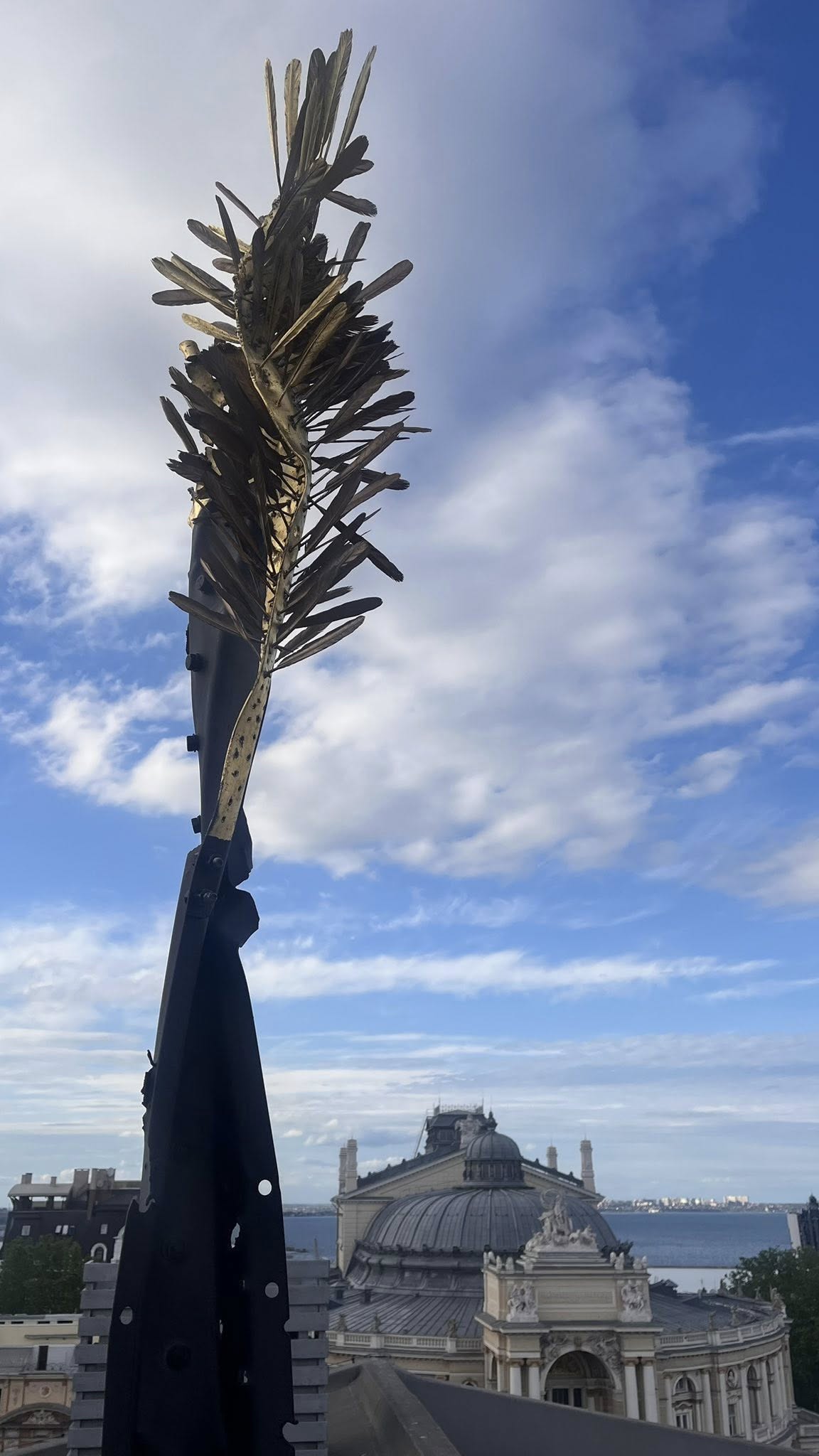
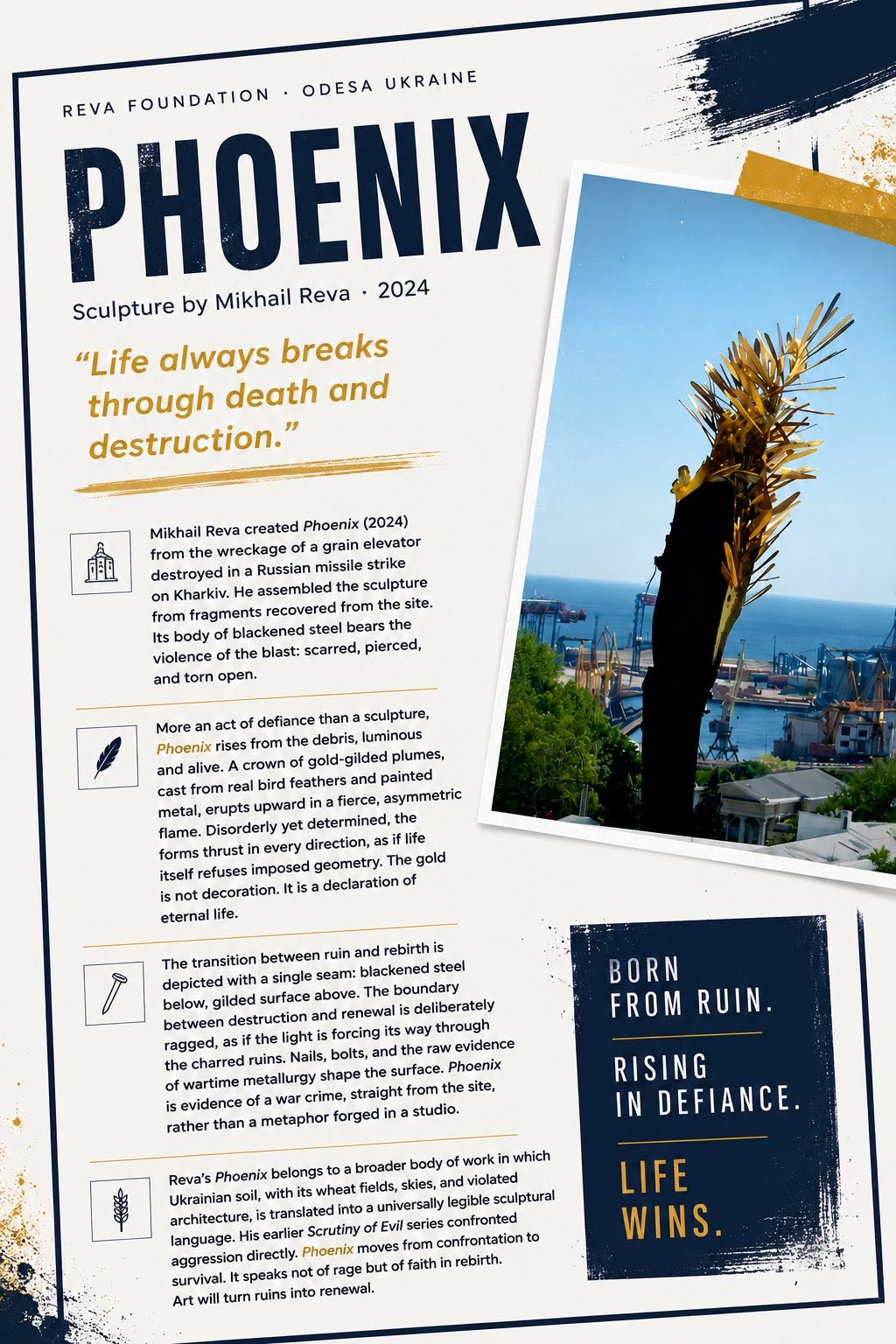
“Phoenix,” completed in 2024, was created from parts of a grain storage facility destroyed by a Russian missile strike near Kharkiv. The metal arrived bearing traces of fire and scorched grain, carrying what the artist describes as a powerful emotional weight.
“When I started working with these elements, I felt it was my personal protest against chaos and destruction,” Reva said. “Even this twisted metal can awaken into something living. The metal becomes the wing of the Phoenix, which rises from the ashes.”
The sculpture embodies that transformation. Its dark lower section preserves the blackened texture of burned metal, while above it rise gilded feathers cast from the wings of Black Sea gulls. Together, they form the image of a bird emerging from devastation — a symbol of endurance and rebirth that resonates deeply in contemporary Ukraine.
According to the artist, the work is intended as a tribute to the resilience of the Ukrainian people. The sculpture’s permanent home, however, has yet to be determined.
For Odessa residents, Reva's works have long been part of the city's cultural landscape. A Honored Artist of Ukraine and one of the country's most recognizable sculptors, he has shaped numerous public spaces through works that combine symbolism, architecture, and urban storytelling.
Among his best-known creations are the bas-relief Four Sides of the World near Ernst Neizvestny’s Golden Child sculpture by the Sea Passenger Terminal, Angel of Mercy at the children's rehabilitation center known today as the House with the Angel, The Source near Vorontsov Palace, House of the Sun on Langeron Beach, and The Beginning of Beginnings in Greek Park.
With “Phoenix,” Reva adds another chapter to that legacy — one forged not from bronze or stone, but from the remnants of war itself. In transforming destroyed metal into a soaring wing, the artist offers a powerful reminder that even in the aftermath of violence, creation remains possible.