


In June 2026, Ukraine's Defense Forces significantly expanded their deep strike campaign against the military and economic infrastructure of the Russian Federation. The strikes targeted key facilities from occupied Crimea and Russia's Krasnodar Krai to Western Siberia.
The maximum successful strike range exceeded 2,000 kilometers from Ukraine's state border.
In line with Ukraine's defense strategy, the strikes were aimed at depriving the Rssian forces of resources essential for waging war, including:
- fuel;
- communications systems;
- weapons production facilities and component manufacturers.
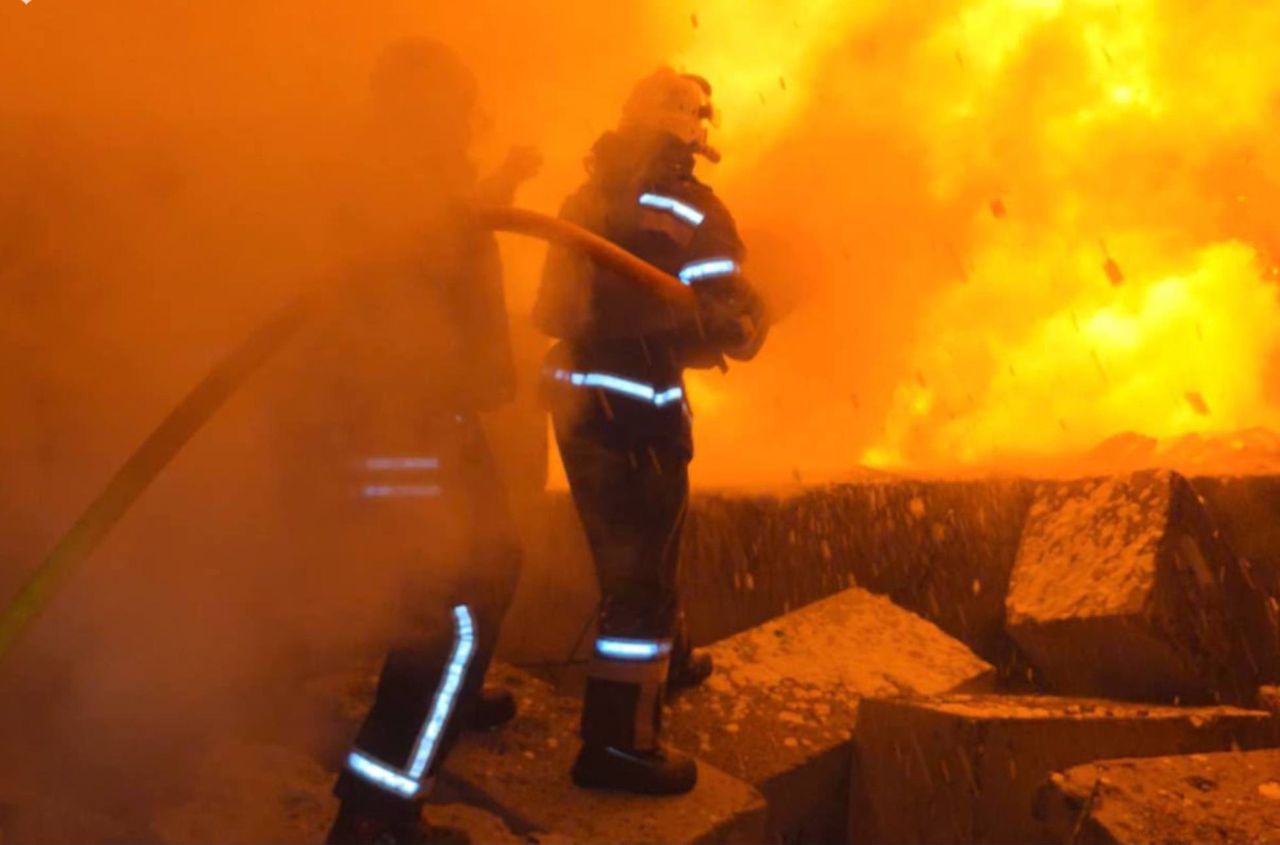
Russia sustained substantial losses as a result of Ukraine's deep strike campaign in June. Throughout the month, Ukraine's Defense Forces struck dozens of oil and gas facilities, fuel logistics hubs, defense industry enterprises, military and satellite communications centers, and naval assets.
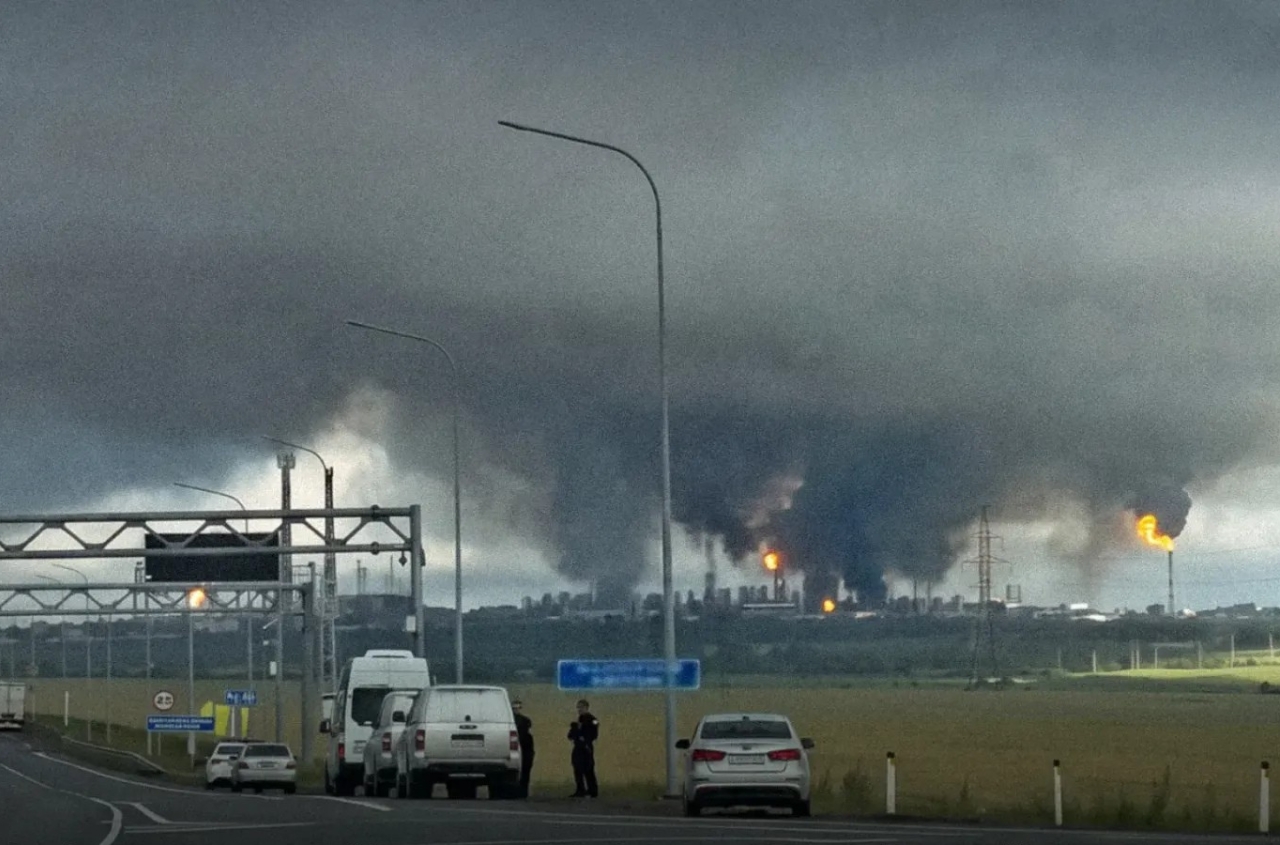
The operations halted or significantly disrupted the activities of several of Russia's leading oil refineries.
Ukraine's Ministry of Defense presents the results of the June 2026 deep strike campaign against Russia.
Strikes on Russia's Oil Refining Industry and Fuel Logistics
In June, Ukraine's Defense Forces carried out long-range strikes against 11 Russian oil refineries.
Tyumen Oil Refinery (Antipinsky), Tyumen Region, more than 2,000 km
One of the largest oil refineries in Western Siberia, with an annual processing capacity of 7.5–9 million tonnes of crude oil. The refinery supplies petroleum products for the Russian military.
Moscow Oil Refinery, Moscow, approximately 500 km
The strike damaged the AVT-6 primary crude oil processing unit, a combined processing unit, and destroyed fuel storage tanks.
The refinery suspended oil processing indefinitely. The facility supplies up to 40% of Moscow's gasoline demand, about 50% of its diesel fuel, and aviation fuel for the Russian capital's airports.
Bashneft-Ufaneftekhim and Bashneft-Novoil Refineries, Ufa, approximately 1,500 km
The Ufa refinery complex is one of Russia's largest refining hubs.
It supplies fuel to much of the Volga region and delivers fuel and lubricants to other parts of Russia, including military units operating in Ukraine.
Orenburg Gas Processing Plant, Orenburg Region, more than 1,200 km
Four gas processing units were confirmed damaged, forcing the suspension of production.
The facility produces natural gas and sulfur, the latter being used in explosive manufacturing.
The nearby Orenburg Helium Plant extracts helium and ethane from the gas stream—both critical materials for missile technologies and aviation.
TANECO and TAIF-NK Refineries, Nizhnekamsk, Tatarstan, approximately 1,200 km
The strikes hit the region's largest refining complexes, with a combined design capacity exceeding 16 million tonnes of crude oil annually.
The plants manufacture a wide range of fuels and lubricants, including products intended for military use.
Kuibyshev Oil Refinery, Samara, more than 900 km
The refinery, which processes approximately 3.7 million tonnes of crude oil annually, ceased operations after strikes hit its AVT-4 and AVT-5 primary distillation units and tank farm.
Yaroslavl Oil Refinery (Slavneft-YANOS), Yaroslavl, approximately 800 km
A successful strike caused smoke to rise from the refinery, which has an annual processing capacity of 15 million tonnes of crude oil.
The facility produces fuel that plays an important role in Russia's military logistics.
Ilsky, Afipsky and Slavyansky Oil Refineries (Krasnodar Krai), approximately 300–400 km
These refineries supply diesel fuel and gasoline for the aggressor state's military logistics.
Their combined refining capacity exceeds 12 million tonnes annually.
At the Slavyansky refinery, four storage tanks with a total capacity of 35,000 cubic meters were destroyed. Another nine tanks with a combined capacity of 30,000 cubic meters, along with an oil processing unit, were damaged.
In addition, the following fuel storage and transshipment facilities were struck:
- Tamanneftegaz oil and gas terminal, Taman, approximately 300 km;
- Grushovaya oil transshipment terminal, Novorossiysk, approximately 400 km;
- Temp strategic oil depot (Rosrezerv), Rybinsk, more than 700 km;
- St. Petersburg and Neste oil terminals, St. Petersburg, approximately 900 km;
- fuel depots in Feodosia and Kerch, occupied Crimea, approximately 300–350 km.
The systematic targeting of these logistics and fuel storage hubs directly disrupts the supply of resources to Russia's forces.
Russian Defense Industry and Communications Infrastructure
Throughout June 2026, the long-range strike strategy targeted not only Russia's energy sector but also its technological and command capabilities.
Russian losses in this sector were also substantial.
More than eight strategic facilities were struck, including manufacturers of artillery systems, missile navigation electronics, and key satellite and military communications centers.
Titan-Barrikady Enterprise, Volgograd, approximately 600 km
FP-5 Flamingo missiles struck the facility, which manufactures artillery systems and launchers for the Iskander-M tactical missile system and the Topol-M and Yars strategic missile systems.
VNIIR-Progress Plant, Cheboksary, more than 900 km
The strike targeted a manufacturer of Kometa navigation antennas used in Shahed-type drones, Kalibr cruise missiles, Iskander-M missiles, and UMPK glide bomb guidance modules.
Dubna Satellite Communications Center, Moscow Region, approximately 600 km
The strike severely damaged the facility's main antennas and hardware-software systems.
The center is Russia's largest satellite communications hub and relay control center supporting the Ministry of Defense.
It is also used for intelligence gathering and coordinating Russian forces operating in Ukraine.
Vladimir Satellite Communications Center, Vladimir Region, approximately 700 km
Hardware-software systems and antenna infrastructure were successfully struck at the facility, which supports communications for Russian military groupings.
VZPP-Mikron Plant, Voronezh, approximately 250 km
The strike targeted a manufacturer of electronic components used in Kh-101 cruise missiles, Iskander-K missile systems, and Pantsir-S1 air defense systems.
The systematic degradation of these production facilities significantly limits Russia's ability to maintain serial production of precision-guided weapons and coordinate the activities of Russian forces on the battlefield.
Russian Navy and Military Logistics
In June, Ukraine's Defense Forces struck:
- a Project 20380 Steregushchiy-class corvette in Kronstadt, approximately 900 km;
- a Project 10410 border patrol ship in the Sea of Azov, approximately 200 km;
- Russian shadow fleet tankers WEST Horizon and FINA A in the Black Sea, approximately 200–300 km;
- port infrastructure and two ferries at Port Kavkaz, approximately 350 km.
These strikes weaken Russia's ability to control maritime areas and maintain secure sea-based logistics.
The systematic destruction of naval assets and port infrastructure not only disrupts the delivery of resources to combat zones but also demonstrates the vulnerability of Russian lines of communication even at considerable distances from the front line.
Deep Strikes Against Russia as a Path to Peace
The degradation of Russia's oil refining industry and defense-industrial complex directly reduces the aggressor state's military and economic potential.
The systematic destruction of Russia's strategic facilities is an effective instrument for exerting pressure on its war machine.
Ukraine's Defense Forces will continue compelling Russia to bring the war to an end.