

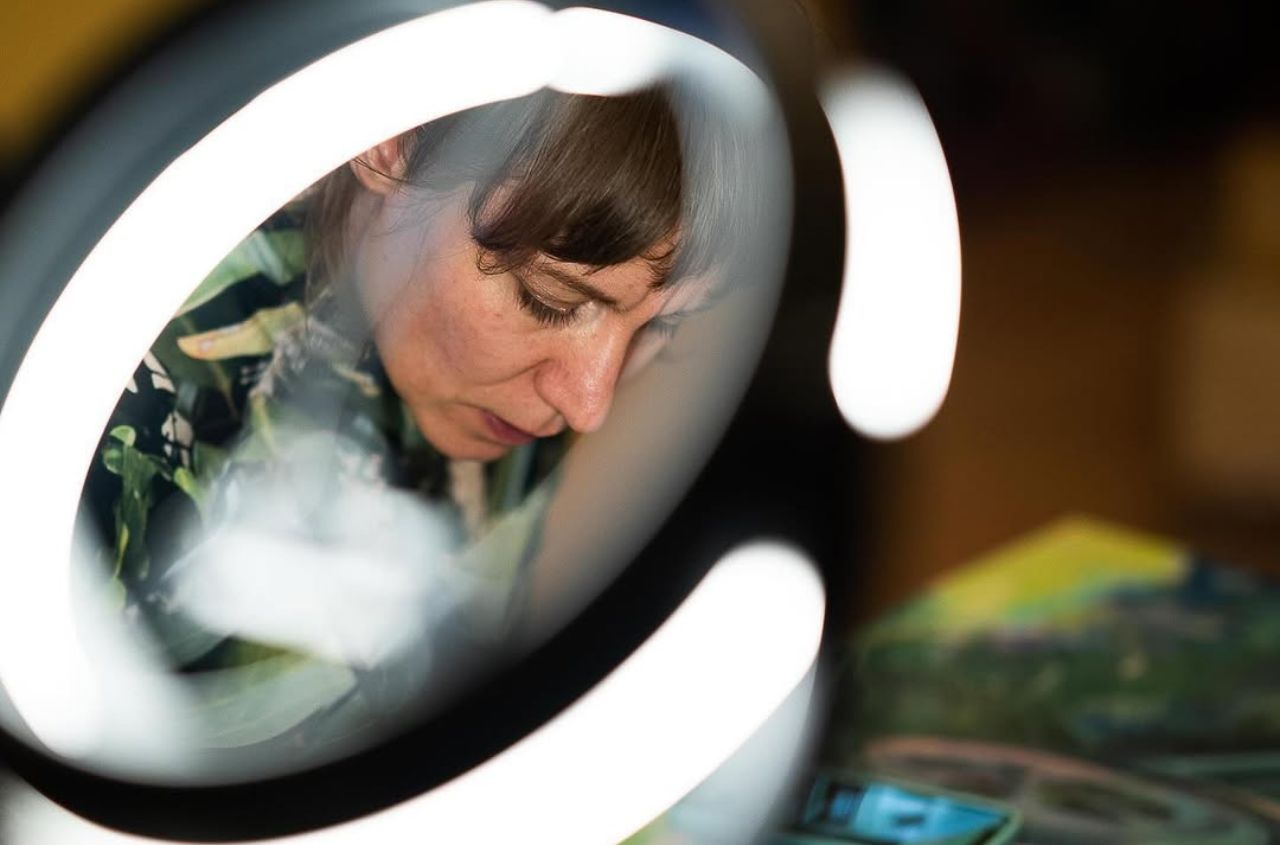

Main image: Nastya Kirilina
The fifty-second interview through images by Andriy Sheptunov
There are cities we remember visually, and then there are those we want to read with our fingertips. The real Odesa begins where the fresh plaster of facades ends, revealing the rough texture of time—cracked paint on old doors, warm, sun-scorched wood, and the coarse stone of unpretentious courtyards. It is precisely in such places, far from noisy tourist routes, that authentic life pulsates.
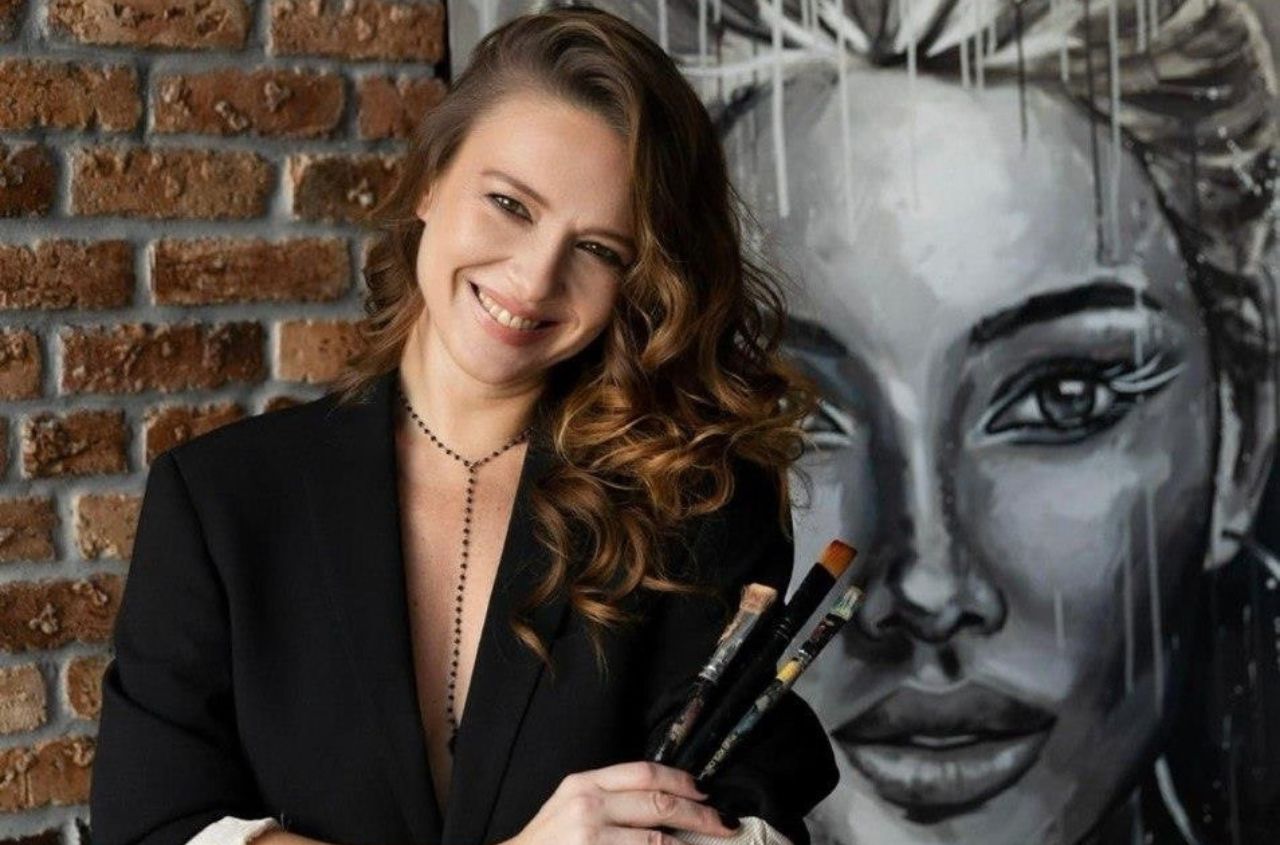
Nastya Kirilina is exactly this kind of artist. She does not merely paint cityscapes or genre scenes; she enters into a deeply personal, almost intimate dialogue with reality. Her works are a delicate archive of emotions and textures, where every detail, be it a lopsided door or clothespins on a line, becomes an important storyteller, endowed with its own voice and character.
A special dimension is added to her work by her choice of materials. Nastya often abandons the classic canvas in favor of old wood, fragments of everyday life, and objects that have already lived a long life. These artifacts of the past carry their own memory, the scuffs and scars of time, while the artist's brush merely weaves new plots into their rich history, giving them a remarkable second wind.
Kirilina’s artistic world is populated by colorful characters, where independent cats often act as the rightful masters of the space, and the architecture of the buildings is more eloquent than any words. It is an art of subtle observation, always leaving room for light, warm irony and a bright melancholy for a fading, fleeting era.
Encountering her painting is akin to unexpectedly finding an old family album. There is an instant feeling of recognition, when the viewer physically feels the texture of an old wall or hears the creak of a wooden staircase. The paintings force you to pause in the endless flow of everyday vanity and simply listen to yourself, opening a portal to the most hidden memories.
To truly understand an artist, sometimes it is necessary to abandon the usual lengthy discussions and let the art speak for itself. We decided to change the classic interview format and invited the author to answer our questions not with words, but with her own artworks, creating an absolutely sincere visual journey through her personal geography. We present to your attention a visual dialogue, where instead of long phrases, images, colors, and meanings speak.
1. Which of your works would you like to introduce to our reader first, so that a visual dialogue immediately sparks between you?
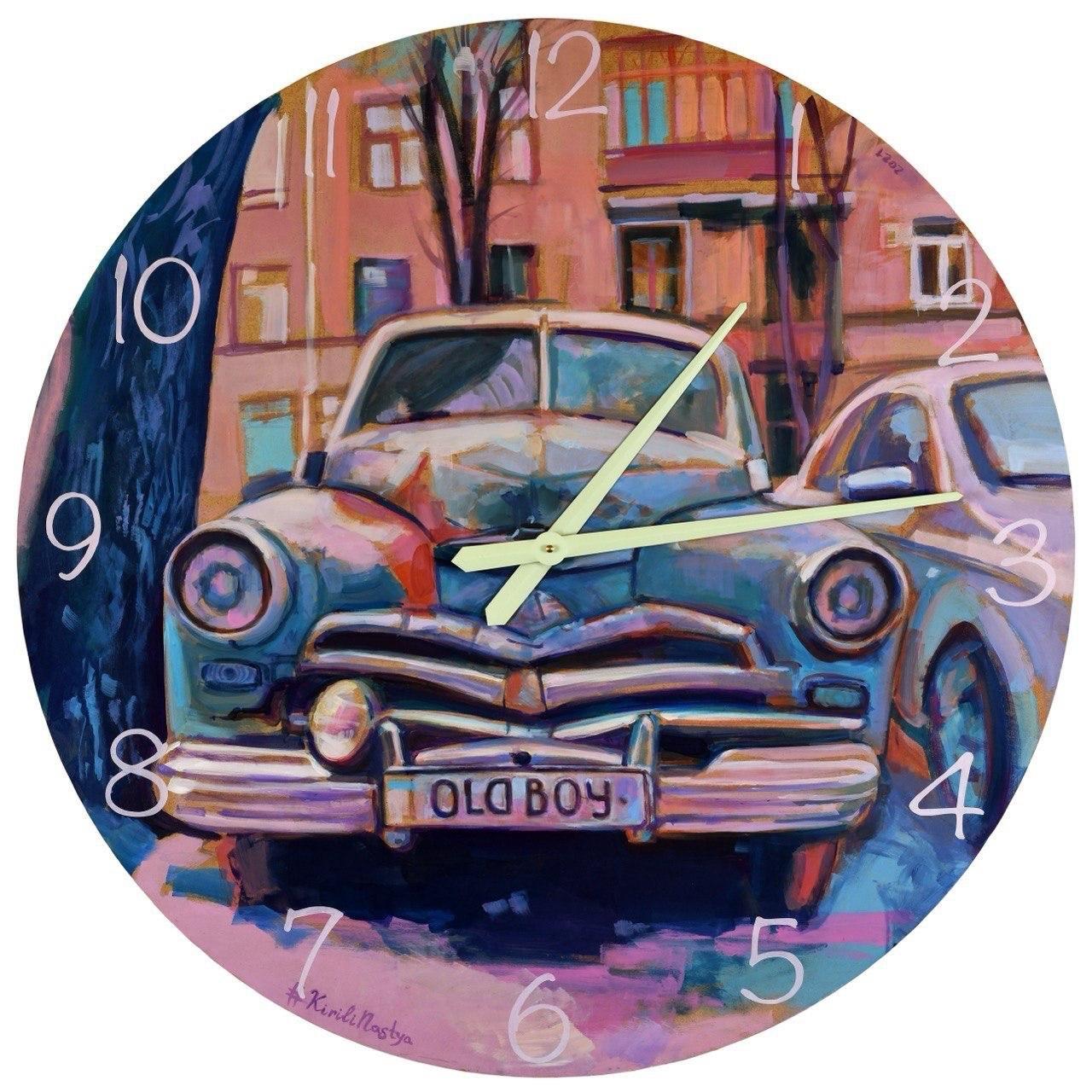
2. Show us a painting where you used the most unconventional technique for yourself or mixed completely incompatible materials.
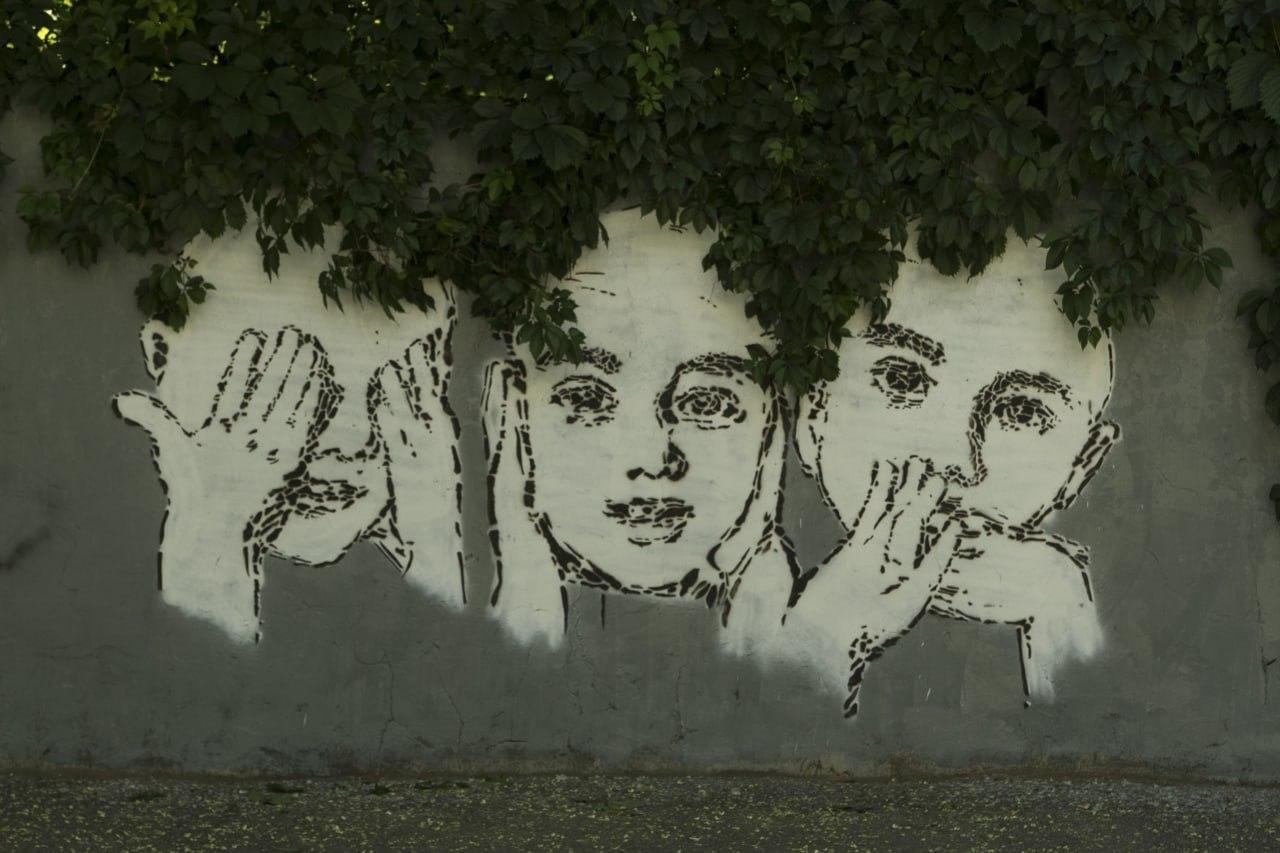
3. Share an artwork where a mundane detail of the cityscape, which many overlook, became the main character.
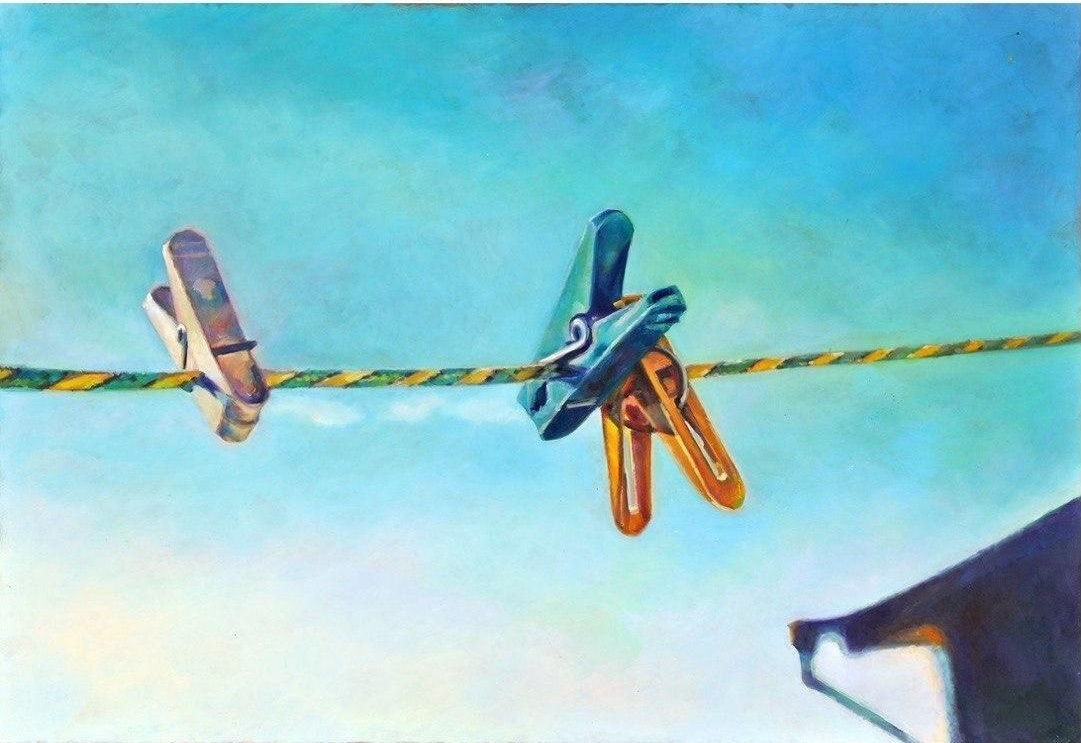
4. Show us a painting based on an old object, piece of wood, or fragment of everyday life with the most amazing past life that you have found.
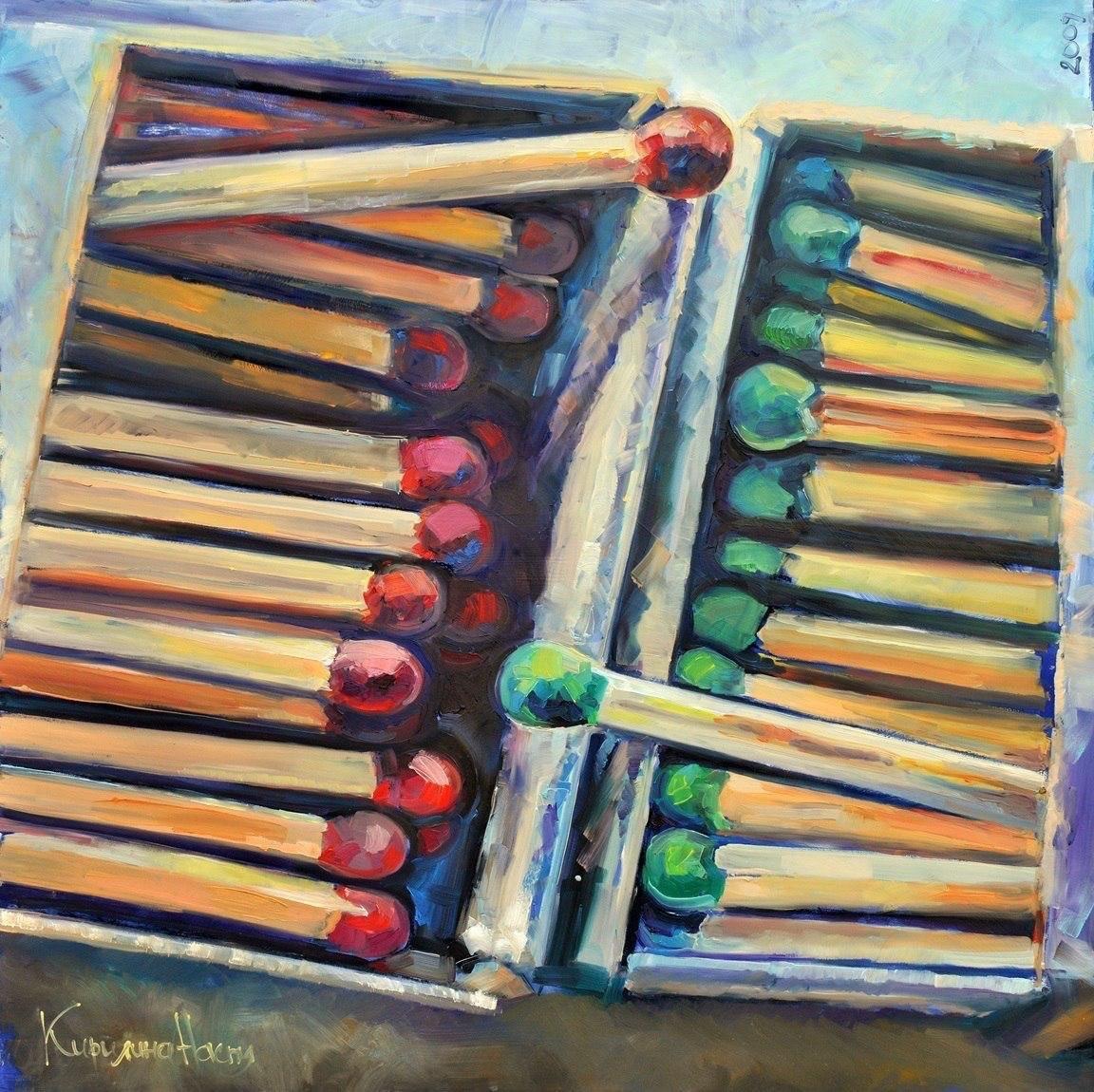
5. Which of your works captured a place or building that no longer exists in reality, yet continues to live on thanks to your colors?
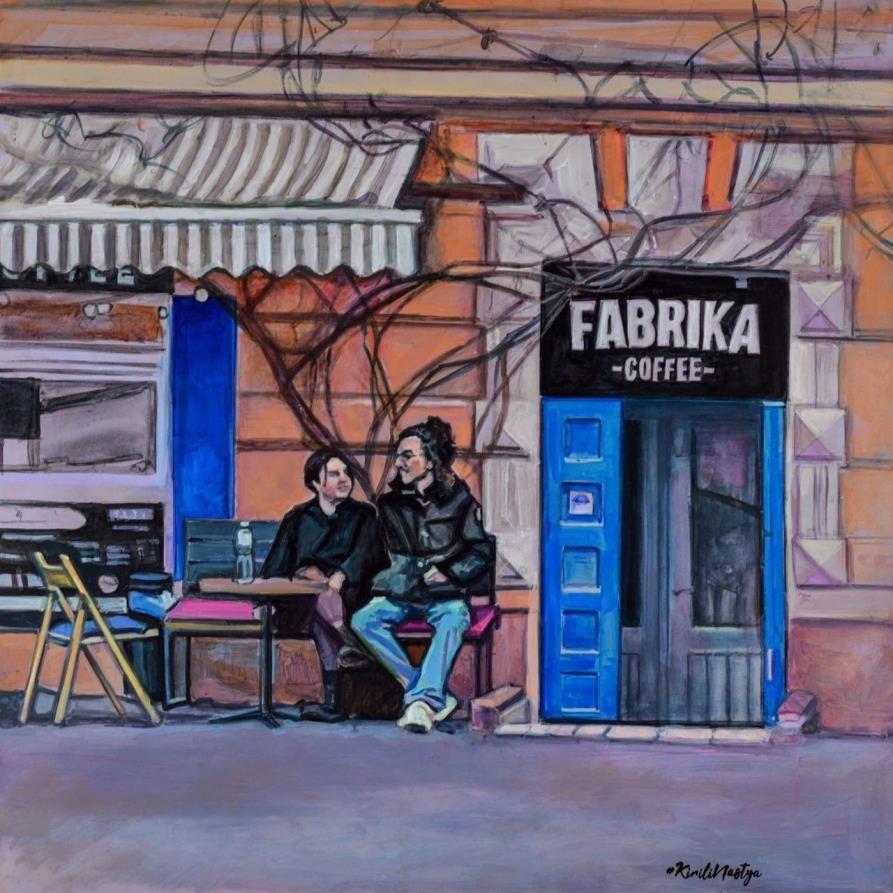
6. In which artwork did a random passerby or a colorful local resident become the main character, whose fleeting emotion remained on the canvas forever?
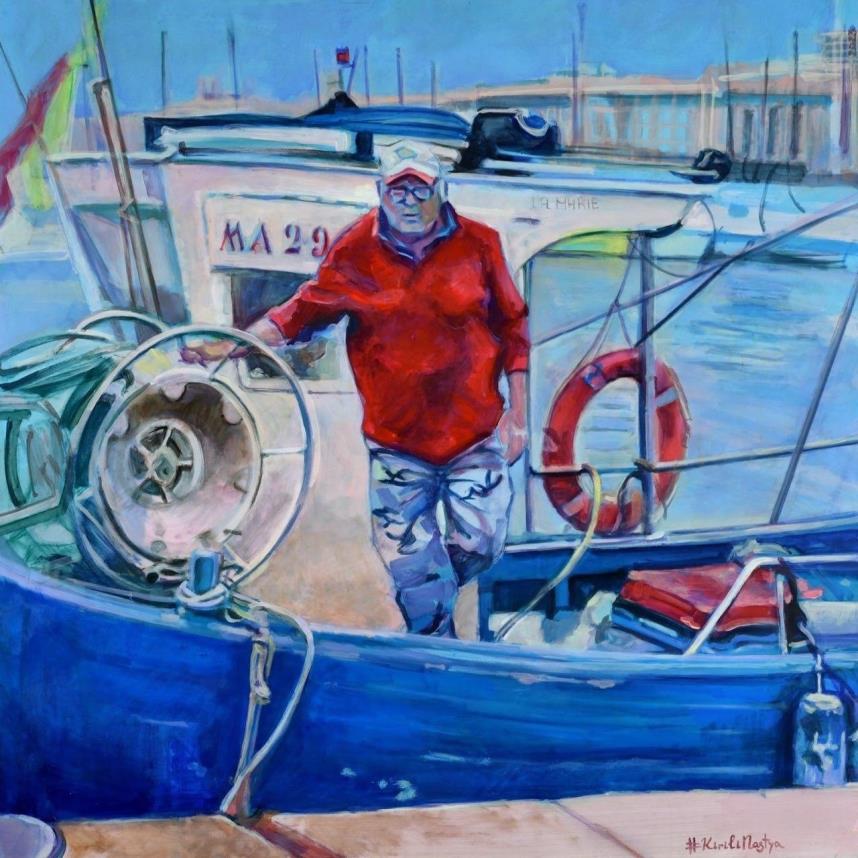
7. Share a work where animals act not just as part of the scenery, but as rightful masters of the urban space.
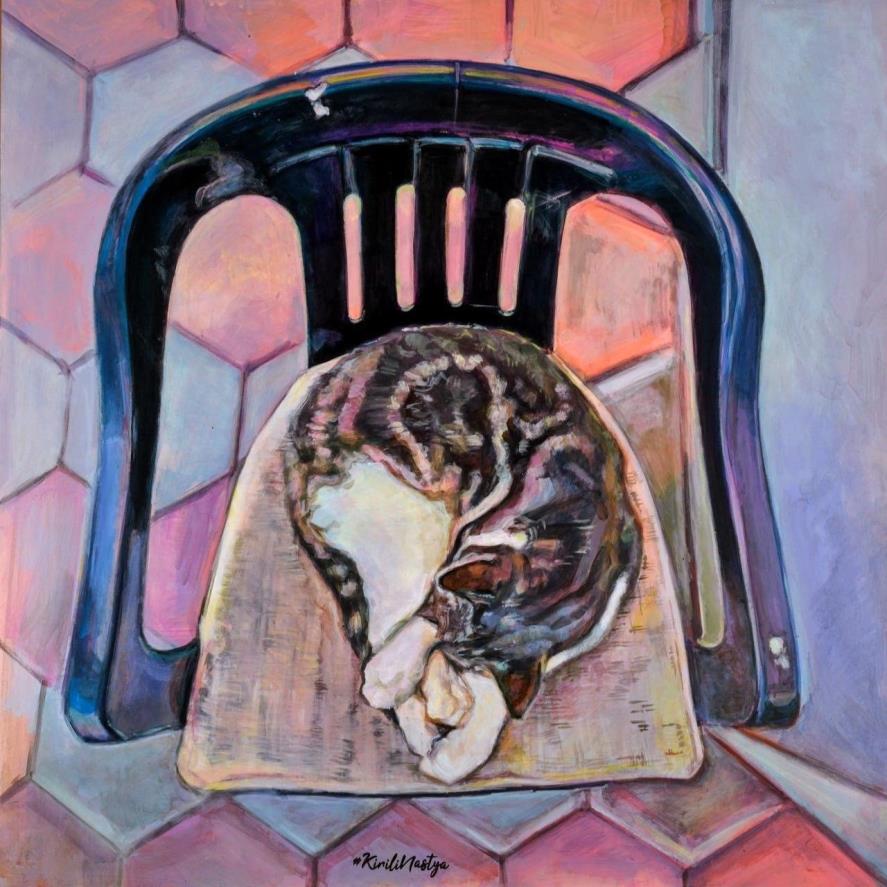
8. In which painting did you allow yourself to step away from reality and show the city as it appears to you in your dreams?
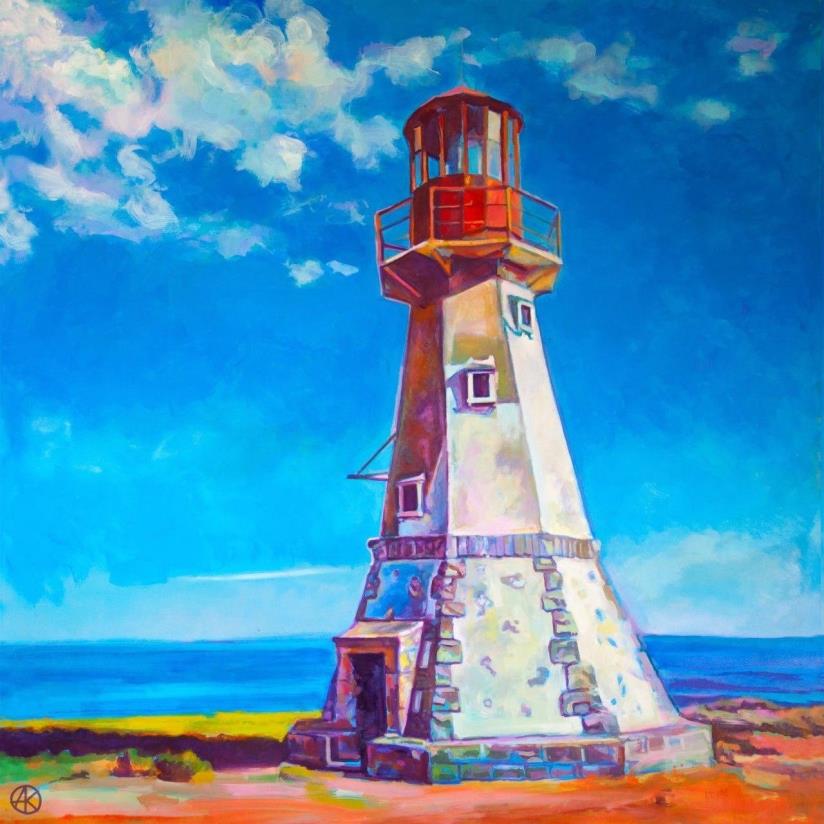
9. Share a painting that the viewer must examine up close to notice a tiny but crucial detail that changes the entire meaning of the plot.
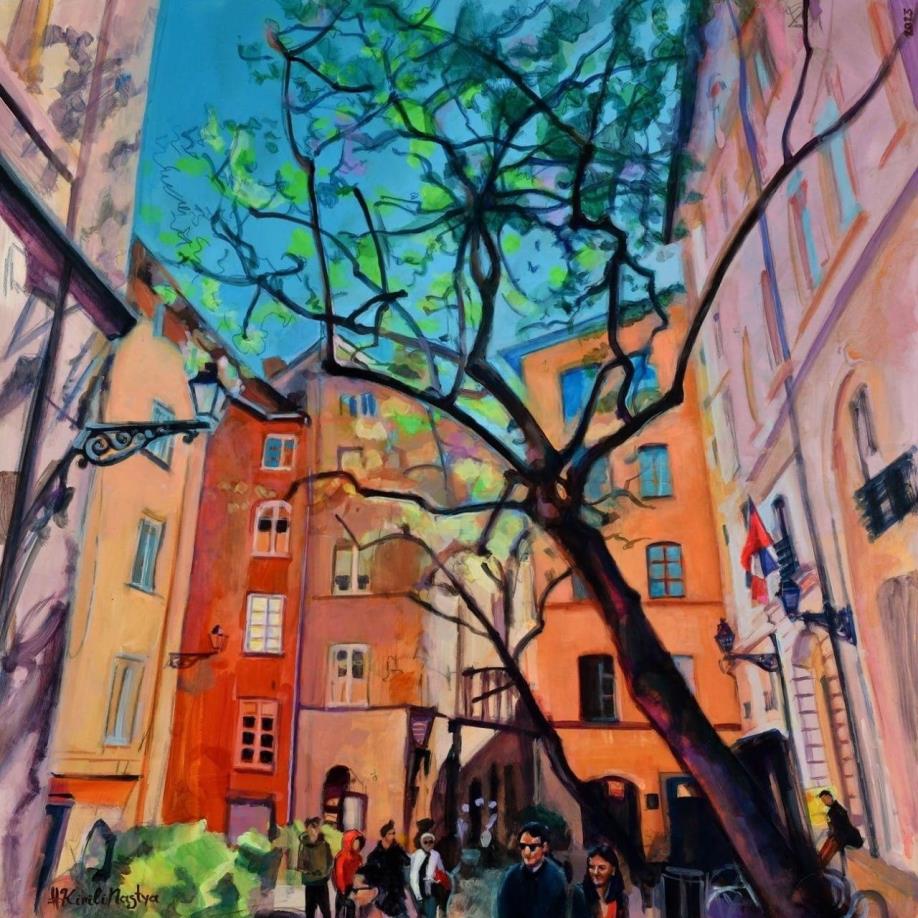
10. In which artwork is a subtle irony or a kind smile at the usual routine of everyday bustle hidden?
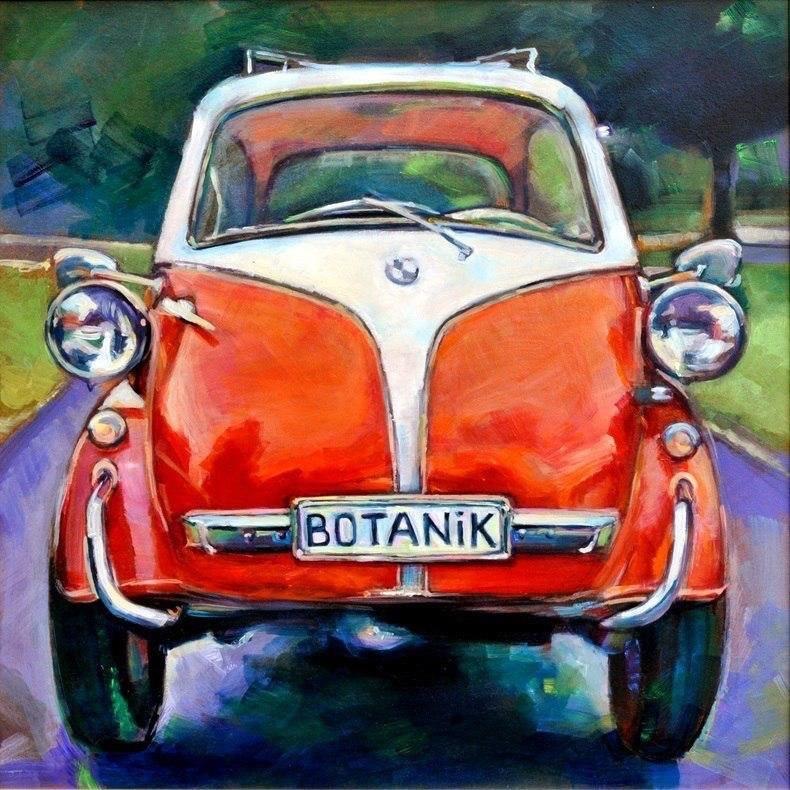
11. Which of your works best conveys that elusive atmosphere of an old Odesa courtyard, hidden from the eyes of tourists?
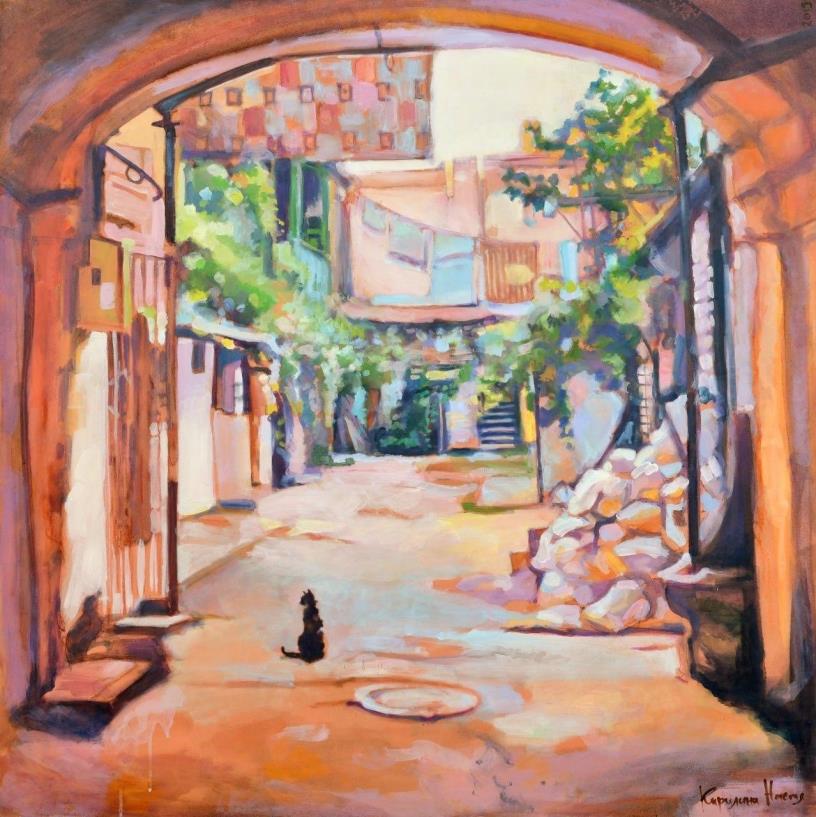
12. Which of your works would you call the cornerstone of your art, without which it is impossible to fully understand your artistic path?
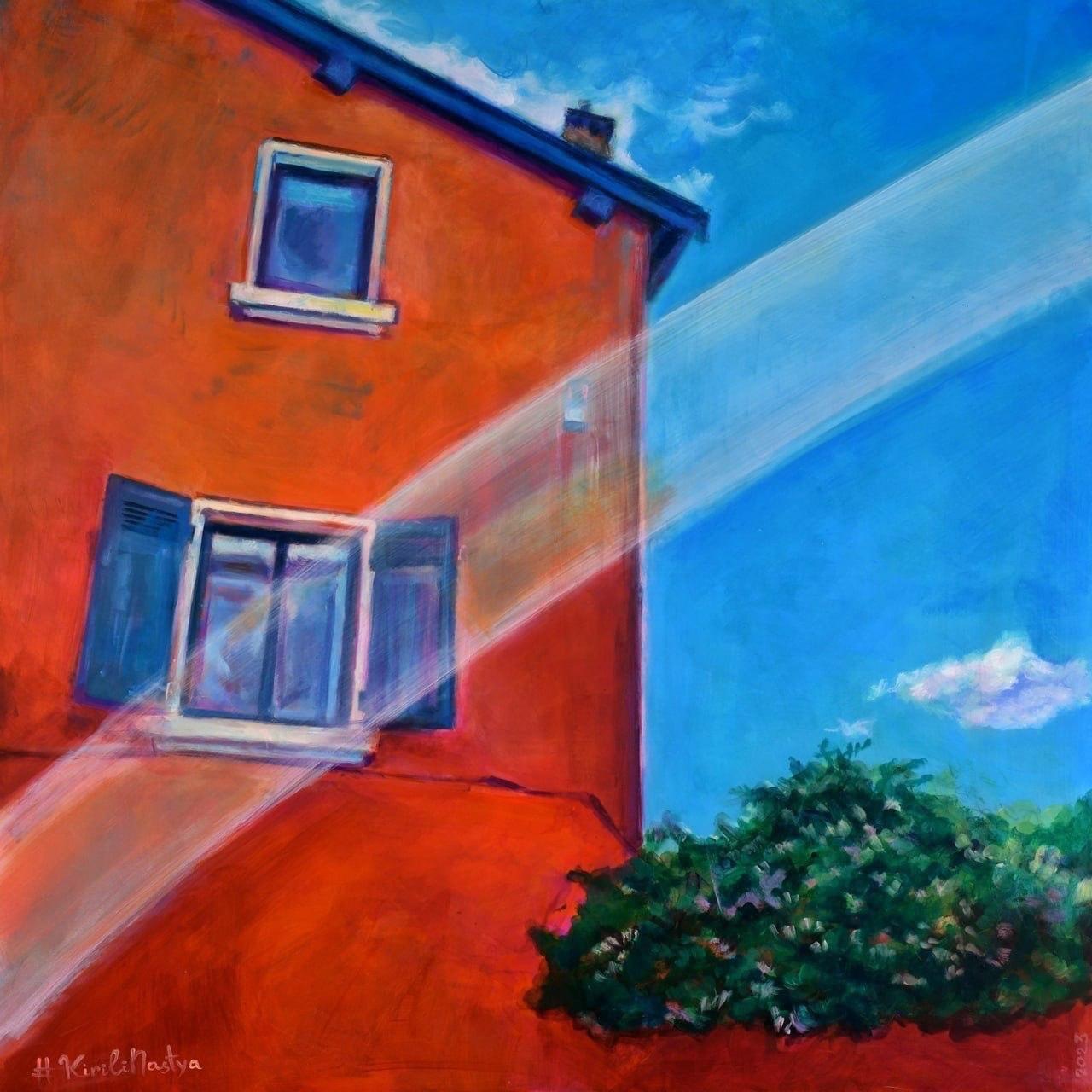
Each of Nastya’s works is just the beginning of a long conversation in which the viewer is assigned the role of co-author. The city in her paintings continues to live, breathe, and change, revealing its secrets to those who are ready to slow down and look a little deeper than the usual facades. This visual dialogue does not end with the last artwork. It continuously goes on in every new plot found in quiet alleys, and in every fragment of old wood that has earned the right to a new, vibrant history.
You can continue to get acquainted with her art, peek behind the scenes of the painting process, and follow the emergence of new sincere images on the artist's page:
- Nastya Kirilina's Instagram: @kirilinanastya