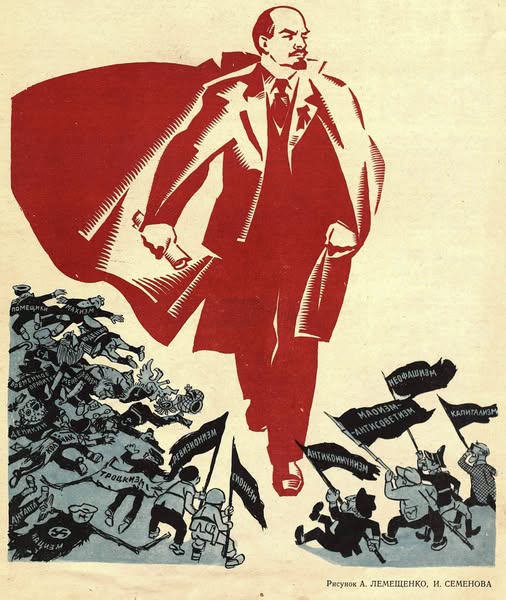


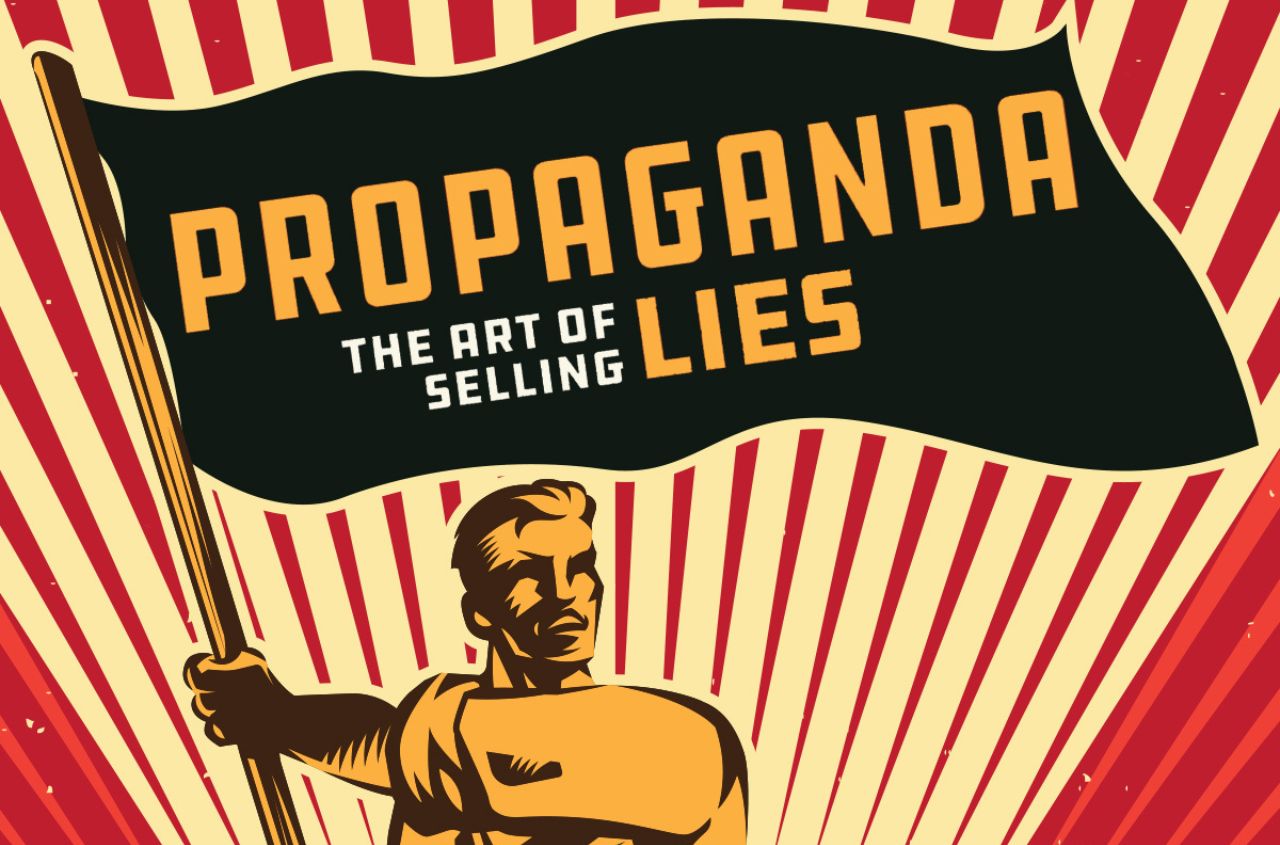

It’s interesting that any mediocre propaganda always faces two mutually exclusive tasks: on the one hand, it must show that the enemy is pitiful, weak, and insignificant, and on the other hand it must somehow explain why it is impossible to defeat these weak opponents — blaming it on Maoism, capitalism, or Zionism. After all, Machism and Denikin have already been defeated.
To explain this contradiction, propaganda uses several well-tested techniques, all of which are used in the war with Ukraine:
- Separation of “the people” and “puppet masters”.
The opponent is portrayed as weak on its own, but controlled by powerful forces. In reality, Russia has long since defeated Ukraine, but behind it stand Europe, America, NATO, Jewish bankers, and secret elites. Yes — the enemy is weak, but the threat is enormous. - The enemy is morally weak but technically dangerous.
They are cowardly, corrupt, and lack values. But they have a lot of money, weapons, and technology. Ukrainian missiles are actually British ones with different labels. Go ahead, try to deny it. - The enemy has already lost but does not yet realize it.
The opponent is historically doomed. They continue to fight only out of inertia. Kyiv’s defeat is inevitable; they just haven’t understood it yet. A little more pressure is needed. Only Mala Tokmachka stands on the road to the English Channel. - The enemy is strong only because of dirty methods.
In a fair fight, we would have defeated them long ago, but they somehow keep resisting. Ukraine allegedly disables Russian oil refineries, which produce fuel for school buses and ambulances. - The enemy is like a parasite.
This is the most popular metaphor of all. Yes, a parasite is small, but its effects are enormous. “Combat mosquitoes” were not invented for nothing. You may also remember stories about Ukraine infecting ducks and other migratory birds with viruses engineered for the “Russian genetic code.” This allows the enemy to be portrayed as both insignificant and extremely dangerous at the same time.
It should be added that military propaganda rarely cares about logic. One day television says the enemy is weak and pathetic, and the next day it describes them as a terrifying threat. This is because most people evaluate each message separately and do not notice the contradiction. The goal of propaganda is not to create a logically consistent theory, but to manage the viewer’s emotions. One day they say sanctions are making Russia stronger, and the next they demand they be lifted. Although, if so, why lift them at all?
Military propaganda also faces another key problem — how to explain its defeats if the enemy was so weak? It will never say that money was stolen again, that Russian equipment is poor, that intelligence failed, that generals are incompetent, or that the supreme commander is a fool. Russian propaganda will never acknowledge the courage, ingenuity, and resilience of Ukrainians. Instead, everything will be explained by betrayal — a fifth column and “perfidious Albion.”
When victory becomes impossible, propaganda begins to redefine what victory means. First, the goal was to seize Ukraine — it failed. Then Kyiv — it failed. Then the four regions written into the Russian constitution — it failed. Then “demilitarization and denazification” — it failed. What comes next? “Let us at least keep what we already captured. At least leave us Crimea.” Then it becomes: “We have proven our courage to the world and preserved our honor. The whole world was shocked by our military valor — fighting alone against 54 countries.” And it ends something like this: “The real battle is still ahead. We lost, but history is on our side.” This is how the foundation is laid for a future great revanche.