


By Sergey Medvedev for iDnes.cz
Last weekend, the World Cycling Championships in Canada concluded with a 273-kilometre road race over the hilly terrain of Montreal. In the absence of the season’s dominant rider and the world’s best cyclist, Tadej Pogačar, who crashed a month ago at Spain’s Vuelta and ended his season early, the race suddenly became unpredictable, with five to seven favourites all having a realistic chance of victory. Adding to the intrigue was the fact that team radio communication is prohibited at the World Championships, meaning riders have to make all tactical decisions themselves, without instructions from the team car.
The race exploded with 32 kilometres to go, when American Brandon McNulty attacked from the leading group. McNulty is a strong, hard-working rider for UAE Emirates, with victories in shorter stage races in Poland, Croatia and Luxembourg, as well as stage wins at the Giro and Vuelta, but he is far from being a superstar or a bookmakers’ favourite. He managed to open up a gap of 30–40 seconds, leaving behind a group containing some of the biggest names in the world peloton: Dutchman Mathieu van der Poel, Belgian Remco Evenepoel, Dane Mads Pedersen, Mexican Isaac del Toro, Britain’s Tom Pidcock, and rising French star Paul Seixas. Every one of them was a class above McNulty, and either individually or working together in pairs or threes, they could have caught the American. But to do that, someone had to take on the burden of leading the chase, or at least they had to agree on how to cooperate — and in cycling, that is often the hardest thing of all.
The favourites became absorbed in their own tactical games: how to outsmart one another, avoid committing themselves to the chase and exhausting their remaining strength, while at the same time making sure they did not miss an attack by a rival. Short attacks followed, only to be immediately closed down, after which everyone would slow again and ride in a line on one another’s wheels. The chasing group was also constantly disrupted by US riders Quinn Simmons and Matteo Jorgenson, who acted as so-called “policemen”, neutralising attempts to organise the chase. Meanwhile, McNulty simply rode his own individual time trial around the familiar Montreal circuit, where he had won one-day races more than once, and his advantage over the favourites grew to a full minute.
With 10 kilometres remaining, Tom Pidcock and Italy’s Giulio Ciccone launched a determined attack on the climb. In barely a kilometre, they reduced the gap to the leader from one minute to just eight seconds and could already see McNulty ahead of them. But then everyone gave up again: nobody wanted to be the desperate rider who dragged the entire group back to the front on his wheel only to lose the sprint at the finish.
As a result, McNulty made it all the way to the finish in first place, clutching his head in disbelief at his victory. He was so stunned by what had happened that he could barely find words for the television cameras, repeatedly saying: “I don’t understand how this happened.”
What happened was precisely what is known as the “prisoner’s dilemma” — a classic model in game theory that demonstrates why individuals or groups fail to cooperate even when cooperation would benefit everyone. Placed in separate cells and unable to communicate, prisoners seek to maximise their own advantage and betray one another, each believing they can save themselves individually. In the end, everyone receives a harsh sentence, whereas if they had all remained silent, they would have received minimal sentences. The lesson of the dilemma is that mistrust and an inability to reach agreement can lead to the worst collective outcome.
Something very similar is happening today in the confrontation between Russia and the West. There is a revisionist state and rule-breaker that, through its war in Ukraine, has challenged a group of significantly stronger countries whose combined economic, technological and military capabilities are many times greater than Russia’s. Yet they are constrained by the selfishness of national interests, reluctance to take risks, a shortage of leadership and an inability to reach agreement.
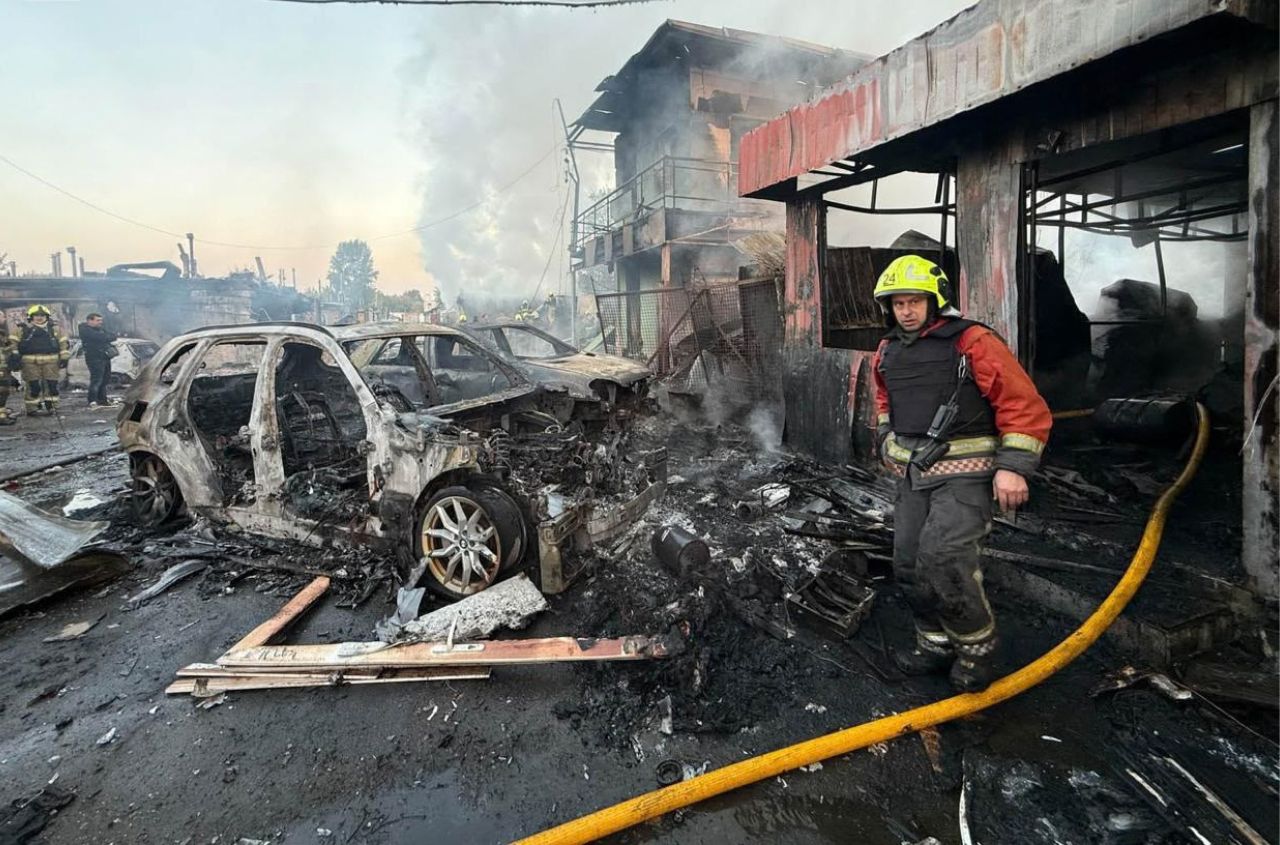
As a result, they are currently losing this race: they have been unable to stop Russia’s daily missile and bombing attacks against Ukraine or the Kremlin’s hybrid and kinetic threats in Europe, and are preparing for the possibility of a war with Russia on their own territory. At the same time, they are pursuing a policy of appeasement, meeting with alleged war criminals — as German Foreign Minister Johann Wadephul did with Sergei Lavrov — and inviting Vladimir Putin to the G20 summit in Miami. They have been unable to develop a collective strategy to neutralise a single rule-breaker and are watching helplessly as he dictates the course of the race himself, outmanoeuvring opponents who are considerably stronger.
But while in cycling the unexpected victory of an outsider makes for a beautiful and heroic story — and I am genuinely happy for McNulty and for the united American team, which had not seen one of its riders in the rainbow jersey since Lance Armstrong in 1993 — in geopolitics, the same scenario carries the risk of catastrophic consequences.
And just as in the prisoner’s dilemma, everyone may ultimately end up losing.