

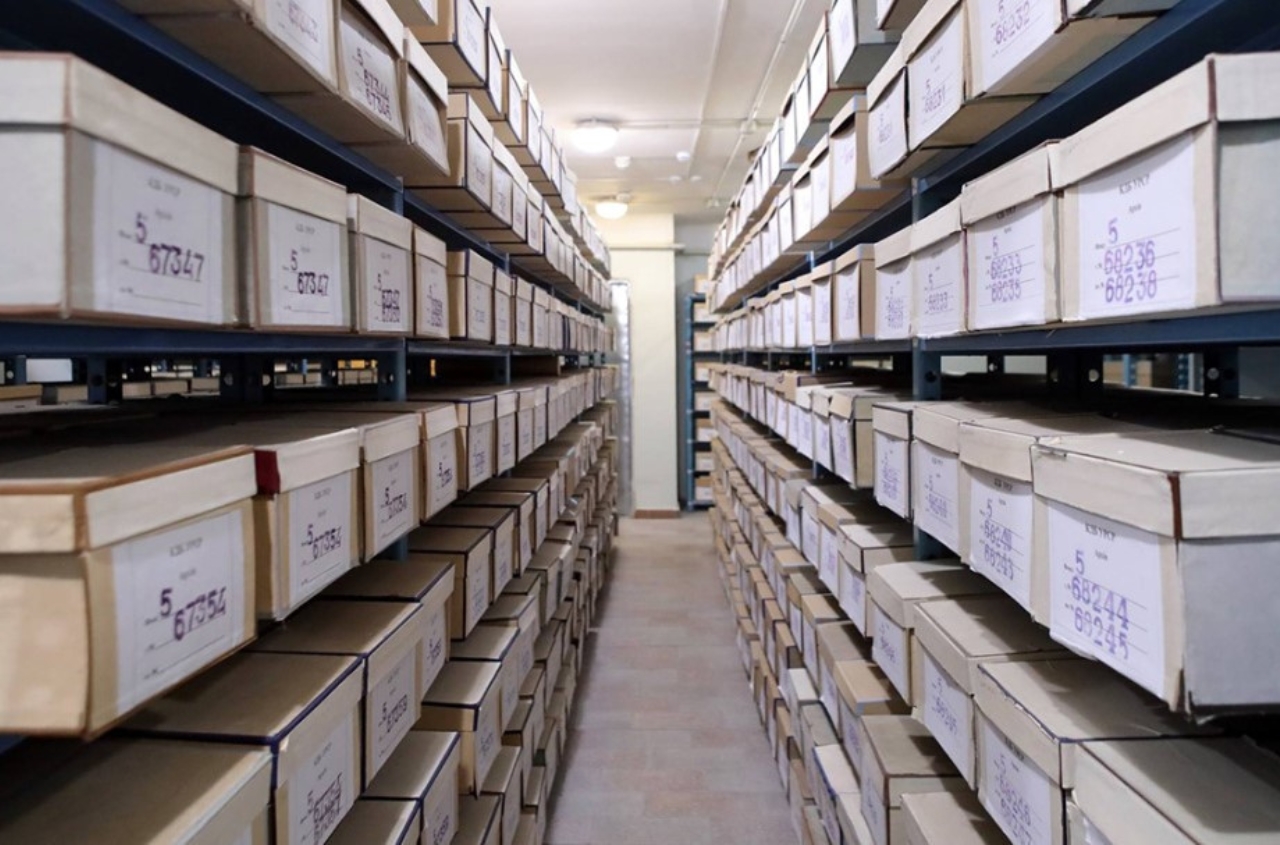

In Ukraine, 99% of documents of Soviet special services have been declassified, allowing citizens and researchers to work with what is described as the world’s largest open collection of KGB archival materials.
This was stated on Ukrainian Radio by Andrii Kohut, director of the Sectoral State Archive of the Security Service of Ukraine (SSU).
“99% of documents have been declassified. Approximately one thousand files remain classified, but this is related to the Yanukovych period. In particular, during Yanukovych’s presidency, when Ukraine began to implement Russian approaches to working with former KGB documents, several thousand files were reclassified. We declassified most of them even before COVID. However, this is a fairly long process… I hope that in the near future, within a year at most, we will complete it fully,” he said.
The head of the archive also refuted the myth that in the late 1980s the KGB massively removed documents from Ukraine to Russia. According to the institution, only the archive of the Internal Troops of the NKVD was taken from Ukraine—those units that fought against the Ukrainian Insurgent Army and the Ukrainian underground in the 1940s–1950s.
“Today we have the opportunity to work with the largest complex of KGB archival documents available anywhere in the world. This allows us not only to better understand our past, but also to better understand how Russian special services operate today, as their logic has not changed,” the official said.
At the same time, Kohut noted that some documents were destroyed during the restructuring period before the collapse of the Soviet Union. In particular, after protesters seized the Stasi archives in East Germany, Soviet special services changed document retention periods under special orders, which allowed part of the materials to be destroyed.
However, he emphasized that the absence of information in the archive does not mean it never existed. According to him, further processing of archival funds may reveal new data.
He also said that since 2014–2015, the number of requests from young people searching for information about repressed relatives has significantly increased. Due to security restrictions, reading rooms are currently closed, but citizens can send requests by email and receive digital copies free of charge. In the future, the archive plans to fully digitize its collections, he concluded.