


First, as I already wrote above, plans for the deployment of strategic reserves and the REAL capabilities of the Russian command in this area in 2025 clearly diverged quite significantly.
Average daily losses of Russian forces (both sanitary and irreversible, including prisoners and those “missing in action”), depending on the intensity of combat operations, fluctuated substantially over the year, ranging from 850 to 1,150 personnel per day (for example, British military intelligence estimated total Russian losses from the start of the war to mid‑last year, as of June, at 230–236 thousand).
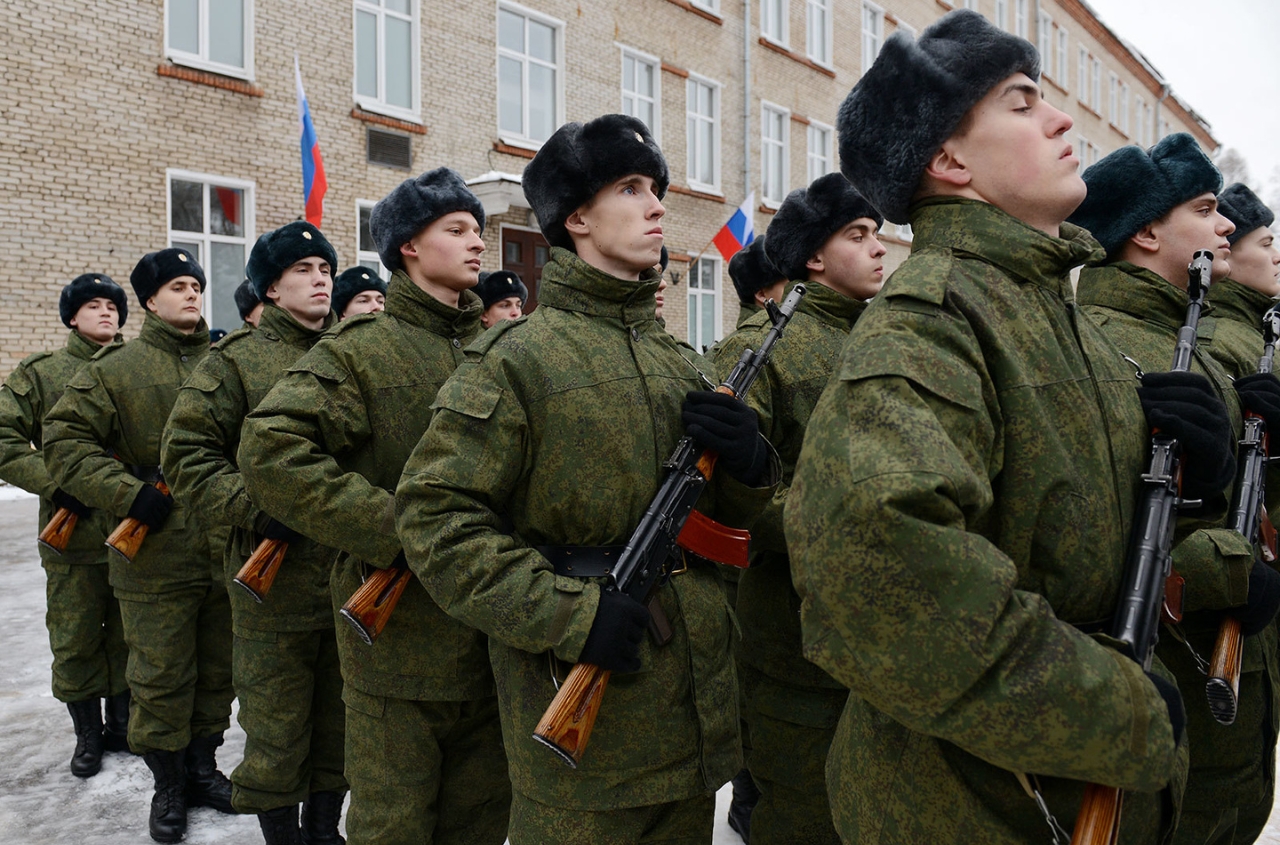
Given the fact that throughout 2025 the Russian command managed to “contract” approximately 400–405 thousand “bodies” for the war, the main reasons for the aforementioned postponement of the formation and deployment of the “bulk” of Russian strategic reserves become quite clear.
In 2025, the enemy command had just enough fresh manpower “down to the wire” merely to replenish losses and to very gradually and very slowly increase the size of its strategic grouping deployed on the territory of Ukraine, in line with the principles of its strategic concept. There was simply no room for an “explosive” formation of NEW reserve divisions and brigades. In this sense, the Russian command had to make do with the bare minimum (four divisions), postponing the rest until better times.
Second, in the current year, 2026, if the above-mentioned factors remain in place (that is, last year’s average daily loss rates of Russian forces at the front and the scale of their “contract mobilization”—with the Russian command planning to “recruit” up to about 410 thousand new “heroes of the special military operation” this year), the situation with Russian reserves is unlikely to change dramatically.
According to assessments (both “classified” and open-source) by a number of experts, this year the Russian command is unlikely to be able to scrape together more than 70 thousand “bodies” for its strategic reserves. This is clearly insufficient for the ENTIRE list of divisions and brigades PLANNED for deployment. That means their formation will once again have to be postponed.
And if we assume that Russian losses could sharply increase (which is quite likely, since the Russian command clearly plans to “advance at any cost,” especially given that, under the current operational-strategic situation, it now faces the unavoidable necessity of assaulting a number of fairly large populated areas—read: Ukrainian Armed Forces defensive hubs—which by default sharply increases losses), then the formation of strategic reserves in Russia could, generally speaking, become a very protracted process.
Third, not all divisions are created equal. One thing is an “old,” fully staffed cadre division (or brigade), and quite another is a “new,” so to speak, truncated one (or, as it is now fashionable to say in Russian headquarters, an “assault” unit), where there is plenty of infantry, enough artillery (though far from always), but very few tanks and armored vehicles, and specialized units and subunits are either reduced to a minimum or absent altogether.
I have written before that in a number of cases, when it comes to forming new units and formations in the Russian armed forces, their organizational structure, armament, and equipment look, to put it mildly, rather “strange.” A typical “new” Russian motorized rifle division is a heap of rifle/motorized rifle battalions moving either on old “motolyagas” (MT‑LB tracked carriers) or on assorted “improvised vehicles” of unclear origin, with obligatorily formed “assault companies and platoons” in each battalion, a couple of tank companies at best, one or two artillery battalions (sometimes an artillery regiment is still encountered), minimal air defense (no more than one SAM battalion per division, and sometimes even a single battery is deemed sufficient), little cargo and special-purpose transport (every flatbed truck counts), but plenty of motorcycles, Chinese and homemade buggies, “bukhankas,” and the like.
It is obvious that such a division, “adapted” for conducting intensive infantry assaults, is easier, faster, and simpler to form than a standard, fully equipped formation.
According to very cautious and highly approximate estimates, in order to form all the PLANNED strategic reserves in the current year, 2026—and to do so in a normal, not truncated and adapted form—the Russian command will additionally require (that is, on top of front-line needs):
- at least 68–70 thousand personnel;
- roughly 490–500 tanks (they produce 340–350 new ones per year, while the “older” tanks from storage bases are practically exhausted);
- between 1,040 and 1,100 armored combat vehicles (the situation here is very similar to that with tanks);
- up to 560–570 artillery pieces plus at least 200 multiple-launch rocket systems;
- and at least 24 launchers for operational-tactical missile systems.
I strongly doubt that all of this will simply “fall into the lap of the Russian army” on its own, like manna from heaven—especially given that the financial situation within Russia today is hardly conducive to finding ADDITIONAL resources beyond those already consumed by the front. Therefore, it is obvious that in 2026 the Russian command will most likely have to either continue forming precisely such “truncated and adapted” formations for its strategic reserves, or once again postpone this fascinating but rather exhausting process until more favorable times.