

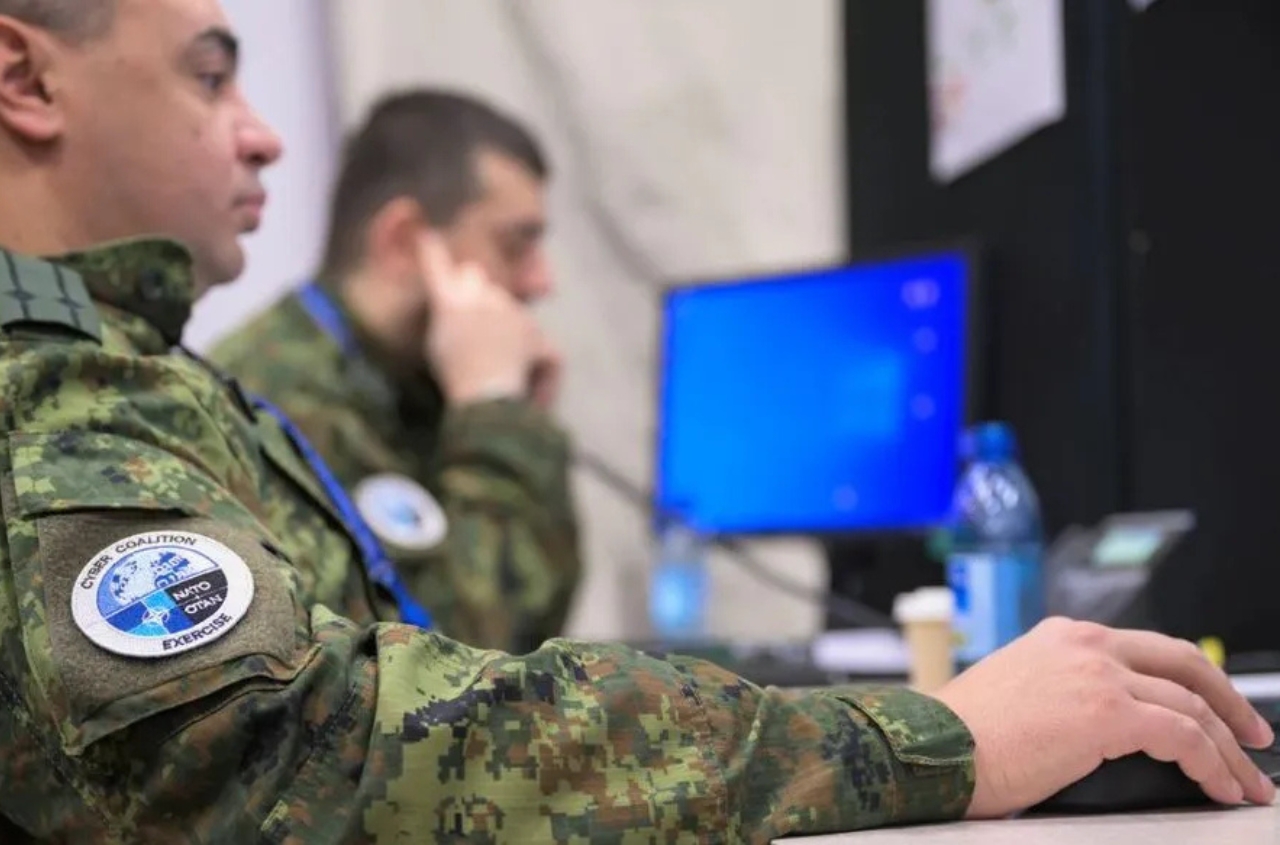

This week, NATO challenged about 1,300 participants in cyber defense exercises aimed at protecting critical infrastructure, including power plants, fuel depots, commercial satellites, and military networks. Source: The Record.
The annual “Cyber Coalition” exercises go beyond basic network defense. Participants face complex, multifaceted threats observed in recent global conflicts, including attempts to incite social unrest and undermine military capabilities.
This year, 29 allies and seven partner countries coordinated actions across seven main scenarios, all designed to stay below the Article 5 threshold for collective defense, at Estonia’s national cyber range CR14, created and maintained by the country’s Ministry of Defense. These were the largest NATO cyber defense exercises in history.
“Cyber Coalition” is structured as a joint exercise rather than a competition, said U.S. Navy Commander Brian Caplan, exercise director.
“Other cyber exercises are often about who wins a trophy,” he said. “Ours is different, it’s about synergy — nations helping nations, and the stronger helping the weaker, so everyone is better prepared.”
Only about 200 people are on-site, while more than 1,000 others participate from their workplaces in military headquarters and other locations worldwide.
These exercises follow a NATO warning from the North Atlantic Council about hybrid threats from Russia affecting both allies and partners.
According to Kaplan, the goal was to reflect the true complexity of modern cyber incidents, where even seemingly non-military issues can quickly escalate into strategic problems affecting combat capabilities.
“In cyberspace, there are no boundaries. Something that happens in one nation can have a second- or third-order effect in another. That’s why information-sharing, trust and collaboration are essential,” he said.