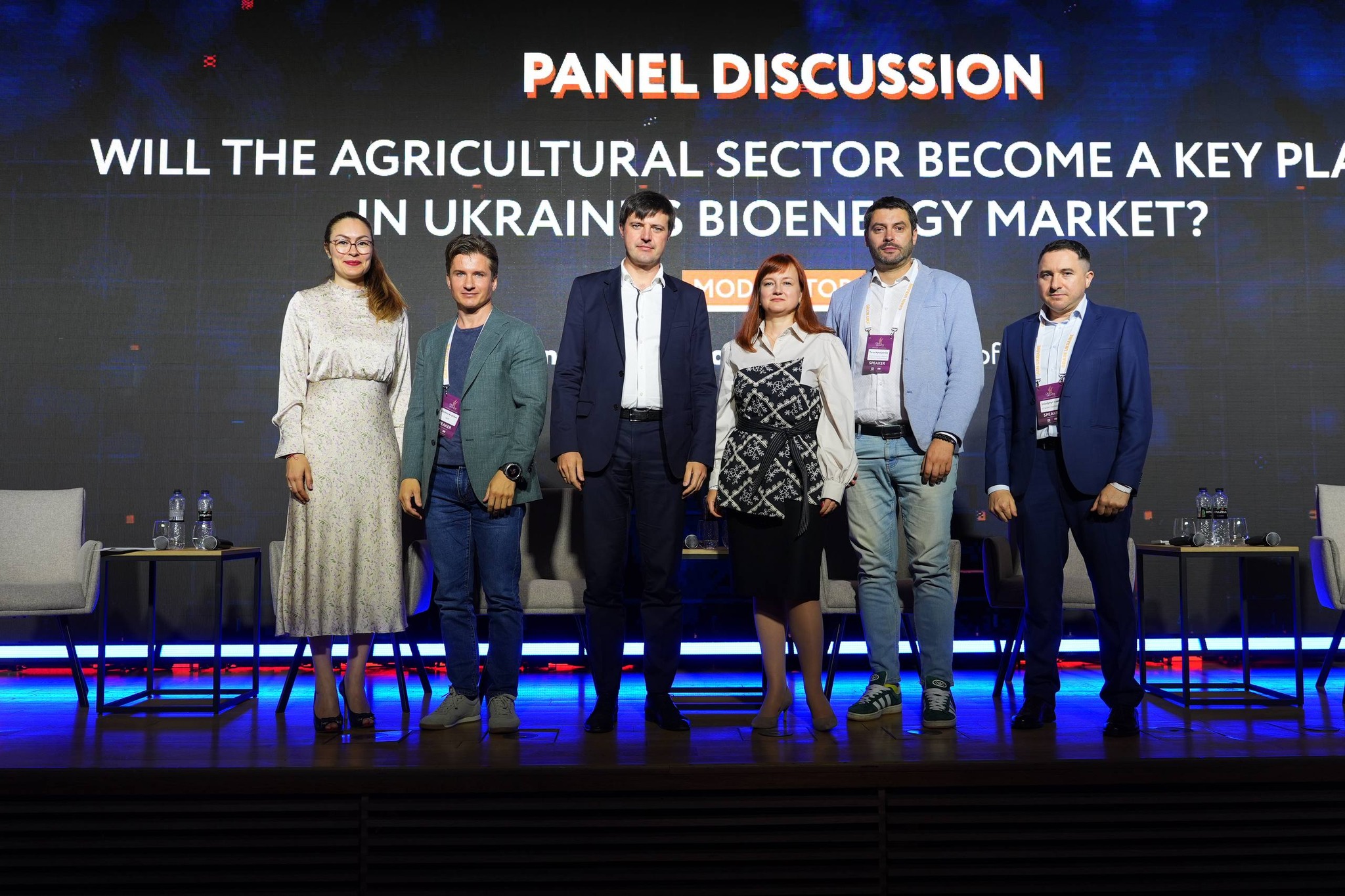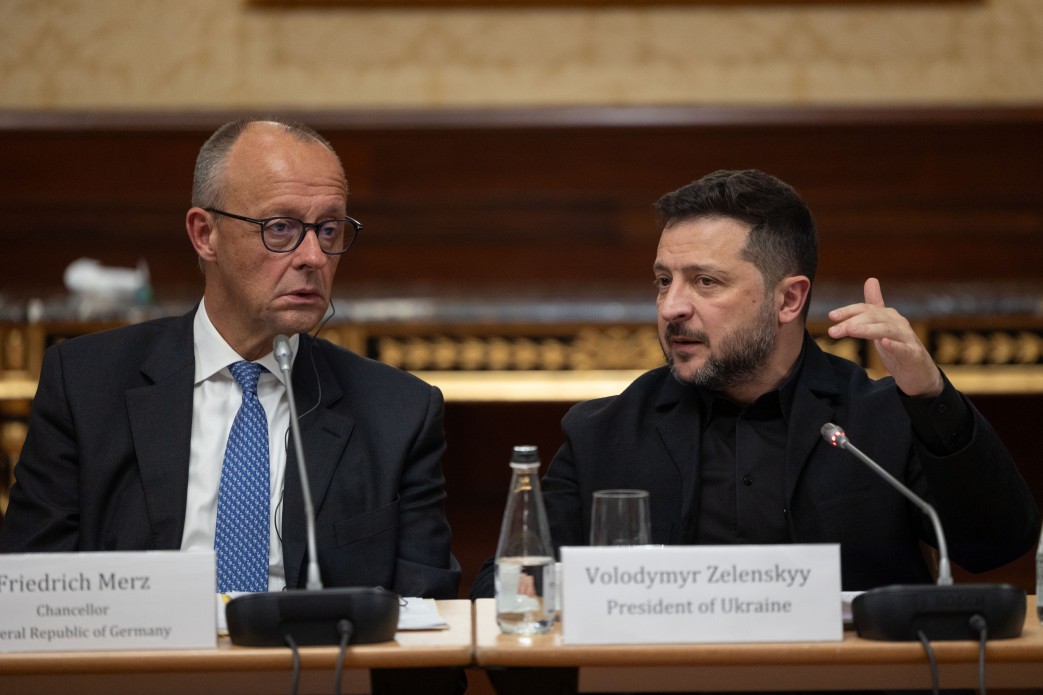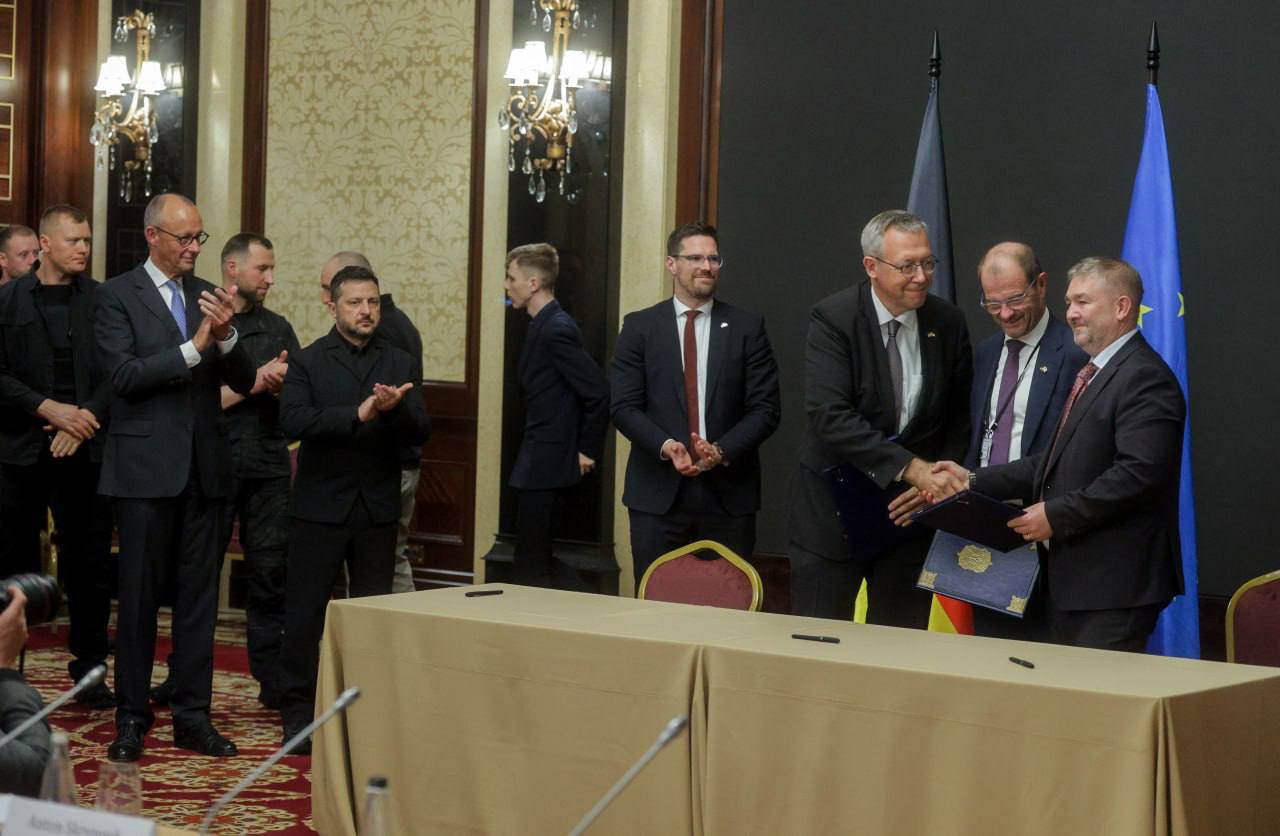




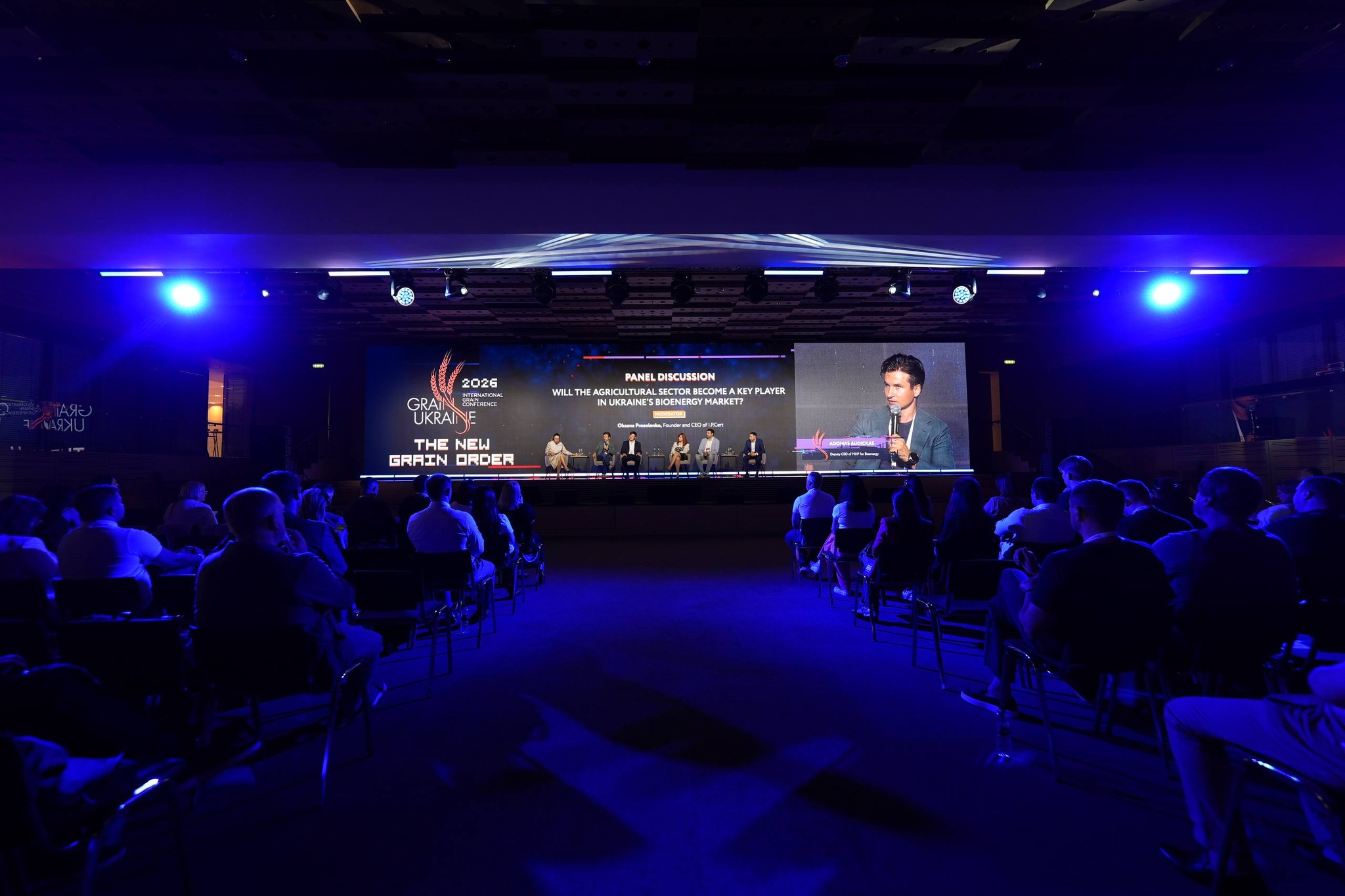
Will the agricultural sector become a key player in Ukraine’s bioenergy market? This question was discussed during a panel at Grain Ukraine 2026, featuring Deputy Minister of Economy, Environment and Agriculture of Ukraine Taras Vysotskyi, Adomas Audickas, Deputy CEO of MHP for Bioenergy, Anna Lebedynets, Associate Director and Senior Banker at the EBRD’s Food and Agribusiness Department, Taras Mykolaienko, Executive Director of the Ukrainian Bioethanol Producers Association “UkroBioEtanol,” and Volodymyr Ivakhiv, Director of VITAGRO ENERGY LLC. The discussion was moderated by Iryna Prosolenko, Founder and CEO of I.P.Cert.
Participants noted that Ukraine has long been perceived as a raw-materials-based country and is now actively seeking ways to create more value within its agricultural sector. One such direction is biofuel production—biomethane, bioethanol, and biodiesel.
At the same time, the state’s ambitious goals for the sector—building production capacity by 2030 of 1 billion cubic meters of biomethane and 1 million tons of bioethanol annually—require a realistic assessment of market conditions. Technologically, Ukraine is capable of rapidly scaling production capacity, but key challenges remain: building stable demand, access to foreign markets, and predictable regulatory conditions. For this reason, the sector’s future is largely tied to exports, as the domestic market is currently unable to absorb the required volumes.
Special attention was given to the economics of biofuel projects. Rising energy prices, the need for energy independence, and Europe’s decarbonization agenda are creating new opportunities for Ukrainian producers. Bioenergy is seen not only as an energy sector but also as a tool to increase agricultural competitiveness, expand processing, and boost foreign currency revenues.
A significant signal for the market was the European Bank for Reconstruction and Development’s (EBRD) willingness to support bioenergy projects in Ukraine. The bank financed such initiatives even before the full-scale invasion and continues to do so. Since 2022, one bioethanol production project has been signed, and two more are under implementation, with total financing amounting to tens of millions of euros. In addition to financial support, the EBRD provides expertise in project preparation, feedstock analysis, and market assessment—particularly important for a sector still in formation.
Panel speakers agreed that bioenergy is already moving beyond a niche segment and is gradually becoming part of the agricultural development strategy. The market sees it as a way to create added value, develop processing, strengthen energy independence, and integrate Ukraine into the European green agenda. However, fully realizing this potential will require investment, access to EU markets, and consistent state policy that encourages sector growth rather than creating additional barriers.