

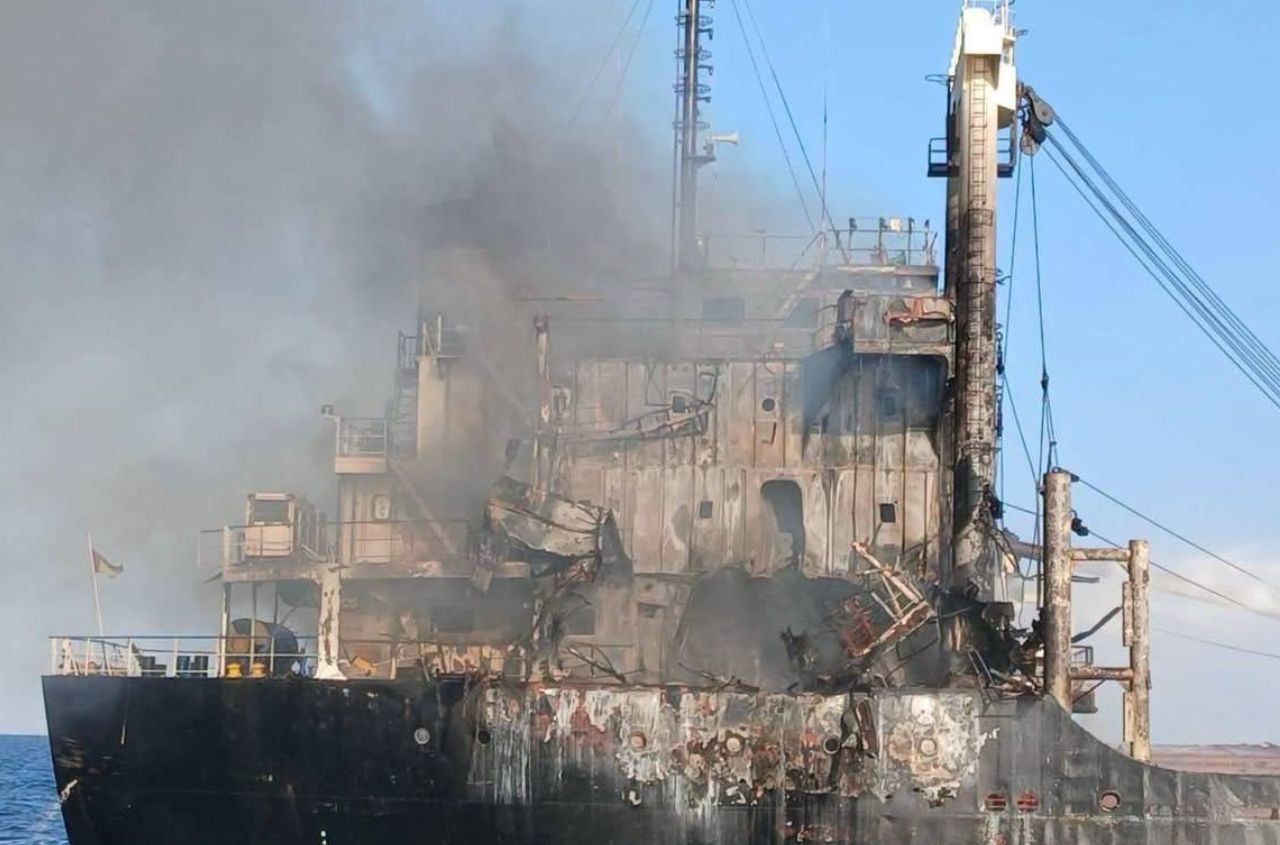

Protecting civilian merchant vessels in the Black Sea remains a major challenge, but combining military and diplomatic efforts could produce results, according to military expert and retired Ukrainian Navy Colonel Vladyslav Seleznov. Speaking on Ukrainian Radio, Seleznov noted that strikes against Russian military infrastructure in occupied Crimea have become routine. However, Russian forces still retain the capability to attack vessels traveling to and from the port of Odessa. He said the United Nations could potentially help improve the situation, but such a process would likely take considerable time. In the meantime, support from Ukraine's European partners, particularly Black Sea countries, could prove more effective. According to Seleznov, the most effective way to ensure freedom of navigation and security in the region is through "preventive action, including ballistic and cruise missile strikes, aimed at destroying the enemy's capability to carry out attacks."
Ukraine's Defense Forces have struck approximately 200 Russian vessels in the waters of the Sea of Azov and the Black Sea in recent weeks. At the same time, Russia has begun attacking civilian vessels near Odessa and has intensified missile and drone strikes on the port infrastructure of the Odessa region. In particular, on July 19, Russian forces attacked the Golden Leo, a Turkish-owned vessel sailing under the flag of Guinea-Bissau, with three cruise missiles. As of now, shipping to Ukraine has effectively been suspended. How can this problem be resolved and shipping restored? Do we have the military means to do so?
I believe a comprehensive approach is needed. The fact that we have not recently seen reports of Ukrainian drone attacks on Russian ships or vessels operating in Russia's interests may indicate the beginning of certain negotiations on the diplomatic track. As for military resources, we still have work to do. Numerous attacks on airfield infrastructure in temporarily occupied Crimea are carried out regularly, but they have not yet led to the complete collapse of the use of Russian combat aircraft, particularly those launching guided aerial bombs. Russian forces still have the resources and the capability to attack vessels sailing to Odessa or in the opposite direction.
As for the overall prospects and possible options, combining military and diplomatic efforts can certainly produce results. However, this will require substantial support from our European partners as well as the countries of the Black Sea region. The issue of security remains relevant for all countries engaged in maritime trade in the Black Sea. We need to unite to turn the Black Sea into a safe region. Moreover, all countries are interested in this because it is a factor that determines the sustainable development of every country connected to the Black Sea region.
As for the capabilities demonstrated by the Ukrainian military, I am convinced that we acted in a completely reciprocal manner. We were not the first to initiate a maritime trade blockade. It was the Russian Federation that resorted to such actions at the very beginning of its full-scale aggression in February and March 2022. We have proved that we possess the resources, the expertise, and the capability to respond in kind—and to do so in a way that is very painful for the Russian economy.
What Russian propaganda is now claiming—that Russia is simply acting reciprocally—is complete nonsense. Following the Russian strike on the cargo vessel Golden Leo, India lodged a strong protest because Indian citizens were among those killed. At the same time, Ukrainian Foreign Minister Andrii Sybiha stated that Russia's escalating terror against civilian cargo vessels in the Black Sea poses a serious threat to global food security. We remember that in 2022 the Black Sea Grain Initiative was concluded with the participation of the United Nations. Could the UN become actively involved in this process today?
That would be logical. However, the institution that is supposed to facilitate interstate communication and dialogue repeatedly demonstrates its complete inability to fulfill that role. Whether the issue of intensifying diplomatic efforts among the interested countries and parties will be raised is difficult to say. Especially considering that August is approaching—a traditional vacation period, including for UN officials. Therefore, the first practical steps on this issue are most likely to be taken only around the beginning of the third ten-day period of September.
Not earlier. Considering how bureaucratic and slow the UN institutions are, I believe this process could be significantly delayed. We will have to solve this problem on our own.
How can we solve it? Physically and technically, can we somehow protect vessels in the western part of the Black Sea?
Of course, it is impossible to install an air defense system on every merchant vessel. We simply do not have such resources. There are also certain protocols that regulate the possibility of installing military equipment on ships engaged in commercial maritime transport. So we face real limitations here. It is impossible to reliably protect every vessel sailing along designated routes toward Ukraine, even in the northwestern part of the Black Sea. We do have air defense systems in southern Ukraine, but they are deployed on the coast, and there are not enough of them. This is indeed a serious challenge. In this context, it is not worth relying exclusively on air defense. In my opinion, preventive action aimed at destroying Russian forces' capability to launch attacks, including with ballistic and cruise missiles, is the foundation of our resilience.